The Bali tourist levy is IDR 150,000 per person, about US$8.30 or C$12, charged once for the whole trip rather than per night or per entry. You pay it on the government portal, you receive a QR code by email, and you keep that code on your phone. Children pay the same as adults.
That much every page on this search tells you. What almost none of them tells you is the part people actually search for: what an officer does at the gate of a temple when you cannot produce the code, and whether the answer involves a fine. It does not, as things stood in August 2026. What it involves is an officer, a phone, and the same IDR 150,000 paid on the spot in front of whoever is queueing behind you.
One warning before anything else. The amount, the procedure and the list of exemptions are all set by provincial regulation and have already been rewritten twice. Everything here was checked against the official Love Bali portal in August 2026. Read it as the state of play rather than as permanent law, and confirm on the official portal before you fly.
On this page
Do you have to pay it?
Almost certainly yes, if you are reading this while planning a holiday. The exemptions exist for people who live and work in Indonesia rather than for tourists who feel the charge is unfair.
The distinction worth understanding is between the two kinds of exemption. Some are proven by showing a card to an officer. Others only exist if you filed for them at least five days before you arrived, and cannot be claimed at the gate afterwards.
| Status | Ruling | Amount |
|---|---|---|
| Tourist visa or visa on arrival | You pay | IDR 150,000 |
| Travelling with children or infants | You pay | IDR 150,000 each |
| KITAS or KITAP | Exempt, nothing to file | Nothing to pay |
| Student or family reunification visa | Exempt, nothing to file | Nothing to pay |
| Crew on a ship or aircraft | Exempt, nothing to file | Nothing to pay |
| Golden Visa | Exempt, but apply first | Apply at least 5 days ahead |
| Business, work or other non-tourist visa | Exempt, but apply first | Apply at least 5 days ahead |
You pay: tourists, visa on arrival, and children
The ordinary case, and the one nearly every Australian falls into. The levy is separate from the visa on arrival you buy at the airport, about US$8.30 or C$12 at today's rate, and paying one does nothing about the other. Age carries no discount and no exemption, so a family of four pays four times, which is where the figure stops feeling trivial and starts being worth doing before you fly.
Exempt automatically: KITAS, students, crew
Temporary and permanent stay permit holders, KITAS and KITAP, are exempt outright. There is nothing to apply for. You show the card if an officer asks, and that is the end of it. Student and family reunification visas sit on the same automatic list, alongside diplomatic and official visas, and the exemption is proven by the visa itself rather than by a voucher. Transport crew members are exempt by category too, and so are passengers transiting through Ngurah Rai without clearing immigration into Bali.
Exempt, but only if you apply first: Golden Visa and other visas
The Golden Visa is exempt, but only on paper obtained beforehand. It sits in the group that has to file an exemption request through the Love Bali portal, and turning up at a checkpoint to argue the category is not how it works. The official wording for the other group is holders of other visas, deliberately wide and deliberately conditional: business, work and similar visas file the same exemption through the portal, allow the five days, and keep the confirmation on your phone the way a paying visitor keeps the QR code.
Source: the exemption list published by the Bali provincial government on the Love Bali portal, read in August 2026. Categories have been narrowed before and can be again, so check the portal before you fly.
The three moments you can pay, and what each one costs you
There is no early payment discount and no late payment penalty. The levy is IDR 150,000 whether you pay it in your kitchen in Perth or on a clifftop at Uluwatu with an officer waiting. What changes is how much of your holiday the payment costs you.
The levy costs the same IDR 150,000 whichever of these three moments you pay it at. What changes is how much of your holiday the payment costs you.
Before you fly: pay online and land with the voucher already on your phone
You fill in the form on the official portal, pay by card, virtual account, UnionPay or QRIS, and the levy voucher with its QR code arrives by email. Screenshot it. Airport wifi at six in the morning is not where you want to be searching an inbox. The one thing that goes wrong: Australian cards get declined by the local payment processor more often than they should. Leave yourself a day or two rather than doing it in the taxi to the airport.
On arrival: pay at the counter at Ngurah Rai before you leave the terminal
Counters exist at the airport and at the ports, and the payment is cashless there too. It is a legitimate route, not a fallback for people who did something wrong, and it is the answer if the website refused your card three times. You are queueing after a six hour overnight flight, behind everyone else who also left it until now. The levy costs the same. The twenty minutes are the price.
When you are asked: pay on the spot at a checkpoint, mid holiday
Officers scan a QRIS code on the spot and you pay the same IDR 150,000 by phone. Nobody is fined, nobody is put on a plane, and nobody is refused entry to the site once it is paid. It happens at the gate of a temple, in front of the queue behind you, on a day you had planned around something else. That is the whole cost, and it is the reason to do it earlier.
Why Australian cards get declined
The portal does not run on an international gateway. It settles through a regional Balinese bank, and that processor blocks foreign cards more aggressively than the national immigration site does. A declined payment is usually the processor, not you. Turn off any VPN, check that international online purchases are enabled on the card, and try a different card before assuming the levy has somehow refused you.
If the money leaves your account but no voucher arrives, do not pay a second time. Vouchers can take a while to land, and the counter at the airport can look up a payment against your passport number.
The sites that are not the government
Search this levy and you will find a row of pages offering to handle it for you. Some are honest agents who file the same form and add a fee. Others quote a total several times the levy and rely on you not knowing what it should cost.
The test is arithmetic rather than judgement. The levy is IDR 150,000 per person and nothing else. Any figure meaningfully above that is somebody's margin, and the form it saves you takes about four minutes to fill in yourself.
What the voucher actually is
A PDF with a QR code, emailed to the address you typed into the form. It carries your name and passport number, which is why it is worth checking both before you pay: a typo in a passport number is the one thing on that form that can make the voucher useless at a checkpoint.
Screenshot it and keep the screenshot. The moment you are asked for it is the moment you have one bar of signal at a temple car park, and searching an inbox is not what you want to be doing with a queue behind you.
The spot checks: where they happen, and what an officer does
Ask this in any Bali travel group and you will get forty confident answers, several of them contradicting each other. Here is the mechanism, plainly.
Who stops you and where
Officers from Satpol PP, Bali's provincial civil enforcement service, working alongside a tourism task force set up for this. They do not stop people in the street. They stand at the entrances to the sites that receive the most foreign visitors, because that is where the arithmetic works.
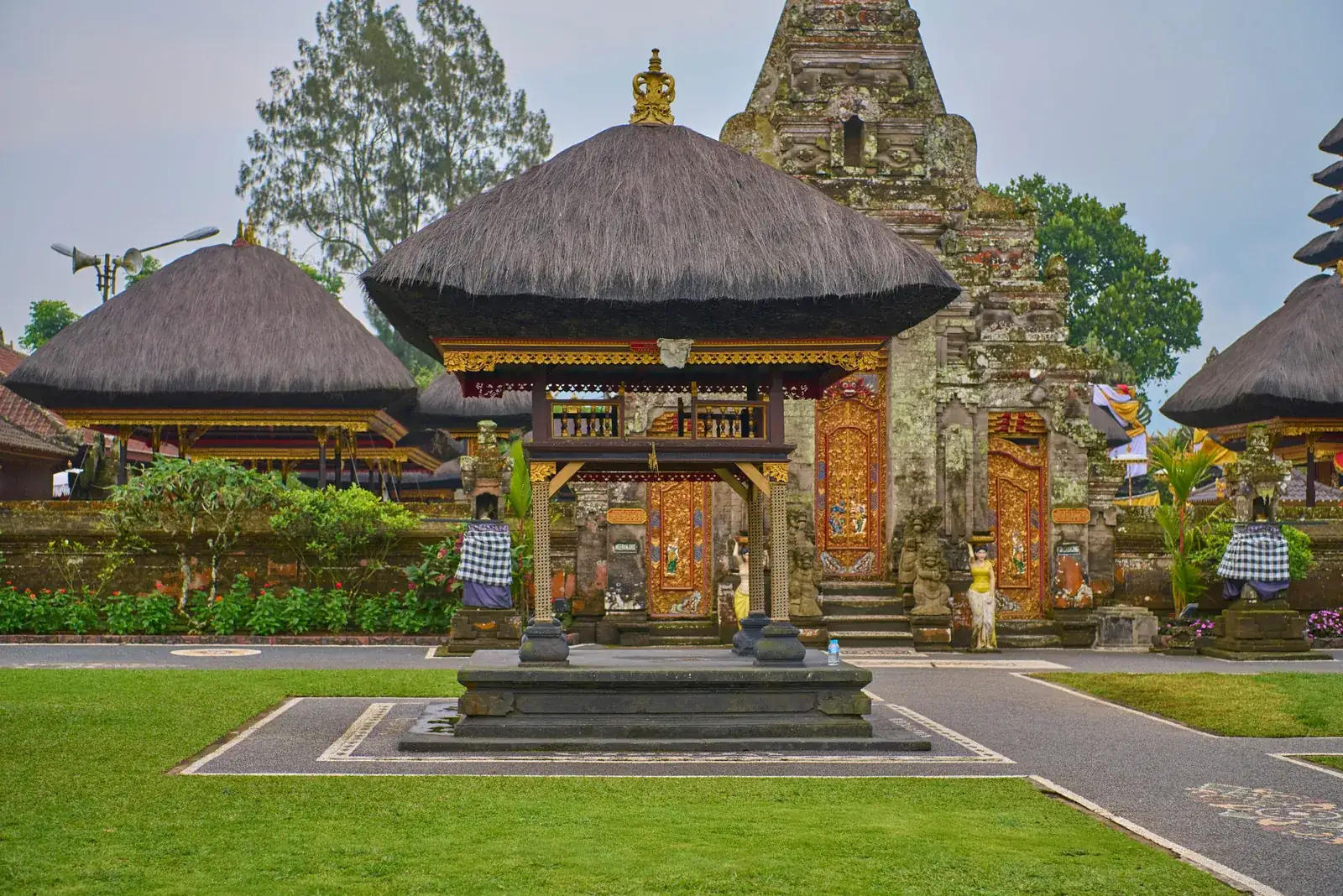
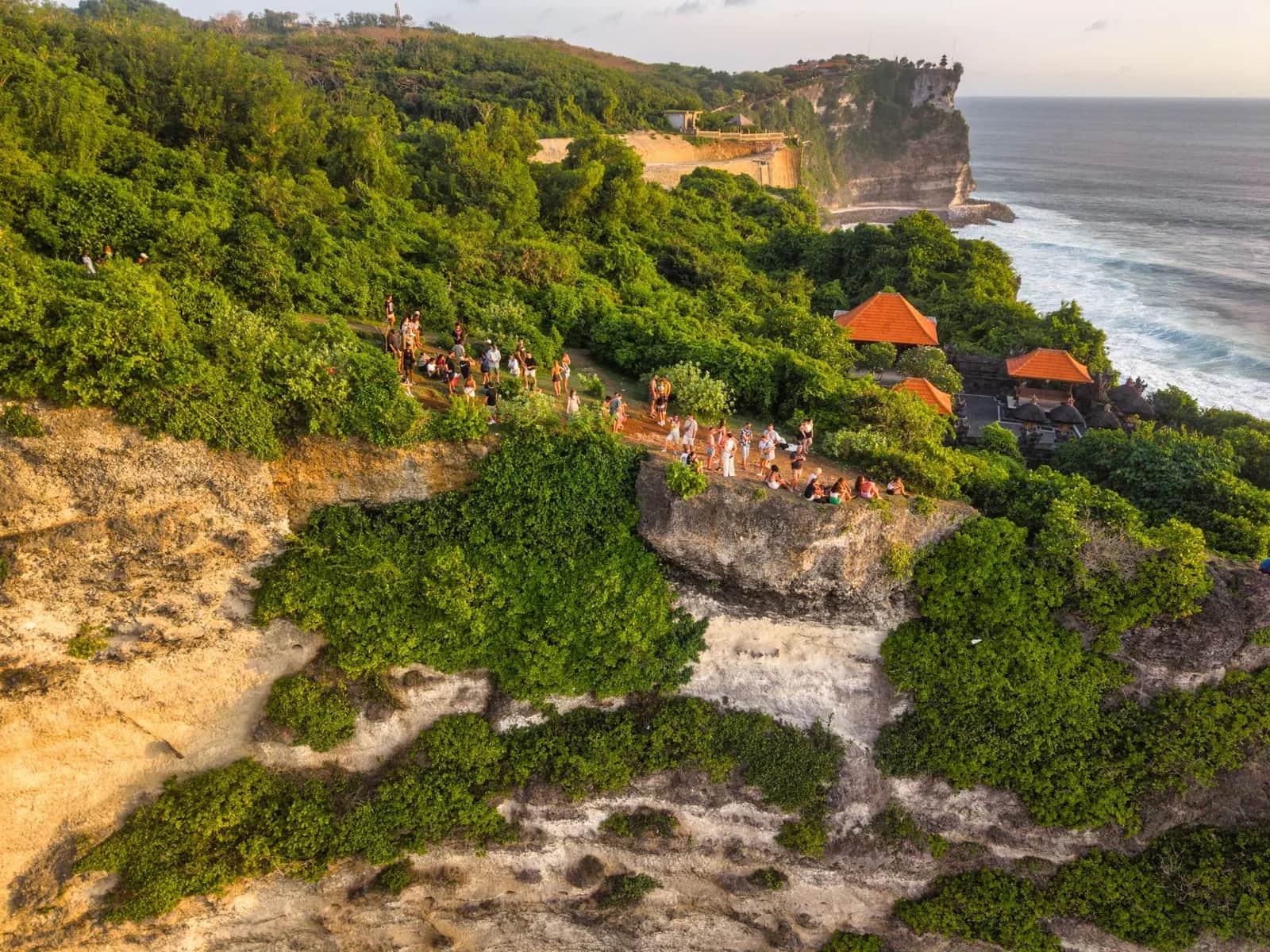
In practice that means Uluwatu, Tanah Lot, Ulun Danu Beratan at Bedugul and the Tegallalang rice terraces, plus the roads immediately around the airport. Every one of those sits on the standard first visit circuit, which is not a coincidence.
Checks are periodic rather than permanent. Compliance has hovered around a third of arrivals, which tells you both that a lot of people are never asked and that the province has an obvious reason to ask more often.
What happens in the thirty seconds after
You are asked to show the QR voucher on your phone. If you have it, it is scanned and you walk on. If you do not, the officer produces a QRIS code and you pay the IDR 150,000 there, by phone or card. Then you walk on as well.
There is no fine on top. There is no record that follows you to immigration, no penalty rate, and no version of this where you are refused entry to Bali or removed from the site. The cost of being caught is the levy you owed anyway, plus the twenty minutes and the audience.
Bali's officials have said repeatedly that fines are on the table for later. Nothing in the current regulation imposes one, so treat this as the position in August 2026 rather than as a standing promise.
What the levy is not
Nearly every question about this charge is really a question about which of several separate payments it is. The levy is provincial, the visa is federal, and the gate fees are local. None of the three replaces either of the others, and the figures below are orders of magnitude read in August 2026 rather than fixed prices. What the rest of the trip costs, day by day, is set out on the Bali trip cost page.
| What you are paying | Detail | Order of magnitude |
|---|---|---|
| Bali tourism levy | Once per trip, per person, children included. Paid to the province of Bali, not to Indonesia. This page. | IDR 150,000 · US$8.30 · C$12 |
| Visa on arrival | A separate federal charge for the 30 day tourist entry, bought at the airport or online as an e-VOA. Paying the levy does nothing about it. | IDR 500,000 · US$28 · C$39 |
| Visa extension | One 30 day extension is available. Handled by immigration, again unrelated to the levy. | IDR 500,000 · US$28 · C$39 |
| Site entrance fees | Every temple, waterfall and viewpoint charges at its own gate, in cash. The levy buys you nothing here. | IDR 30,000 to 75,000 each |
| Parking at each site | Collected separately from the entrance, by a different person, still in cash. | IDR 5,000 to 10,000 |
| Sarong hire at temples | Usually included in the entrance fee. Where it is not, it is a small charge at the gate. | IDR 0 to 25,000 |
The last three lines are the ones that surprise people who assumed a tourism levy buys access to tourism. It does not. Every site on this site charges at its own gate, in cash, and the amounts have been drifting upward: the gate at Lempuyang and the entrance at Tegallalang are both worth budgeting for separately.
Nusa Penida, Lembongan and the other islands
All three are part of Bali province, so there is no second levy for crossing to them and no requirement to pay again when you come back. The same voucher covers the whole trip.
What it does not cover is anything charged once you are on the island. Each viewpoint on Penida takes its own entrance fee at its own gate, and the parking is collected separately again. The day trip arithmetic sets out what a tour ticket really includes and what still lands on you in cash, and the full Nusa Penida guide covers the island itself.
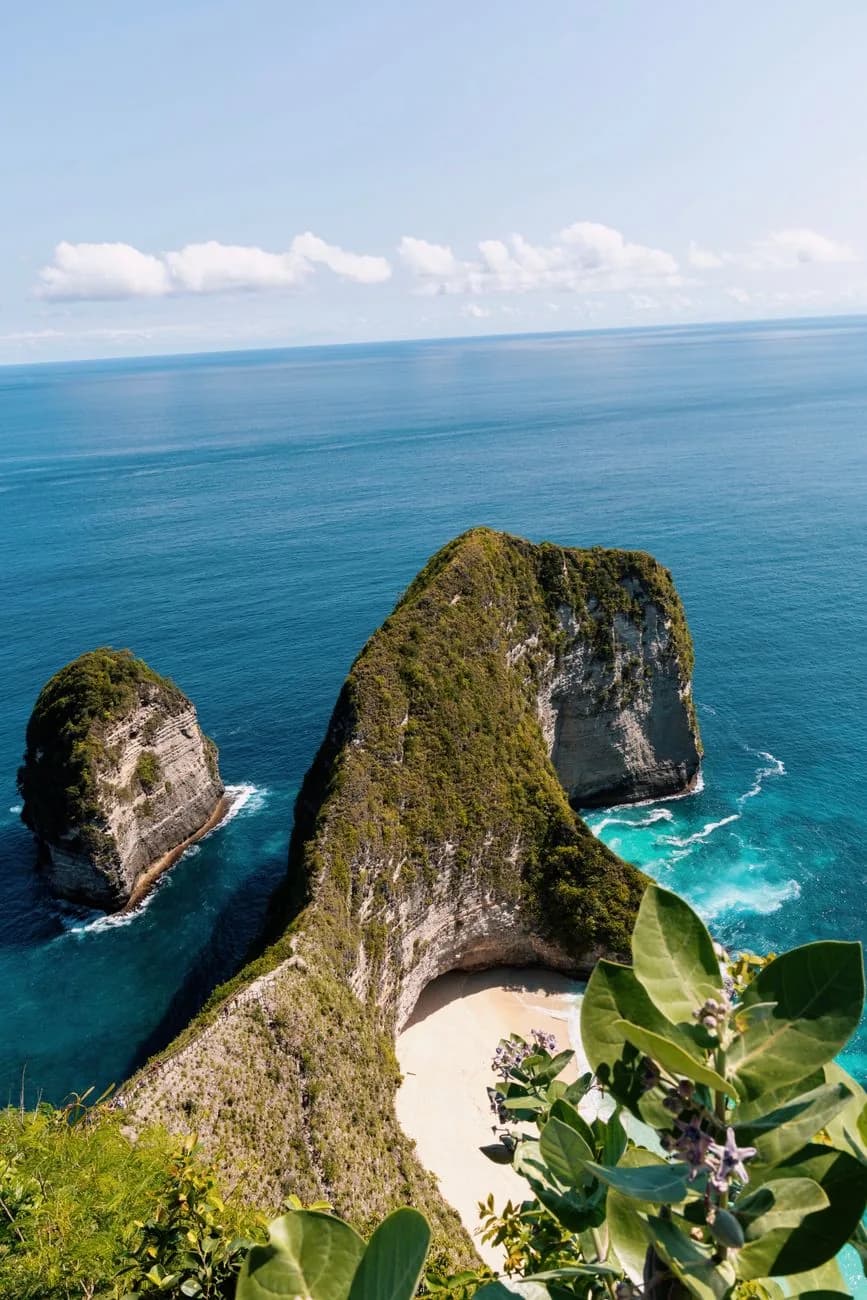
Covered by the same levy, charged separately at every gate
Free cancellationBali: Nusa Penida All-Inclusive Full-Day Tour with Transfers
- ✓Return fast boat from Sanur and hotel pickup in the south, both inside the price
- ✓A driver waiting at Toya Pakeh rather than a scooter and an unfamiliar road
- ✓Kelingking, Broken Beach with Angel's Billabong and Crystal Bay on one loop
- ✓Budget separately for the gate fees on the island, which no ticket includes
Affiliate link. Booking through GetYourGuide costs you nothing extra and supports the guide. Price and rating checked October 2026. Both move with season and demand.
Bali tourist levy: the questions people actually ask
Answers as at August 2026. The levy is set by provincial regulation and the regulation has already been amended twice, so confirm anything decisive on the official portal.