Canggu is not a town, it is four of them. Berawa, Batu Bolong, Echo Beach and Pererenan sit in a row along one coast road, and booking on the word Canggu alone is how people end up two river crossings from the street they came for.
So the question is not what to do in Canggu. It is which quarter you sleep in, because that decides your week here more than anything you book. Start there.
For orientation: Canggu sits about eighteen kilometres north west of the airport in Badung regency, above Seminyak and below Tanah Lot. It is a group of villages rather than a city, it has no centre and no airport of its own, and the name is said chang-goo.
| I am here for | Best quarter | Why |
|---|---|---|
| A first trip to Bali | Batu Bolong | One walkable street, cafes to board hire to the beach |
| Surfing every morning | Batu Bolong | The most forgiving wave, in the water before six |
| A night out | Berawa | The biggest beach clubs, on your doorstep |
| Quiet, and a pool | Pererenan | Villas back onto rice fields, frogs instead of scooters at night |
| Travelling with kids | Pererenan | Space, walls, a pool, and an emptier beach |
| The cheapest bed | Echo Beach | Lowest nightly rates in Canggu, where long stays end up |
The one thing here worth booking ahead
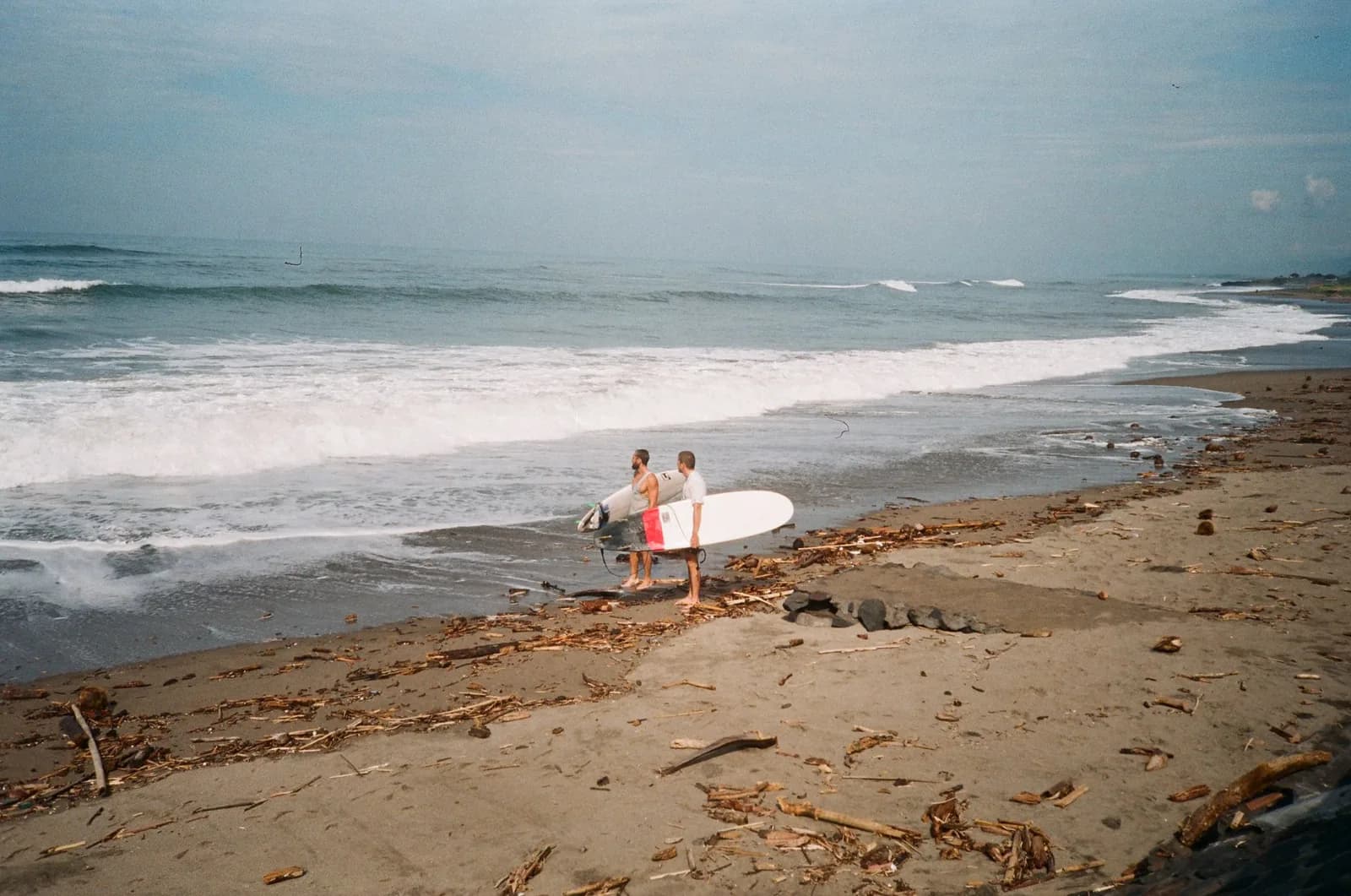
Free cancellationSurf lessons and board hire at Batu Bolong
- ✓Beginner beach break, which is what Batu Bolong actually is and Echo Beach is not
- ✓Board, leash and rash vest included, so nothing to arrange on the sand
- ✓Early slots before the six o'clock crowd fills the line up
- ✓Free cancellation on most listings if the swell turns
Affiliate link. Booking through GetYourGuide costs you nothing extra and supports the guide. Prices are indicative and vary by option and season.
On this page
The four quarters of Canggu, in detail
South to north, in the order you drive through them. The rivers between them are the reason they feel further apart than the map says.
Berawa
The southern end, closest to Seminyak, and the quarter that has changed hardest. Jalan Pantai Berawa is a wide, fast road built for cars, lined with new hotels, gyms, a large international school and the biggest beach clubs on the island. If you have seen a photograph of a Bali beach club with several hundred people in an infinity pool, it was probably taken here.
What Berawa gives you is a modern room, a short walk to a very large night out, and the shortest drive back to the airport. What it costs you is the character people come to Canggu for. There is construction on most streets, the noise starts early, and the walk to the sand means crossing a road that was not designed for walking. It is also, on a lot of dates, more expensive than Seminyak twenty minutes south, which surprises people who chose Canggu to save money.
Batu Bolong
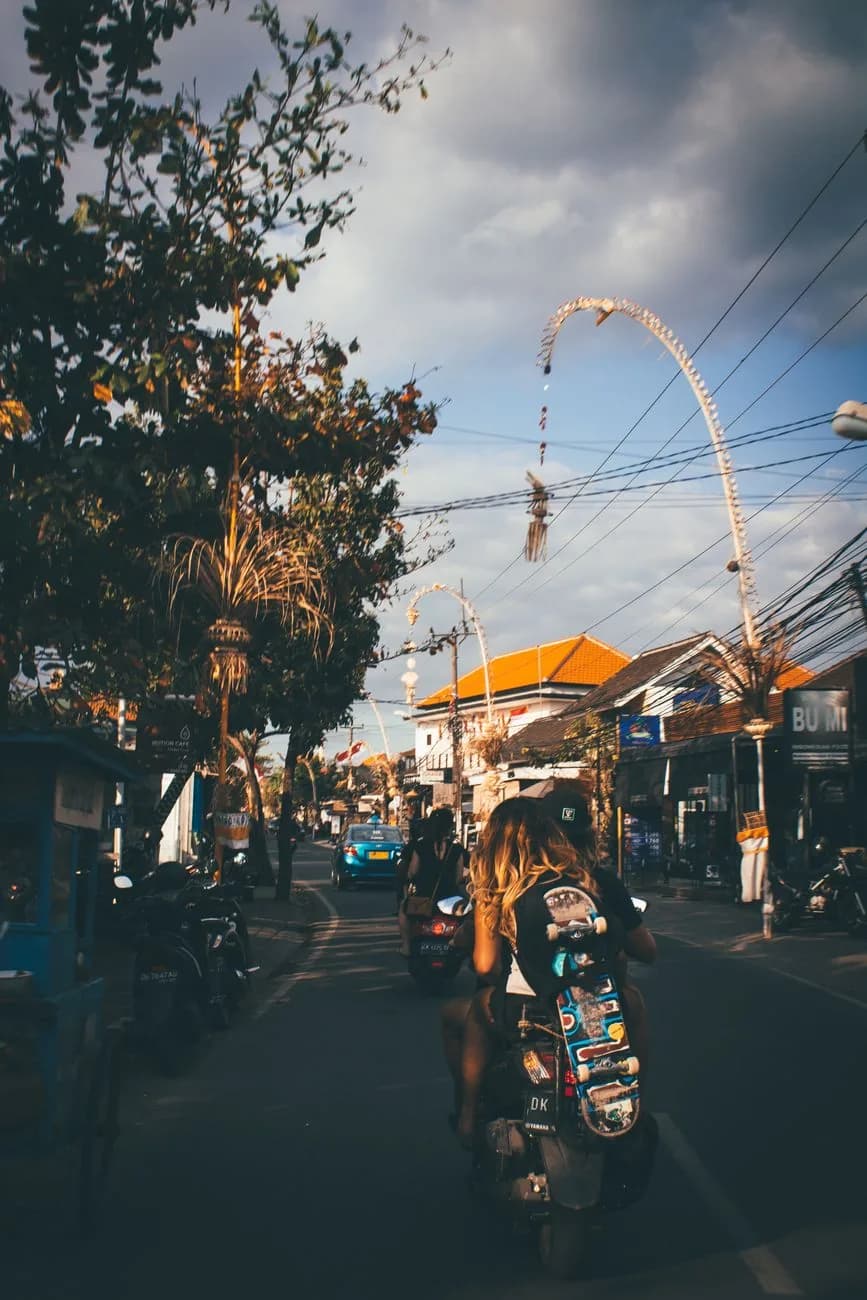
Across the first river, and the part almost everyone means when they say Canggu. One road, Jalan Pantai Batu Bolong, runs from the highway down to the beach with cafes, board hire, warungs, tattoo studios and bars along its whole length. At the bottom is the most forgiving wave in the area and the temple the street is named after.
This is the answer for a first visit and for most second ones. It is the only quarter that works on foot, which in a place with Canggu's traffic is worth more than any other feature. The trade is noise. The street carries scooters at every hour, there is no quiet end of it, and a room on the road itself will hear all of it. Book one lane back and you get the walk without the soundtrack.
Echo Beach
Ten minutes further on, and the quarter with the longest surf history and the shortest present. Echo was the serious wave here long before the cafes arrived, and it is a reef break rather than a beach break, which is the distinction that matters: it is not a beginner wave, and the line up knows it.
What is left today is a seafront of bars facing due west, a sunset crowd that fills them every evening without exception, and the cheapest beds in Canggu behind. It is where long stays and tight budgets end up. Very little of it is walkable, so plan on a scooter for anything beyond dinner.
Pererenan
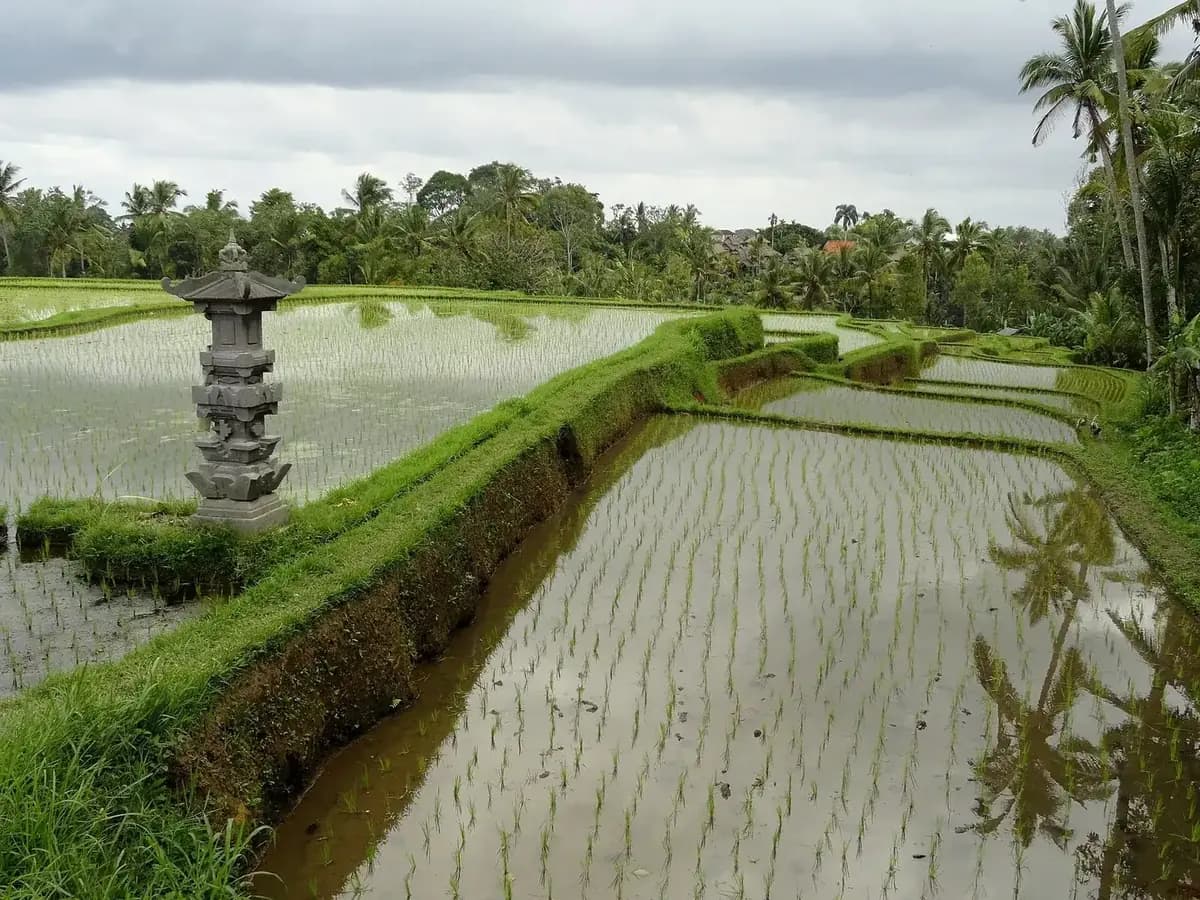
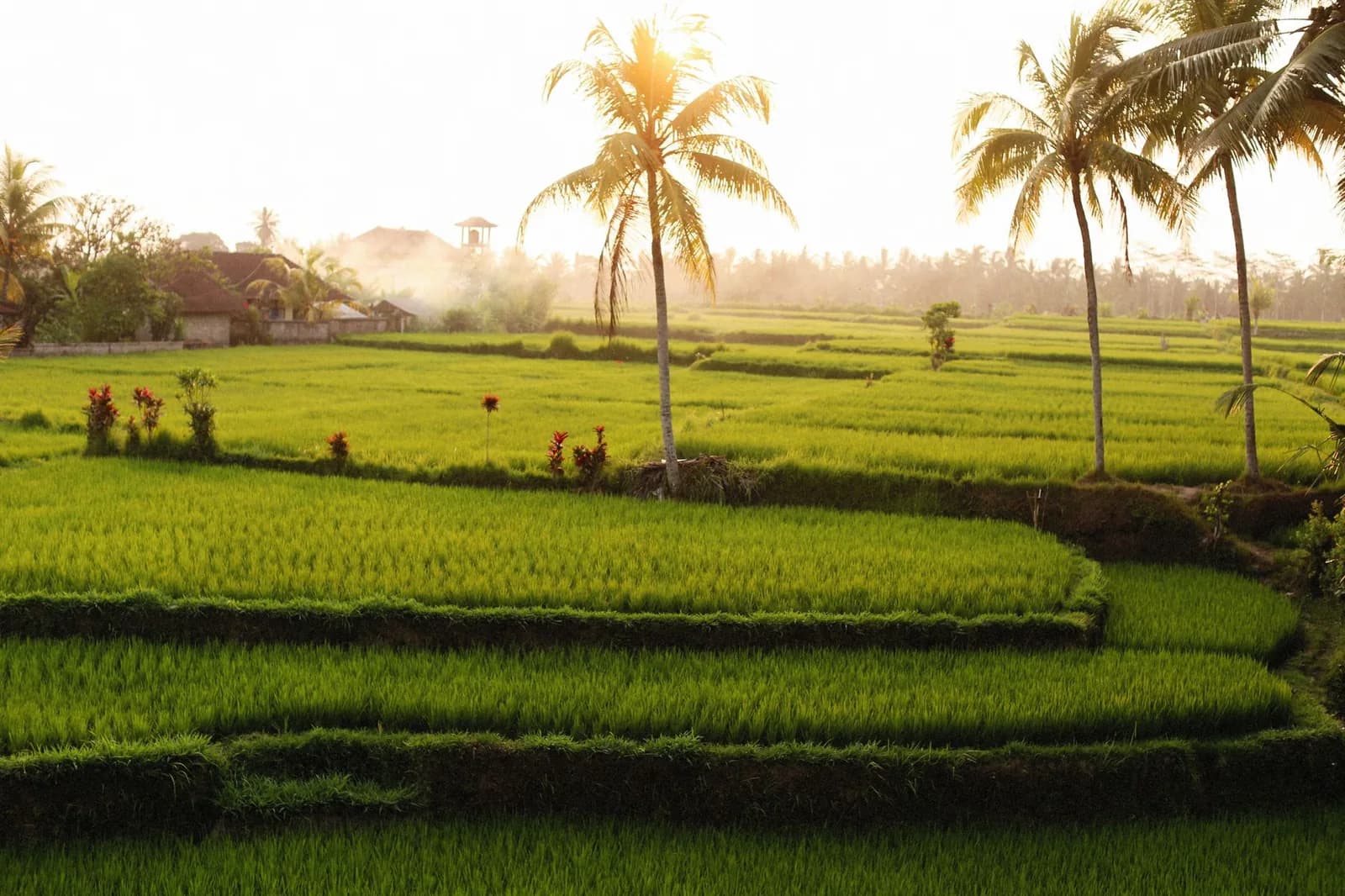
Over the second river, and the only one of the four that still reads as a village. The rice fields start again north of the bridge, the villas back onto them, and you can hear frogs at night rather than scooters. The restaurants here are the best in the area, and they close early, which tells you what kind of place it is.
Pererenan is the pick for a villa, for travelling with children and for anyone who wants Canggu at a distance rather than in their room. The catch is that the distance is real. You are fifteen to forty minutes from Batu Bolong depending on the hour, and you will make that trip more often than you expect. It is also being built on fast, so the version described here is a few years from being the version in the old guides.
What changed, and why the old guides mislead
Canggu has changed more in the past five years than anywhere else in Bali. A lot of what is still written about it describes a place that no longer exists, updated by changing the year in the headline.
The strip
The Canggu you read about: One road with a handful of warungs, a surf shop and a famous bar at the end of it. The Canggu you land in: Four kilometres of continuous frontage across three quarters, with the same coffee prices as a European city and a queue outside the good places at nine in the morning.
The sand
The Canggu you read about: Described in almost every guide as a beach, with no adjective attached to it. The Canggu you land in: Volcanic grey, coarse, and hot enough by eleven to hurt bare feet. It is a good beach and it is not a white sand beach, which is the single most common disappointment here.
The traffic
The Canggu you read about: A footnote, if it appeared at all. The advice was to hire a scooter and enjoy the lanes. The Canggu you land in: The defining feature. Two river crossings carry everything, the shortcut lanes are single width with a drop on one side, and Berawa to Pererenan can take forty minutes at six in the evening.
A room
The Canggu you read about: The budget alternative to Seminyak, and the reason people came here instead. The Canggu you land in: Berawa now costs more than Seminyak on a lot of nights. The cheap beds have moved up to Echo Beach, and the villas have moved out to Pererenan and Tumbak Bayuh.
The rice fields
The Canggu you read about: The backdrop of every photograph, running from the road to the sea. The Canggu you land in: Mostly built on between the road and the beach. There are real paddies left, and they start north of the second river, which is why Pererenan reads as a different place.
Who is here
The Canggu you read about: Surfers, and a small group of people working remotely before anyone had a word for it. The Canggu you land in: A large resident foreign population, a construction industry serving it, and a visitor season that no longer really ends. This is what changed the prices and the roads, not the number of holidays.
None of this is an argument against coming. The surf is as good as it was, the food is better than it was, and the thing that drew people here originally is still on the beach every morning at six. It is an argument for arriving with the right picture in your head, because almost every complaint you will read about Canggu comes from someone who arrived with the 2019 one.
The beach, honestly
Canggu's beaches are good and they are not what the word beach usually promises. Three things decide whether you enjoy them.
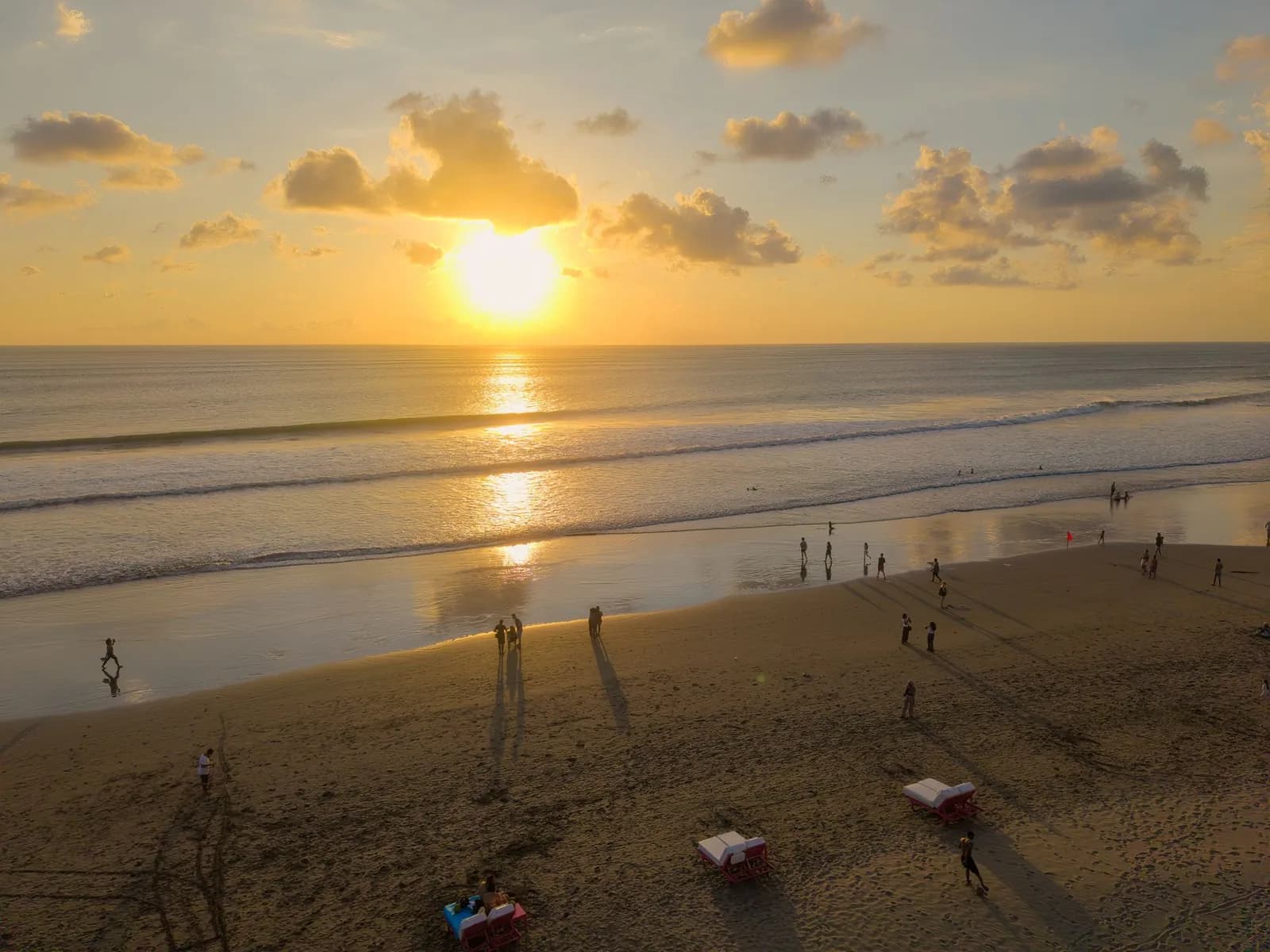
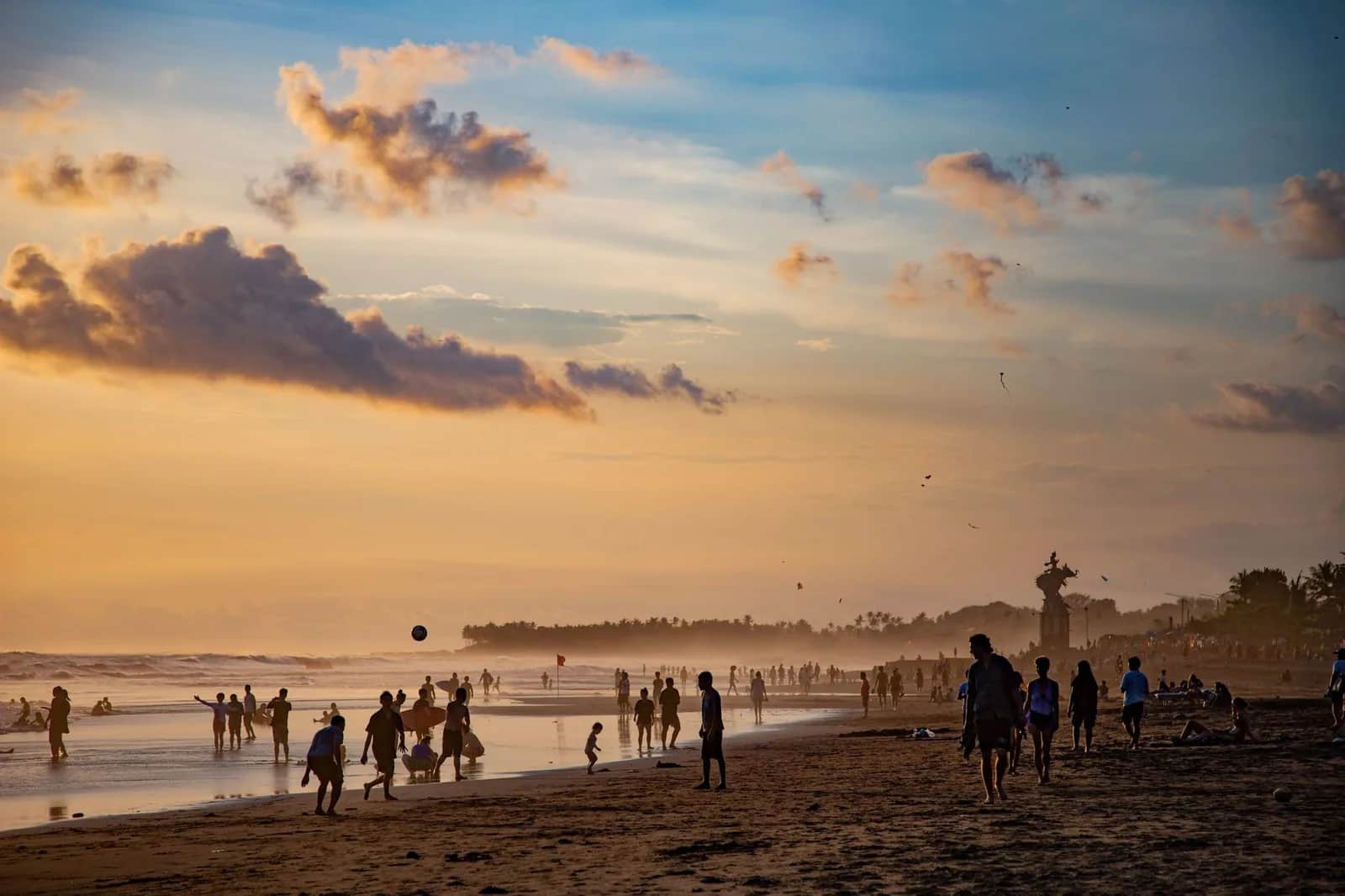
The sand is grey. This is a volcanic coast and the sand is coarse, dark and mineral. It is clean, it is normal for this side of Bali, and it absorbs heat all morning. By eleven it is hot enough to hurt, and the walk from the road to the waterline is the part people remember. Bring something for your feet. It also means the photographs never look like the brochure, which is the most common disappointment here and the easiest one to avoid by knowing in advance.
The sea is not a swimming pool. There is a heavy shorebreak dumping onto a steep bank, and rip currents that form and move through the day. The main beaches are patrolled and flagged: swim between the red and yellow flags, and treat a plain red flag as a closure rather than a warning. This coast takes lives every year and the great majority of them went in outside the flags. If someone in your group wants water they can walk into without thinking, that is a hotel pool, or it is the reef side of the island at Sanur. Which coast does what is set out in our guide to Bali’s beaches.
The wet season changes it. From roughly November to March the current pushes debris onto the whole west coast, and after heavy rain the tide line at Canggu can be a band of driftwood and rubbish. It gets cleared, it comes back with the next swell, and it is nobody's fault locally. What it does mean is that a January beach day here looks very different from a July one. The month by month picture sets out what each one actually changes.
Surfing in Canggu, by break and by level
This is still the best reason to be here, and the breaks are not interchangeable. Two of them are wrong for a beginner and nobody tells you which.
Batu Bolong
Beginners. A slow, forgiving sand bottom wave that breaks a long way out and rolls in, which is why every surf school in the area operates on this beach. It suits a first lesson and a first longboard better than anywhere else on this coast. The line up fills from about six in the morning, and the crowd is the actual hazard: loose boards, not the wave. Be in the water before six if you can, and take a lesson rather than renting a board and working it out, because the etiquette in a line up this busy is not obvious.
Echo Beach and Pererenan
Intermediate and up. Both are reef breaks, which changes everything. They break harder, they break in shallower water over a bottom that will cut you, and they are not places to learn. Echo is the more consistent of the two and holds a bigger swell. Pererenan works best at low tide and carries a fraction of the Batu Bolong crowd, which is why people who already surf end up basing themselves at that end. Reef boots are not a bad idea at either.
When it works
Season. Canggu faces south west, which makes it a wet season coast in surfing terms. The cleanest conditions here run roughly from October through March, when the wind comes offshore in the mornings. That is the inverse of the Bukit at Uluwatu, which fires in the dry season. It is the single most useful thing to know if you are planning a trip around waves rather than weather, and it is why serious surfers move between the two coasts rather than picking one.
The beach clubs, and what they actually cost
Canggu has the largest beach clubs in Bali, almost all of them in Berawa. The model is the same everywhere and it is worth understanding before you arrive at the gate.
Entry to the grass or the sand is usually free. A daybed, a pool lounger or a cabana carries a minimum spend, which is not an entry fee: it is money you must spend inside, on food and drink priced for a resort. People treat the number as a cover charge, discover at the till that they have to consume all of it, and leave having spent the price of a very good dinner on cocktails. Weekend minimums run well above weekday ones, and the largest venues take bookings that are genuinely worth making for a Saturday.
The alternative nobody mentions is the row of ordinary warungs and beanbag bars along the sand at Batu Bolong and Echo Beach. No gate, no minimum, no dress code, plastic chairs facing the same sunset. It costs the price of two beers, and it is the version of the evening most people actually remember. If you want one big beach club day, do it properly in Berawa and do the other four evenings on a beanbag. Staying further south, the Seminyak beach clubs are smaller, take children, and publish their minimum spends.
Getting around, and the traffic
This is the part every older guide skips, and it is the thing that most shapes a week here.
Canggu's road network was built for a village and now carries a small town plus its visitors. Two river mouths cut the area into pieces, and only a handful of crossings link them, so nearly everything funnels through the same few bottlenecks. Between about half past four and seven in the evening, a journey from Berawa to Pererenan that the map calls eight kilometres can take forty minutes. That is a normal evening, not one bad day.
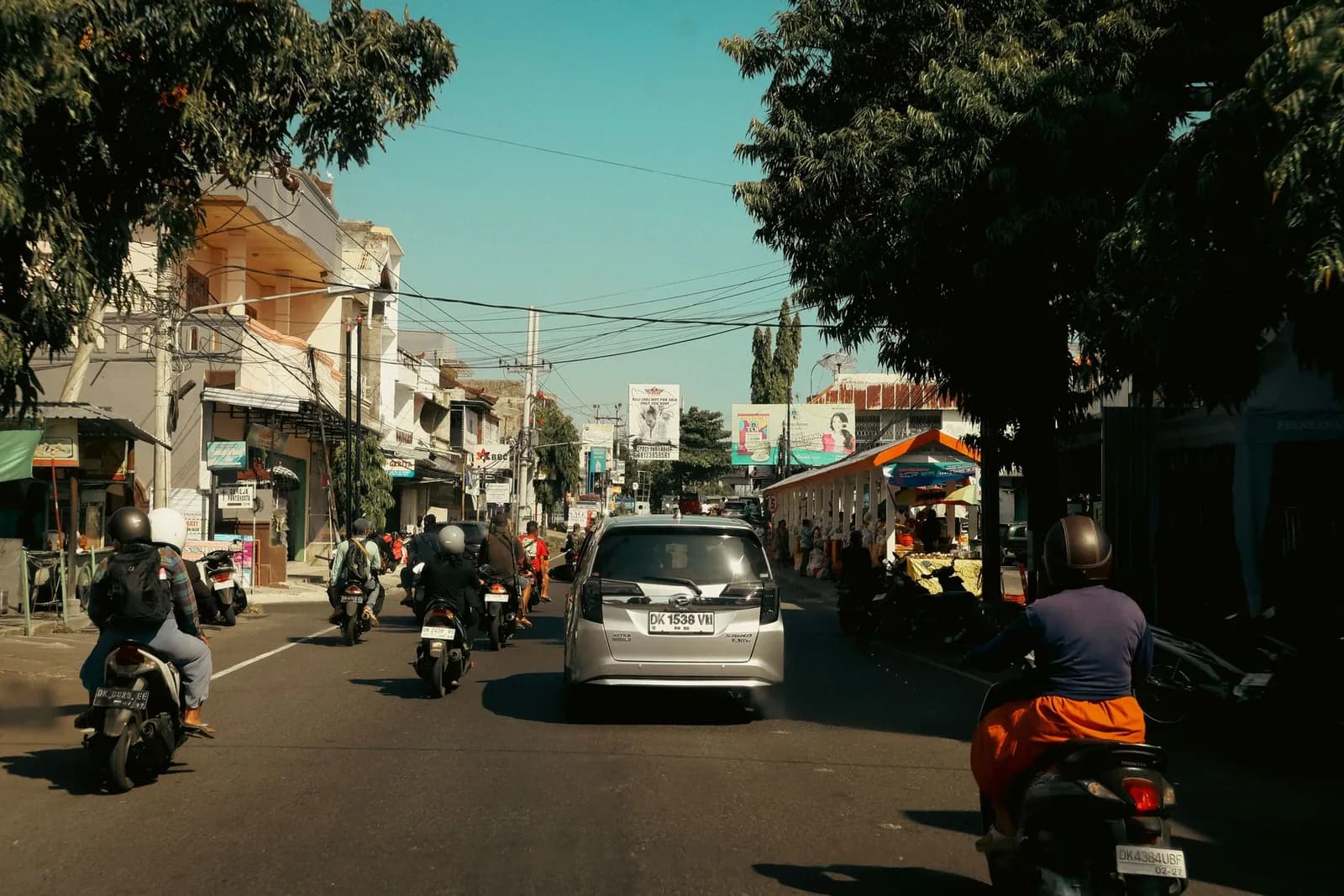
The shortcuts are a trap for cars. The narrow lanes between the main roads look like a way around the jam and they are, on a scooter. In a car they are single width with a drainage ditch on one side, and meeting an oncoming vehicle means one of you reversing several hundred metres. Drivers know this. Passengers who have opened a map app and started navigating usually do not.
A scooter is the honest answer, with a caveat. It is the only vehicle that makes Canggu work, it costs about six dollars a day, and it is also how most visitors here get hurt. Riding legally requires an international permit with the motorcycle category on it, endorsed against a licence you actually hold. Without that, your travel insurance will very likely decline a claim, and the clinics here deal with the consequences daily. Wear the helmet, and do not learn to ride a scooter for the first time on Jalan Raya.
Grab and Gojek work, mostly. Scooter taxis are cheap, quick and the right tool for hopping between quarters at a dollar or two. Cars are fine for the airport, where the pickup zone is across from arrivals rather than at the kerb, and useless in the evening jam. There are still lanes and beach entrances where local drivers hold the pitch and an app driver will ask you to walk up the road to meet them, which is a minor friction rather than a real obstacle.
Canggu against the other bases
Four comparisons, answered straight. Most trips end up splitting nights rather than picking one of these.
Canggu or Seminyak
Canggu for surf, cafes and a younger crowd. Seminyak for restaurants, villas and a beach wide enough to absorb a crowd. They are twenty minutes apart and converging fast. The two things people get wrong: Canggu is no longer the cheap one, and its traffic is now worse than Seminyak's despite the reputation for being calmer.
Canggu or Ubud
The real decision of most Bali trips, and neither one wins it. Canggu is coast, surf and sunsets with an hour of driving to anything green. Ubud is culture, countryside and the base for the waterfalls and the volcano, with no beach at all. Do both, three or four nights each, and stop trying to day trip between them.
Canggu or Uluwatu
Canggu if you want to walk to things and surf a beach break. Uluwatu and the Bukit if you want cliffs, white sand and the most spectacular coast in the south, and you accept that every beach is down a staircase and there is no centre to walk to. Their surf seasons are opposite, which is the deciding factor for anyone here for waves.
Canggu or Kuta
Canggu, for almost anyone, unless the nightly rate is the whole constraint. Kuta has the cheapest beds, the most forgiving beginner surf on the island and the loudest night out, and it also has the most persistent street hassle in Bali. The comparison people should be making is Canggu against Legian, the quieter strip just north of Kuta, which nobody writes about and which beats both on value. For Australian visitors specifically, Kuta and Legian are still where the package holidays land, while Canggu is where the repeat visitors have moved.
Day trips from Canggu
Canggu sits at the wrong end of the island for most of Bali's famous sights, with one significant exception. Real drive times, not map times.
| Place | Drive time | Why |
|---|---|---|
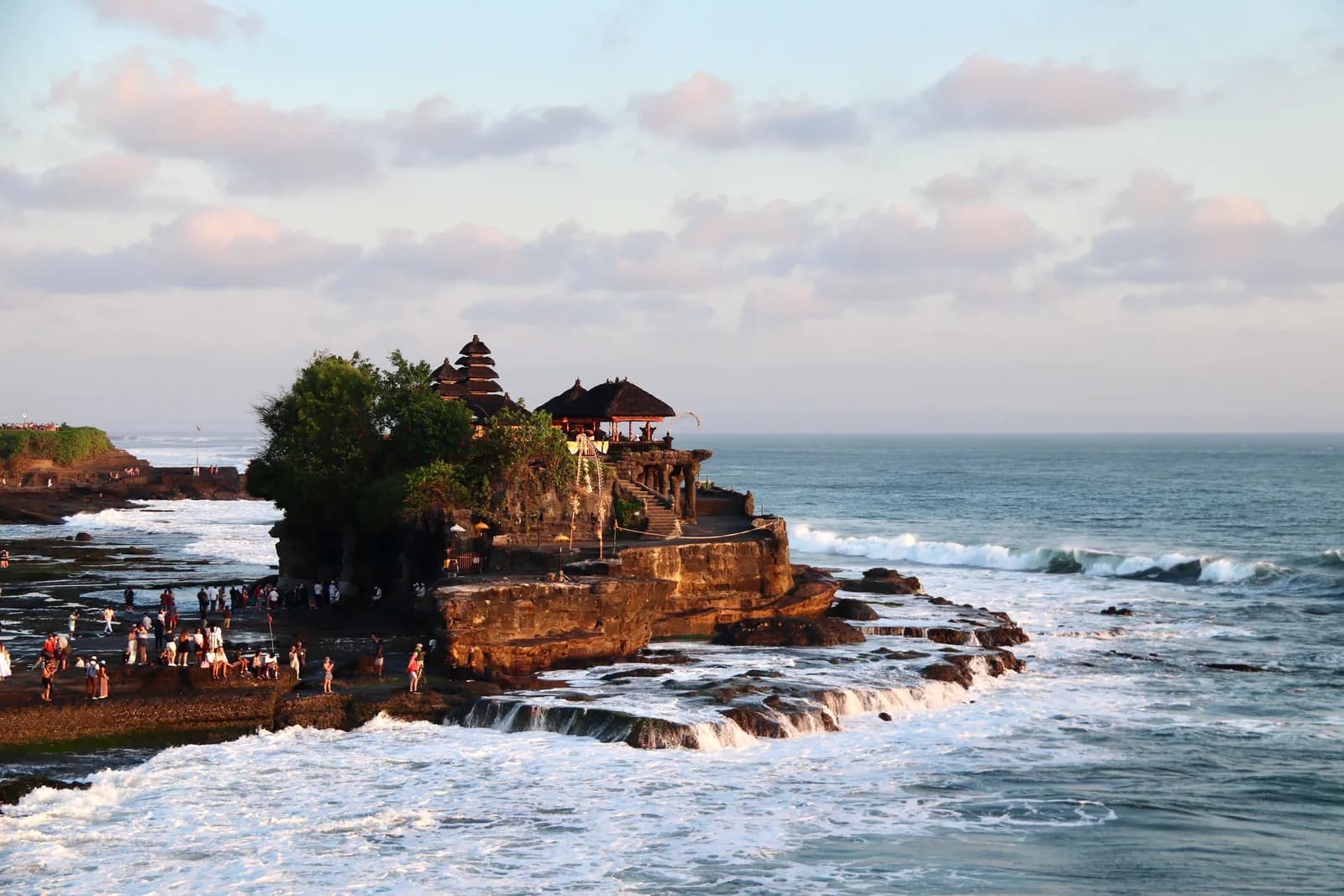
| Tanah Lot | 30 to 45 min north, and the closest thing on this list | The sea temple on its rock, and the one major sight that is genuinely near Canggu. The tide decides whether you see it standing above the water or sitting in it. |
| Taman Ayun | 40 min north east, on the road inland | The royal temple in its moat, quiet at almost any hour, and the natural pairing with Tanah Lot in a single afternoon. |
| Ubud and the interior | 75 to 110 min north east, entirely traffic dependent | Terraces, palace dancing and the base for everything green. Doable as a day, much better as the second half of the trip. |
| The waterfall belt | 2 to 3 h each way from here | Too far for a comfortable day trip out of Canggu. This is the argument for moving inland partway through rather than driving both ways. |
| Uluwatu and the Kecak dance | 70 to 100 min south, worse on the way home | A clifftop temple at sunset and a fire dance in an open amphitheatre. The best evening in the south, and a long drive back through the airport traffic. |
| Nusa Penida | Leave Canggu by 06:00 for the Sanur boat | A very long day from this side of the island, and mostly transfers. Worth knowing the real shape of it before booking. |
The exception is Tanah Lot. It is half an hour up the coast, it is one of the genuinely great sights on the island, and Canggu is the best base in Bali for reaching it before the tour buses. Everything else on the list is a long day, and the honest advice for the waterfalls and the volcano is to move inland for a few nights instead of driving four hours to see them.
Thirty minutes up the coast
Free cancellationTanah Lot at sunset, from Canggu
- ✓Driver and car, which matters on a road that is dark and busy coming home
- ✓Timed for the tide as well as the sunset, which decides what you actually see
- ✓Usually paired with Taman Ayun on the way, so the afternoon is not one stop
- ✓Free cancellation on most listings
Affiliate link. Booking through GetYourGuide costs you nothing extra and supports the guide. Prices are indicative and vary by option and season.
What Canggu costs
Orders of magnitude, not quotes. The gap between the strip price and the warung price one lane inland is the whole story of a budget here.
| What you pay for | Detail | Order of magnitude |
|---|---|---|
| A room | Hostel bed at Echo Beach, up to a villa with a pool in Pererenan | ≈ $12 to $250 a night |
| Airport transfer | Pre booked car for two, one hour and up depending on the time of day | ≈ $15 to $25 |
| Scooter hire | Per day, fuel on top, international permit with the motorcycle category required | ≈ $5 to $8 a day |
| Surf lesson | Two hours at Batu Bolong with a board and an instructor, beginner beach break | ≈ $25 to $40 |
| Board hire | Foam longboard or a shortboard for a half day, straight off the beach | ≈ $5 to $10 |
| Beach club daybed | Minimum spend for two at one of the Berawa clubs, redeemable against the bill | ≈ $40 to $100 |
| Cafe breakfast | The one on the strip with the queue outside it, coffee included | ≈ $8 to $15 |
| Warung meal | Nasi campur and a drink, one lane inland from that same cafe | ≈ $2.50 to $5 |
| One hour massage | Street spa on the strip, not a hotel spa | ≈ $8 to $15 |
| Grab or Gojek scooter | Berawa to Batu Bolong, which is the trip a car cannot do quickly | ≈ $1 to $2 |
Two numbers ruin budgets in Canggu. The beach club minimum spend, which people read as an entry fee. And breakfast, because eating on the strip every morning costs more across a week than the room does in some cases. Neither is a reason to avoid either, but both are worth knowing before the trip rather than at the end of it. Before you land, the visa, the tourist levy and the arrival card add their own line to the total.
Canggu: frequently asked questions
The questions people arrive with, including the two about the sand and the traffic that the booking pages leave out.