Ubud is where Bali kept its art. Dance, gamelan, painting, carving and the temple calendar are all still working here rather than being performed for visitors, which is the difference between this and the beach towns, and it survives despite the shops. It is also the geographic middle of everything worth driving to: the terraces to the north, the waterfalls to the east, the water temples above both. Stay here and you stop spending two hours a day in a car.
What it is not is the place in the photographs. Ubud today is a spread out town of roughly thirty thousand people with two main roads carrying all of its traffic, not a village sitting in a rice field. That gap between the expected Ubud and the actual one is the single largest cause of disappointment on the island, and it is entirely avoidable if you know it in advance and stay in the right part of town.
This page is the transversal part: how long to stay, where to sleep, how to move, what belongs to the town and what merely gets sold under its name. The individual sights each have their own page, linked through the text and listed below.
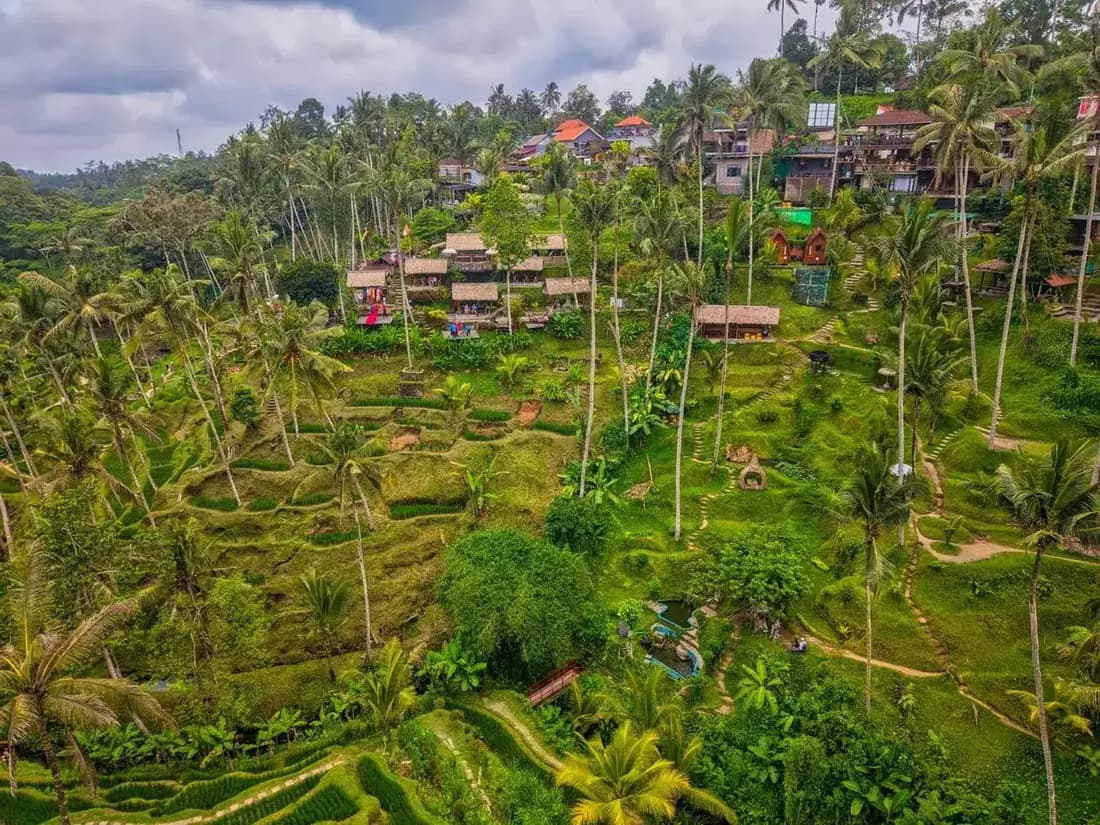
One driver, one day, four sights
Day tours and activities around Ubud
- ✓Hotel pickup, which matters because parking in the centre does not exist
- ✓Terraces, water temples and waterfalls combine into one day rather than three
- ✓The pre dawn departures, which are the only version of Batur worth doing
- ✓Free cancellation on most listings if the forecast turns
Affiliate link. Booking through GetYourGuide costs you nothing extra and supports the guide. Price and rating checked September 2026. Both move with season and demand.
On this page
The Ubud in the photographs, and the Ubud you arrive in
Worth saying plainly before anything else, because every other decision on this page follows from it.
The image most people carry into Ubud is a wooden villa on stilts above a green valley, a woman carrying offerings down an empty lane, mist in the palms. All of those things exist here. None of them is what the centre of town looks like. The centre is a dense grid of shops, cafes, spas, tour desks and parked scooters, built along two narrow streets that were never designed to carry the traffic now on them, and from about ten in the morning until early evening it is congested in a way that surprises people who came for calm.
The reason is simple geography. Ubud sits on a ridge between the Wos river valleys, which is why the countryside is so close and why there is nowhere to widen a road. Jalan Raya runs east to west through the middle and Monkey Forest Road runs south off it. That is essentially the whole network. Every tour bus, delivery van, hotel transfer and rented scooter in the region funnels through those two lines, and there is no bypass.
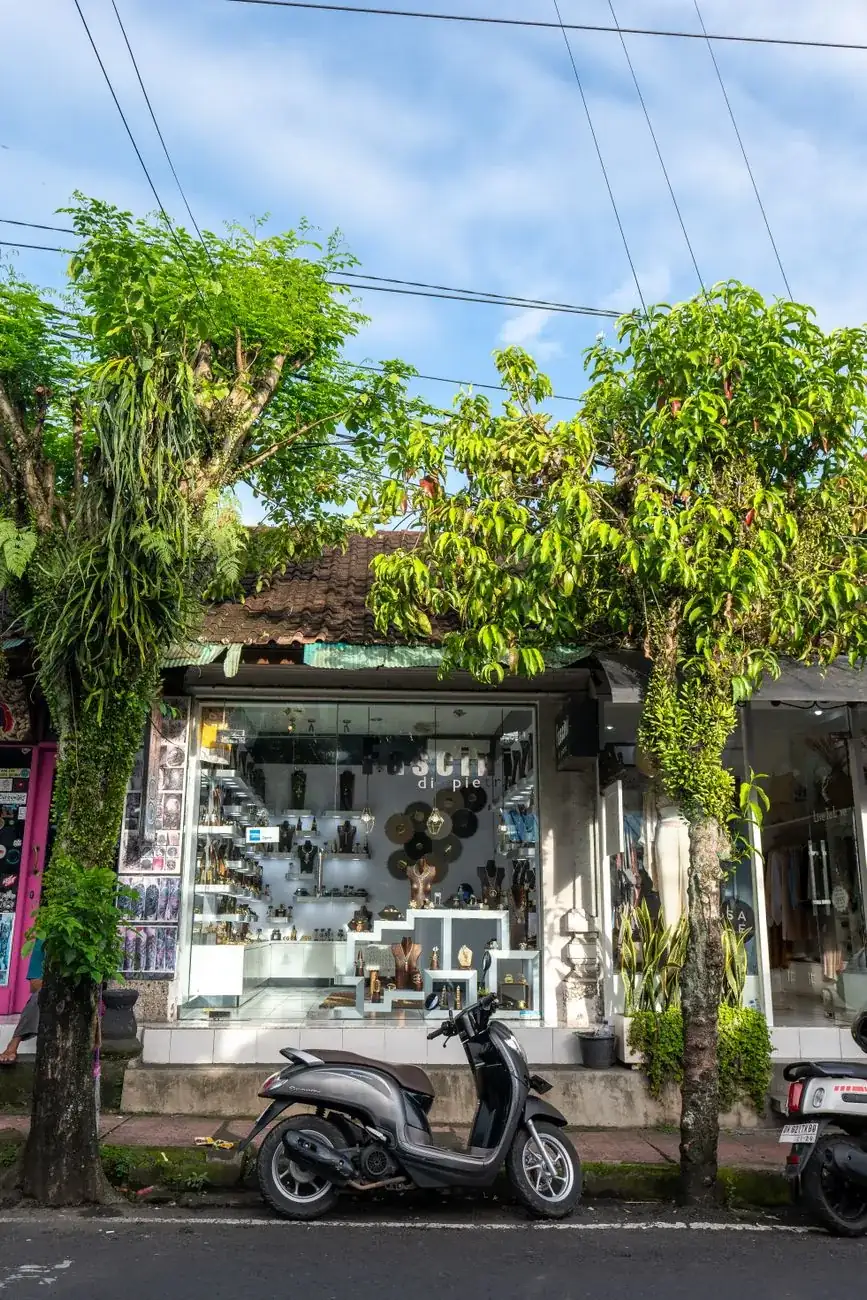
What has also changed is scale. The administrative area now absorbs a string of villages, Penestanan, Nyuh Kuning, Pengosekan, Sayan, Petulu, that were separate places within living memory and are now continuous with the town. When a hotel says it is in Ubud, it may be twenty minutes and one river gorge from the market, and that difference decides whether your evening ends with a walk or with an app.
So the honest verdict is this: Ubud is not undiscovered, not quiet, and not a village. It is a busy small town with an unusually good cultural life, unusually good food, and countryside starting ten minutes out in three directions. People who arrive expecting the first list are disappointed by lunchtime. People who arrive expecting the second stay longer than they planned, which is by some distance the most common outcome.
The practical consequence is that your choice of neighbourhood matters more here than in any other town on Bali. Sleeping on Monkey Forest Road and sleeping in the Ayung valley produce two different holidays under the same name, and both are called Ubud on the booking sites.
How many days, and what really fits in one
Every list of things to do in Ubud is written as though the items are free to combine. They are not. Two sights north of town plus one waterfall east of town is not a day, it is a day of driving with three short stops in it.
Four honest lengths, from a single day to five. Pick the length you actually have. What changes between these plans is not the list of sights, it is how much driving each day can absorb before it stops being enjoyable.
| Length | Nights | What fits | Transport |
|---|---|---|---|
| One day | No night, or one | Town only, no exceptions | None needed |
| Two days | Two nights | Town, then one day north | One driver day |
| Three days | Three nights | Town, north loop, waterfalls | Two driver days |
| Five days | Five nights | Everything, plus Batur and a repeat day | Three driver days, plus a Batur transfer |
One day
A single day gets you the town and nothing else, and it is the reason a large share of the bad reviews exist. People arrive from the beaches at eleven, sit in traffic, walk a shopping street in the heat, and leave at four convinced Ubud is overrated. If one day is genuinely all you have, spend it entirely inside walking distance and do not try to add a rice terrace to it.
- 06:30 to 08:00. Campuhan Ridge Walk, out and back. Cool, empty, free, and the only hour of the day the ridge is pleasant. It is a grass spine between two rivers, not a walk through rice fields.
- 08:00 to 09:00. Breakfast in town, then the market. The market is a working produce market before about nine and a souvenir hall after it. That hour is the whole difference.
- 09:30 to 11:00. Monkey Forest. Ninety minutes covers the loop properly. Nothing loose on you, no food in a bag, no plastic bottle in hand.
- 11:00 to 14:00. Lunch and the town itself. The palace takes fifteen minutes at most. Saraswati temple next door takes ten. Both are two minutes apart on foot.
- 14:00 to 17:00. Sit down somewhere with a view. Massage, pool, or a cafe. The middle of the afternoon in the centre is hot and gridlocked, and fighting it costs more than it returns.
- 18:00 to 20:00. Dance performance at the palace courtyard. Around an hour and a half, tickets sold on the spot in the late afternoon. This is what the palace is actually for.
Skip at this length: Tegallalang, which is forty minutes each way in traffic, any waterfall, all of which are east of town, Tirta Empul, which needs a half day to be worth doing, the Batur sunrise trek, which starts the night before. Not needed. Walk everything, take a ride-hailing scooter for the last stretch home.
Two days
Two days is the first length that works. One day inside the town on foot, one day out of it in a car. The mistake at this length is splitting both days between town and countryside, which puts you in traffic twice instead of once and finishes neither.
- Day 1, 06:30 to 13:00. The whole town on foot. Ridge walk, market, Monkey Forest, lunch. Exactly the one day plan, compressed into a morning.
- Day 1, 15:00 to 19:00. Cooking class or spa, then the dance. Most cooking classes start with the market and run four to five hours, so an afternoon class replaces dinner rather than preceding it.
- Day 2, 07:00 to 08:00. Leave for Tegallalang before the coaches. Forty minutes north at seven, an hour and a quarter at nine. The road is the same road.
- Day 2, 08:00 to 11:00. Tegallalang, then the swings above it. The terraces themselves take under an hour. Everything else there is built on top of them.
- Day 2, 11:30 to 15:00. Tirta Empul, then lunch on the way back. Twenty minutes from Tegallalang. Bathing in the spring means a change of clothes and a sarong, and it is the single most interesting thing you can do in the area.
- Day 2, 16:00 onwards. Back in town, early evening. The drive back into Ubud after four is the worst hour on that road. Aim to be inside before it.
Skip at this length: the waterfalls, which are a separate direction entirely, Mount Batur, unless you give up a full night of sleep, Nusa Penida, which does not work as a day trip from here. One car with a driver for day two, roughly seven to ten hours. This is the standard way it is done.
Three days
Three days is the honest answer to how long Ubud needs, and it is enough. Town, the northern loop of terraces and water temples, and the waterfall circuit east of town, each with its own day. Anything beyond this is either repeating yourself or leaving the region.
- Day 1. The town, on foot, ending with the dance. Ridge at dawn, market before nine, Monkey Forest, palace, performance at sunset.
- Day 2. North: Tegallalang, Tirta Empul, Gunung Kawi. Leave at seven. Gunung Kawi is a stone shrine complex cut into a river gorge and it is reached down about three hundred steps, which you also climb back up.
- Day 3, 08:00 to 14:00. East: the waterfall circuit. Three falls within twenty minutes of one another. Tukad Cepung is a slot canyon and only works with sun overhead and no recent rain.
- Day 3, 15:00 onwards. Whatever you liked most, again. The best afternoon of a three day stay is usually the one that repeats something rather than adding to the list.
Skip at this length: Batur, unless you swap it in for the waterfall day, a beach day, which costs two hours of driving each way. Two full driver days out of three. On the town day you want no vehicle at all.
Five days
At five days Ubud stops being a sightseeing base and starts working as somewhere you live for a week. This is the length at which the cooking class, the yoga, the long lunch and the second visit to a place you liked all become possible, and it is also the length at which the Batur sunrise trek stops wrecking the rest of the trip.
- Day 1. The town, slowly. Same ground as the one day plan, with time to sit down in the middle of it.
- Day 2. North loop: terraces and water temples. Tegallalang, Tirta Empul, Gunung Kawi, back by mid afternoon.
- Day 3. Batur sunrise, then nothing. Pickup around 02:00, summit for sunrise, back in Ubud by ten. The afternoon is written off and that is fine on a five day stay.
- Day 4. Waterfalls east, or the river. The three fall circuit, or white water rafting on the Ayung, which is a half day and ends with a climb back out of the gorge.
- Day 5. Cooking class, market, or a craft workshop. Silver work in Celuk, mask carving in Mas, or a full day cooking course that starts at the produce market at seven.
Skip at this length: nothing in the region, at this length everything fits, still not Nusa Penida, which wants its own night on the island. Three driver days out of five, plus one pre dawn transfer for Batur.
The arithmetic behind that planner is worth stating explicitly. Nothing around Ubud is far, and everything around Ubud is slow. Tegallalang is eleven kilometres from the market and takes thirty five minutes at seven in the morning, over an hour at ten. The waterfalls east of town are twenty to thirty kilometres away and take an hour. A day that involves both directions spends three hours in a vehicle, and those three hours come out of the same day as the walking, the queueing and the lunch.
The other constraint is the clock rather than the map. The good hours here run from about six in the morning to ten, and again from four in the afternoon until dark. In the middle of the day the light is flat, the sites are full and the roads are worst. Plans that ignore this produce the classic Ubud day: arrive at Tegallalang at half past ten with four coaches, queue for a swing, and drive back in the heat.
If you only take one thing from this section: one direction per day. North for terraces and water temples, east for waterfalls, or nothing at all and stay in town on foot. Three days lets you do all three properly, which is why three is the number this page keeps returning to.
Getting around Ubud without losing the day to it
Five options, and the honest boundary of each one. Costs are orders of magnitude and move with the season.
| How | Best for | Rough cost |
|---|---|---|
| On foot | The whole centre, not terraces or waterfalls | Free |
| Ride-hailing app | Short trips, the airport run. Patchy pickups near the market | ≈ $1 to $3 across town |
| Rented scooter | The northern road, if you already ride | ≈ $6 a day, fuel on top |
| Car with a driver | Full days out: terraces, temples, waterfalls | ≈ $40 to $55 for eight to ten hours |
| Organised day tour | First visits, early starts. Less flexible | ≈ $28 to $65 per person |
On foot, pavements appear and disappear, so walk facing traffic on the narrow stretches. A rented scooter is genuinely risky in the centre at any hour, and at four in the afternoon on every road. An organised day tour is only worth it if it leaves before dawn, since the rest is a driver with a fixed route and a shared vehicle.
The line in that table people ask about most is the ride-hailing one. Grab and Gojek both operate in Ubud, and both are tolerated unevenly depending on where you stand. Local driver associations hold certain pitches, particularly around the market and the central junctions, and an app driver will often decline a pickup there or ask you to walk a hundred metres. This is a negotiated local arrangement rather than a scam or a danger, and it resolves itself if you walk two streets away from a taxi rank before ordering. Drop offs are almost never contested. The first ride, up from the airport, is a separate call: the Bali airport to Ubud guide compares Grab, the taxi counter and a booked driver for the hour you land.
For anything outside town, a car with a driver for the day is the default and it is not a luxury. Eight to ten hours costs about the same as two scooter rentals once you add fuel and parking, it removes the problem of riding an unfamiliar bike on a wet road, and the driver waits at each stop rather than charging by the trip. Fuel is normally included, entry tickets and parking are not. Agree the itinerary before you leave, confirm that entrance fees are yours to pay, and expect a gentle suggestion of a coffee plantation somewhere in the middle, which you are free to decline.
Renting a scooter is genuinely useful if you already ride, and genuinely risky if you do not. The centre is the wrong place to learn: narrow lanes, deep drainage gutters at the edge of the road, dogs, and a constant stream of vehicles stopping without warning. Riders without the motorcycle category on an international permit are uninsured, and that is the part that turns a scraped knee into a serious financial problem.
In and around town
What is worth your morning, what it costs, and the hour that makes each one better.
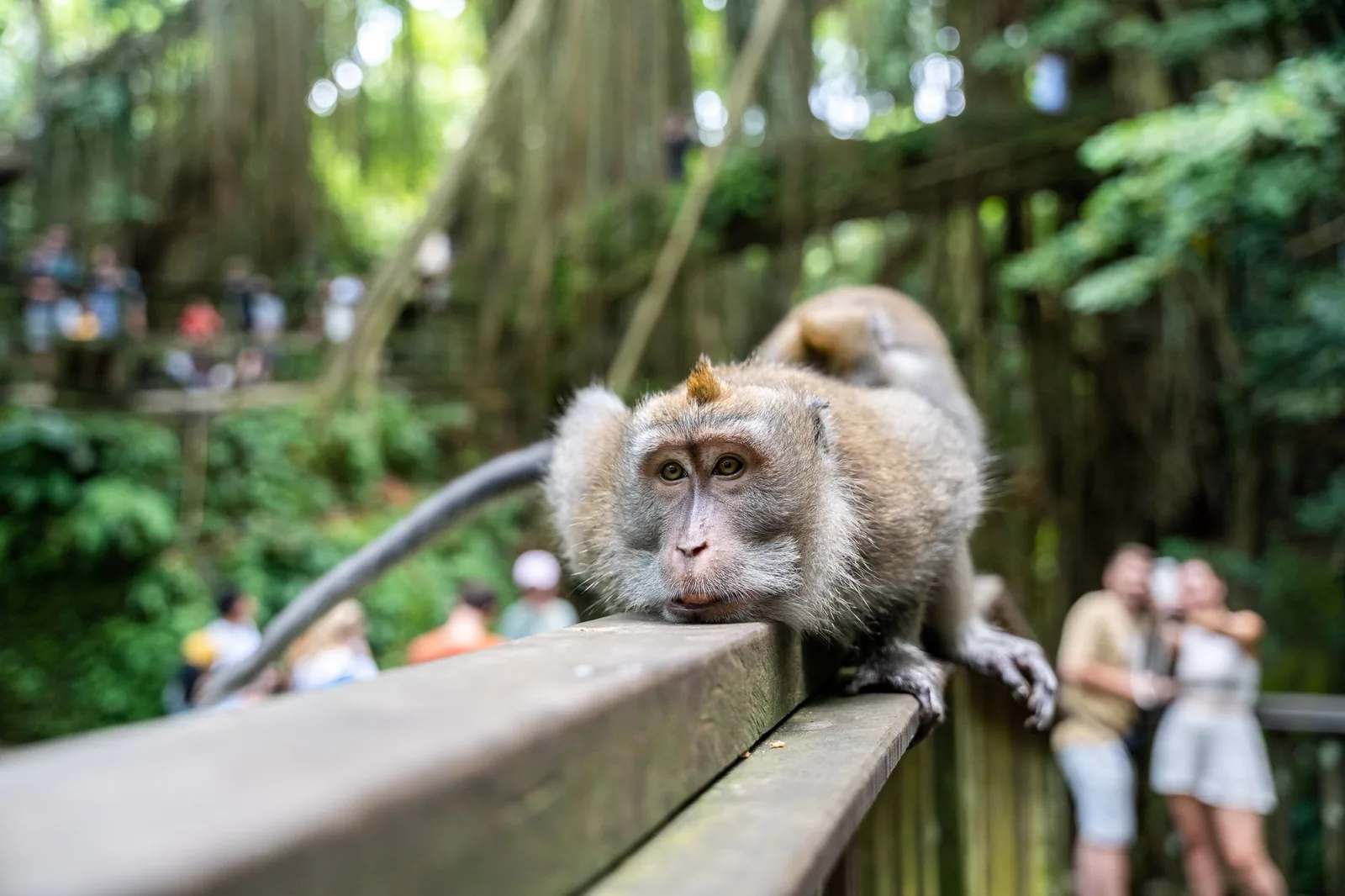
Ubud
Sacred Monkey Forest Sanctuary: The Macaques, Honestly
Twelve hectares, three temples and around 1,200 wild long-tailed macaques. What they take, how to react when one climbs on you, and what a bite means on Bali.
Read the guide →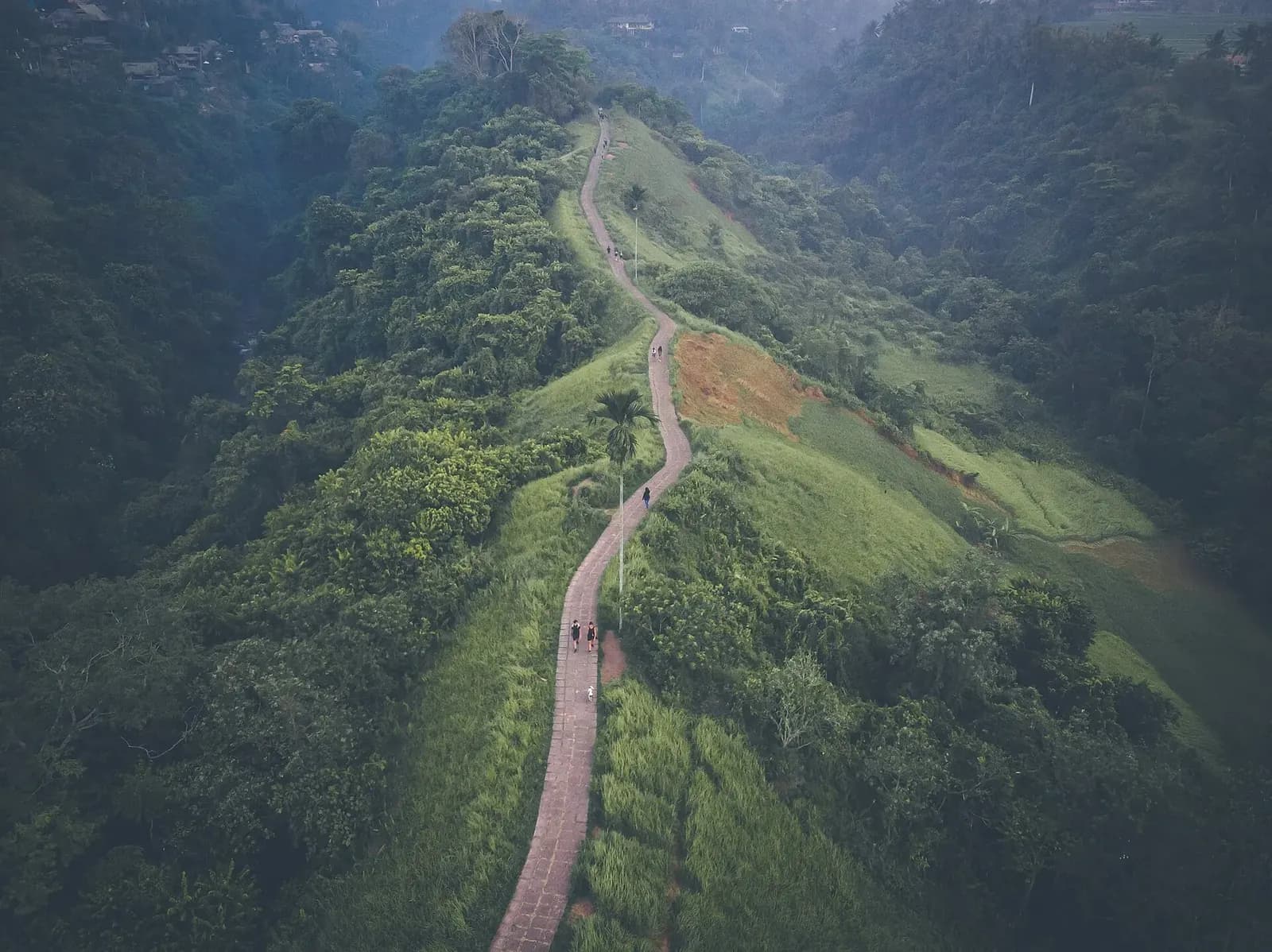
Ubud
Campuhan Ridge Walk: Where It Starts, and Why Sunrise Wins
A grass ridge between two river gorges, not a rice terrace walk. Where the trail really begins, where to leave the scooter, and how to get back easily.
Read the guide →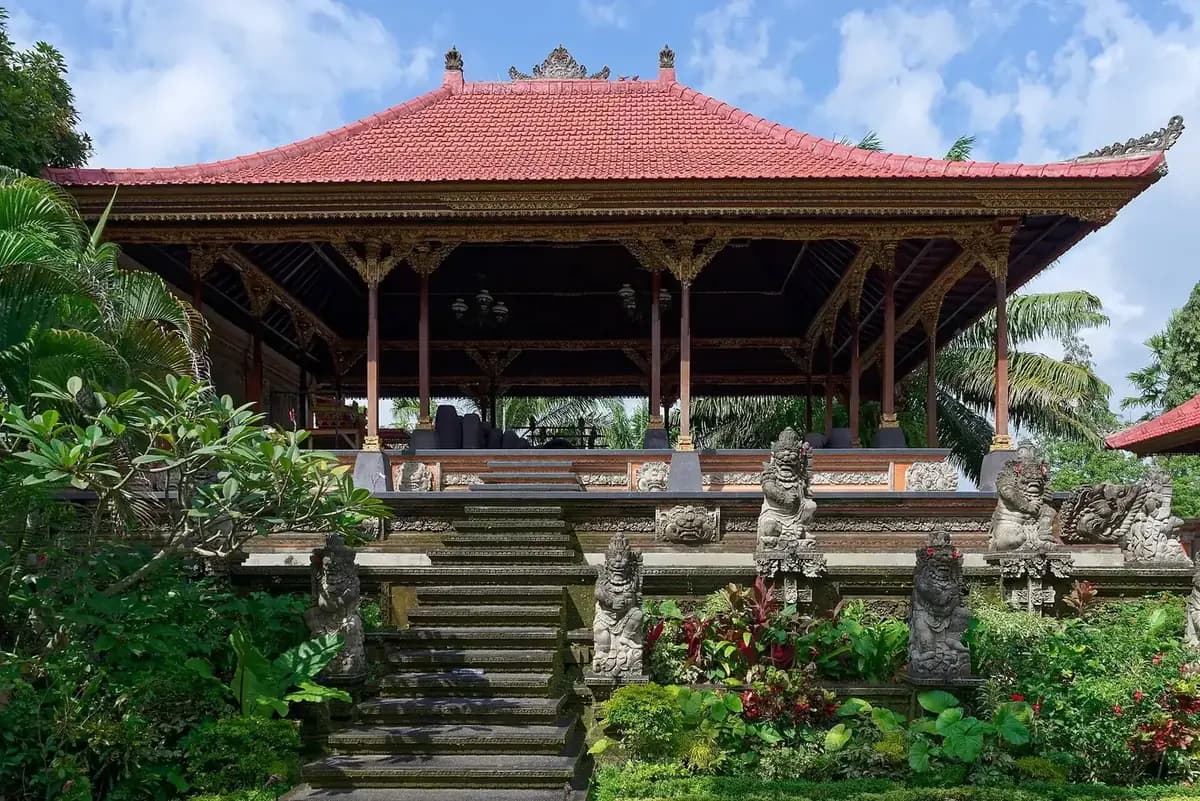
Ubud
Ubud Palace: Free by Day, Worth Planning For at Night
Ubud Palace takes fifteen minutes and costs nothing. The reason to come is the evening dance in the courtyard: which show is which, and where to sit.
Read the guide →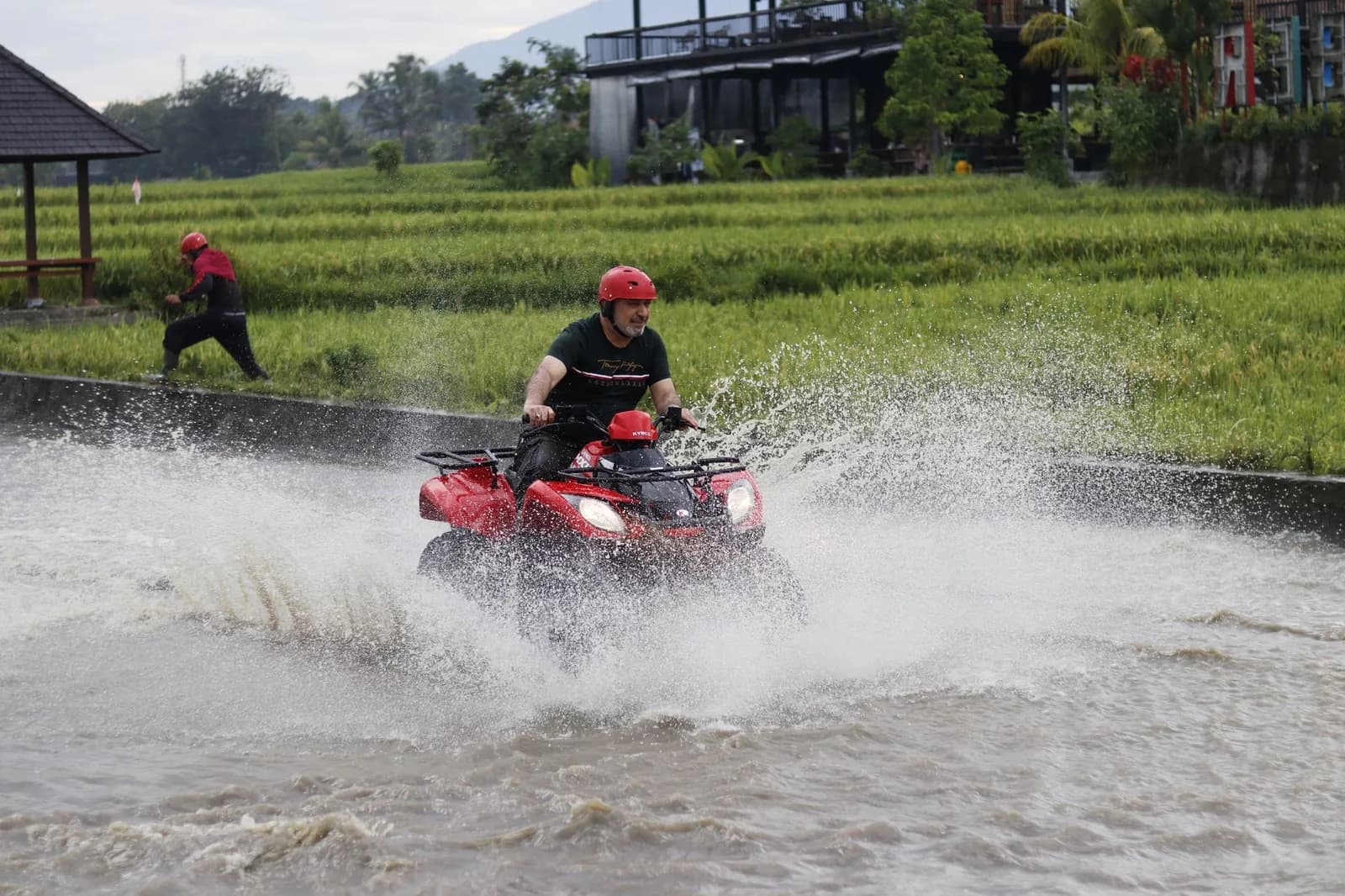
Ubud
ATV Ubud: Quad Biking Tracks, Real Price, Solo or Tandem
Which Ubud ATV track to book, what a quad ride really costs for your group, solo or tandem, the age rules, what to wear and the rafting combo.
Read the guide →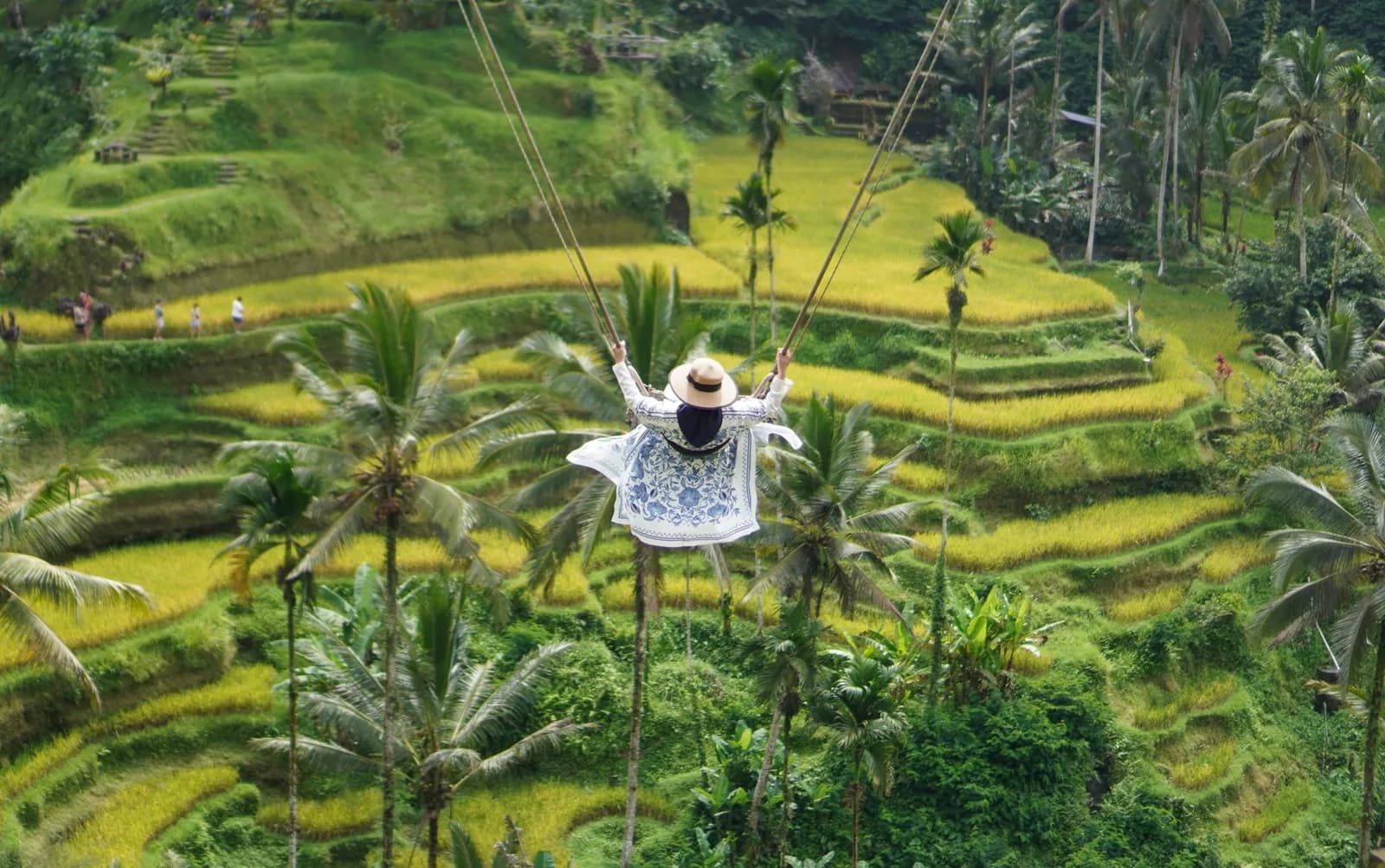
Ubud
Bali Swing: Which One You Are Actually Booking
Two businesses claim the name and they sit on opposite sides of Ubud. Every operator sorted by village, what each ticket really covers, and what the day costs.
Read the guide →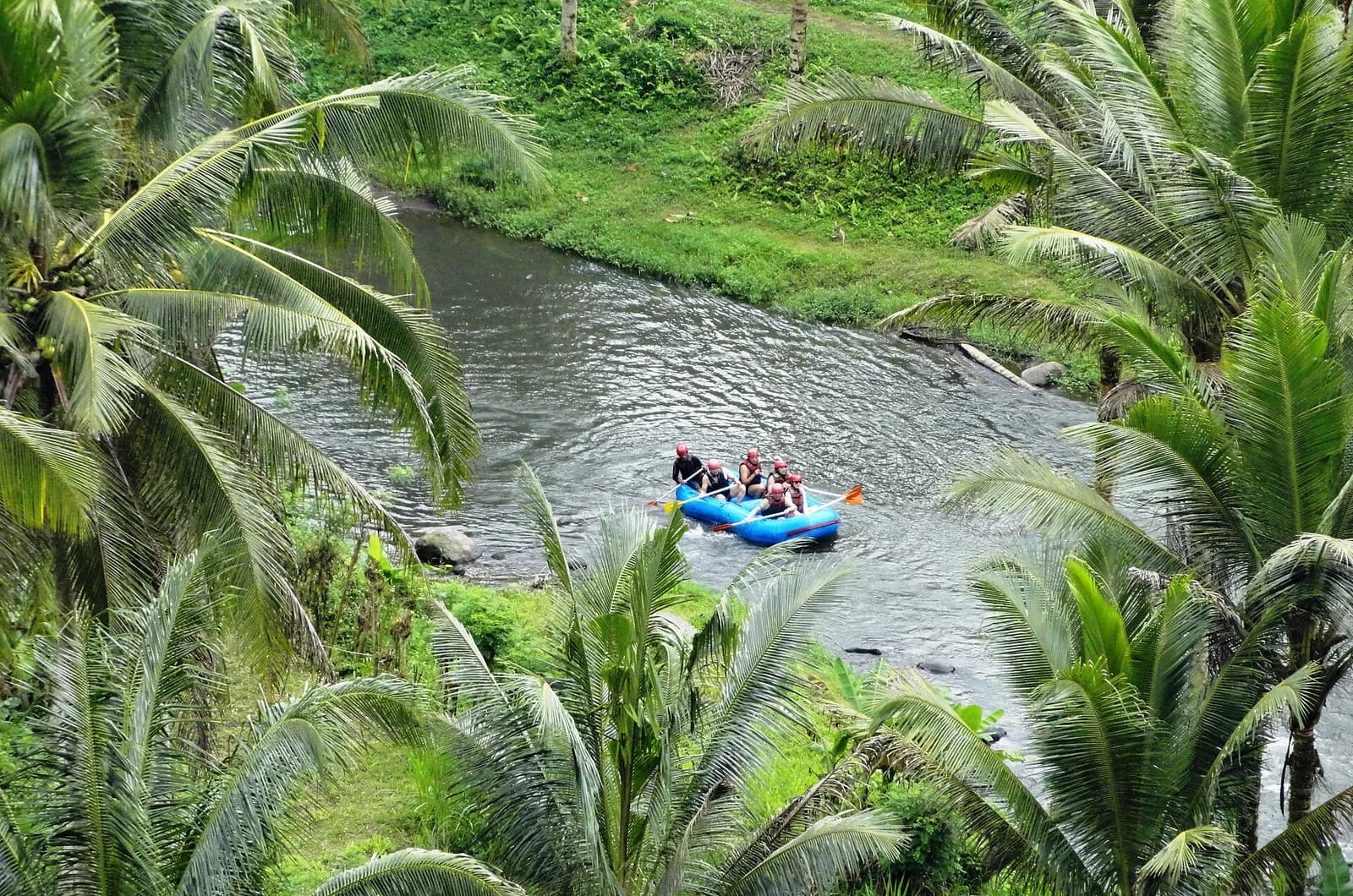
Ubud
White Water Rafting Bali: Ayung or Telaga Waja, Price, Age
Ayung near Ubud or Telaga Waja in the east: which river suits you by month, age and hotel, what a trip really costs with transfer, and the steps out.
Read the guide →What is actually worth doing in the town itself
Not a list of twenty eight. The half dozen things inside walking distance that people still talk about afterwards, with the hour that makes each of them work.
The Monkey Forest, which is a temple with monkeys in it
Twelve hectares of nutmeg forest at the bottom of Monkey Forest Road, with three temples inside it and around a thousand long-tailed macaques living wild across the site. It is a sanctuary managed by the village of Padangtegal, not an attraction built around animals, and the temples inside are still in use. Allow ninety minutes, go at opening, and carry nothing loose: sunglasses on your head, a phone in an open hand, a water bottle, a bag with snacks in it, all of these are taken regularly and the monkeys are far quicker than you are.
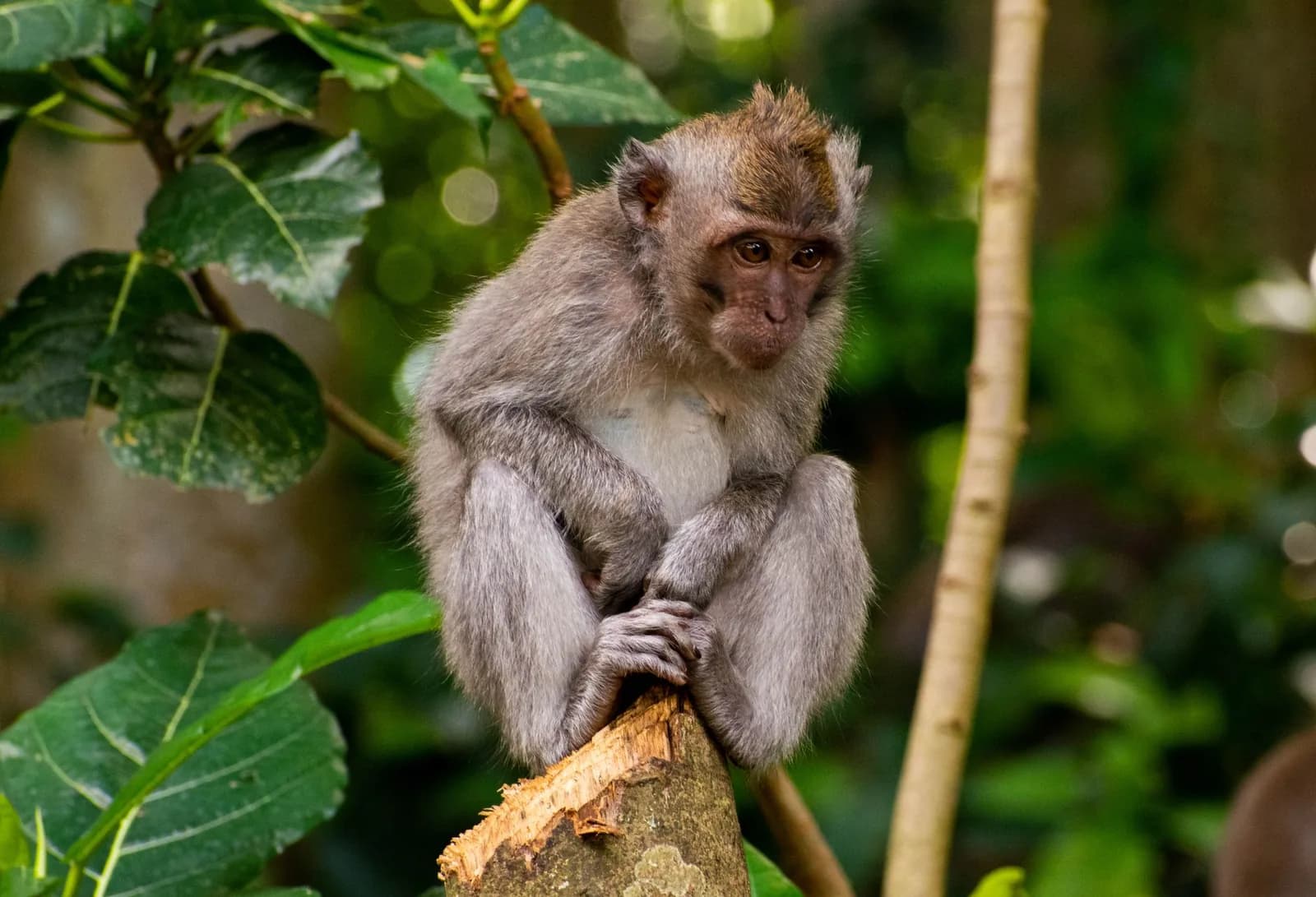
The rule that matters is not to resist. A macaque that has decided to take something will escalate if you pull back, and bites do happen, which on Bali means a rabies conversation at a clinic rather than a plaster. Do not feed them, do not make eye contact with a large male, and keep small children by the hand rather than running ahead.
It also happens to be the shortest walking route between the centre and the village of Nyuh Kuning to the south, which is a pleasant thing to know if you are staying down there. The forest closes in the early evening, so the walk home after dinner goes around the outside instead.
A cooking class, which is the activity people rate highest afterwards
Of everything sold in Ubud, the Balinese cooking class is the one that most consistently outperforms expectations, and it is strangely absent from the standard lists. The good ones start at the produce market at about seven in the morning, where you are walked through the ingredients while it is still a working market, and then continue at a family compound outside town for four or five hours of actual cooking.
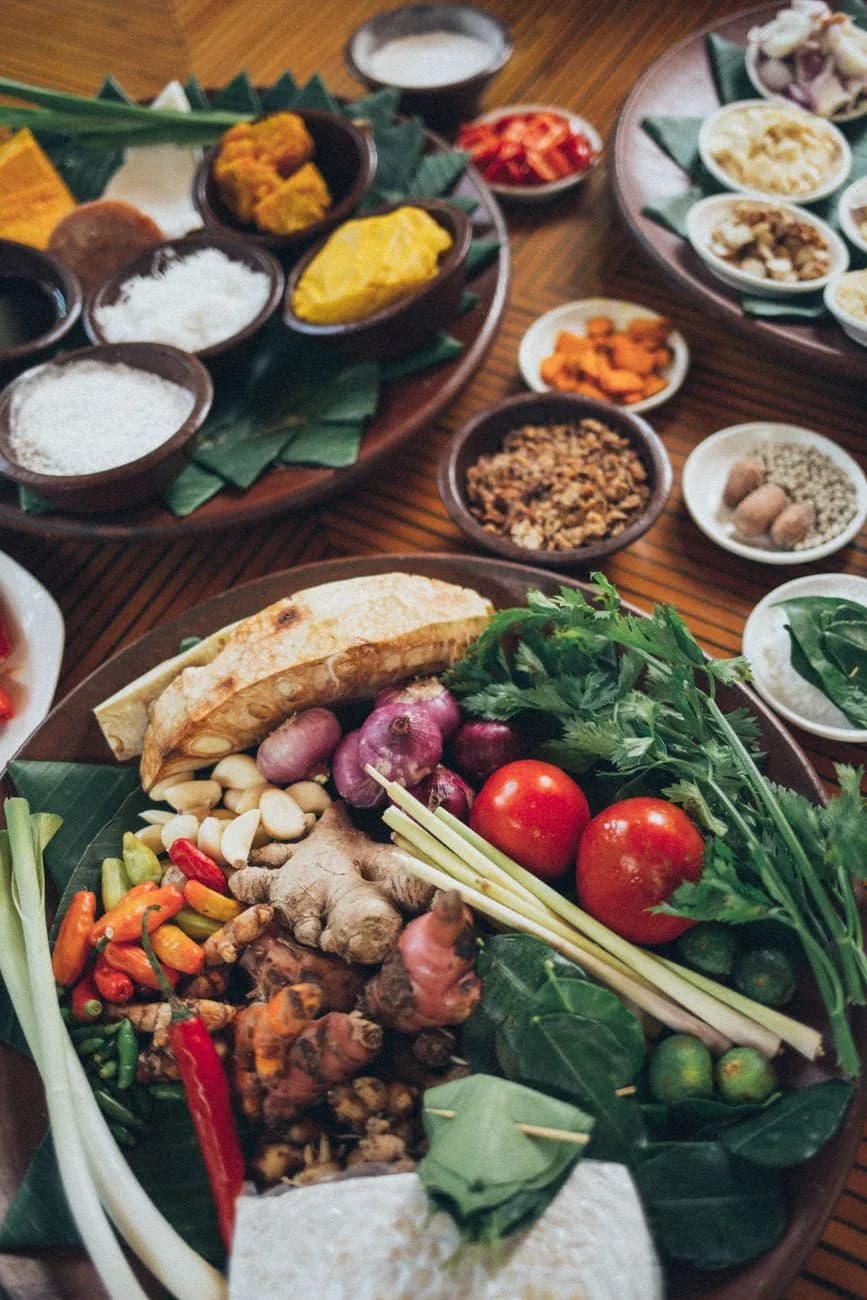
What you learn is the base paste, the bumbu, which is the reason Balinese food tastes different from Thai or Indonesian food further west. Around that you will usually make a satay lilit, a vegetable dish with grated coconut, a curry and a sambal, and you eat all of it at the end, which means the class replaces lunch or dinner rather than sitting alongside it.
Two things to check before booking: whether the market visit is included, since the ones without it start at ten and lose the best part, and whether they cook vegetarian on request, which most do but not all. Half day classes run at roughly the cost of a good dinner for two.
The market before nine, and the palace after seven
Ubud market is two markets sharing a building on different shifts. Before roughly nine in the morning it is the produce market for the town: offerings, palm sugar, live chickens, banana leaf, sacks of chillies, and almost no visitors. After that the produce traders pack up and the souvenir stalls take the space, and by eleven it is a hall of sarongs, rattan bags and wooden carvings where everything is negotiated. Both are worth seeing. Only one of them is what people mean when they recommend the market.
Directly opposite is Puri Saren Agung, the Ubud palace. It is worth being clear that the palace itself is small and takes about fifteen minutes: a few courtyards, some carved gates, and most of the compound closed because the royal family still lives in it. Nobody should plan a morning around it.
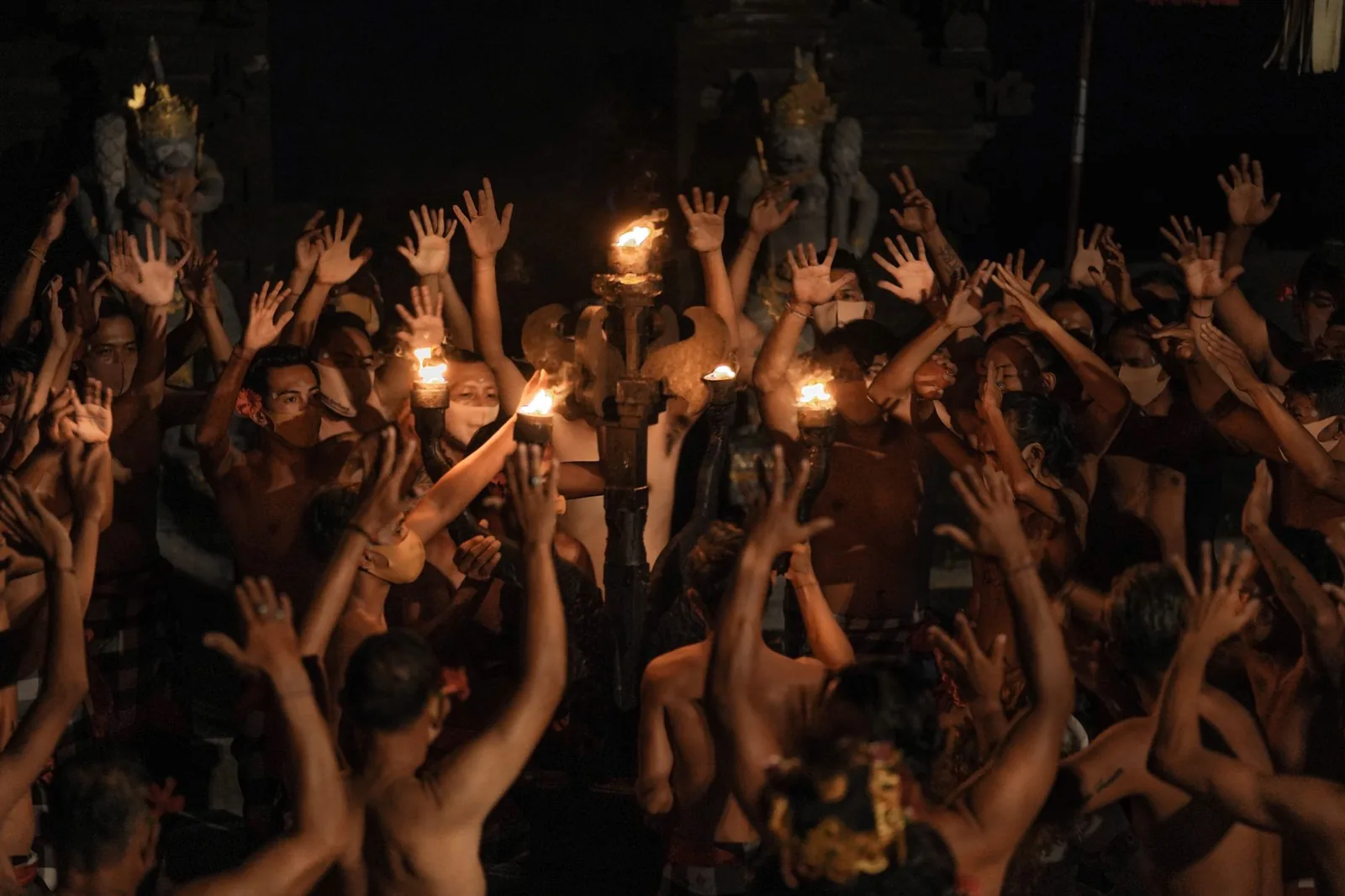
Its real function is in the evening, when the front courtyard becomes a stage for legong and barong performances at about half past seven, with a live gamelan and tickets sold on the spot during the afternoon. That performance, under the gates with the drums going, is one of the best hours you will spend in Bali, and it is the reason the palace is on this page at all. Saraswati temple, two minutes west with its lotus pond, is the Ubud Water Palace: it now charges 65,000 IDR, takes half an hour, and hosts its own dance six nights a week.
Cafes, warungs and the ridge walk
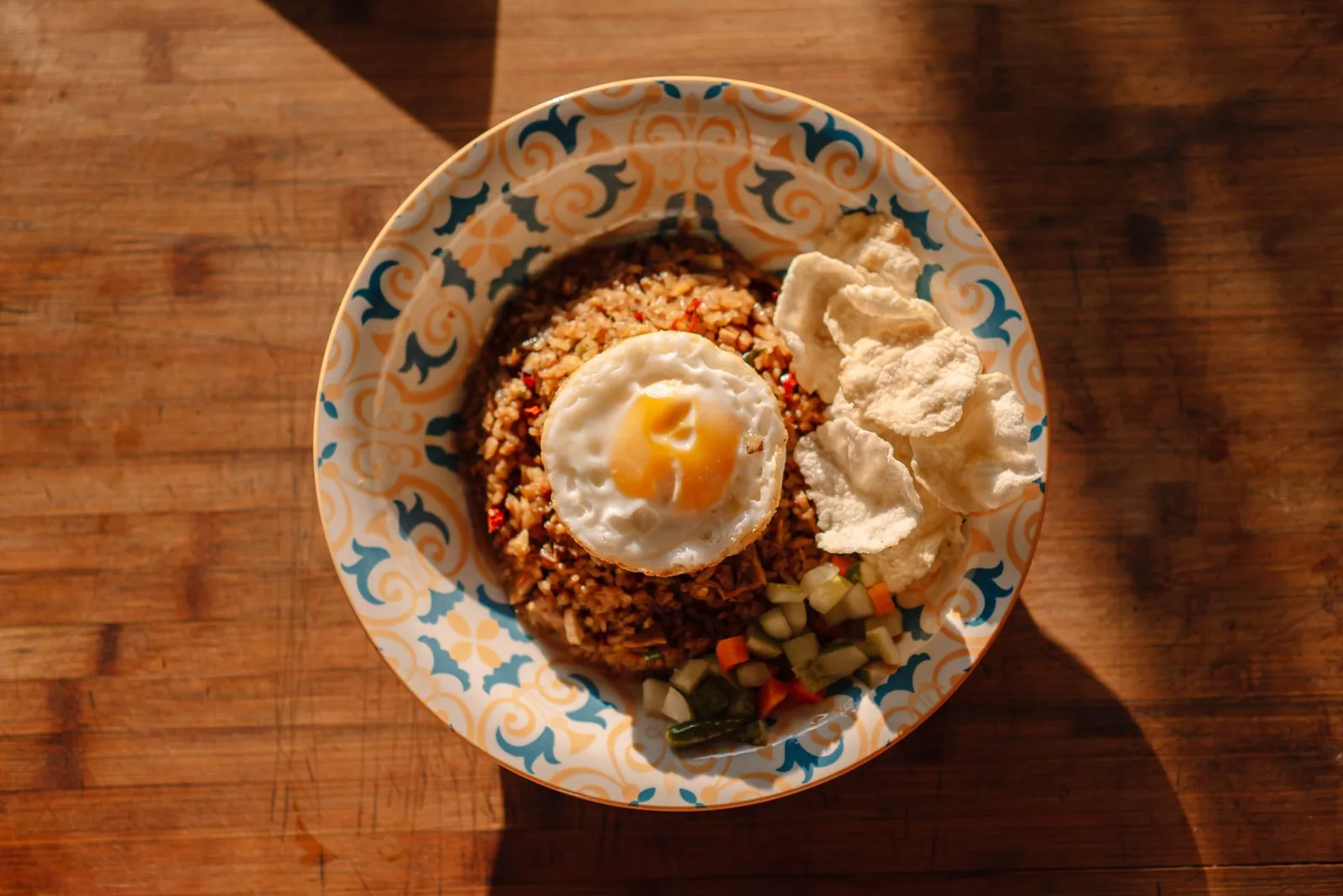
Ubud has the best eating on Bali outside the southern beach strip, and it runs across an unusually wide range. A family warung and a designed cafe fifty metres apart can differ by a factor of five on the same dish, and the warung is frequently the better plate. The town is also the vegetarian and vegan capital of the island by a long way, which is a legacy of the wellness scene and is genuinely useful whatever you eat.
Coffee is its own subject here. Ubud has serious specialty roasters as well as the plantations on the road north that exist mainly to sell civet coffee to tour groups. The plantations are free to enter, the tasting flight is free, the civet coffee at the end is not, and the animals are frequently caged in conditions worth looking at before you decide. The roasters in town are the better coffee by a distance.
For the morning, the Campuhan Ridge Walk is the best free thing in town, with one correction that is worth making because the internet gets it wrong constantly: it is a grass ridge between two river valleys, not a walk through rice terraces. About two kilometres of open spine with tall grass on both sides, no shade whatsoever, and a temple at the trailhead. Go at half past six and it is beautiful. Go at eleven and it is an exposed hill in full sun.
What gets sold as Ubud but is not in Ubud
Most of the images attached to the name are of places between thirty minutes and an hour and a half away. That is not a complaint, it is a planning fact, and it is the reason a car matters here.
| Place | From the centre | Time on site | Hour that works | What to know |
|---|---|---|---|---|
| Campuhan Ridge Walk | 10 min, or a 15 min walk | 1 to 1.5 h | 06:30, before the sun clears the ridge | A grass spine between two river valleys. There are no rice terraces on it. |
| Monkey Forest | In the centre, walkable | 1 to 1.5 h | Opening, around 09:00 | A real forest temple complex with about a thousand macaques living in it. |
| Ubud Palace | In the centre, walkable | 15 min, plus the evening show | Late afternoon for tickets, 19:30 for the dance | Small, free, and over in minutes. The dance in the courtyard is the point. |
| Tegallalang rice terrace | 35 to 70 min north | 1 to 2 h | 07:00, the coaches arrive around 09:30 | Not a UNESCO listed site in its own right, whatever the signs on the road say. |
| Tirta Empul | 30 to 45 min north | 1.5 to 2 h | Opening, or after 15:00 | A working purification spring. Bathing is allowed and it is the reason to go. |
| Tegenungan waterfall | 30 min south east | 1 h | Opening, it is the busiest fall on Bali | The closest one to Ubud, which is exactly why it is the most crowded. |
| Tukad Cepung and Tibumana | 50 to 70 min east | 2 to 3 h for both | 10:00 to 12:00 for the light shaft at Cepung | A slot canyon and a curtain fall, twenty minutes apart. Half a day together. |
| Mount Batur sunrise | 75 to 90 min north, leaving around 02:00 | 4 h on the mountain | Summit for 06:00 | Sold from every shop in Ubud. It is a night out, not a morning out. |
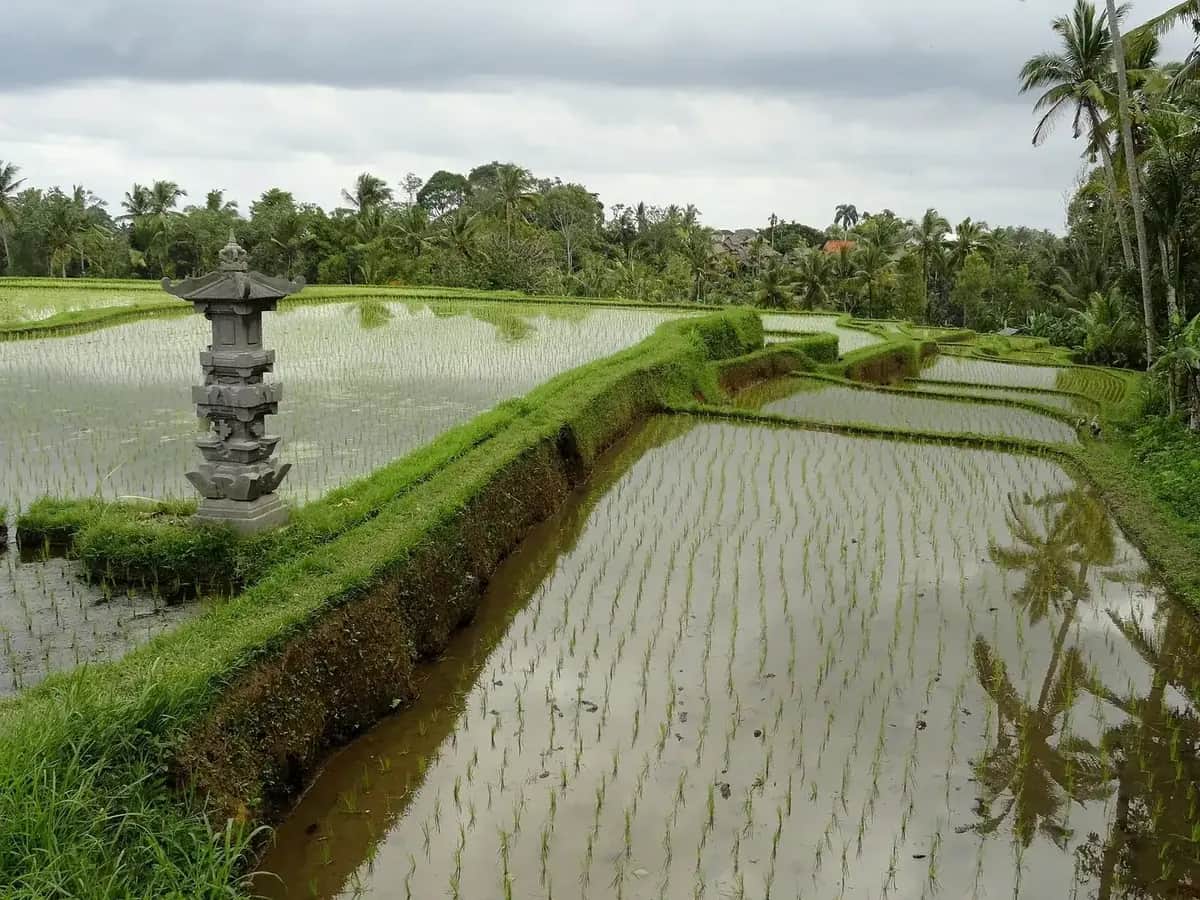
North of town the road climbs through Tegallalang and on towards Kintamani, and it holds three of the best half days on the island. Tegallalang is the terraced valley in every photograph of Bali, and it is worth clearing up one thing about it: Tegallalang is not itself a UNESCO listed site. The listing covers the subak irrigation system through specific places, notably Jatiluwih and the temples of the Pakerisan watershed, and Tegallalang is not among them. It is beautiful, it is worth the drive at seven in the morning, and it is not the thing the sign at the entrance implies.
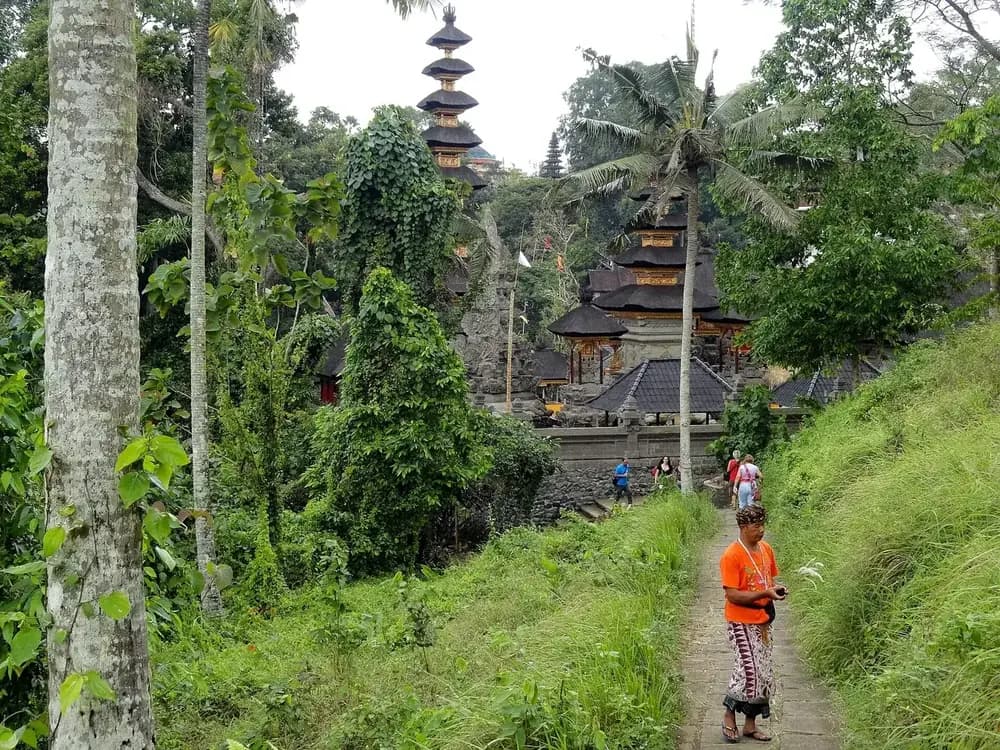
Twenty minutes further on is Tirta Empul, the purification spring, where Balinese families queue at a row of stone spouts to bathe. Visitors may join the ritual, which requires a change of clothes and a sarong, and it is the single most interesting thing you can do within an hour of Ubud. It belongs to the Pakerisan group that is actually inside the UNESCO listing. Gunung Kawi, nearby, is a set of shrines cut into the rock of a river gorge and reached by about three hundred steps down, all of which you climb back up.
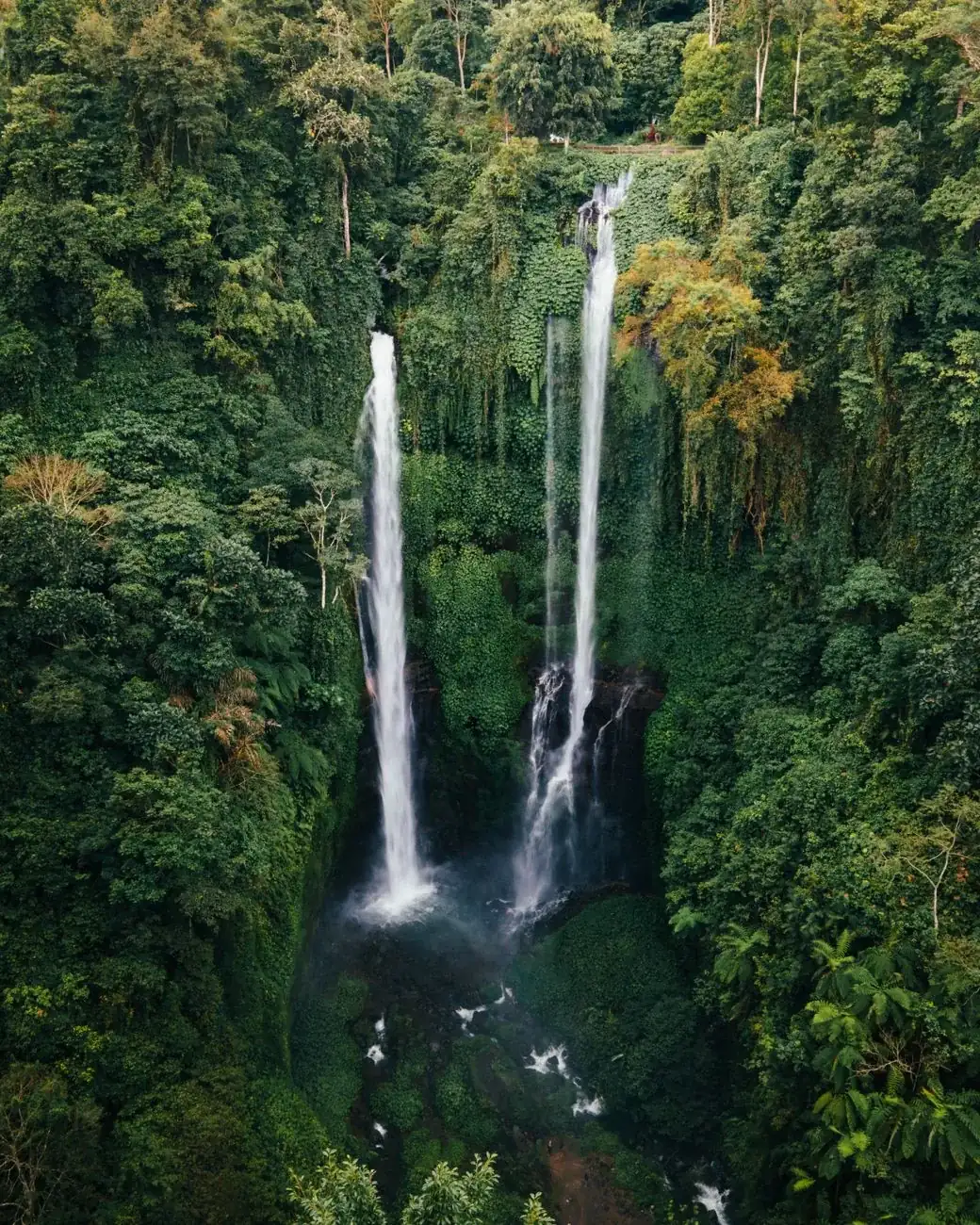
East of town is the waterfall country. Tegenungan is thirty minutes away, the closest and by some distance the busiest. Tukad Cepung and Tibumana sit twenty minutes apart an hour east, and together with Kanto Lampo they make one of the best half days in central Bali. Cepung is a slot canyon and only produces its famous shaft of light in the middle of the day, with no recent rain.
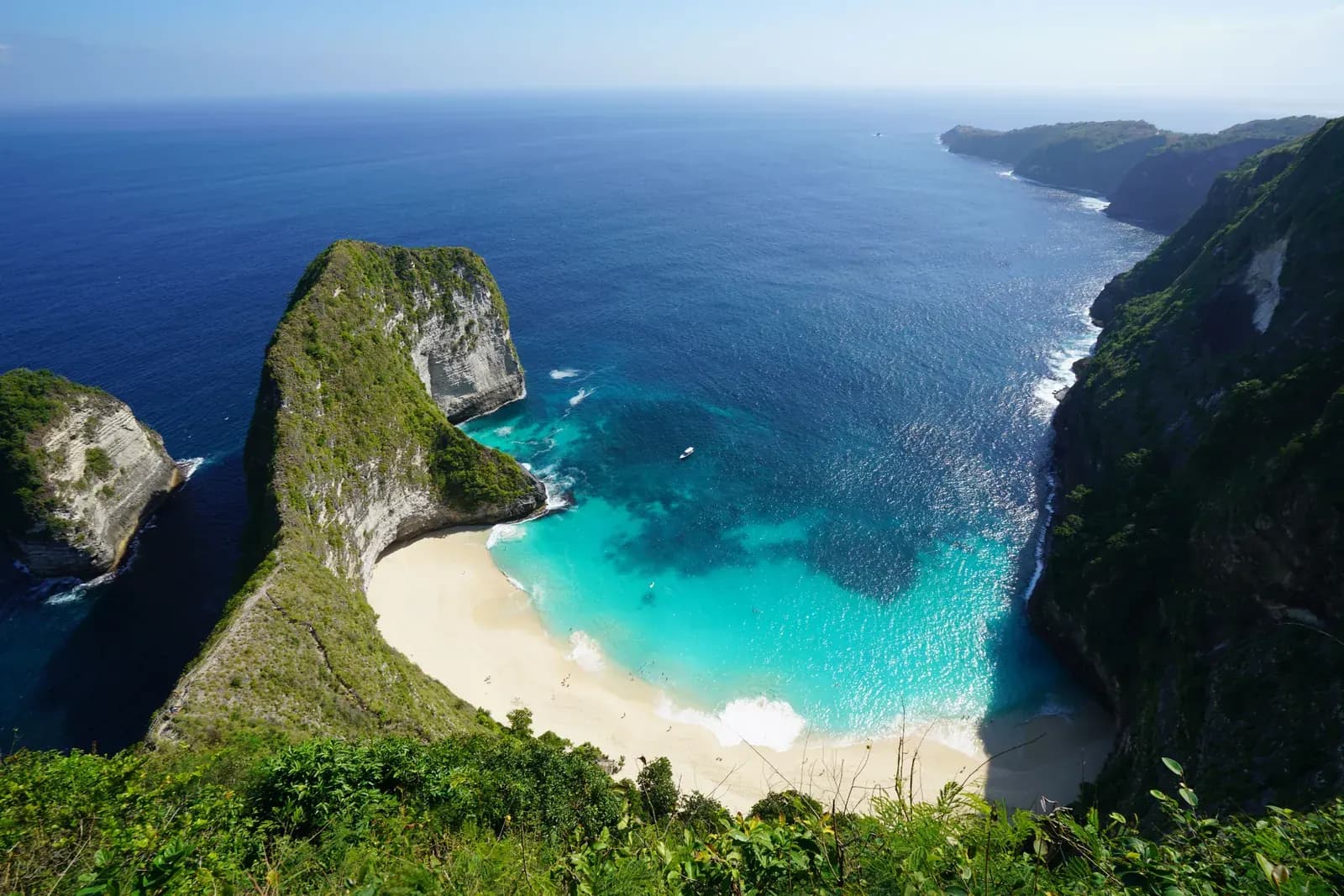
Further out again, all of the major temples are day trips rather than outings: Taman Ayun and Ulun Danu Beratan on the road to the lakes, Besakih on the flank of Mount Agung to the east. And Nusa Penida is sold from Ubud as a day trip, which involves two hours to the port at Sanur and back around a boat crossing. It works. It is a fourteen hour day and it is better with a night on the island.
The one part of that day that survives the travel time is Manta Point, where reef mantas feed a few metres under the surface and you need nothing more than a snorkel to see them. If you are going to spend fourteen hours on a Nusa Penida day trip from Ubud, book the boat that includes it rather than the one that only does the cliff viewpoints.
The Mount Batur sunrise trek, sold on every corner in Ubud
Every tour desk in town sells it, most of them at the same price, and almost none of them mention what time you are being collected.
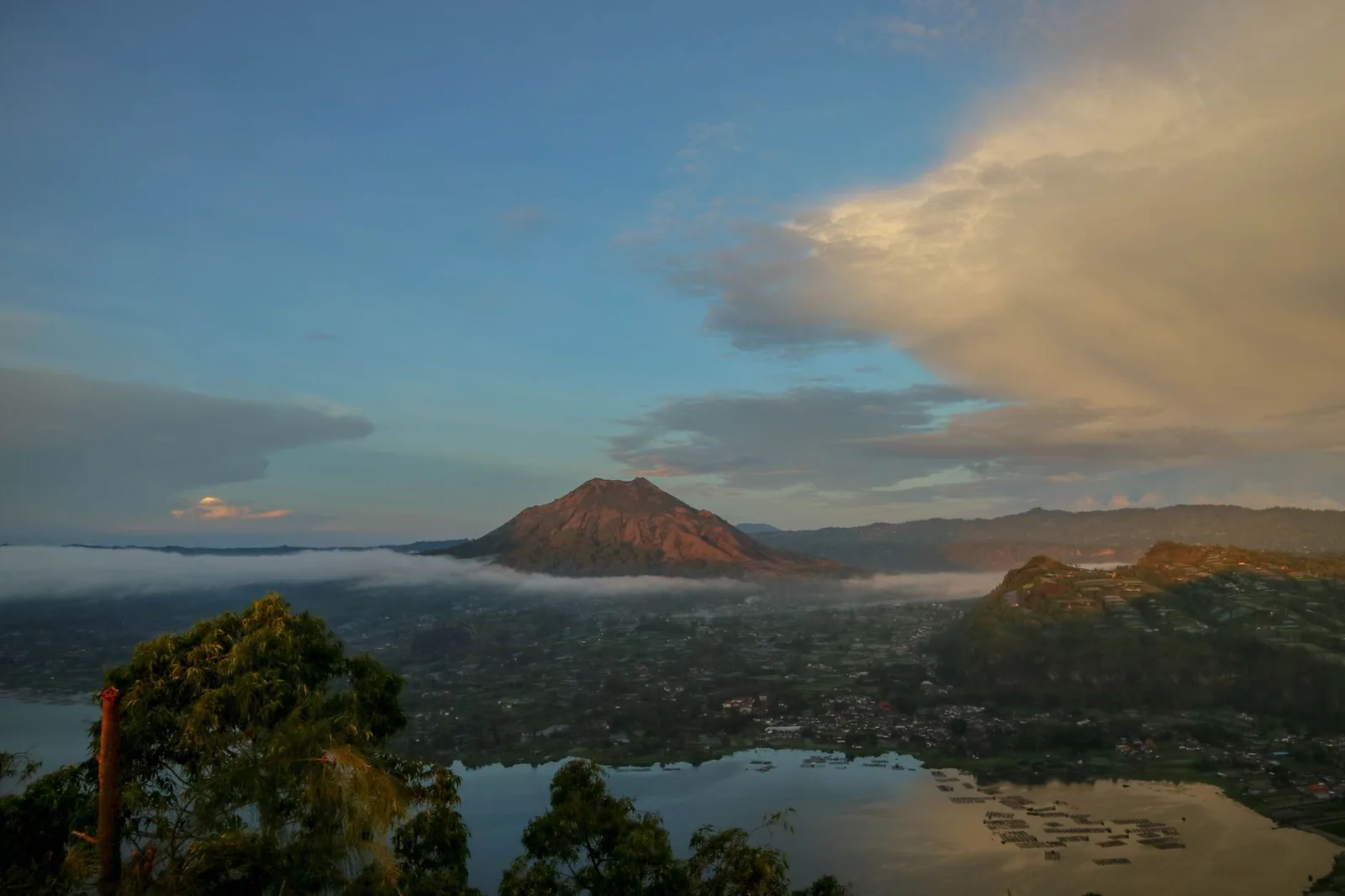
Batur is an active volcano about ninety minutes north of Ubud, inside a much larger caldera holding a lake. The trek is a two hour climb of roughly seven hundred metres of ascent on loose volcanic gravel, in the dark, with a head torch, to reach the rim for sunrise. It is not technical and it is not a stroll: the pickup from Ubud is between one and two in the morning, and that is the fact the shopfront posters leave out.
Done well it is one of the best mornings on Bali. You are above a sea of cloud, the lake appears underneath as it gets light, and Agung and Rinjani on Lombok stand out on the horizon. Done badly it is a queue of two hundred head torches on a narrow path, a cold wait at the top, and an egg cooked in a steam vent while you shiver. The difference is mostly the season and the size of the group.
Three practical points. Guides are effectively compulsory and are organised through a local association, so there is no independent route worth attempting. It is genuinely cold at the summit before dawn, around ten degrees with wind, and people arrive in shorts every single morning. And the day after is written off: you will be back in Ubud by ten in the morning having slept three hours, so do not book anything for that afternoon.
The alternative nobody mentions: drive to the crater rim at Kintamani for sunrise instead, sit in a warung with a coffee, and look at the volcano rather than standing on it. Same view of the caldera, an hour and a half of driving instead of a night, and no climb. For a lot of people that is the better version, and it costs a fraction of the trek.
Which of the two you want comes down almost entirely to the month you are here, because the summit is under cloud far more often than the listings admit. Our full guide to Mount Batur gives the honest odds of a clear morning month by month, what the association guide really costs, and the version by jeep.
Where to stay, and why the zone decides your trip
Booking sites list all of these as Ubud. They produce completely different weeks.
Five zones, all of them called Ubud on a booking site, all of them producing a different holiday. The line that matters most is transport: how much of the week you will spend arranging a ride.
| Zone | Getting around | Noise | Rate |
|---|---|---|---|
| Central Ubud | Everything on foot | Traffic from 07:00, late evening | $22 to $65 |
| Penestanan | 15 to 25 min walk, part of it up steps | Quiet, village sounds | $28 to $80 |
| Nyuh Kuning and Pengosekan | 20 min walk, straight through the forest | Residential, genuinely calm | $22 to $55 |
| Sayan and the Ayung valley | Driver or shuttle for every outing | Silent, river audible | From $165 |
| North towards Tegallalang | Scooter essential | Rice fields and roosters | $28 to $90 |
Central Ubud
Jalan Raya, Monkey Forest Road, Hanoman, Dewi Sita. In the evening: The only zone where you can eat, drink and see the dance without arranging a ride.
Right for: Short stays, first visits, anyone without a licence, anyone travelling solo. Wrong for: Light sleepers, and anyone whose mental picture of Ubud was silence. The practical choice, and the one people regret for exactly one reason: the two main streets carry the whole town and they are loud. Ask for a room set back from the road, not one facing it, and the zone becomes considerably better than its reputation.
Penestanan
West of the centre, up the steps above the Campuhan bridge. In the evening: A handful of good places to eat, and a walk home on unlit paths.
Right for: Stays of three nights or more, couples, anyone who wants a garden. Wrong for: Anyone carrying heavy luggage, since some lanes are stairs only. The best compromise on the map and the reason people extend their stay. Close enough to walk in when you feel like it, far enough that you hear frogs instead of scooters. Check whether your room is reached by road or only by footpath before you book.
Nyuh Kuning and Pengosekan
South of the Monkey Forest, on the other side of it. In the evening: Village warungs and a few good restaurants, town is a short ride.
Right for: Families, longer stays, anyone who wants a normal street to live on. Wrong for: Anyone who wants to walk home from dinner after the forest closes. The village that stayed a village. Walking to town through the Monkey Forest is genuinely pleasant during the day, and closed at night, which means the twenty minute walk becomes a ten minute ride around the outside.
Sayan and the Ayung valley
West, above the river gorge, twenty minutes out. In the evening: You are eating where you are staying, and that is the deal.
Right for: Honeymoons, a two night splurge at the end of a trip, anyone who came to look at a view. Wrong for: Anyone who wants to see Ubud rather than photograph a gorge. The postcards of infinity pools over jungle were taken here. It is spectacular and it is remote: every dinner, every temple and every market run becomes a twenty minute drive each way. Excellent for two nights, isolating for a week.
North towards Tegallalang
The road up through Petulu, Junjungan and Tegallalang. In the evening: Nothing. Dinner is where you sleep or a fifteen minute ride away.
Right for: Confident riders, photographers, anyone doing the northern sights twice. Wrong for: First timers, non riders, anyone on a two night stay. You wake up looking at the thing everyone drives an hour to see, which is a real argument. The cost is that you are on the wrong side of the traffic for everything else, including your own dinner, and pickup coverage from ride-hailing apps thins out fast past Junjungan.
The trap is a beautiful listing photographed from a drone above the rice fields, booked for a week, that turns out to be twenty five minutes from anywhere you want to eat. A view of a paddy costs you the ability to walk anywhere, and on a short trip that trade is usually wrong. On a longer one, with a scooter, it is often right.
Two questions settle it faster than any review. First, can you walk home from dinner, and if not, does a ride-hailing app reliably pick up at that address after dark. Second, is the room reached by road or by footpath, because several of the best value places in Penestanan are up a flight of steps that a suitcase does not enjoy.
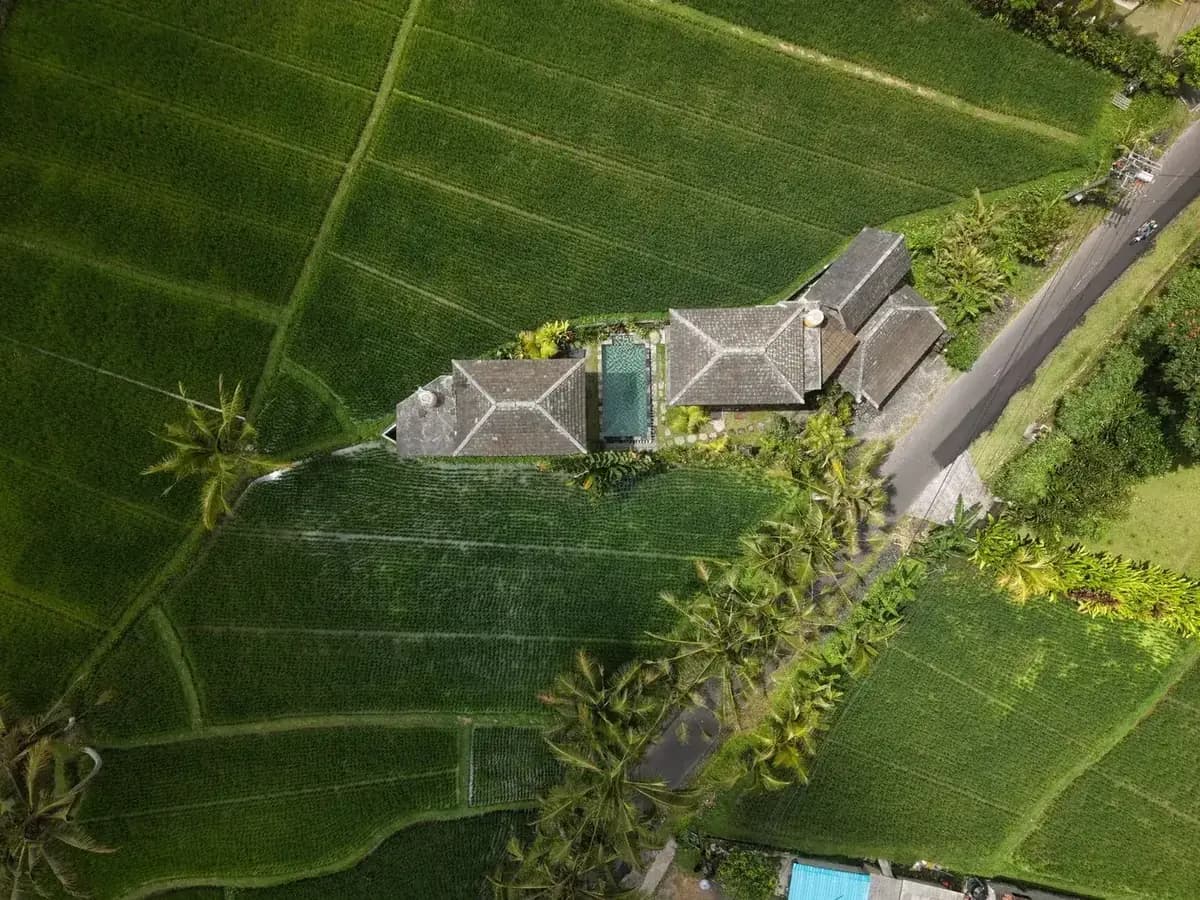
On price, Ubud is the best value of any well known place on Bali. A private room with a pool in a family guesthouse costs less here than a plain hotel room in Seminyak, and the gap widens as you move away from the two main streets. The luxury end, along the Sayan ridge above the Ayung, is a different market entirely and prices like one.
What to be careful of in Ubud
It is one of the most searched questions about the town, and the honest answer is a short list of ordinary annoyances rather than anything alarming.
The monkeys
They live in the Monkey Forest and they range along the road beside it. Sunglasses, phones, water bottles and anything in a loose bag are all fair game, and they are far faster than you. Do not carry food, and do not hold on to something a monkey has decided to take.
The traffic
Two narrow streets carry the whole town. Riding a scooter through the middle of it in the afternoon, as a visitor on an unfamiliar bike, is where most Ubud accidents happen. Walk in the centre.
Donation posts
Walking through the rice terraces means crossing land owned by several families, and each may ask for a contribution as you pass. It is not a scam, it is the arrangement. Carry small notes and decide your route in advance.
Money changing
A rate noticeably better than everyone else is being paid for somewhere. Use a bank or an established counter, count your money before you leave the desk, and do not hand it back to be recounted.
Two more that come up constantly and belong here. Mosquitoes are worse in Ubud than on the coast, for the obvious reason that the town sits between two river valleys with standing water in the paddies and no sea breeze to clear them. Dusk is the worst hour, repellent belongs in the day bag rather than the suitcase, and a room with proper screens or air conditioning is worth the small premium. Dengue is present on Bali, so this is a health argument rather than a comfort one.
And the stomach. Ubud is not riskier than anywhere else on the island, but it is where most people eat the widest variety of food, so it is where the odds catch up. Bottled or filtered water only, including for brushing teeth, and a busy warung with high turnover is a safer bet than a quiet one with the same food sitting out. Ice in established places is made from treated water and is not the problem it once was.
Ubud as a base, in driving times
The argument for staying here is not the town, it is what is within reach of it.
20 to 45 minutes: waterfalls and the spring temple
Tirta Empul twenty minutes north, and the waterfalls east of town within forty-five. Rafting on the Ayung starts even closer, fifteen minutes west, and white water rafting from Ubud is a half day with lunch included. This is the side of Ubud that makes it worth basing in.
1 to 1.5 hours: the lakes and the temples
Ulun Danu Beratan and Taman Ayun on the road north, or Besakih to the east. Full mornings rather than quick trips.
2 hours and a boat: the coast and the islands
The southern beaches, and Nusa Penida via the fast boat from Sanur. Doable as day trips from here, but long ones.
Ubud: common questions
How long to stay, what to watch out for, how to get around, and whether to base yourself here.