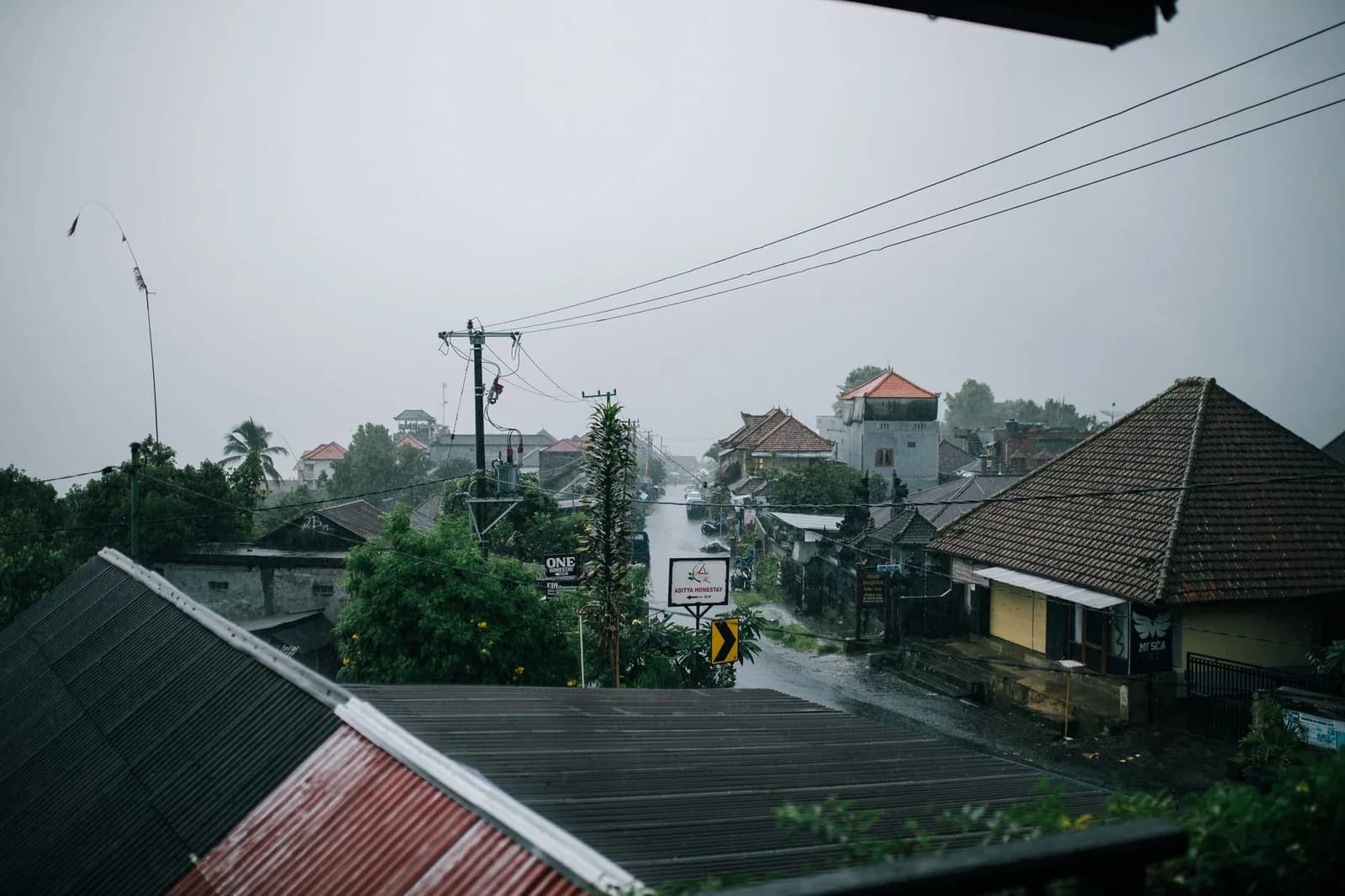
The Bali rainy season runs from November to March. It does not mean grey skies for five months: it means mornings that mostly work, a heavy downpour in the afternoon, and a few days a season when the low streets of Denpasar, Kuta and Legian fill with water for a few hours.
What it changes is the sea, the summit views and the price of a room. Plan for those three and the wet season is a very good time to go.
On this page
Is the rainy season a good time to visit Bali?
Yes, for a trip built on land: temples, rice terraces, waterfalls, food, Ubud, spas. Less so for a trip built on the sea, because the boats to Nusa Penida, snorkelling and diving all get worse between December and February. The rain itself is rarely the problem. The swell is.
When is the rainy season in Bali, and when does it start in 2026/27?
In a normal year the wet season settles in during November and eases off through March, with April and October as transition months. It is a monsoon pattern: from December the wind swings round to the west and north-west, brings moisture off the Indian Ocean and the Java Sea, and builds the afternoon storms.
The 2026/27 season is forecast to be late. In its outlook published on 28 September 2026, the Bali office of Indonesia's weather agency BMKG expects only 3 of its 20 forecast zones on the island to enter the wet season in late November, and the other 17 in December. Around 70 percent of zones are running at least ten days behind normal, some by close to two months.
- Peak: February 2027 for 16 of the 20 zones, March for three, January for one.
- Total rain: normal for 70 percent of zones, above normal for the rest, mostly in the north and on the east coast.
- Length: shorter than usual almost everywhere. BMKG links this to a very strong El Niño and a positive Indian Ocean Dipole, and warns of the flip side: heavier rain packed into fewer weeks, with landslides, fallen trees and high waves.
For a trip, that means November 2026 should behave more like a dry month than usual, and the heavy part of the season is likely to be compressed into December to February. A forecast is not a promise, so it is worth checking BMKG again a fortnight before you fly.
Bali rainy season month by month, November to March
The figures below are orders of magnitude for the south coast, where most visitors stay. Ubud and the centre get more rain, the highlands of Bedugul and Munduk the most, and the east coast around Amed the least.
| Month | Rain | Days with rain | Sea and boats | Verdict |
|---|---|---|---|---|
| November | ≈ 150 mm | ≈ 14 | Turning rough late | Good, if plans can move |
| December | ≈ 250 mm | ≈ 18 | Rough, regular cancellations | Fine before the 20th |
| January | ≈ 345 mm | ≈ 20 | Rough, frequent cancellations | The wettest, best on land |
| February | ≈ 275 mm | ≈ 18 | The most cancellations | Cheapest, emptiest |
| March | ≈ 220 mm | ≈ 15 | Improving through the month | The best of the wet months |
South coast, rounded. Daytime 30 to 31 °C, nights around 24 °C and the sea at 29 °C all season. Humidity 83 to 85 percent.
Bali in November: the start of the rainy season
About 150 mm and fourteen days with rain in a normal year, often less at the start of the month. Showers are short and rooms are still at shoulder rates. The sea turns in the last week, when the west coast swell builds. With the late start forecast for 2026, this November should be one of the better ones. Detail in Bali weather in November.
Bali in December: two months in one
Around 250 mm and eighteen wet days. The first three weeks are quiet and cheap. From about the 20th, prices roughly triple for Christmas and New Year while the weather gets properly wet. This is also when the southern streets start to flood after the big storms, and when a forty minute taxi can turn into two hours. See Bali weather in December for the two halves.
Bali in January: the wettest month
About 345 mm and twenty days with rain on the coast. It is the month most likely to give you a grey day or two in a row, and the month the summit of Batur is most often in cloud. It is also, after the first week, one of the cheapest and quietest. A good month for a trip on land, a poor one for the islands. More in Bali weather in January.
Bali in February: the hardest month for the sea
A little less rain than January, around 275 mm, but the most boat cancellations of the year and, in 2027, the forecast peak of the season. In return, the lowest prices on the calendar and sites you have almost to yourself. The February guide has the detail.
Bali in March: the end of the wet season
The rain eases through the month to about 220 mm, the island is at its greenest and the sea calms down towards April. The one date to check is Nyepi, the Day of Silence, when the whole island and the airport shut for 24 hours. See Bali weather in March.

Bali floods: what actually happens, and how often
Most wet seasons bring a few days when a storm drops more water on the south than the drains can take. Roads in Denpasar, Kuta, Legian and Canggu go under 20 to 30 cm of brown water for an hour or two, scooters stall, traffic stops, and by evening it has gone. That is the ordinary version, and it happens a few times between December and February.
Two recent episodes went far beyond that.
The September 2025 Bali floods
On 9 and 10 September 2025, at the end of the dry season, more than 150 mm of rain fell in a single day. Six of Bali's eight regencies were hit, Denpasar worst of all, and at least 18 people died (tolls reported in the following days varied). The airport stayed open, but the main roads to it flooded.
The rain was the trigger, not the whole cause. Rivers were blocked by rubbish and debris, and the ABC reported that only about 3 percent of the island's river catchments are still forested, against the 30 percent considered healthy, as rice fields keep giving way to villas in Badung, Gianyar and Tabanan. The governor responded with a moratorium on new commercial building on farmland.
The February 2026 floods in Denpasar, Kuta and Legian
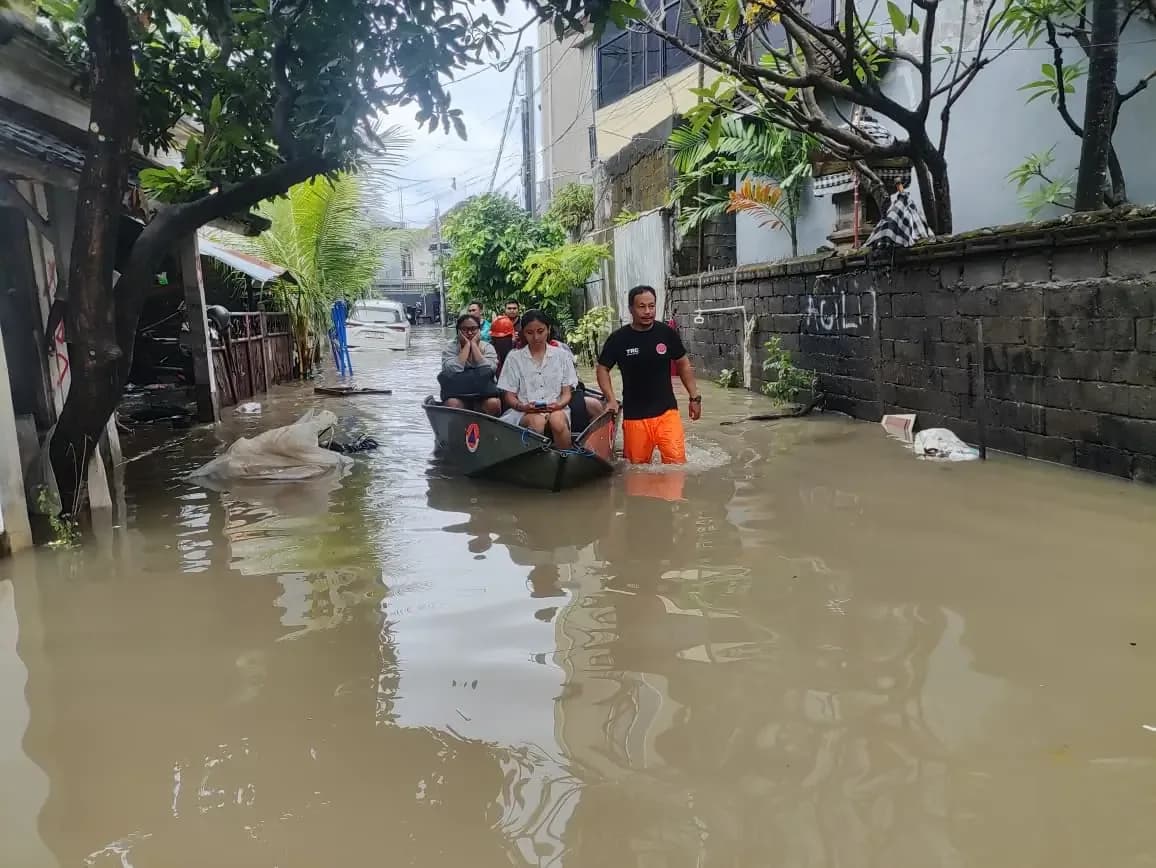
Between 9 and 24 February 2026, Bali's disaster agency BPBD recorded 76 incident sites across the island: 42 floods, 5 landslides, collapsed river walls and fallen trees. Denpasar alone had 36 flood points, with 30 to 80 cm of water in residential streets and up to a metre on Jalan Hang Tuah.
On 23 and 24 February, around thirty foreign tourists were taken out of flooded streets in Legian and Kuta by boat, around 350 people were moved temporarily, two international flights were diverted and three departures delayed. Nobody died. BMKG had put six regions on red alert and forecast waves up to 4 m until the end of the month.
Which parts of Bali flood, and which areas stay dry
Denpasar
The capital takes the most water because it sits low on the Tukad Badung river and is almost entirely paved. Few visitors stay there, but every road from the airport to Sanur, Ubud or the east passes through it, which is why a flood in Denpasar becomes a missed flight for someone staying elsewhere.
Kuta and Legian
Flat, low and dense. The lanes behind the beach and the streets around the old drains flood quickly in a big storm, as they did in February 2026. Hotels on the beach road are fine. Getting in and out is the problem.
Seminyak and Canggu
Short-lived waterlogging rather than real floods: Jalan Petitenget, the shortcut lanes through the old rice fields in Canggu and Berawa, and the dips on the roads to the beach. Riding a scooter through it is the main risk, because the potholes underneath disappear. Our Seminyak guide covers where to stay.
Sanur
Drier than the west coast on most days and the calmest water in the south, but parts of it are low-lying and it flooded in February 2026. Fine as a base, but check how far your street sits from the main drains.
Areas of Bali that rarely flood
- Nusa Dua and Jimbaran: drier, better drained and on the calmer east side of the peninsula in the wet season.
- Uluwatu and the Bukit: on limestone, high above the sea, so the water runs off rather than sitting. Mornings tend to be clear. See our Uluwatu guide.
- The east coast, Amed and Candidasa: in the rain shadow of Mount Agung and the driest part of the island in the wet season.
- Ubud and the highlands: no flooding to speak of, but more rain than the coast and some risk of landslides on steep roads and river banks. A temple wall in Ubud collapsed in the February 2026 storms.
Is it safe to visit Bali now? Floods today and weather warnings
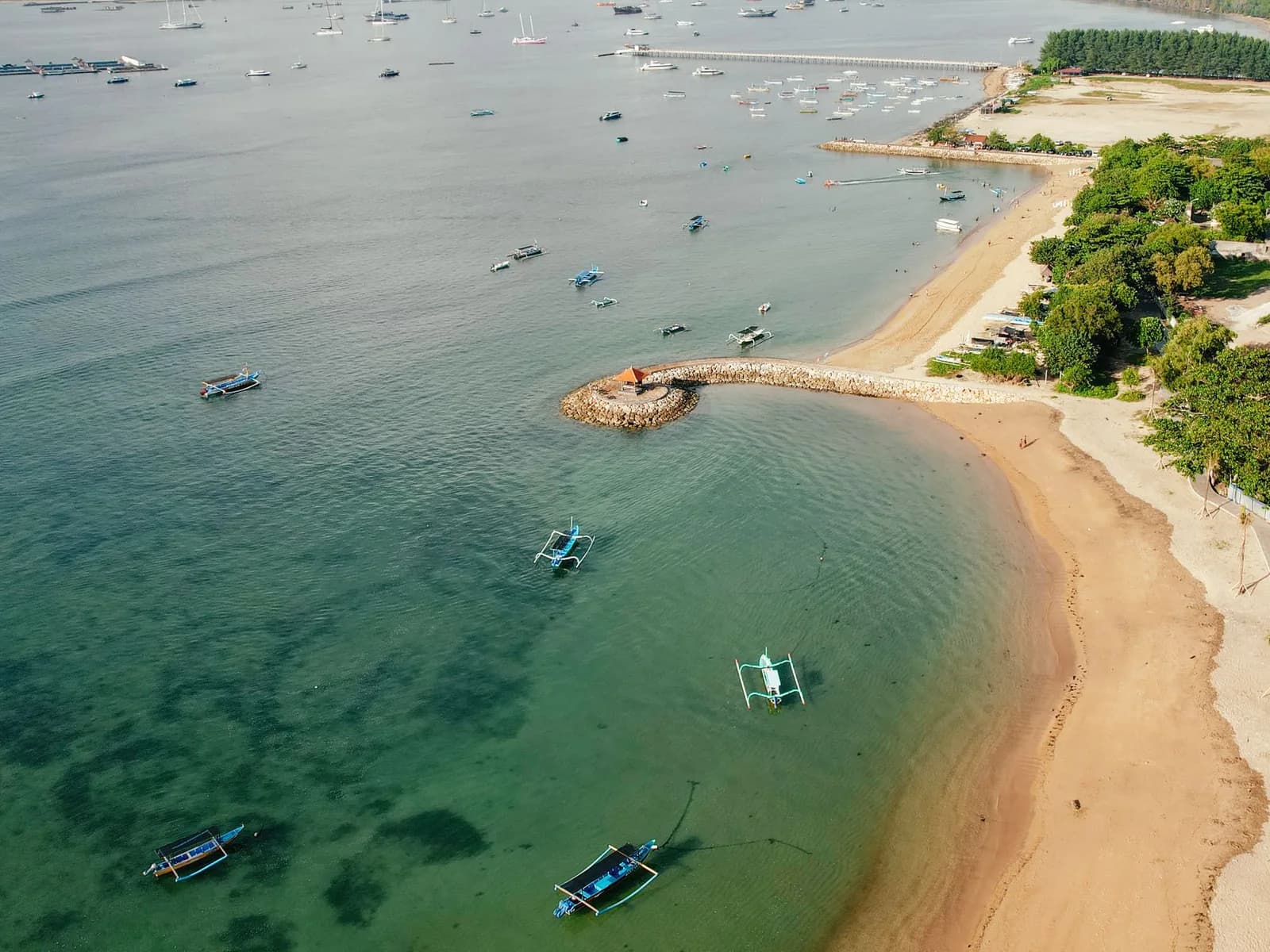
As of 1 October 2026, no flood or weather alert is in force for Bali, and the wet season has not started. Going to Bali in the rainy season is safe for the vast majority of visitors. The floods hit particular streets on particular days.
- Check BMKG: the Indonesian agency issues colour-coded warnings by region on bmkg.go.id and in the Info BMKG app, on three levels: yellow (waspada), orange (siaga) and red (awas). On orange or red, skip the boats and long drives that day.
- Check Smartraveller (or your own government's advice) before you travel. The advice level also matters to your insurer.
- Keep out of floodwater. It hides open drains and potholes, carries rubbish and sewage, and leptospirosis is a known risk after floods.
- Leave double the time for the airport on a stormy afternoon from December to February.
What the wet season does to Bali activities
Mount Batur in the rainy season
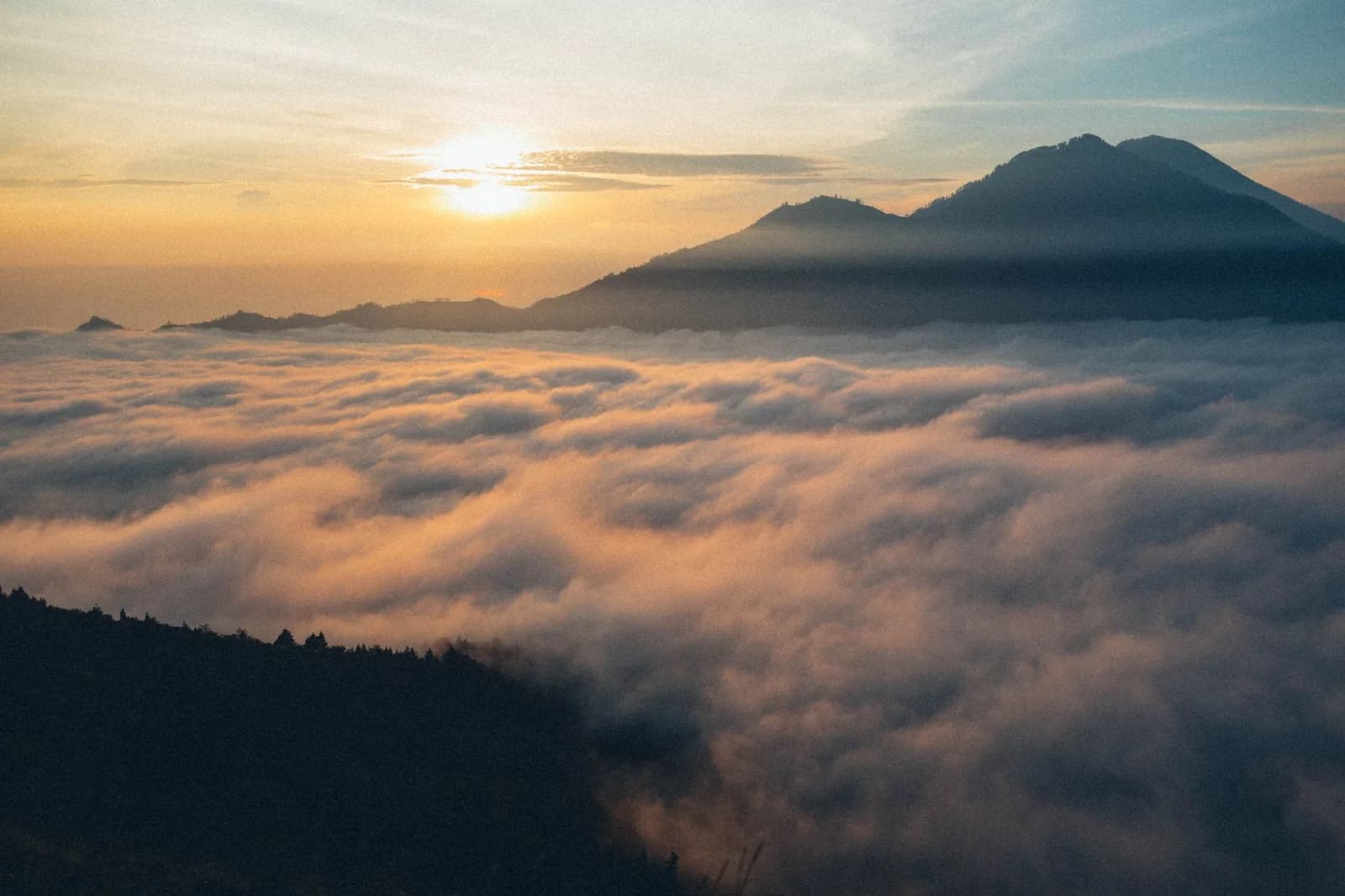
The sunrise trek runs all year, but between December and February a large share of mornings end with a grey rim instead of the famous sea of cloud, and the descent on wet volcanic grit is slippery. There is no seasonal closure. Pick a listing with free cancellation and decide the evening before. The odds by month are in our Mount Batur guide.
In the wet season, only book it with free cancellation
Mount Batur sunrise trek, guide and breakfast included
- ✓Free cancellation on most listings, so you can watch the forecast and pull out on a cloudy night
- ✓The mandatory guide and the 2 a.m. pickup from Ubud or the south are included
Affiliate link. Booking through GetYourGuide costs you nothing extra and supports the guide. Price and rating checked September 2026. Both move with season and demand.
White water rafting on the Ayung in the wet season
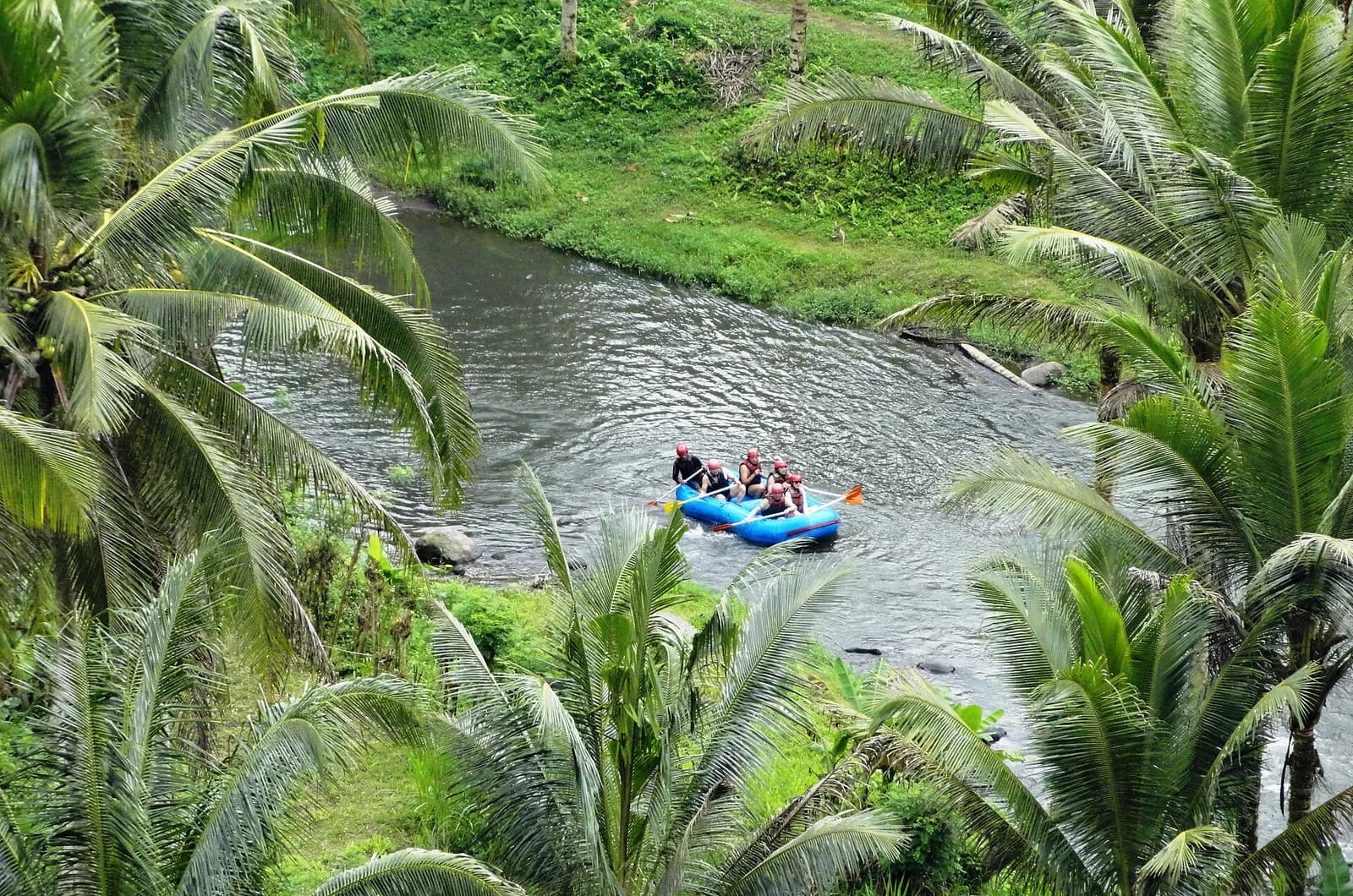
The rafting season is the wet season: the Ayung runs higher and faster, brown with silt, and the rapids are more fun than in August. Some operators shorten the run or stop for the day when the river is in flood after a big storm, so book a morning slot, which also beats the afternoon rain. More in our Ayung rafting guide.
Bali waterfalls in the rainy season
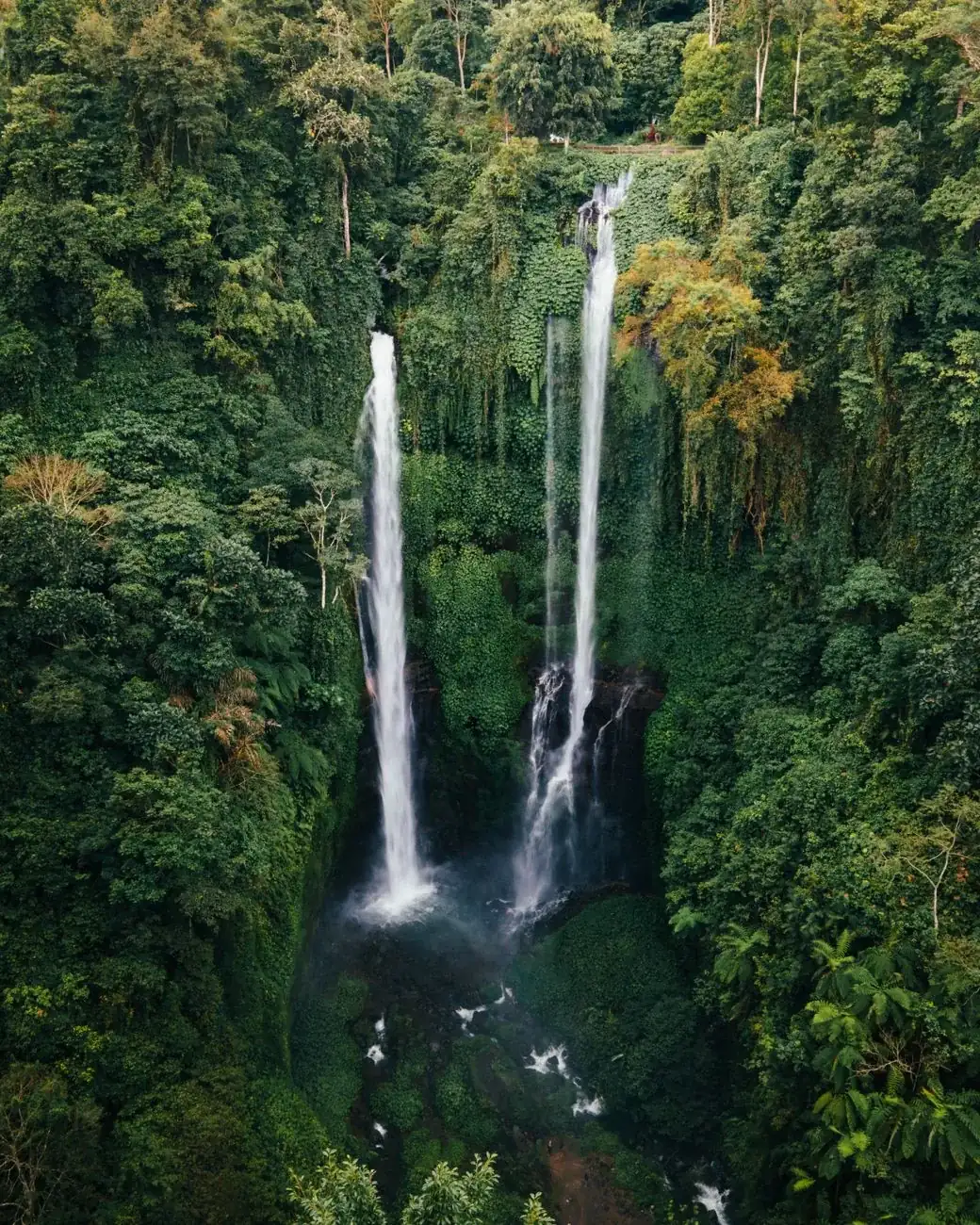
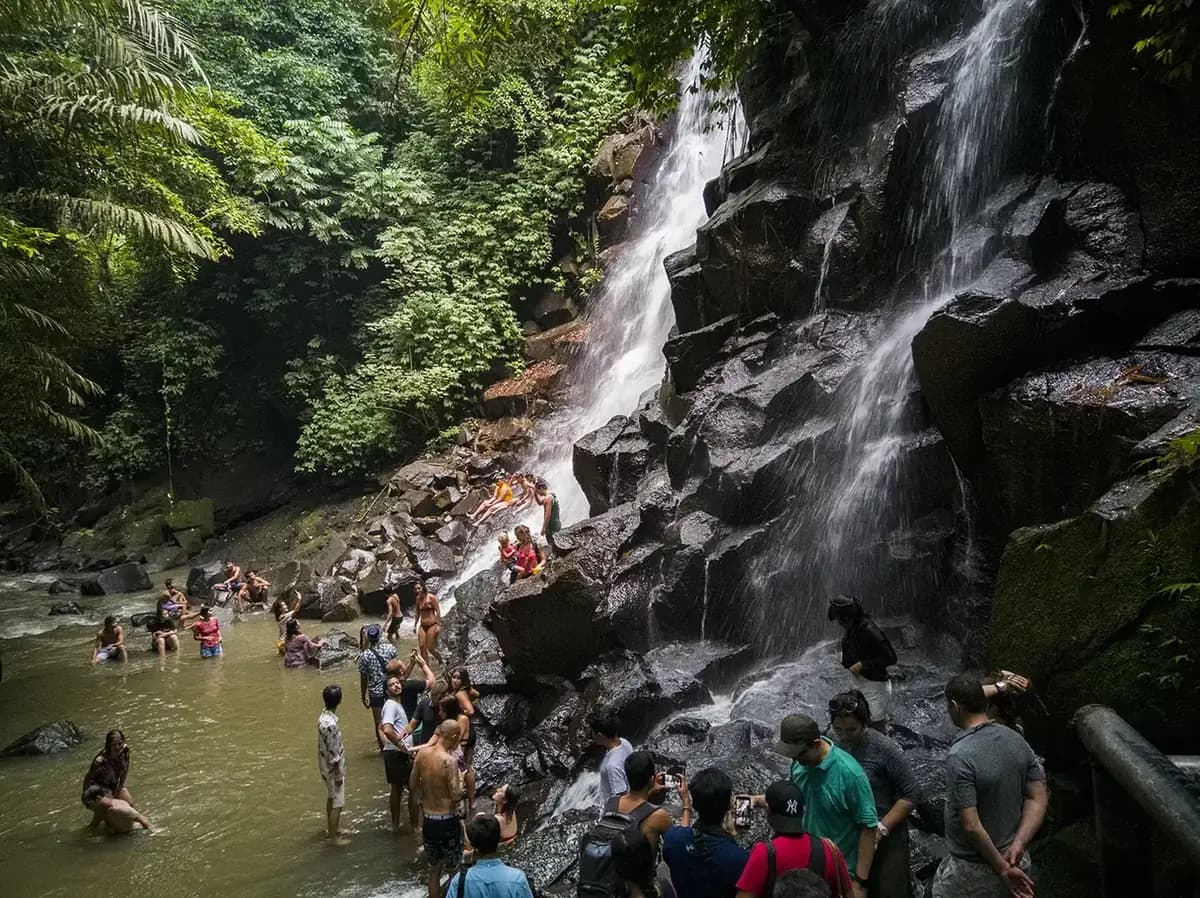
The falls are at their biggest, and their muddiest. Swimming at the base is usually impossible and the pools at places like Tegenungan and Kanto Lampo turn the colour of milky tea. The steps down get slippery. Go in the morning and treat it as something to look at, not swim in. Our waterfalls guide has the best ones for the season.
Fast boats to Nusa Penida in the rainy season
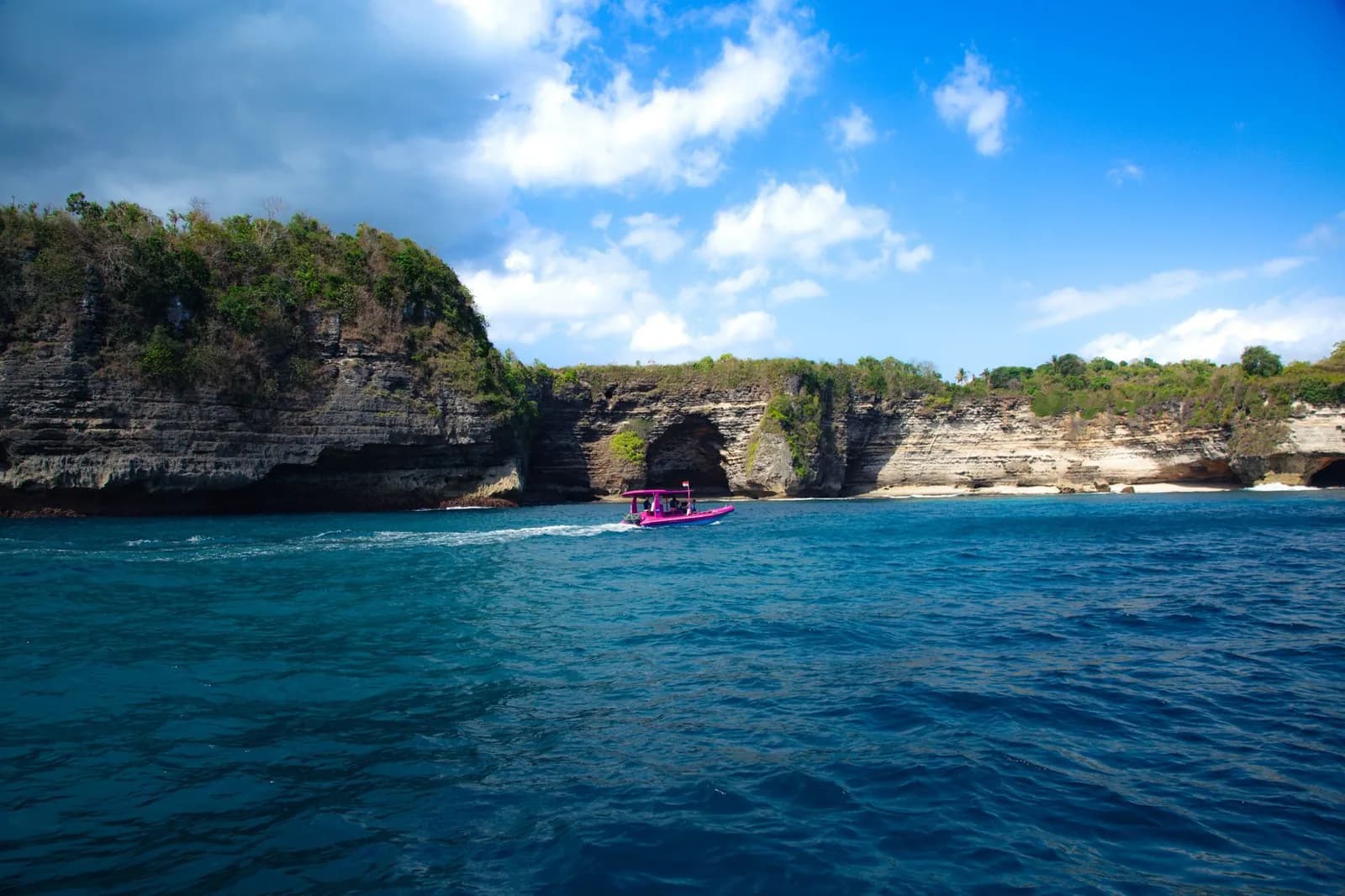
The crossing from Sanur or Padang Bai is cancelled by the harbour authorities on sea state, not rain, sometimes on the morning itself. December to February is the bad stretch, with February the worst. Swell is not only a wet season problem, though: in August 2025 more than a hundred departures were cancelled for 4 m waves.
Put the island day early in the trip so there is room to move it, keep a land-based plan in reserve, and never schedule it the day before your flight home. Diving and snorkelling at Manta Point lose a lot of visibility in these months. For the day trip itself, see Nusa Penida in a day.
Kuta, Seminyak and Canggu beaches: rubbish in the wet season
From December to March the westerly wind pushes rubbish washed down the rivers, and from further along the coast, onto the west-facing beaches of Kuta, Legian, Seminyak and Canggu. In the worst weeks the cleaning crews report tens of tonnes a day. It is cleared every morning, but the sand can look grim after a storm. The east side, from Sanur to Nusa Dua, stays much cleaner.
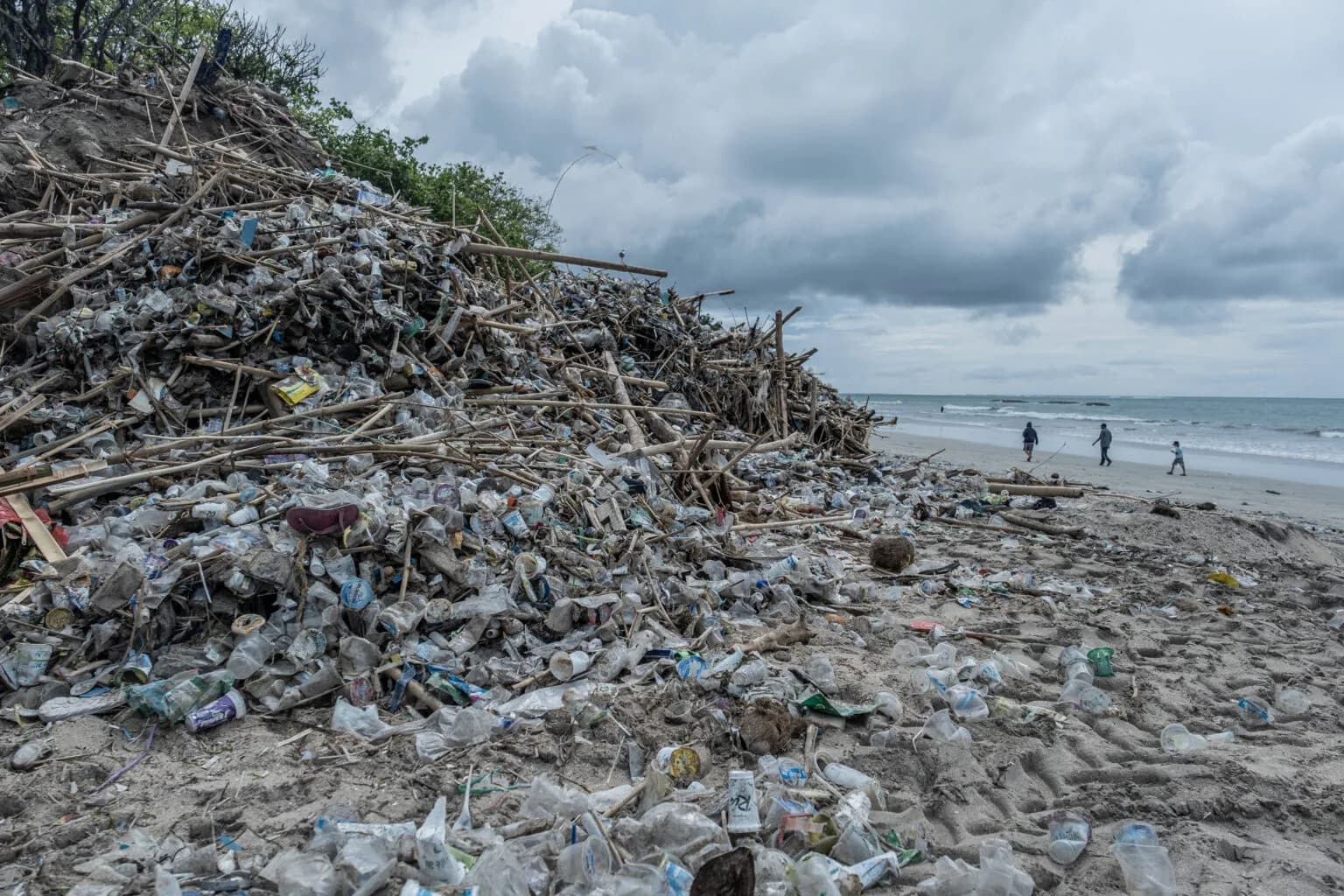
Photo Agung Parameswara, CC BY-SA 4.0
Scooters and driving in the rain
Roads turn slick in the first minutes of a storm and potholes fill with water. If you do not already ride confidently, the wet season is not the time to learn. A driver for the day costs a little more than a scooter, and a lot less than a fall.
What to pack for the Bali rainy season
It stays 30 °C by day, so a raincoat is mostly a sauna. A compact umbrella and quick-dry clothes do more. Sandals or shoes with real grip for temple steps and waterfall stairs, a dry bag for the phone on boats and scooters, and repellent: dengue rises in the wet months. Cotton never dries at 85 percent humidity, so pack one more set than you think.
Bali floods and travel insurance: cancelled trips and what is covered
Travel insurance pays for the sudden and unforeseen. That has two consequences for a wet season trip.
- Normal rain is not a claim. A rainy week in January is a known feature of the season, so a cloudy Batur or a cancelled snorkelling trip is not covered. Free cancellation on activities is your insurance there.
- A real flood can be, if you bought cover before it. When an event cuts roads, closes your hotel or delays your transport, the cancellation and travel delay sections may apply. Once the event is in the news, insurers close the door: after the September 2025 floods, Go Insurance stopped covering the event for policies bought from 9:00 AEST on 11 September 2025, and Fast Cover tied its cover to the purchase date and time.
In practice: buy the policy the day you book the flights, read the product disclosure statement for “natural disaster” and “travel delay”, and if a flood disrupts your trip, ask the airline or hotel for a refund or change first. Insurers usually expect that before they pay. Keep receipts, screenshots of the BMKG warning and anything in writing from the airline.
For long trips and remote workers, policies such as SafetyWing's Nomad Insurance are built around medical cover with a travel delay benefit. Check the trip interruption limits before relying on them for a flood. Partner link.
What you gain in Bali's rainy season: prices, green and empty sites
- Prices: February is the cheapest month of the year, with many rooms at less than half their July rate. January after the first week and the first three weeks of December are close behind. The only expensive stretch is Christmas to early January.
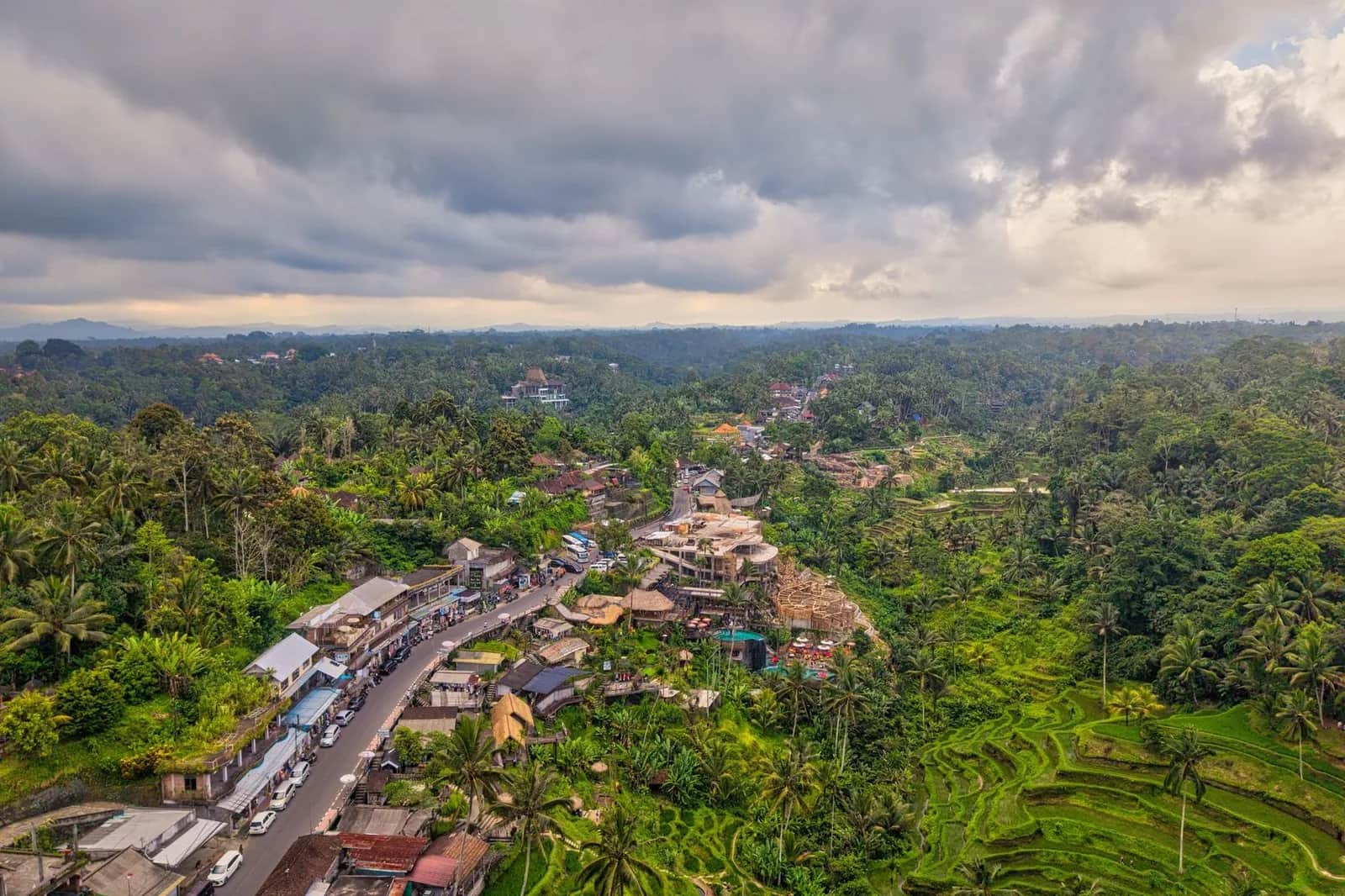
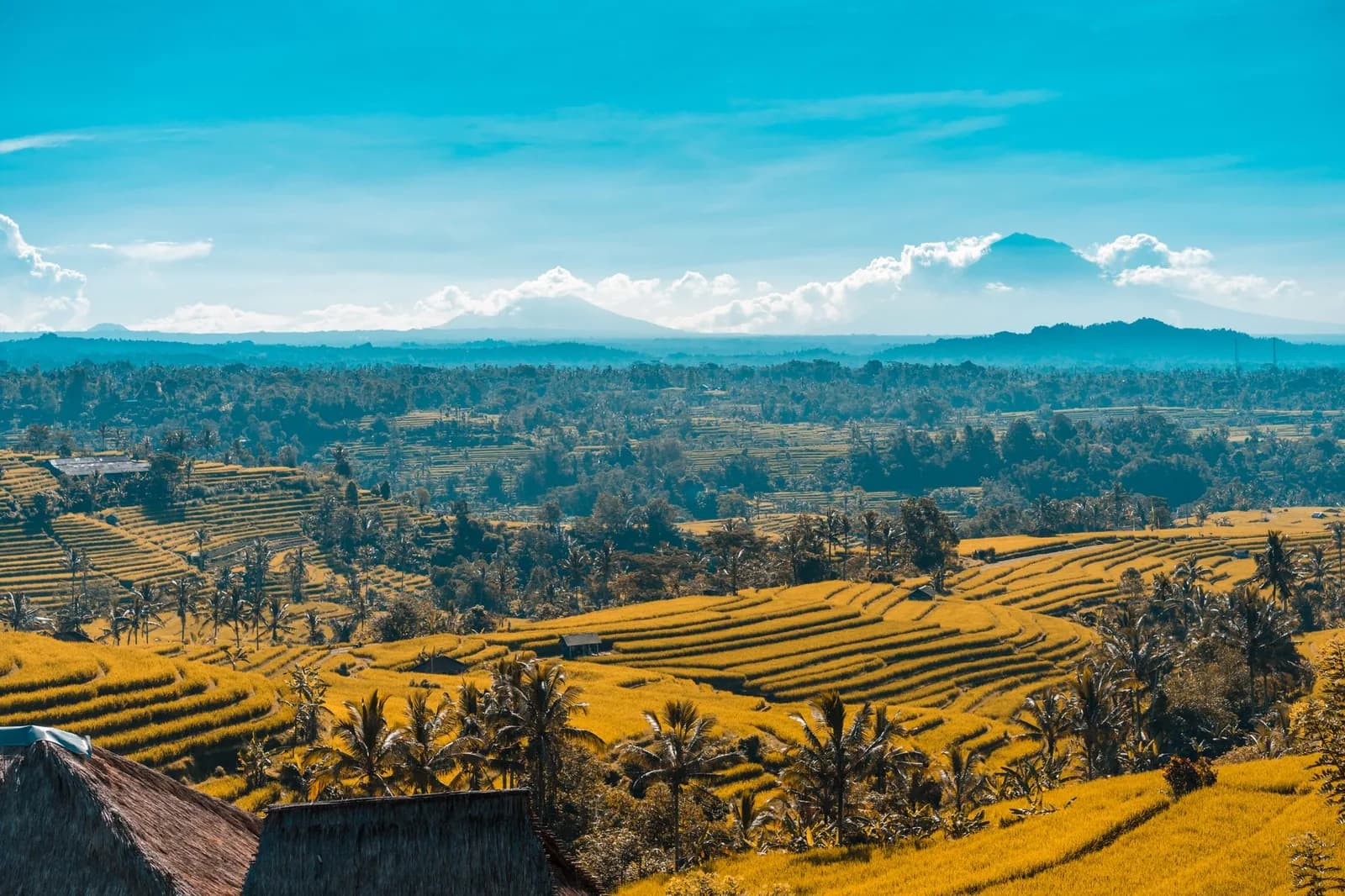
- Green: the rice terraces of Tegallalang and Jatiluwih are at their most vivid from January to March, and every waterfall is running at full volume.
- Space: Tanah Lot, Tirta Empul and the Ubud viewpoints without the queues of July and August.
- Better rafting on a fuller river, and clear evenings after the afternoon storm.
For the dry months and the year as a whole, go back to Bali weather month by month.