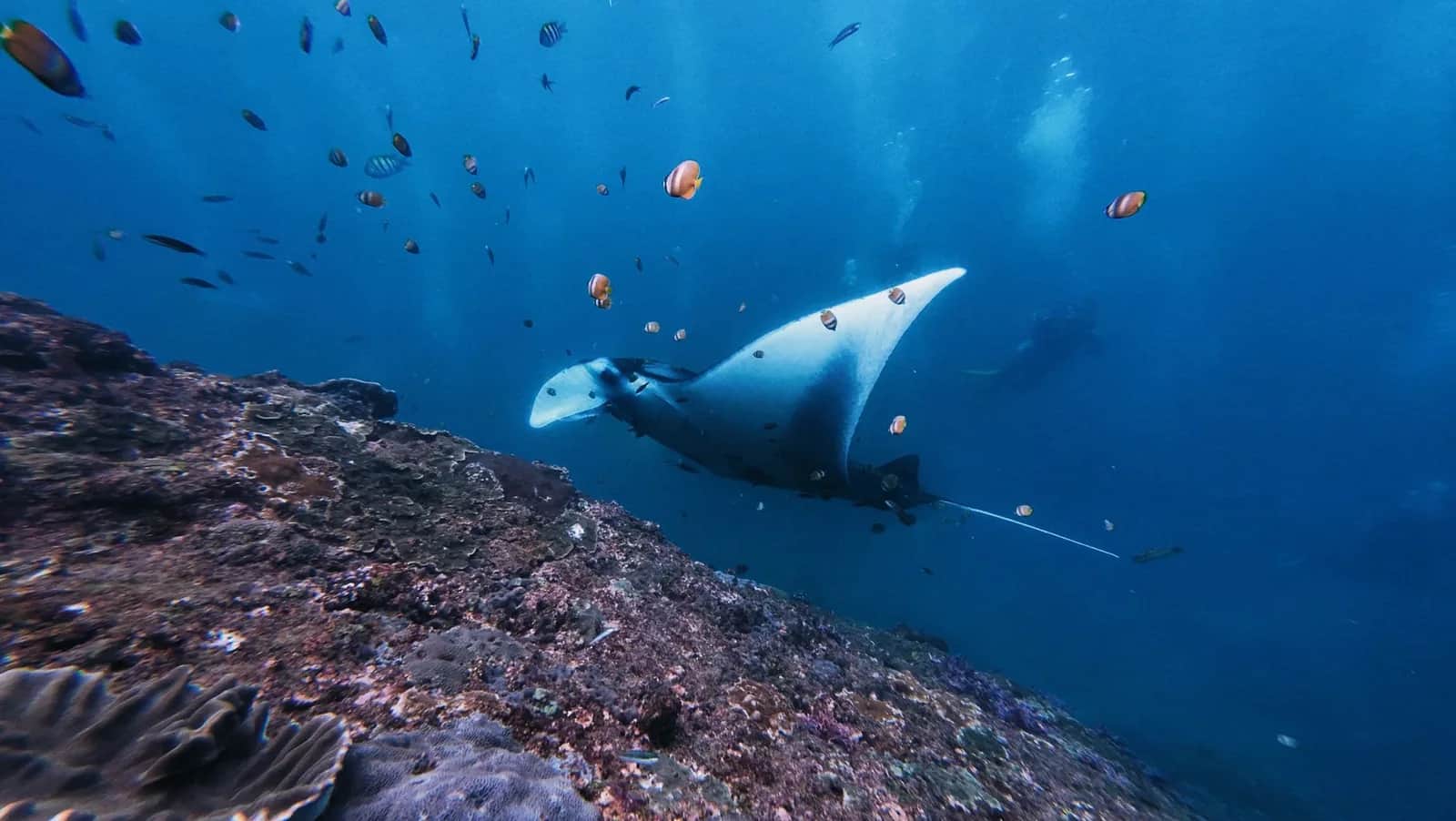
Manta Point is a cleaning station off the south-west corner of Nusa Penida, where reef mantas queue up to have parasites and dead skin picked off by small fish. They come up to within a few metres of the surface to do it, which is what makes this one of the very few places on earth where a snorkeller and a diver see the same animal, at the same distance, on the same morning.
That single fact is why this page exists. Almost everything ranking for Manta Point is written by a dive centre for certified divers, and the majority of people who end up in this water have never worn a tank in their lives. You do not need to dive here. You need a boat, a mask and a morning when the sea behaves.
The rays are the reliable part. The sea is not.
The normal way to do this
Manta snorkelling trips, Nusa Penida
- ✓Mask, snorkel, fins and a buoyancy vest provided, no certification needed
- ✓Two to four stops, usually Manta Point or Manta Bay plus Gamat Bay and Crystal Bay
- ✓Morning departures, when the water is flattest and the mooring is not yet crowded
- ✓Free cancellation on most listings, which matters more here than at any temple
Affiliate link. Booking through GetYourGuide costs you nothing extra and supports the guide. Price and rating checked September 2026. Both move with season and demand.
On this page
What a manta morning actually looks like
Not the photograph. The three hours around it, which is what you are actually buying.
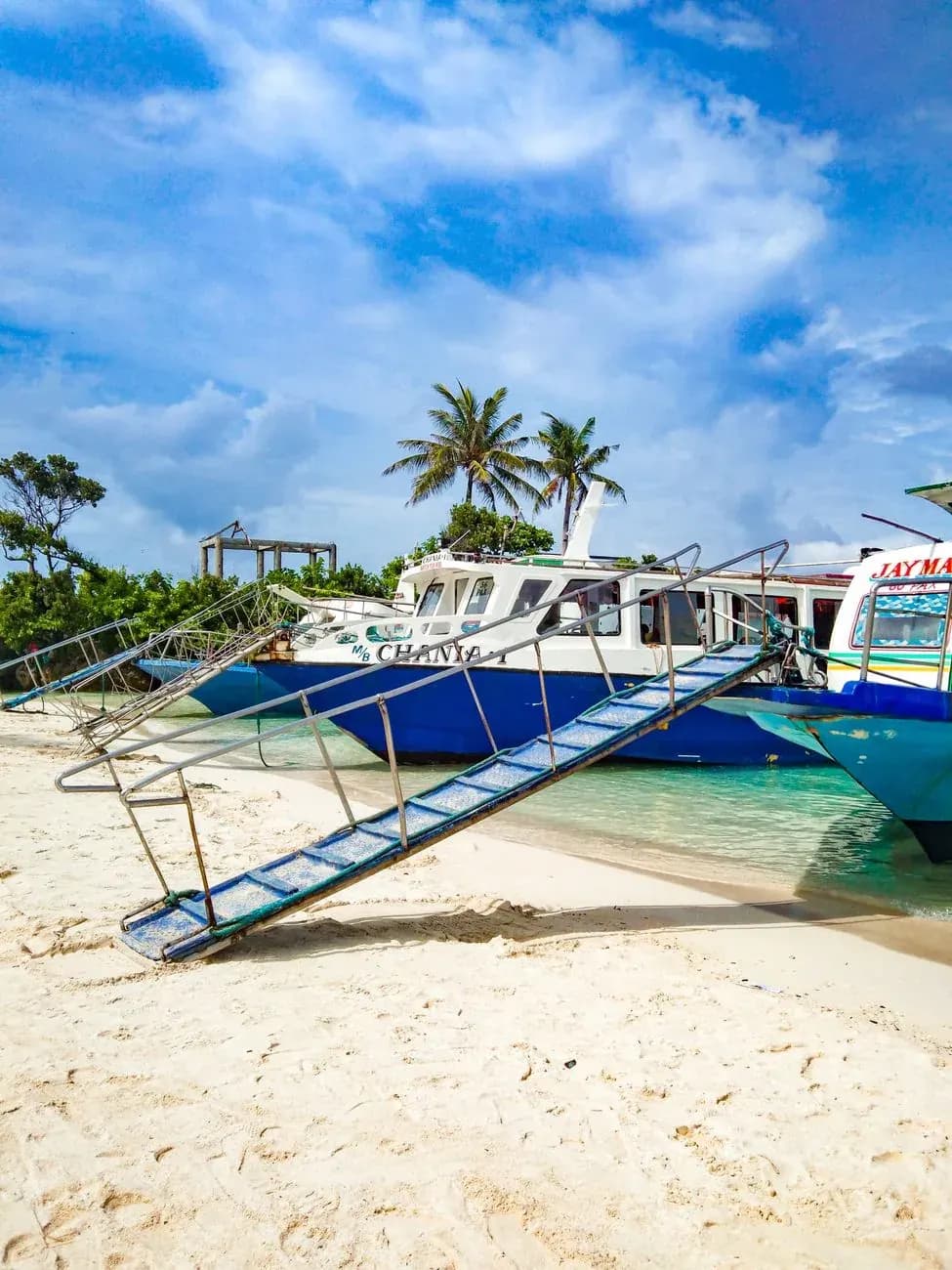
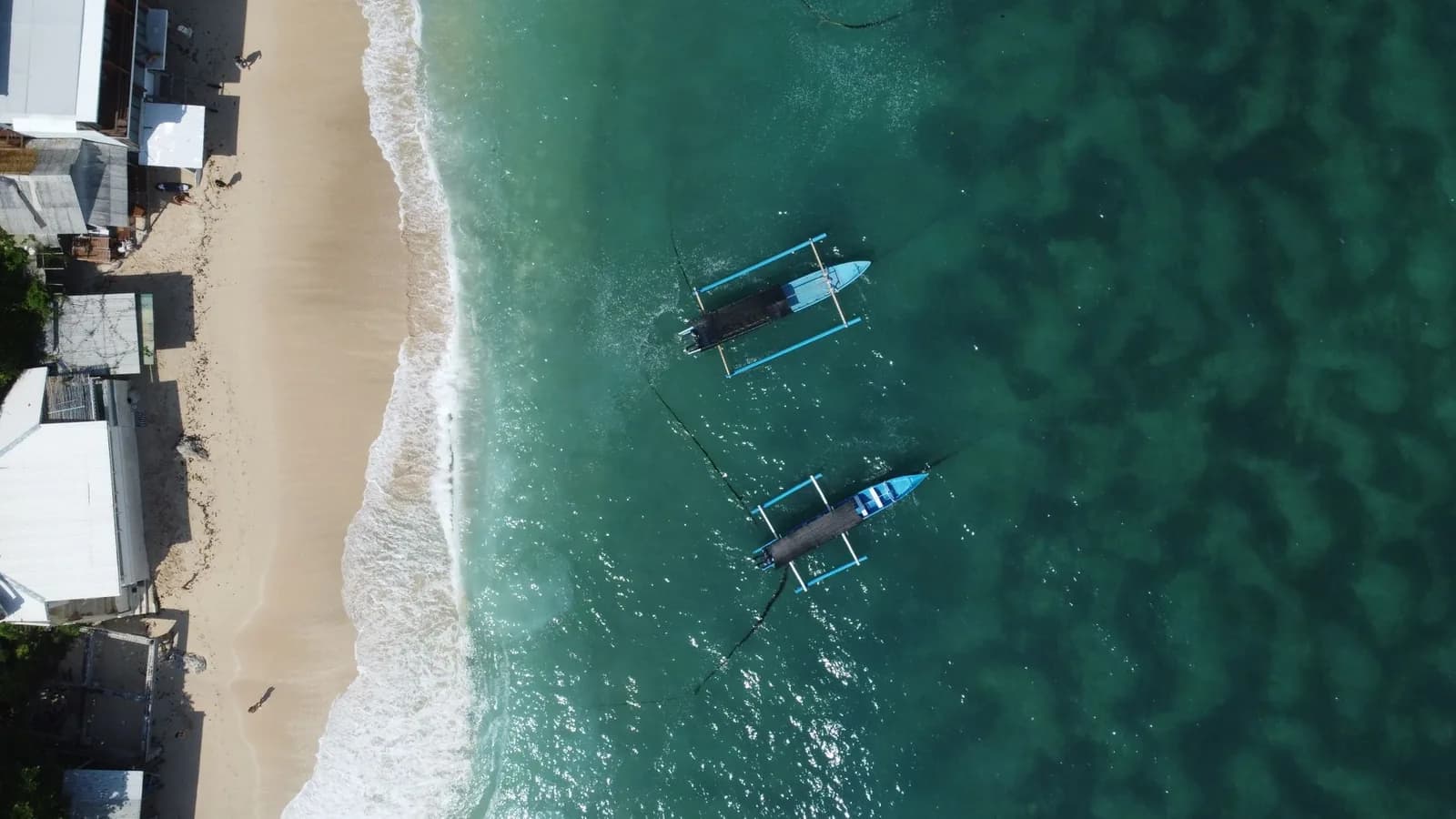
Boats leave from the harbours on the north coast of Nusa Penida, mostly around Toya Pakeh and Banjar Nyuh, between half past seven and nine in the morning. They are small: an open fibreglass hull with an outboard, a canopy, and a dozen people sitting on benches along the sides. There is no cabin, no toilet and nowhere to lie down, and the crossing to the south-west corner takes roughly thirty to sixty minutes depending on where you board and how the sea is running.
That ride is the part nobody photographs. Once the boat clears the shelter of the north coast it turns into open water and starts to slam. It is not dangerous with a competent crew, and it is genuinely uncomfortable, and it is where the seasickness that ruins some people's morning begins.
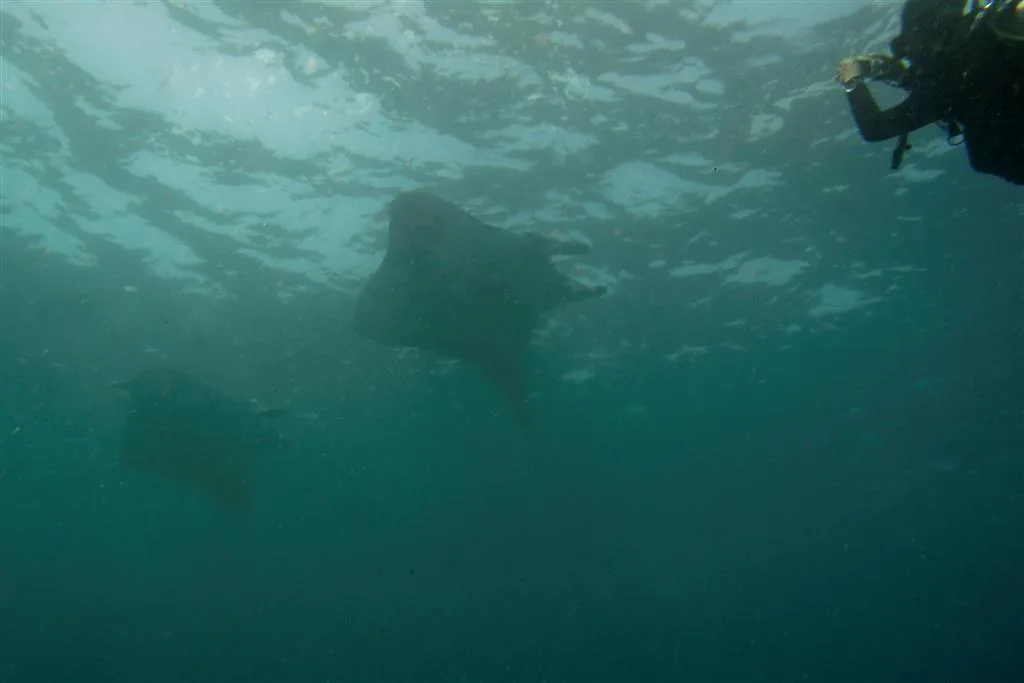
Photo Andrepiazza, CC BY-SA 3.0
At the site itself you find a mooring below tall cliffs with anything from two to fifteen other boats on it. The briefing is short: stay with the guide, do not touch, do not swim over the rays. Then you go in off the side of the boat in a vest, and you float. The rays appear underneath rather than in front of you, and the first one is invariably closer and bigger than you had prepared for.
A stop lasts twenty to forty minutes. You get back on the boat cold, salty and slightly disoriented, and the boat runs on to Gamat Bay or Crystal Bay for the calmer half of the loop. Door to door from an island hotel, the whole thing is a morning: out around eight, back around noon.
Why the rays are here at all
The answer is not feeding, and it is not luck. It is hygiene, and it is the reason the sightings hold up all year.
The animal you are looking at is the reef manta ray, a filter feeder that lives around coastal reefs and reaches a wingspan of roughly four to five metres here. It has no sting, no teeth worth the name and no interest in you. It also cannot clean itself, and it collects parasites, dead skin and the small wounds that come from living in a reef system.
A cleaning station is the solution. At specific outcrops of reef, small wrasse and butterflyfish set up shop and eat exactly that: parasites off the skin, debris out of the gills, dead tissue from old scars. The manta arrives, slows down, and hangs almost motionless in the current while the fish work over it. It will circle back and queue for another pass. The whole performance can go on for an hour.
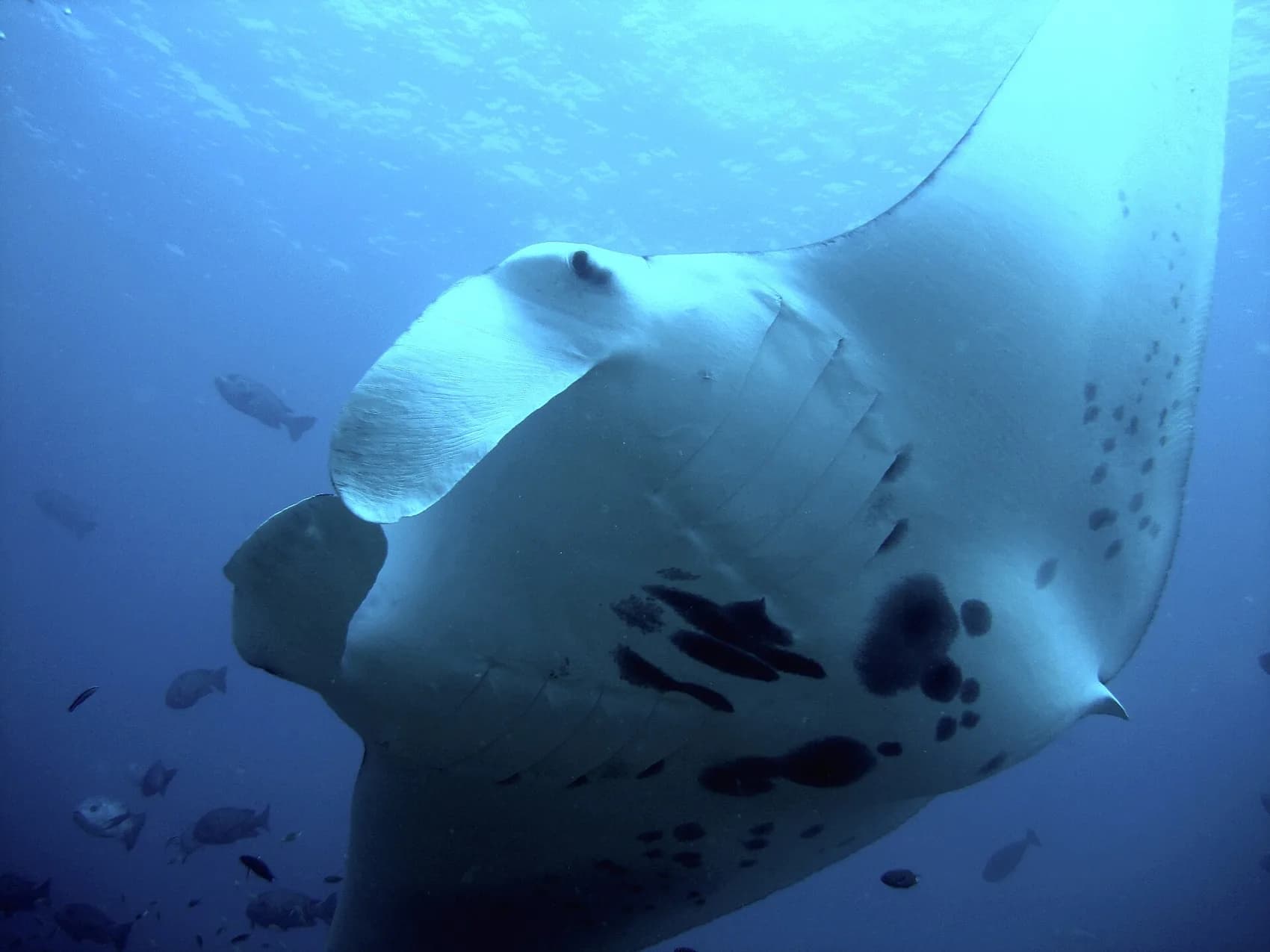
Photo asands, CC BY-SA 2.0
This is why Manta Point works as a destination when so many manta sites in the world do not. The station is a fixed address that the same individuals visit repeatedly, and it sits shallow enough that the animals spend their time within a few metres of the surface. Researchers identify individual rays from the spot patterns on their bellies, which is how it is known that many of the mantas here are residents rather than passers-by.
It also explains the etiquette. A ray that is being cleaned is doing something it needs to do, and a snorkeller hovering directly over the station interrupts it. Give the animals the column of water they are using, stay off to the side, and the encounter lasts. Crowd them and they leave, for you and for the boat that arrives twenty minutes later.
Which trip should you actually book?
Snorkelling, diving, a day trip out of Bali or something gentle enough for kids are four different mornings, at four different prices, on the same patch of water.
Snorkelling: the boat loop with mask and fins
This is what makes Manta Point work without any certification. A small motorboat runs a loop of two to four stops, usually Manta Point or Manta Bay plus Gamat Bay and Crystal Bay, with mask, snorkel and fins provided. Nusa Penida's reef mantas rise to a cleaning station just under the surface, so you see them properly from above without ever going deep.
Budget two to four hours depending on how many stops the boat makes. A buoyancy vest is normally handed out, which lets you float above the rays instead of treading water. Manta Point is the most reliable spot for sightings and the roughest to sit above, so if you get seasick at all, take something before you board rather than after. Book the day before and take the earliest departure, since morning sea is flatter and the water reads better.
You never touch a ray, and you keep roughly three metres of distance. That is the rule, and it is why they keep coming back. Reef-safe sunscreen only.
Manta snorkelling trips, Nusa Penida
Scuba diving: two dives with a local centre
Manta Point is a shallow dive, since the cleaning station sits only a few metres down, but it is exposed. Expect swell, surge and sometimes current. Centres on Nusa Penida and Lembongan usually run it as two dives across a morning, often paired with Crystal Bay. There is no reason to go deep here: the rays are near the surface, the same water the snorkellers are in.
Open Water is enough for Manta Point, since the interest is at the top of the water column rather than at depth. Crystal Bay goes deeper and gets noticeably colder. That is where mola mola show up between July and October, and it suits divers who are already comfortable. A discover-scuba dive is possible without certification, but for a first look at mantas snorkelling is honestly the more comfortable way to do it. Swell at Manta Point can cancel the trip or push the boat across to Manta Bay instead, so leave slack in the day and have a fallback plan.
Manta diving trips, Nusa Penida
Day trip from Bali: the full day with a fast boat
If you are not sleeping on the island, the simplest version is a day trip out of Bali. The fast boat from Sanur, the snorkelling boat, a guide and usually lunch are all bundled. The manta loop runs in the morning while the sea is still readable, then you head back in the afternoon, without managing ferry times or scooter hire.
The loop from Bali normally strings together Manta Point or Manta Bay, Gamat Bay and Crystal Bay, sometimes with a stop on land. It is the most expensive way to do it, because you are paying for the crossing, and by far the least tiring for a first visit. Take the earliest departure you can, since crossings and sea state both tend to deteriorate as the day goes on. It is also a long day: hotel pickup can start before dawn and you are back late, and if the sea is called off, the fast boat leg is usually the first thing to go.
Manta Point day trips from Bali
With kids: Manta Bay rather than Manta Point
The rays are the easy part. The hard part is the boat. Manta Point sits out in open water and takes the swell head on, which is a lot for a child or anyone who is unsure in water. Manta Bay is further west, closer in and generally calmer, and operators often pick it for exactly this reason. Sightings are slightly less consistent, and the trade is usually worth it.
Ask the operator directly which site they plan to use, and say you would rather have the calmer one. Most will tell you honestly. Buoyancy vests are standard, and a child who can float in a vest and breathe through a snorkel will see the rays perfectly well from the surface. Keep the loop short: two stops is plenty, four turns into a long morning on a small boat.
Swimming is banned at several Nusa Penida beaches because of currents. That has nothing to do with snorkelling from a boat, which is supervised and vest-assisted.
Family-friendly manta trips, Nusa Penida
Manta Point or Manta Bay?
These are two different sites on the same coast, and tour listings use the names almost interchangeably. Knowing which one you are being taken to is the single most useful thing on this page.
| Manta Point | Manta Bay | |
|---|---|---|
| Where it is | Off the south-west tip, in open water below the cliffs | Further north-west, tucked into the coast |
| Sea state | Swell and surge most days, no shelter at all | More sheltered, usually calmer |
| Odds of seeing rays | The reference cleaning station, rays almost year-round | Good odds too, a little less consistent |
| Boat ride | Longer, it is the furthest site on the loop | Shorter, which is partly why operators pick it |
| Snorkel or dive | Both, and the dive is shallow | Mostly snorkelling |
| Water clarity | Variable, often green with the plankton the rays feed on | Usually a shade clearer |
| The feel of it | Wild and open, more dramatic, more boats on one mooring | Quieter water, still heavily used by tour boats |
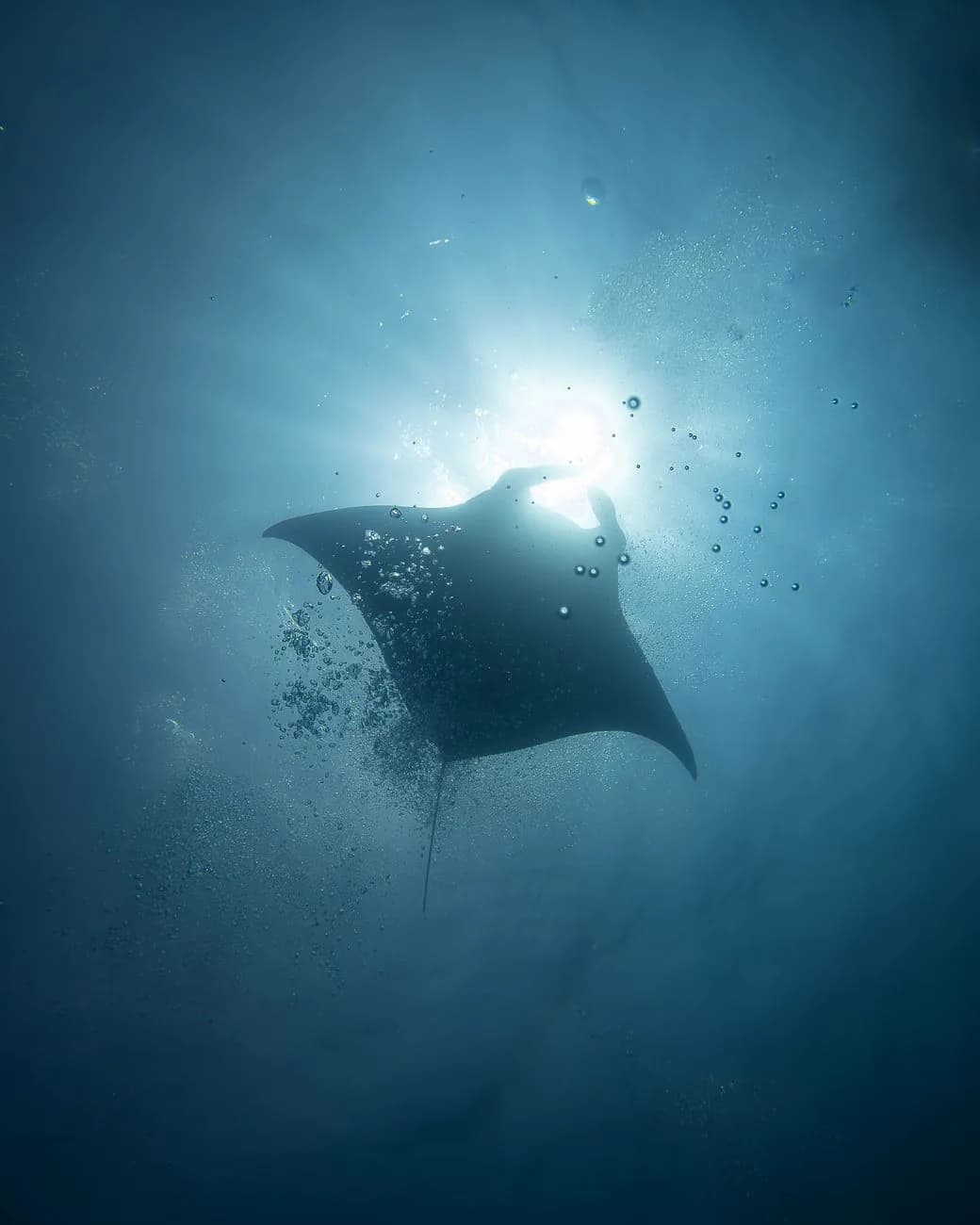
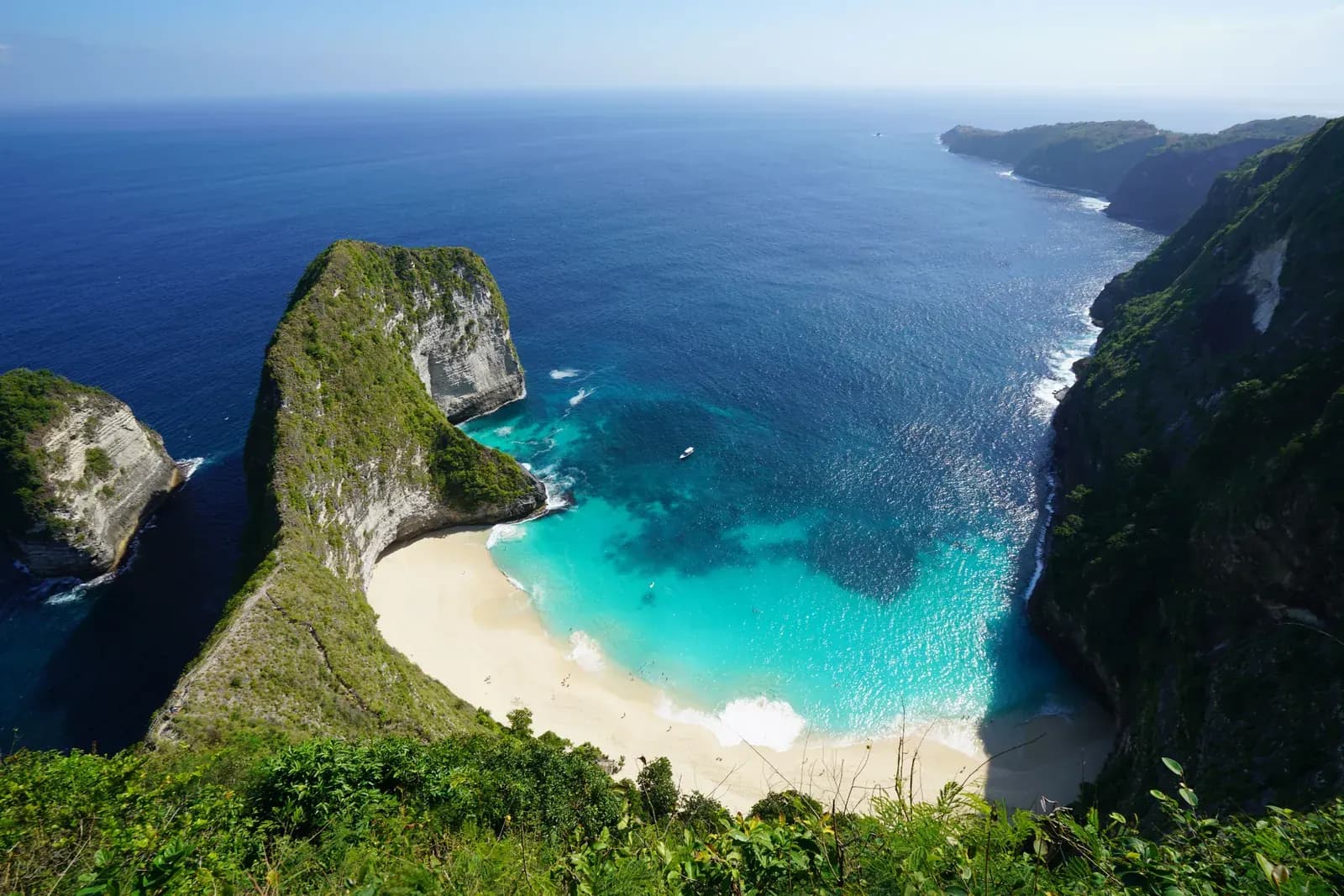
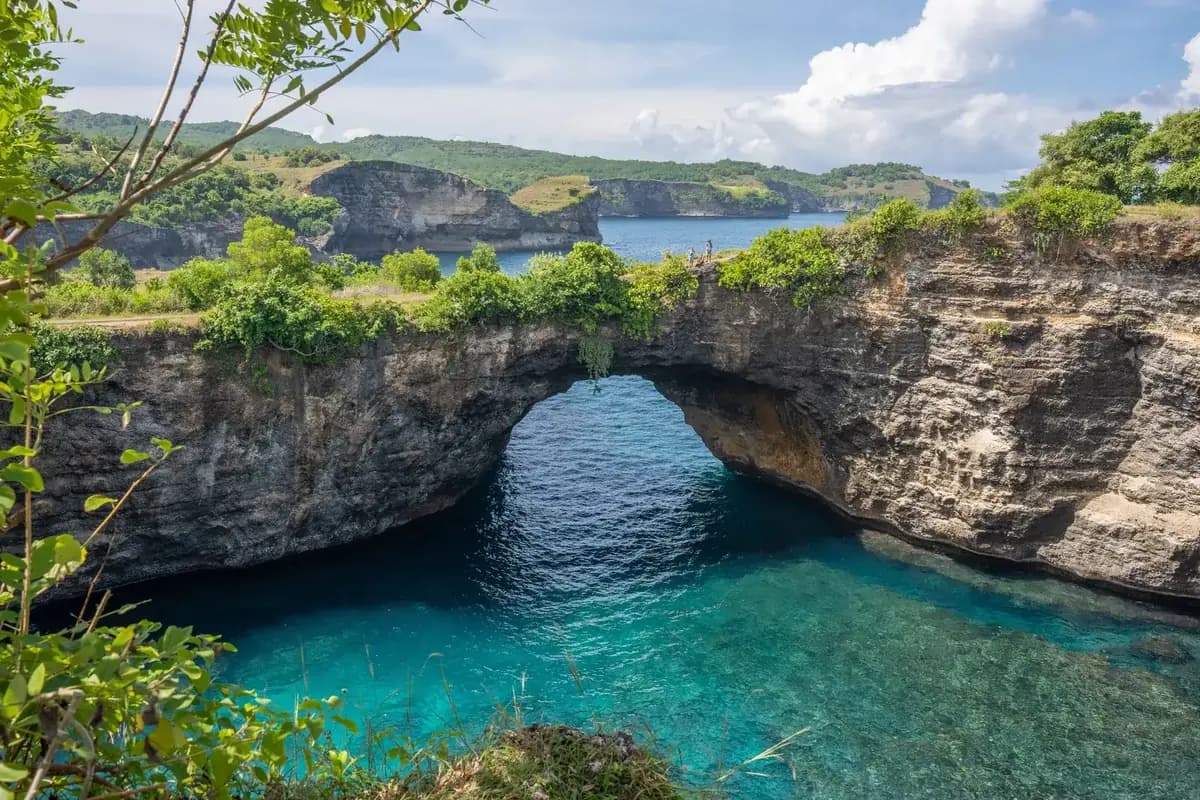
There is a third name in circulation, Manta Bay at Kelingking, which is simply the stretch of water below the famous cliff. Some operators use it as a manta stop, some use it as scenery, and a listing that mentions it without mentioning either of the two sites above is worth a question before you pay. If you are pairing the boat with the west coast on land, the viewpoints at Broken Beach and Angel's Billabong and the cliff at Kelingking Beach sit directly above this coastline.
Snorkelling or diving: what you actually see
At most dive sites this question decides whether you see anything at all. At Manta Point it barely matters, and the dive shops writing the top-ranking pages have little reason to say so.
What a snorkeller gets
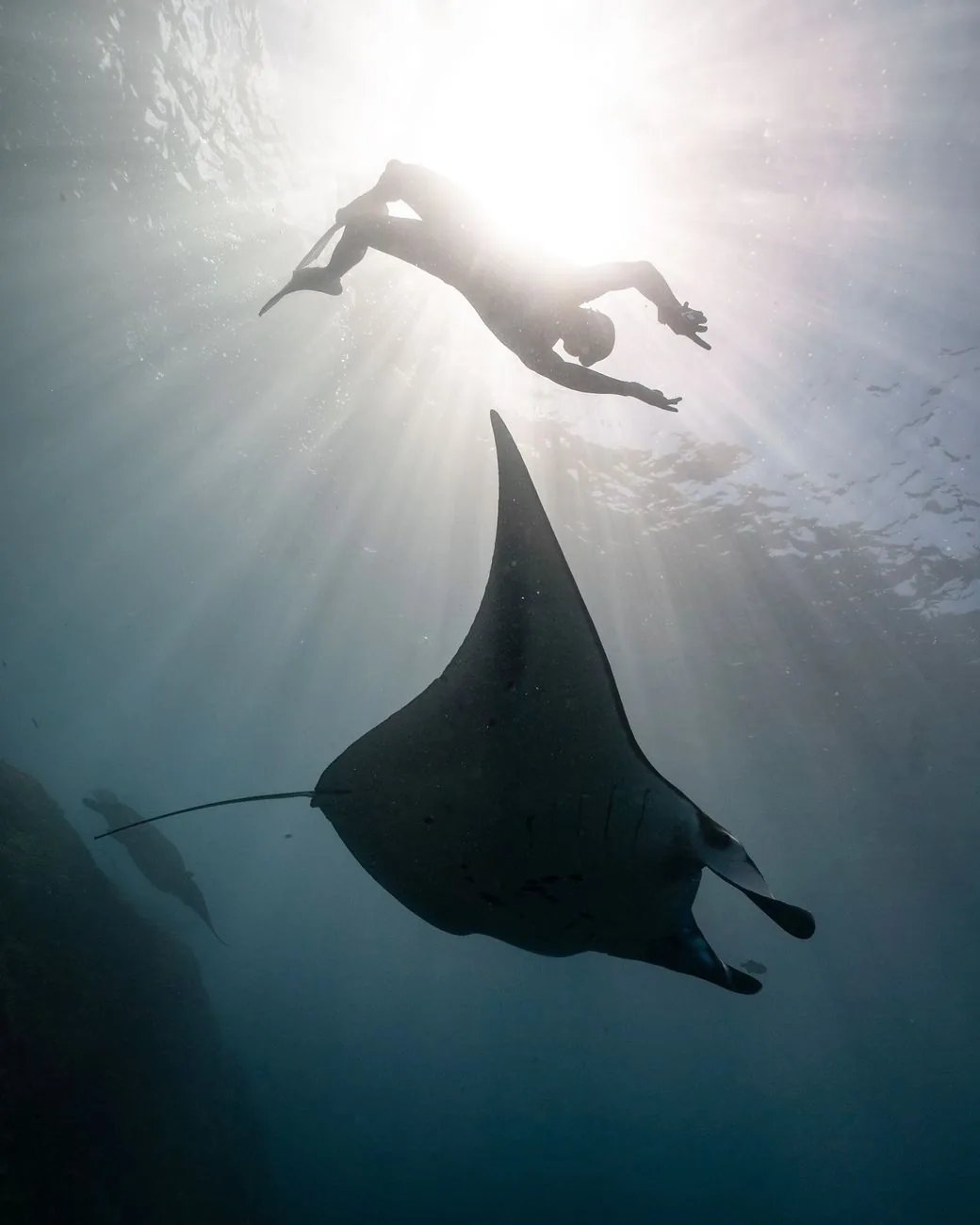
You float on the surface in a vest while the rays circle the cleaning station below you. Because they rise to be cleaned, they often pass within a couple of metres, close enough that a five metre wingspan stops being an abstraction and becomes something slightly alarming. Mask, snorkel, fins and the vest come with the boat, and the guide puts you in the right part of the water.
The limitation is not what you see, it is how long you last. Sitting on the surface in swell is tiring, the water is cooler than the Bali beaches have led you to expect, and this is exactly where seasickness gets people. Most snorkelling stops run twenty to forty minutes, which is usually enough.
What a bottle changes
Divers settle on the sand below the station and watch the rays come in from underneath, which is a genuinely different angle and a far calmer place to be than the surface. Under the water the swell stops mattering, the cold matters more, and you have an hour rather than half of one. Open Water certification is enough: depth is not the point here, and the interesting water is shallow.
The honest reason to dive Nusa Penida is usually the rest of the day rather than the mantas themselves. Crystal Bay goes deeper, gets properly cold, and is where mola mola turn up between roughly July and October. If the mantas are the whole objective and you are not already certified, a course is a lot of money and time to spend on an animal you can see perfectly well from the surface.
| Snorkelling | Scuba diving | |
|---|---|---|
| What you need | Nothing. Mask, snorkel, fins and a vest come with the boat | Open Water certification, or a supervised discover dive |
| Where you watch from | The surface, looking down onto the cleaning station | The sand a few metres below, looking up |
| How close the rays come | Often within a few metres, since they rise to be cleaned | Similar, and they pass overhead rather than underneath |
| Time in the water | Twenty to forty minutes per stop | Forty to sixty minutes, usually two dives in a morning |
| Seasickness | The main problem. Floating in swell is what does it | Much less once you are under. The surface intervals are the hard part |
| Cold | Noticeable after half an hour, a rash vest helps | A proper wetsuit is standard here, and you will want it |
| Cost | The cheapest way into the water by a wide margin | Several times more for a two dive morning |
Reading the conditions before you book
A lot of pages will tell you to visit in a particular window to catch the rays. It is worth being blunt about this: the cleaning stations at Nusa Penida are permanent and the reef mantas are resident. They are there in February and they are there in August. What moves through the year is the sea.
| Season | Departure | Sea state | Visibility | Trip runs? | Seasick risk |
|---|---|---|---|---|---|
| Dry, May to Sep | First boat, 07:30 to 09:00 | Usually the flattest water of the year | Often 15 to 25 m | Almost always goes ahead | Low |
| Dry, May to Sep | Mid morning, 09:00 to 11:30 | Building as the wind picks up | Decent, more stirred up | Normally goes ahead | Moderate |
| Dry, May to Sep | Afternoon, after 13:00 | Choppy, the afternoon wind is the rule | Reduced by traffic and sediment | Fewer operators run it at all | High |
| Shoulder, Apr, Oct, Nov | First boat, 07:30 to 09:00 | Usually manageable, occasional heavy days | Commonly 10 to 20 m | Usually goes ahead | Low to moderate |
| Shoulder, Apr, Oct, Nov | Mid morning, 09:00 to 11:30 | Choppy more often than not | Mixed, some days green with plankton | Some diversions to Manta Bay | Moderate |
| Shoulder, Apr, Oct, Nov | Afternoon, after 13:00 | Rough more often than not | Poor to average | Frequently dropped or moved | High |
| Wet, Dec to Mar | First boat, 07:30 to 09:00 | Swell common, can arrive overnight | Variable, 8 to 15 m is normal | Frequent diversions to Manta Bay | Moderate to high |
| Wet, Dec to Mar | Mid morning, 09:00 to 11:30 | Frequently rough, wind against swell | Often green and plankton heavy | Cancellations and diversions routine | High, even for good sailors |
| Wet, Dec to Mar | Afternoon, after 13:00 | Rough, squalls come through fast | Poor | Usually not running at all | High |
Orders of magnitude from operator practice and reported conditions, not a forecast. Nothing here guarantees a sighting or a departure: both belong to the ocean.
Dry season, May to September: aim for the first boat
This is the combination to aim for. A first departure gets flat water, clean visibility and a boat that reaches the real site rather than a substitute, ahead of the fleet. Mid morning is still workable but busier, with several boats stacked on the same mooring, which spreads snorkellers thin and keeps the rays lower. Afternoon is the weakest slot even in this best season: most operators do not offer it, and the ones that do work a rougher sea and flatter light. If you have one morning on the island, spend it here.
Shoulder months, April, October, November: read the forecast the night before
Water runs around 26 to 28 °C most days here, warmer than the dry season but still capable of a cold patch on the way through. A good bet with more variance than the dry months, so a flexible booking is worth slightly more than the cheapest one. By mid morning you will probably still get in the water, but there is a real chance the site is not the one printed on your voucher. Ask on the boat, not on the beach afterwards, and treat Manta Bay as a fair substitute rather than a swindle. Afternoon is not worth planning around: if it is the only slot available, keep the day for the west coast viewpoints and put the boat on the following morning.
Wet season, December to March: book early and leave a second attempt
Water is at its warmest here, around 27 to 29 °C, but warm does not mean calm and this is the roughest stretch of the calendar. Still the best window of a difficult season, and the rays are absolutely there. What you are buying is a morning that might be moved or called off, so book early in your stay and leave yourself a second attempt. Mid morning is the combination that produces the bad reviews, two hours on a small boat in short steep chop then a mooring that will not sit still, so take the first departure instead and take the refund if it is offered. In the wet months the afternoon sea off the south coast is a job for the crew rather than an outing, and no sighting is worth pushing a boat into it.
What genuinely varies
Sea state and visibility, not the animals. Rough water is far more common from December through March, when trips get cancelled or quietly diverted. The drier months tend to give flatter crossings and cleaner water, and September is the clearest of them. Plankton blooms can turn the water green in any month.
Time of day beats month
Morning boats get flatter water and better light, and they reach the mooring before the queue builds. By midday the same site can hold a dozen boats and a hundred people, which changes the experience more than the calendar does.
The one seasonal thing
Mola mola, the oceanic sunfish, appear in the cold upwellings around Crystal Bay roughly between July and October. That is a dive, it is cold, it is for experienced divers, and it has nothing to do with the mantas.
The water is colder than you expect
Everybody arrives on Nusa Penida with the temperature of the Bali beaches in their head, and the channel between the two islands does not work that way. Cold, nutrient rich water pushes up through this strait, which is precisely what feeds the plankton, which is precisely what supports the mantas. The thing that makes the wildlife worth seeing is the thing that makes the water cold.
In practice, surface temperatures around 24 to 26 °C are normal in the dry season, and you can swim through a thermocline that drops it several degrees in the space of a metre. Nobody is at risk on a snorkel stop, but forty minutes floating still in that, with wind on your back between stops, is a different proposition from a swim off Sanur.
Take a rash vest or a shorty if you have one, and ask for a wetsuit if you feel the cold: most operators carry a few. Bring a dry layer for the ride home as well. The boat is fast and wet, and the second crossing is the one where people who were fine on the way out start to shiver.
What to have in the bag
- Rash vest or shorty wetsuit, more for warmth than for sun
- Seasickness tablets, taken before boarding
- Reef-safe sunscreen, applied well before you get in
- A dry shirt and a towel for the ride back
- Cash in small notes for the harbour and the driver
- A strap for your mask if you wear glasses, and no loose hats
Getting to the boat
There is no road to Manta Point and nothing to look at from land. The only question is which harbour you leave from, and how much of the day the crossing eats.
Staying on Nusa Penida
The easy version. Book the boat the evening before at Toya Pakeh or Banjar Nyuh, take the first departure, and you are back at the harbour by lunchtime with the afternoon free for the west coast. It is also the cheapest way in by a wide margin, and it gives you a second chance if the sea cancels your first attempt.
Day trip from Bali
Fast boats run from Sanur and take roughly forty minutes in reasonable conditions. Packaged day trips add hotel pickup, the snorkelling boat, a guide and usually lunch. Pickup in the south can start before six in the morning, and you are back late afternoon. What that day trip actually costs, once the gate fees are counted.
From Ubud
Add an hour each way to reach Sanur, which makes for a very long day. Ubud is a fine base for the interior and a poor one for this particular morning. If the mantas matter to you, sleep a night on the island instead. Snorkel boats from Padang Bai, in the east, also cross to Manta Point from about 500,000 IDR, and pair well with a morning at Blue Lagoon Beach.
From Lembongan
Dive centres on Nusa Lembongan and Ceningan run the same sites, with a slightly longer boat ride to the south-west corner. It is a legitimate base if you want quieter evenings than the Penida harbour villages offer.
One piece of planning is worth stating plainly: a single night on Nusa Penida changes this trip more than anything else on the page. It converts a rushed day with two sea crossings into a morning boat and a free afternoon, it puts you on the first departure rather than the third, and it means a cancelled sea day is a disappointment rather than a write-off. The wider case for staying over is on the Nusa Penida guide.
What it costs
Treat every figure below as an order of magnitude. Prices move with the season, the number of stops and how full the boat is, and any page quoting you an exact rupiah amount is quoting last year.
Already on Nusa Penida
Around 30 euros a head for a shared boat running two to four stops. This is far and away the cheapest way to do it, and the reason people who stay a night on the island end up glad they did.
Day trip from Bali
Somewhere between 70 and 120 euros, because the fast boat from Sanur, the transfers and usually lunch are folded into the price. You are paying for the logistics, not for better rays.
Two dives
Several times the snorkelling price once gear is included. Centres on Nusa Penida and Lembongan usually sell it as a morning of two dives rather than a single tank, often pairing Manta Point with Crystal Bay.
Two costs get forgotten. The first is the fast boat if you are coming from Bali and booking the boat separately, which is a return fare on top of everything else. The second is time: a day trip from the south of Bali is twelve hours door to door, and roughly four of those are spent moving.
One thing genuinely worth paying for is free cancellation. It matters more here than at any temple or waterfall on the island, because the failure mode is not rain but a sea that stops the boat leaving the harbour at all.
How to behave around the rays
The mantas come to Manta Point because it is a cleaning station and because they are left alone there. Both halves of that matter, and the second one is on you.
- Never touch a ray, and never try to ride or grab one. Their skin carries a mucus layer that protects against infection, and a hand takes it off.
- Keep roughly three metres of distance and let them come to you. Chasing a manta is the fastest way to make it leave, which spoils it for the boat behind yours as well as your own.
- Stay out of the space directly above a ray at the station. Sitting on top of it interrupts the cleaning, which is the entire reason it is there.
- Reef-safe sunscreen only, and put it on well before you get in so it has bonded. Better still, wear a rash vest and skip the chemistry.
- No flash photography. It does the rays no favours and it will not improve your picture at that distance anyway.
- If your guide is encouraging people to touch the animals, that tells you what kind of operator you booked. Say something, and pick differently next time.
This is not decoration. Reef mantas are a slow breeding species, classified as vulnerable, and the population around these islands is one of the most heavily visited in Indonesia. The site works because hundreds of people a day mostly follow three simple rules. It stops working the moment they do not.
The other stops on the same boat
Almost nobody sells Manta Point on its own. It comes as part of a loop, and the other stops are what fill the two hours around it.
Crystal Bay
A sheltered bay on the west coast with a beach you can actually land on, which makes it the usual last stop. Below the surface it drops into cold water, and that is where divers go looking for mola mola from July to October.
Gamat Bay
A small bay north of Crystal Bay, usually the calmest water on the loop and the one people remember for coral rather than for size. A good place to put a hesitant snorkeller in the water first.
Wall Point and Toya Pakeh
Drifts along the north-west coast that some operators add when the swell keeps them away from Manta Point. Ask whether a substitution replaces the manta stop or comes on top of it.
The west coast on land
If the boat morning ends by lunchtime, the viewpoints are the obvious afternoon. Start with Broken Beach and Angel's Billabong, which share a car park twenty minutes up the road.
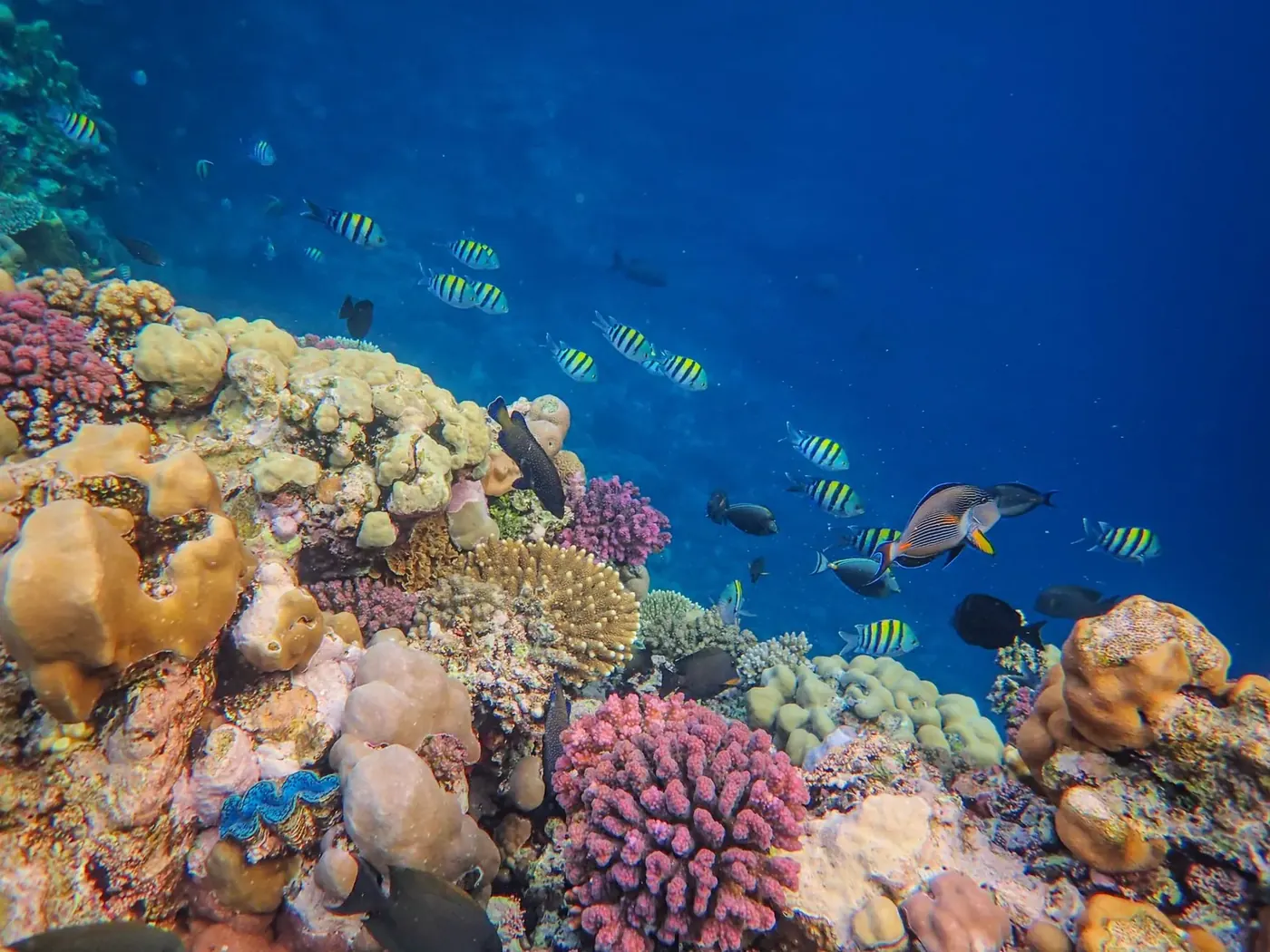
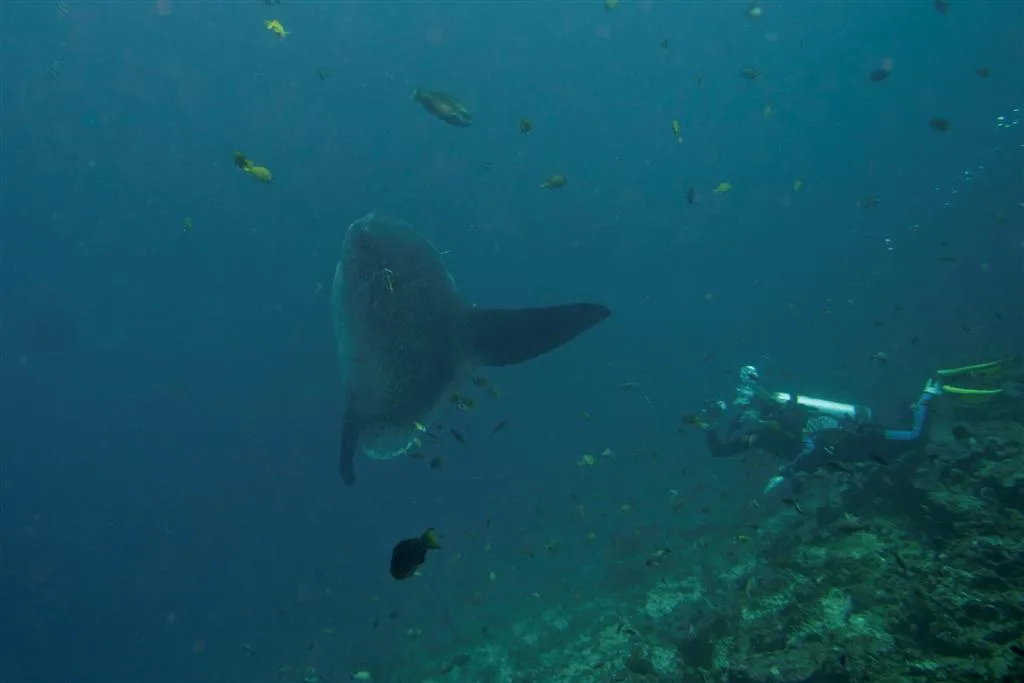
Photo Andrepiazza, CC BY-SA 3.0
So, is Manta Point worth it?
The most searched question about this site, and it deserves a straight answer rather than an enthusiastic one.
If you want to see the animal
Yes, clearly. A four metre reef manta passing two metres under you is one of the few things on Bali that is better in person than in the photographs. It costs about as much as a mediocre dinner in Seminyak, and you do not need a single qualification to do it.
If you take the first boat
Yes, with conditions. Book the earliest departure, in the dry season if you have the choice, from a bed on the island rather than a hotel in Kuta, and with free cancellation. Do all four and the odds of a good morning are strongly in your favour.
If the boat is the problem
Probably not. If you get seasick on a ferry, dislike open water, or are only mildly curious about the rays, this is a long uncomfortable morning for an animal you might not see. Skipping it is a perfectly reasonable decision.
What tips it for most people is the combination that almost no other manta site offers: a resident population at a shallow, fixed cleaning station, close enough to the surface that a complete beginner in a vest gets the same view as a certified diver. That is why this specific patch of rough water off a cliff in southern Indonesia has a name that travels, and it is why the boats keep going out.
Manta Point: common questions
The questions people actually search before booking a boat, from the Australian and American results.