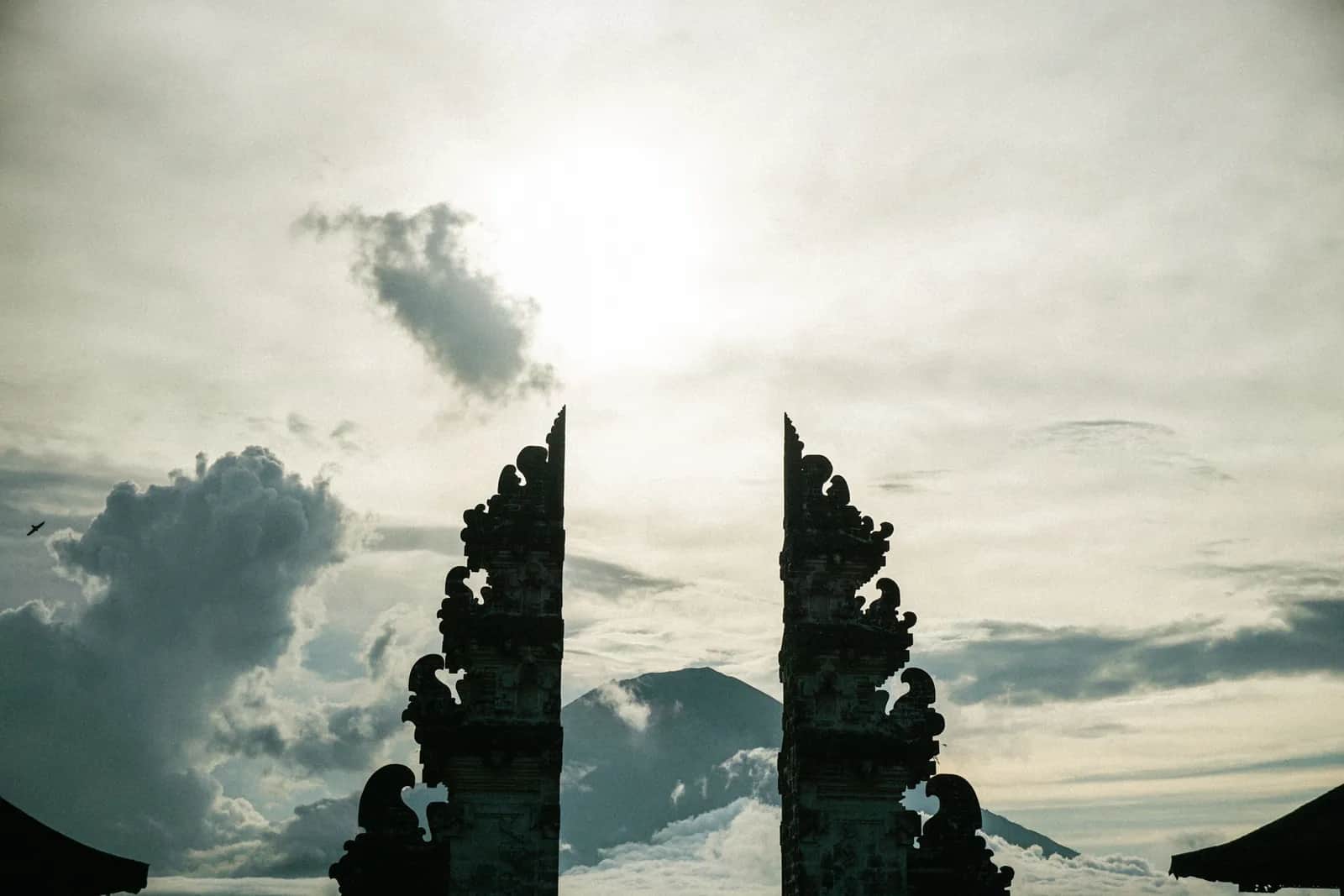
A split gate stands on a hillside in Karangasem, in the far east of the island, and it opens onto Mount Agung. In Balinese Hinduism this is part of Lempuyang, one of the six sanctuaries that anchor Bali spiritually, older and considerably more important than anything on a standard tour itinerary. On the internet it is a mirror-still lake with a volcano rising behind it.
There is no lake. There has never been a lake. What there is instead is a genuinely extraordinary view, a queue that routinely runs to three hours, and a drive that eats an entire day from anywhere most people stay. Getting those three things in the right order is what this page is for.
If you would rather not organise the logistics yourself, this is one of the few sites on Bali where a guided trip genuinely earns its price. The early start is the whole game, and the operators who run it leave in the dark.
Skip the 3 am logistics
Lempuyang sunrise trips, east Bali
- ✓Hotel pickup in the dark, which is the part that makes or breaks the visit
- ✓The driver waits while you queue, so the day does not collapse if the wait runs long
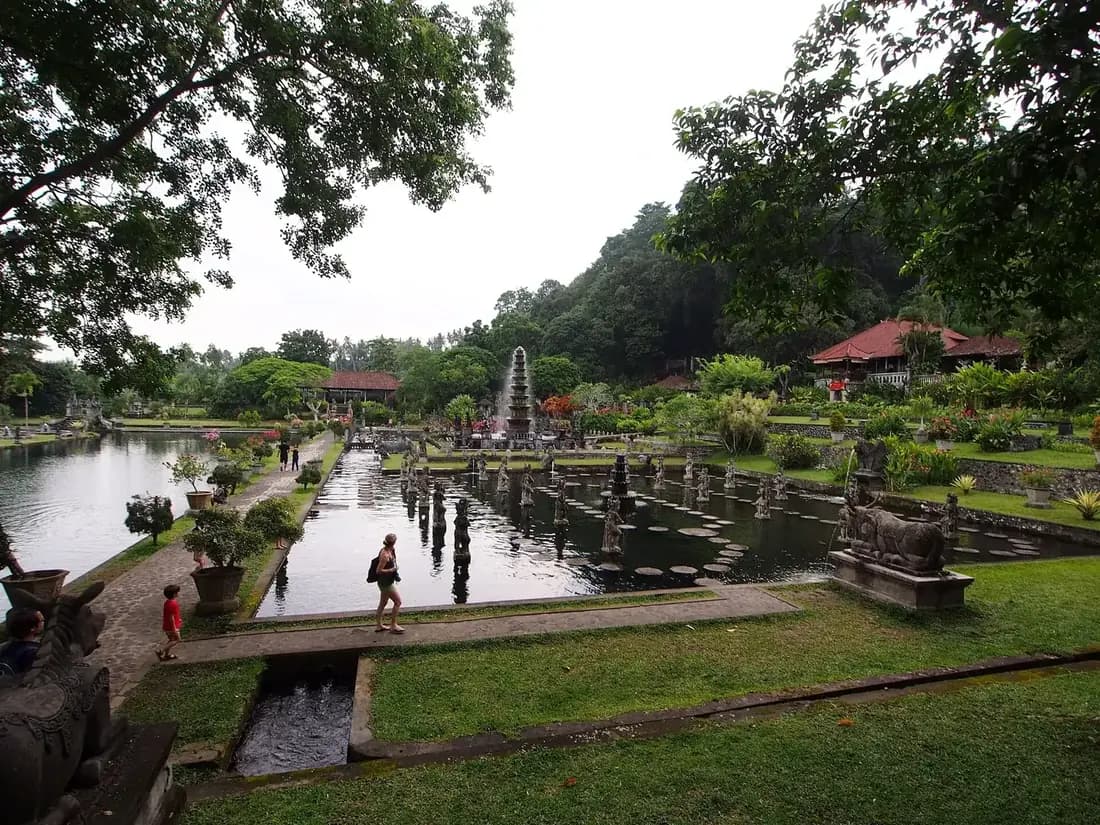
- ✓Usually combined with Tirta Gangga or Besakih on the way back west
- ✓Free cancellation on most listings if the forecast turns
Affiliate link. Booking through GetYourGuide costs you nothing extra and supports the guide. Price and rating checked September 2026. Both move with season and demand.
On this page
What the place actually looks like
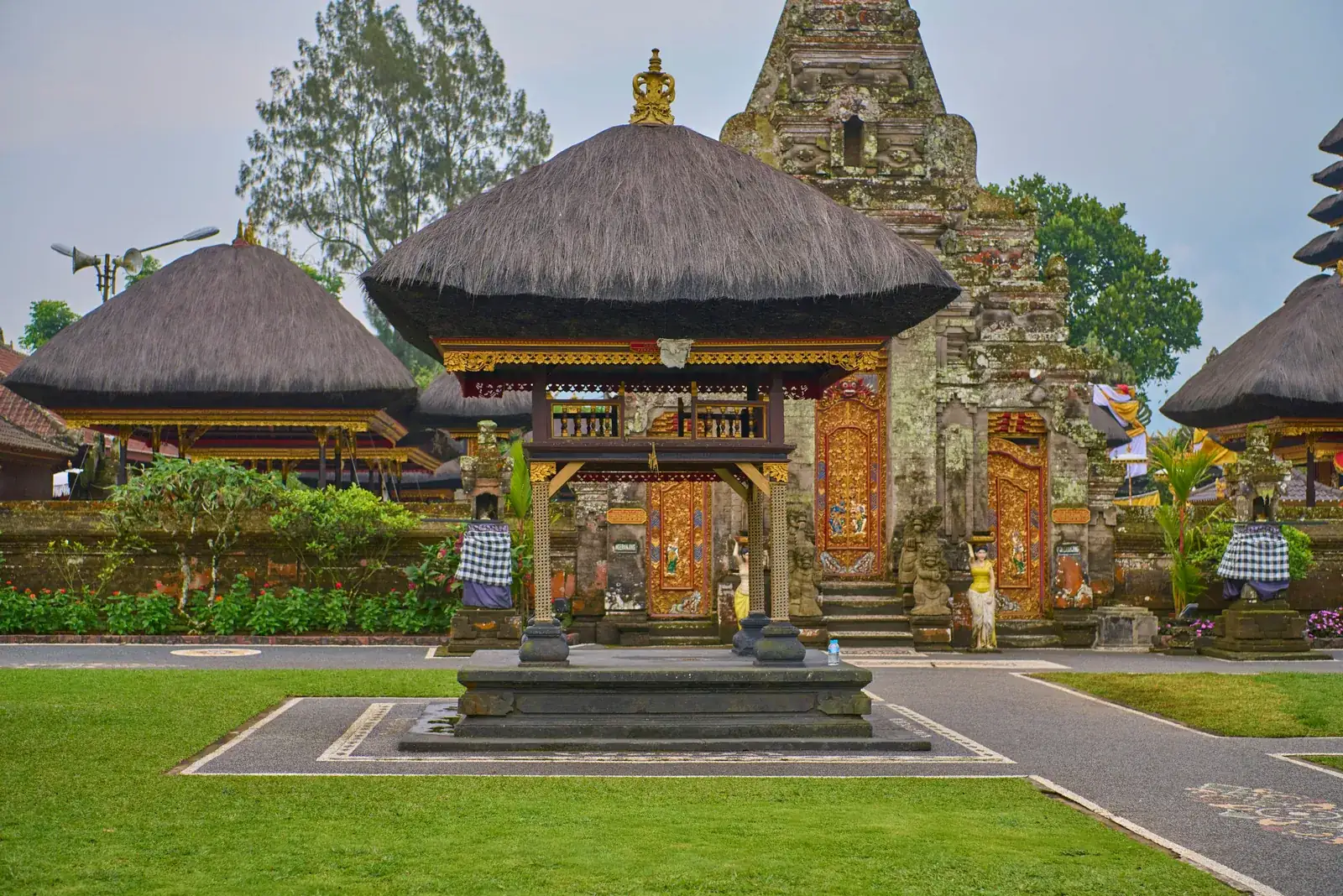
Before the mechanics of the photograph, the setting it is taken in. This is the courtyard on an ordinary morning.
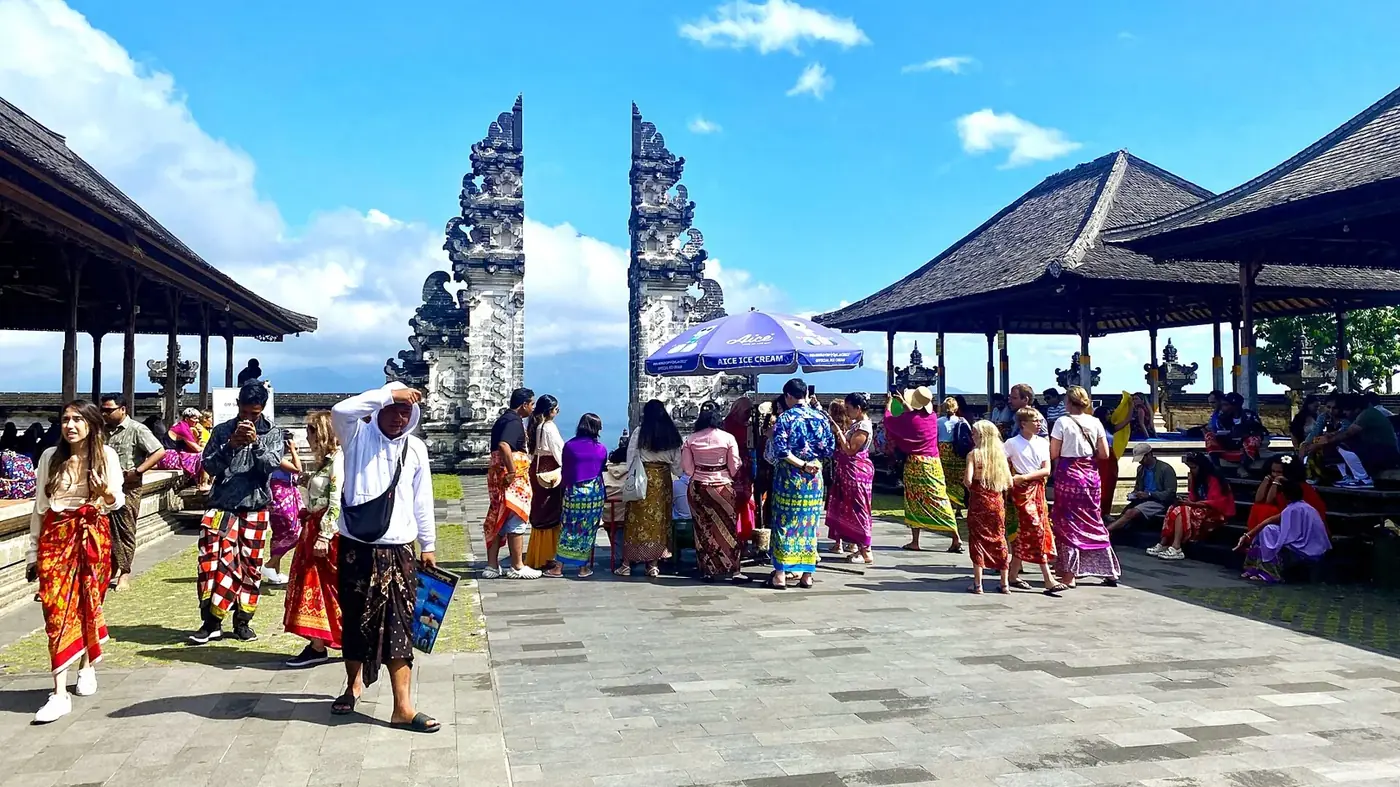
The split gate, a candi bentar, stands at the far edge of a paved courtyard with pavilions down both sides and the land dropping away behind it. There are perhaps two hundred people up here on a normal morning and a good number of them are Balinese worshippers rather than visitors, which is easy to miss because everybody is wearing the same rented cloth.
What surprises most people arriving is how small the photogenic part is. The gate is one structure at one end of one courtyard, and the queue for it occupies a strip of ground perhaps ten metres wide. Everything else, the pavilions, the offerings, the stairway climbing into the trees behind, gets walked past.
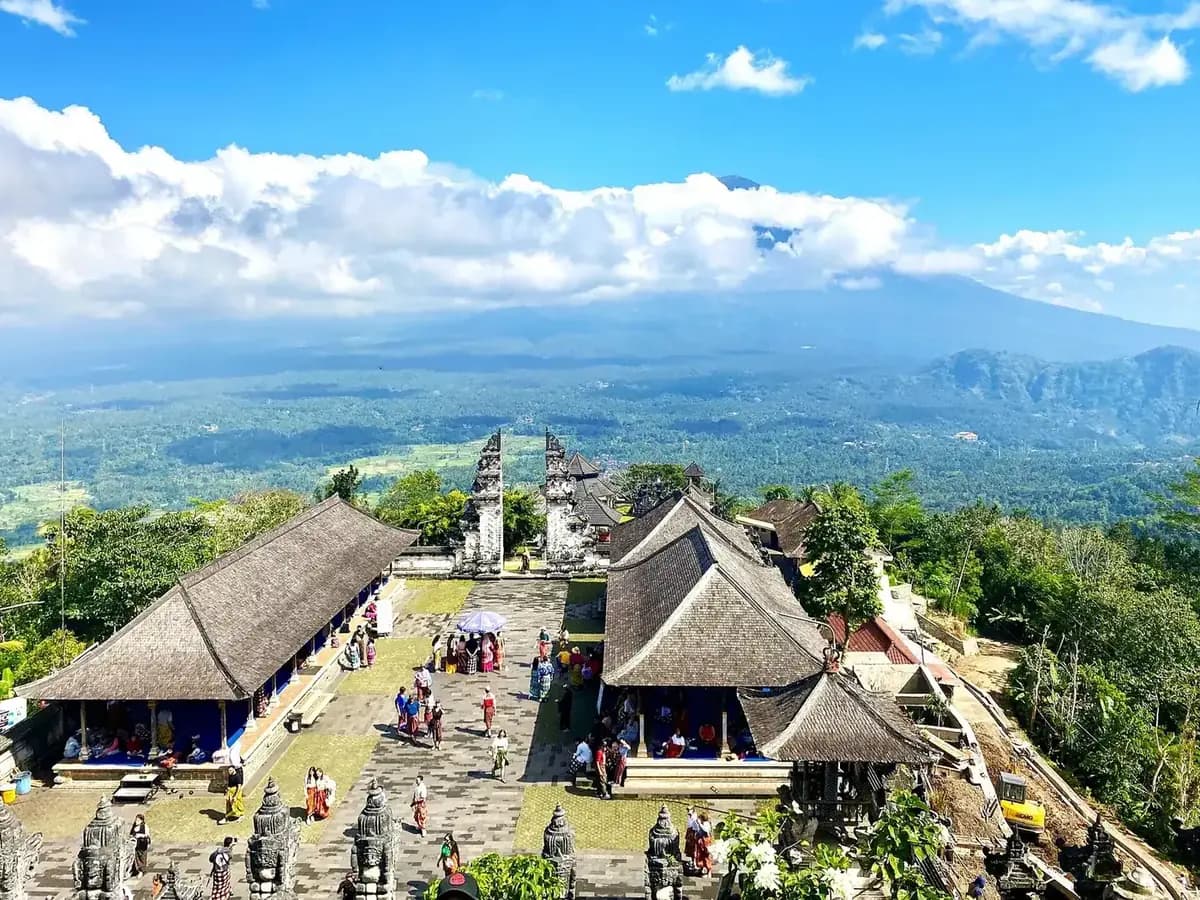
The second surprise is the altitude. At around six hundred metres the air at dawn is properly cool, mist sits in the valley below, and the whole site can be inside a cloud with no warning at all.
How the photograph is made
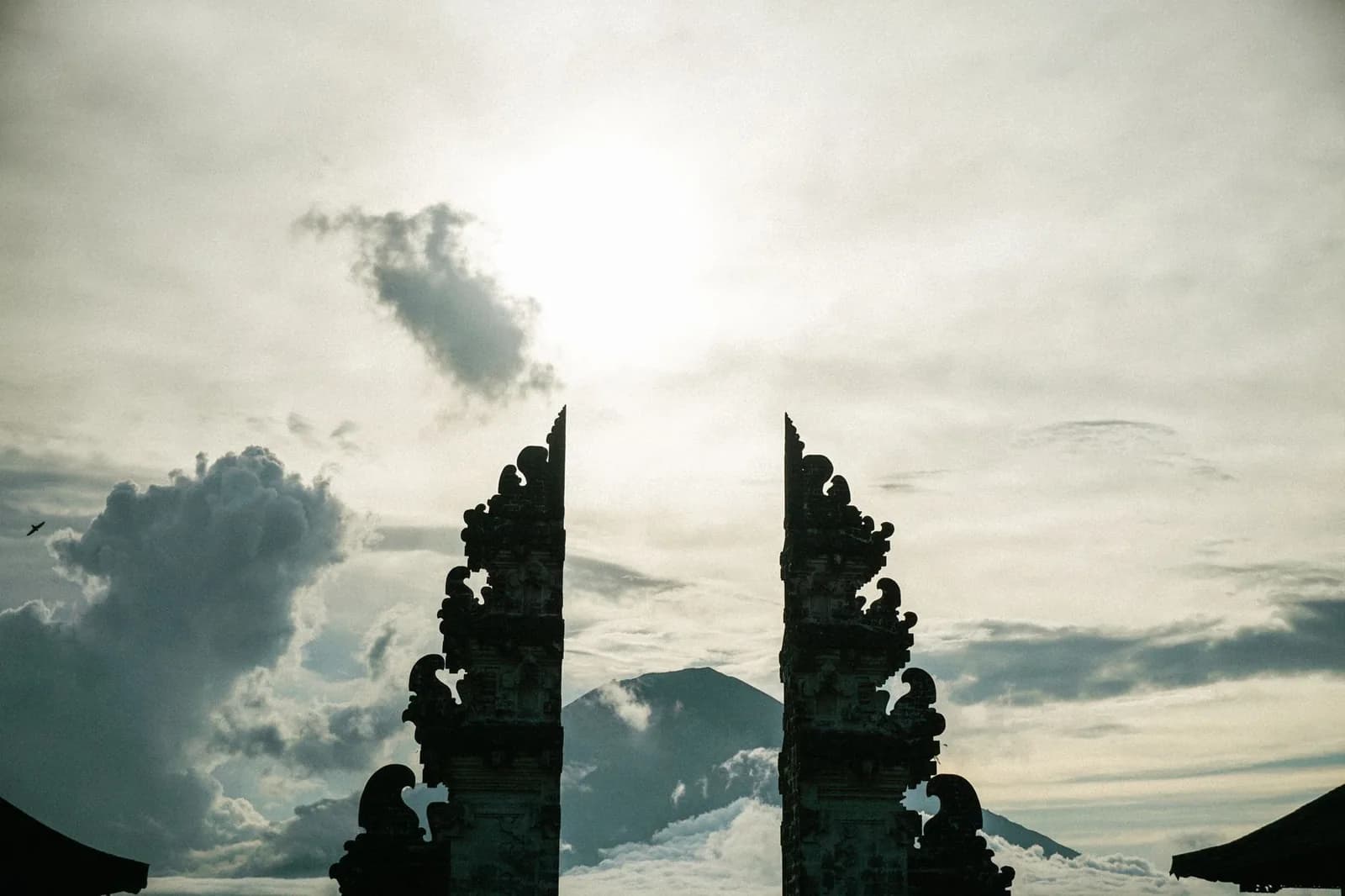
The same gate, from the same spot, seconds apart. Here is the ground, with and without the mirror.
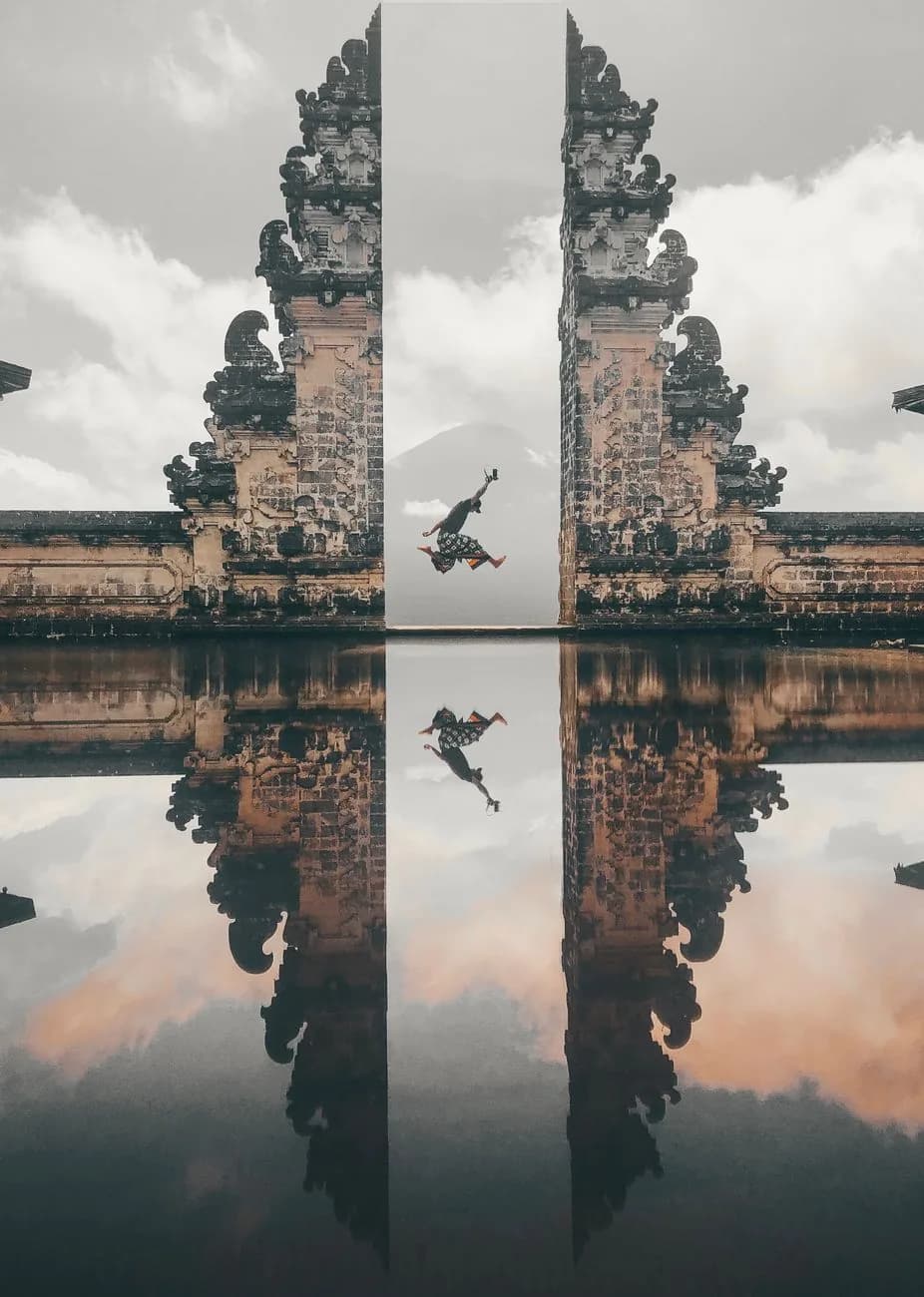
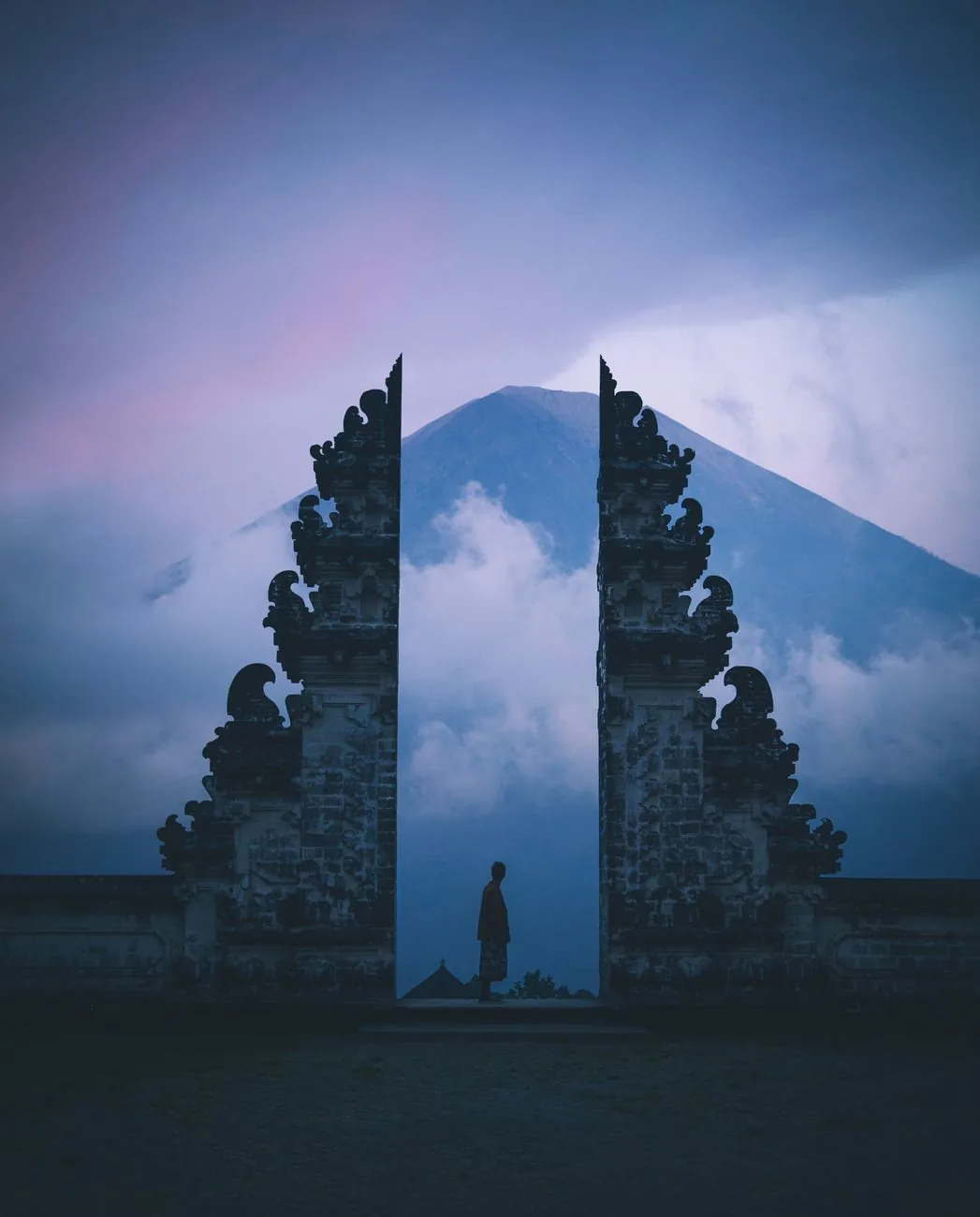
At the front of the queue a temple photographer takes your phone, crouches, and holds a rectangle of mirrored glass just below the lens. The mirror catches sky and stonework, the camera reads it as still water, and you get the image. It takes about twenty seconds and the people doing it are extremely good at it.
Calling this a scam overstates it. Nothing is concealed: the technique is performed in the open, in front of a hundred people waiting their turn. What makes it feel like a deception is the millions of captions that have never once mentioned it.
Arrive knowing and it is a good trick, competently done, with the real view still there behind it. Arrive expecting water and you will spend three hours driving home feeling had.
The hour you arrive decides everything
Nothing about the site changes through the day. The queue, the cloud and the light do, and they pull in different directions.
| Arrival | Queue for the gate | Mount Agung | Leave by |
|---|---|---|---|
| At opening, 06:00 to 07:00 | Shortest of the day, though never actually short | Best odds of a clear summit | 03:00 from Seminyak or Canggu, 04:00 from Ubud, 05:00 from Amed |
| Early morning, 07:00 to 09:00 | Building fast, an hour or more by the end of it | Often still clear, cloud starting to gather | 04:30 from the south, 05:30 from Ubud |
| Mid morning, 09:00 to 12:00 | Two to three hours is normal | Frequently in cloud by now | Any time, which is exactly why everyone is here |
| Afternoon, after 12:00 | Thinning out through the afternoon | Usually gone entirely | Any time |
At opening: the only slot that gets you everything
The only arrival that gets you all three things at once: a manageable wait, the mountain visible, and light that has not gone flat. It costs you a night's sleep and a long drive in the dark, and it is still the right answer.
Early morning: a reasonable compromise
A reasonable compromise if a three in the morning alarm is not happening. You will queue properly and the mountain is a coin toss, but the site is still recognisably the one in the photographs.
Mid morning: the window every tour arrives in
The window every organised tour arrives in, and the one that generates the disappointed reviews. You spend most of your visit standing in a line for a photograph of a gate with cloud behind it.
Afternoon: the queue eases, the mountain does not come back
The queue eases and the mountain does not come back. Worth it only if you are staying nearby and treating the complex as a temple visit rather than as a viewpoint.
How the visit actually unfolds
Four stages, three of which involve waiting. Knowing the shape of it in advance is most of the difference between patience and irritation.
Stage 1: Leaving in the dark
Around three in the morning from Seminyak or Canggu, four from Ubud, five from Amed. The road east is empty at that hour, which is the one advantage of it.
Stage 2: Changing vehicles
Private cars stop at a lower car park and a local shuttle covers the last steep stretch. Small fee, not optional, and where the first wait happens.
Stage 3: Taking a number
You are handed a queue number for the gate and you wait. There is shade, there are warungs, and very little else. Bring something to do.
Stage 4: Your slot
A minute or two in front of the gate while the photographer works, with everybody behind you watching. Decide your pose while you are still in the line.
Getting there, and the shuttle nobody expects
Lempuyang sits in the far east of the island, which is the single biggest thing separating it from every other temple on a Bali itinerary.
| Coming from | Drive | Leave by, for opening |
|---|---|---|
| Seminyak, Canggu, Kuta | 3 h to 3 h 30 | 02:30 to 03:00 |
| Ubud | 2 h 30 | 03:30 to 04:00 |
| Candidasa | 1 h | 05:00 |
| Amed | 45 min to 1 h | 05:00 |
The compulsory shuttle
Your car does not go to the temple. Private vehicles stop at a lower car park and a local shuttle truck covers the last steep couple of kilometres. This is not presented as optional and it is not a shakedown either: the road above is narrow and the arrangement keeps it moving.
Budget a small fee per person each way and a wait at both ends. The trucks fill before they leave, so at quiet hours you may sit for ten minutes while one fills up.
By scooter
Possible from the east coast, genuinely inadvisable from the south. Three hours each way on Balinese roads in the dark, on an unfamiliar bike, before a long day, is how the statistics on this island get made.
From Amed or Candidasa the ride is short enough to be reasonable, and you still change onto the shuttle at the bottom.
Opening hours, dress code and how long you need
Hours
Roughly 06:00 to 17:00, and nowhere authoritative publishes that. Ceremonies close the site to visitors at short notice, sometimes for a full day, which is a real risk after a three hour drive and a reason to have a fallback in the east.
Dress
Sarong and sash are compulsory and provided with the entrance, for men and women alike. Shoulders covered. Bring your own sarong if you have one: the loaned ones are one-size polyester and every photograph you take will have one in it.
How long
Two to four hours on site, almost all of it queue. Twenty minutes of that is actually looking at the temple. Add another twenty if you walk any of the stairway, which almost nobody does and which is the best part.
Photographing it, with or without the trick
You get about ninety seconds at the front of the queue with a hundred people watching. Deciding what you want before you get there is the whole difference.
If you want the mirror shot
- Hand over the phone and let the photographer work. He knows the angle, you do not, and arguing about it burns your slot.
- Wear something with colour. Everybody is in the same rented sarong and the frame is grey stone and white sky, so a plain outfit disappears into it.
- Stand still rather than jumping. The mirror is hand-held, and movement is what produces the blurred, obviously-fake versions of this photograph.
- Tip. It is not included in anything you have paid and the expectation is universal.
If you want the real photograph
- Crouch low and shoot upward, so the gap in the gate frames Mount Agung rather than the sky above it. That composition is the reason the site exists visually.
- Shoot early. Light comes across the gate rather than into the lens, and the mountain has not gone into cloud yet.
- Step back and shoot the courtyard as well. The queue, the pavilions and the drop behind them are more interesting than another portrait, and nobody comes home with that picture.
- No drone during a ceremony, and ask before flying at all. The complex is an active sanctuary and enforcement varies.
What it costs
The site itself is cheap. Reaching it is not, and that is the line almost no guide draws.
| What you pay for | Detail | Order of magnitude |
|---|---|---|
| Shuttle from the lower car park | Private vehicles stop below and a local truck runs the last steep stretch. Not optional. | ≈ $3 |
| Entrance and donation | Collected at the temple, sarong included. Rates are set locally and move. | ≈ $3 |
| The gate photograph | Taken by the temple photographer with the mirror. A tip is expected rather than fixed. | ≈ $2 |
| Driver for the day | From the south this is a twelve hour round trip and is priced as a full day. | $45 to $65 |
All of it is cash, none of it is posted on a board, and every figure above moves. Treat them as orders of magnitude rather than prices, carry small notes, and budget a little more than you expect. The pattern is the same across the island: the entrance is trivial and the accumulation is not.
The part almost nobody visits
The gate belongs to Pura Penataran Agung Lempuyang, the lowest of seven temples strung up the mountainside. Above it a stone stairway of well over a thousand steps climbs through forest to Pura Lempuyang Luhur, near the summit of Mount Lempuyang.
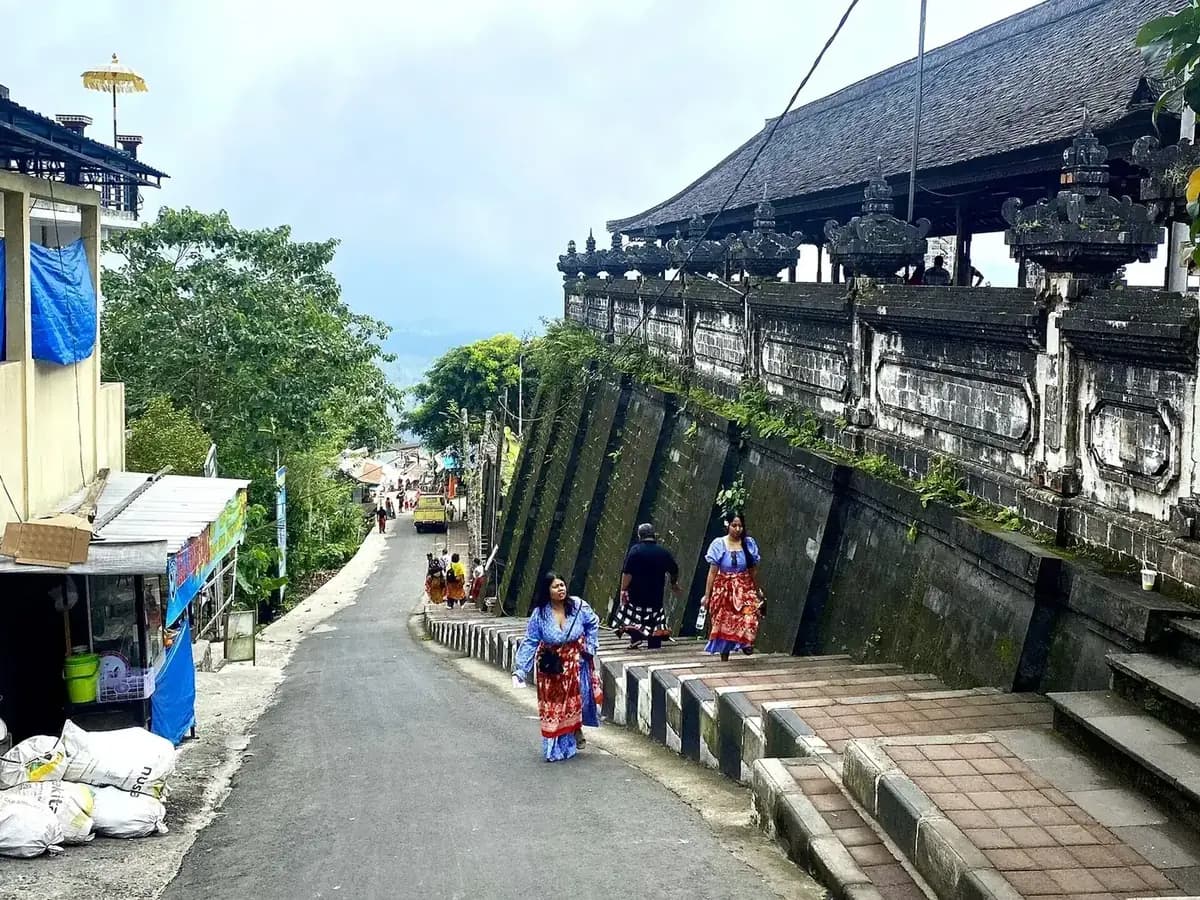
That climb is the actual pilgrimage. It takes the better part of a day, it passes six sanctuaries on the way, and the overwhelming majority of visitors never set foot on a single step of it. They photograph the gate and drive away, which is a strange way to treat one of the six holiest places on the island.
You do not have to do the whole thing. Twenty minutes up the stairs empties out almost completely, the forest closes over the path, and the noise of the queue disappears behind you. It is the fastest way to remember that this is a working sanctuary rather than a photograph, and it costs nothing.
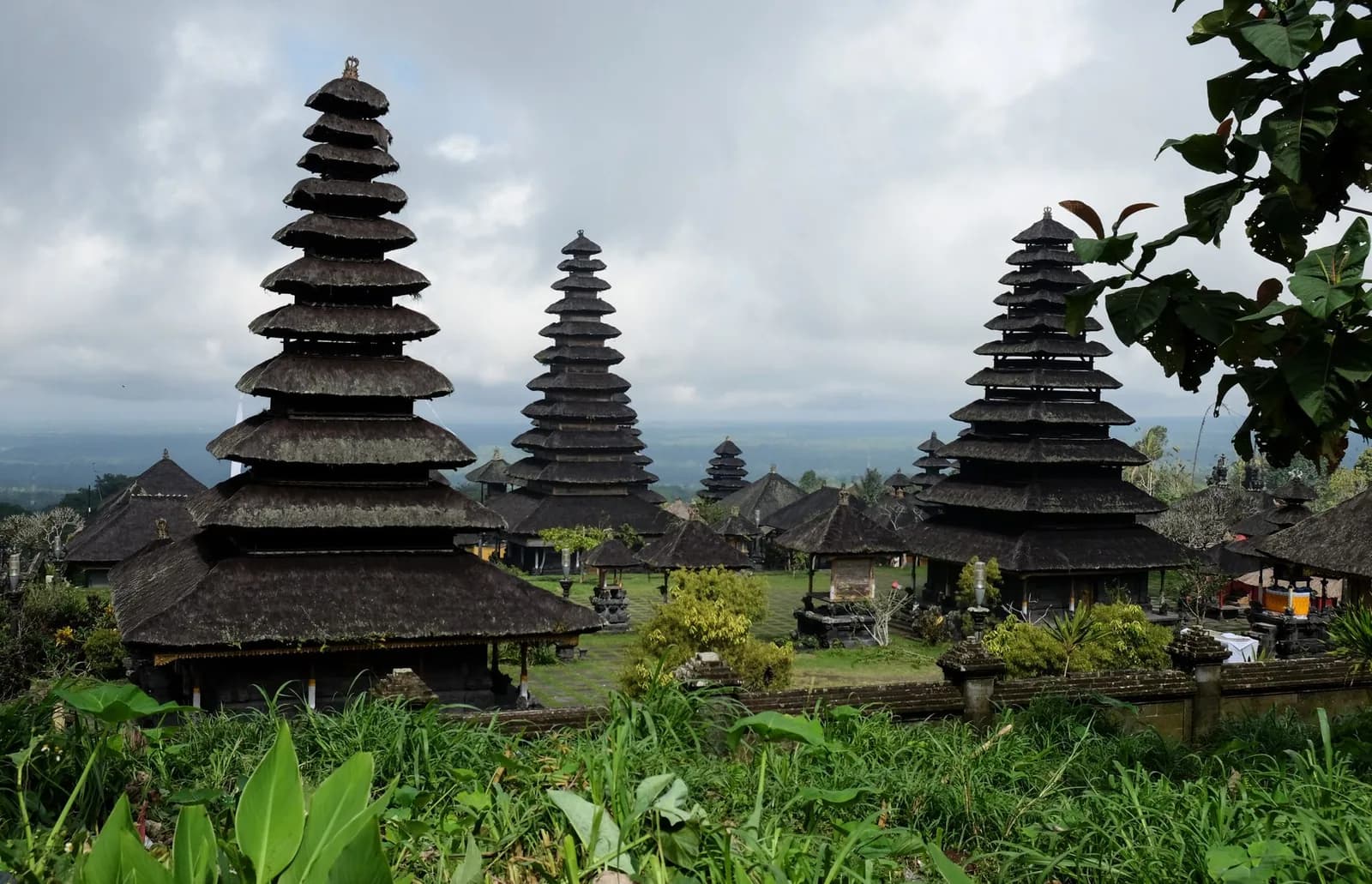
For the same reason it is worth pairing this with Besakih rather than rushing back west. Both are serious religious sites, both are in the east, and doing them in one day is the only version of this drive that really makes sense.
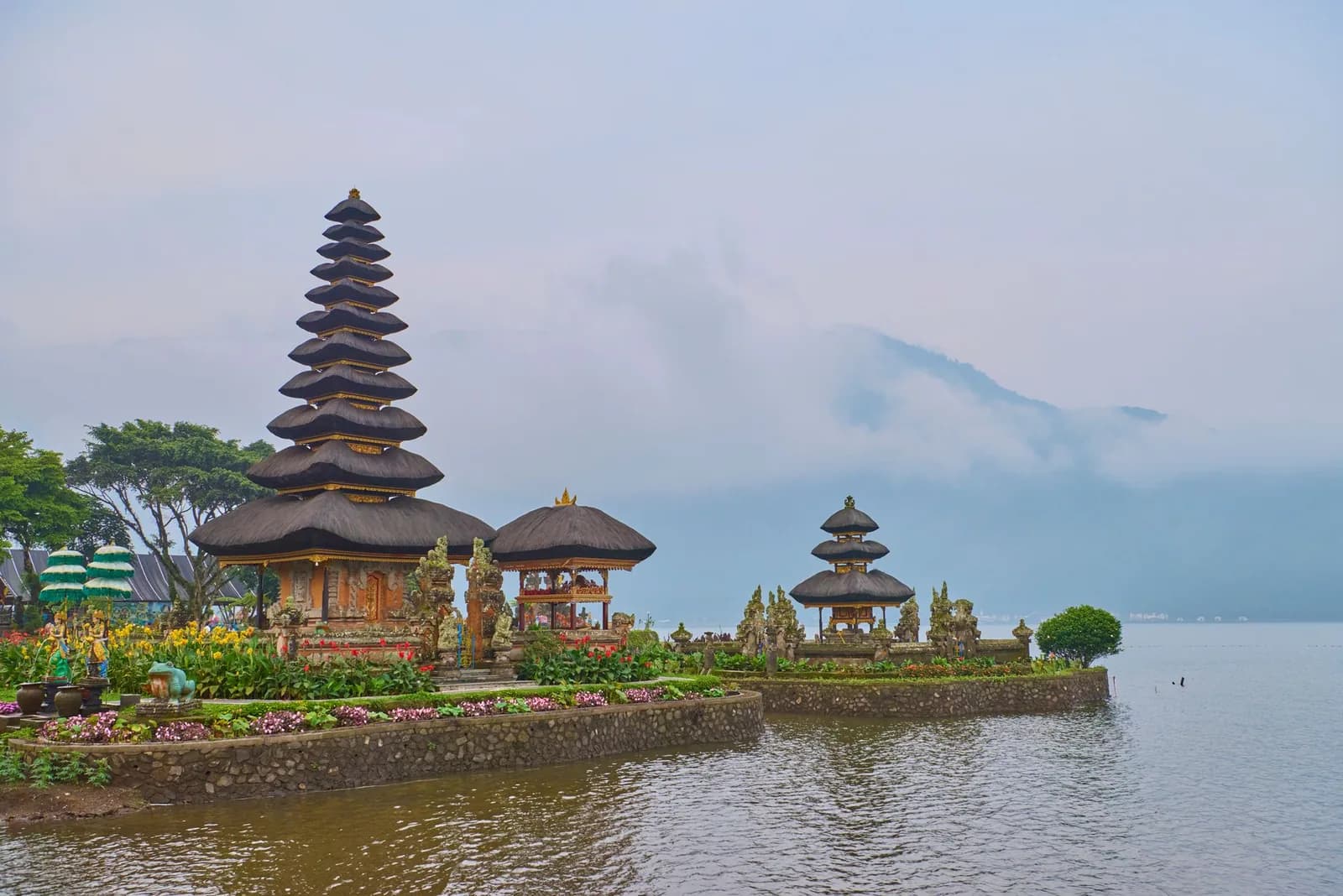
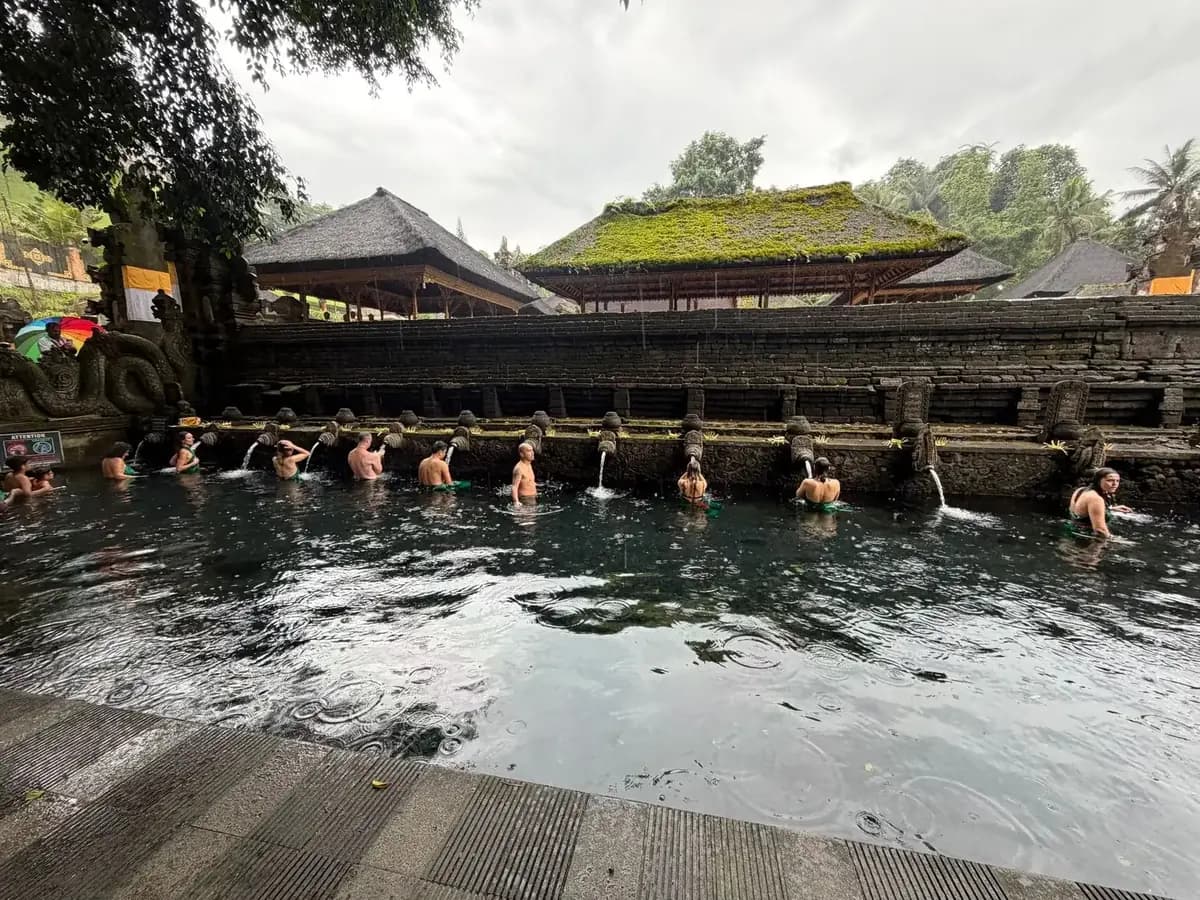
Lempuyang is the only temple on the island where the main activity is waiting for a photograph. That is worth saying plainly, because three other temples give you something the camera is not the point of. At Tirta Empul you get in the water and take part in the ritual yourself. Taman Ayun is thirty quiet minutes reading tiered roofs across a moat, with no queue at all. Ulun Danu Beratan trades the volcano backdrop for a lake and highland air.
None of that makes the gate a mistake. It does mean that if you have one temple day and you spend all of it here, you will have seen the most photographed thing on Bali and none of the living ones. The temples guide sorts the shortlist by what each one actually gives you.
Practical details
| Where | Karangasem, east Bali. Roughly three hours from the southern beaches, two and a half from Ubud, under an hour from Amed or Candidasa. |
|---|---|
| Wear | Sarong and sash provided with entry, shoulders covered. A layer for the cold at dawn, and shoes if you plan to walk any of the stairway. |
| Bring | Cash in small notes, water, and something to occupy two hours. Parts of the queue have no shade at all. |
| How long | Two to four hours on site depending entirely on the queue. Twelve hours door to door from the south. |
One strategy is worth stating plainly: sleeping on the east coast the night before turns this from a twelve hour ordeal into a comfortable morning. Amed and Candidasa are both under an hour away, and a night there costs less than the driver you would otherwise pay for the round trip. Padang Bai, a little further, adds a morning snorkel at Blue Lagoon on the way home.
Where to stay to make this easy
This is the single piece of planning that changes the visit more than anything else on this page, and almost no guide leads with it.
Amed, 45 min away
A string of black sand fishing villages on the north-east coast, quiet, cheap and built around diving. A five in the morning start from here is civilised. It also puts you near the wreck diving at Tulamben.
Candidasa, 1 h away
Larger, flatter, more hotels and more restaurants, less charm. The practical choice if you want a proper room and an easy drive rather than a village.
The southern beaches, 3 h away
Seminyak, Canggu, Kuta. Doable as a day trip and genuinely brutal: out at three in the morning, back mid-afternoon, most of it in a car.
The arithmetic is simple. A full day driver from the south to do this round trip costs more than a night in Amed, and it costs you the day as well. Sleeping one night on the east coast lets you do this gate at dawn, Tirta Gangga mid-morning and Besakih on the way back west, which is a good day rather than an endurance exercise.