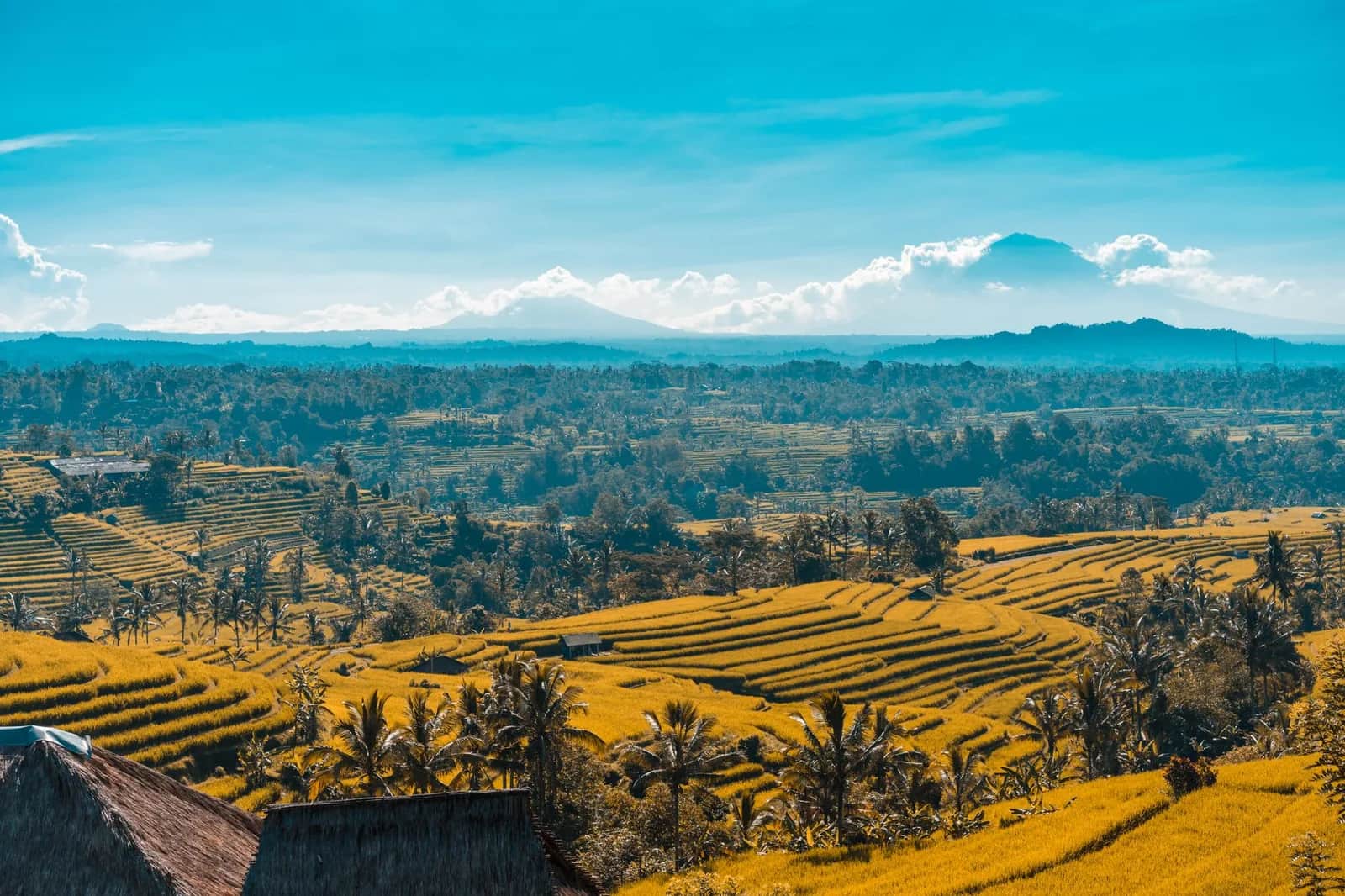
The Jatiluwih rice terraces cover a whole plateau on the slopes of Mount Batukaru, in Tabanan regency, west of Ubud. They are the largest stretch of terraced paddy on Bali and the one that sits inside the UNESCO World Heritage listing for the subak water system. They are also a place you walk through, on marked loops, rather than a view you stand in front of.
The ticket is IDR 75,000 for a foreign adult in 2026, the drive is well over an hour from the south coast or Ubud, and the fields closest to the car parks are the only crowded part. Walk ten minutes and you will mostly be sharing the ridges with farmers.
The western loop, with someone else driving
Free cancellationJatiluwih, Ulun Danu Beratan and Tanah Lot in one day
- ✓Hotel pickup in Ubud, Canggu, Seminyak or Kuta, which solves the hardest part of reaching Jatiluwih
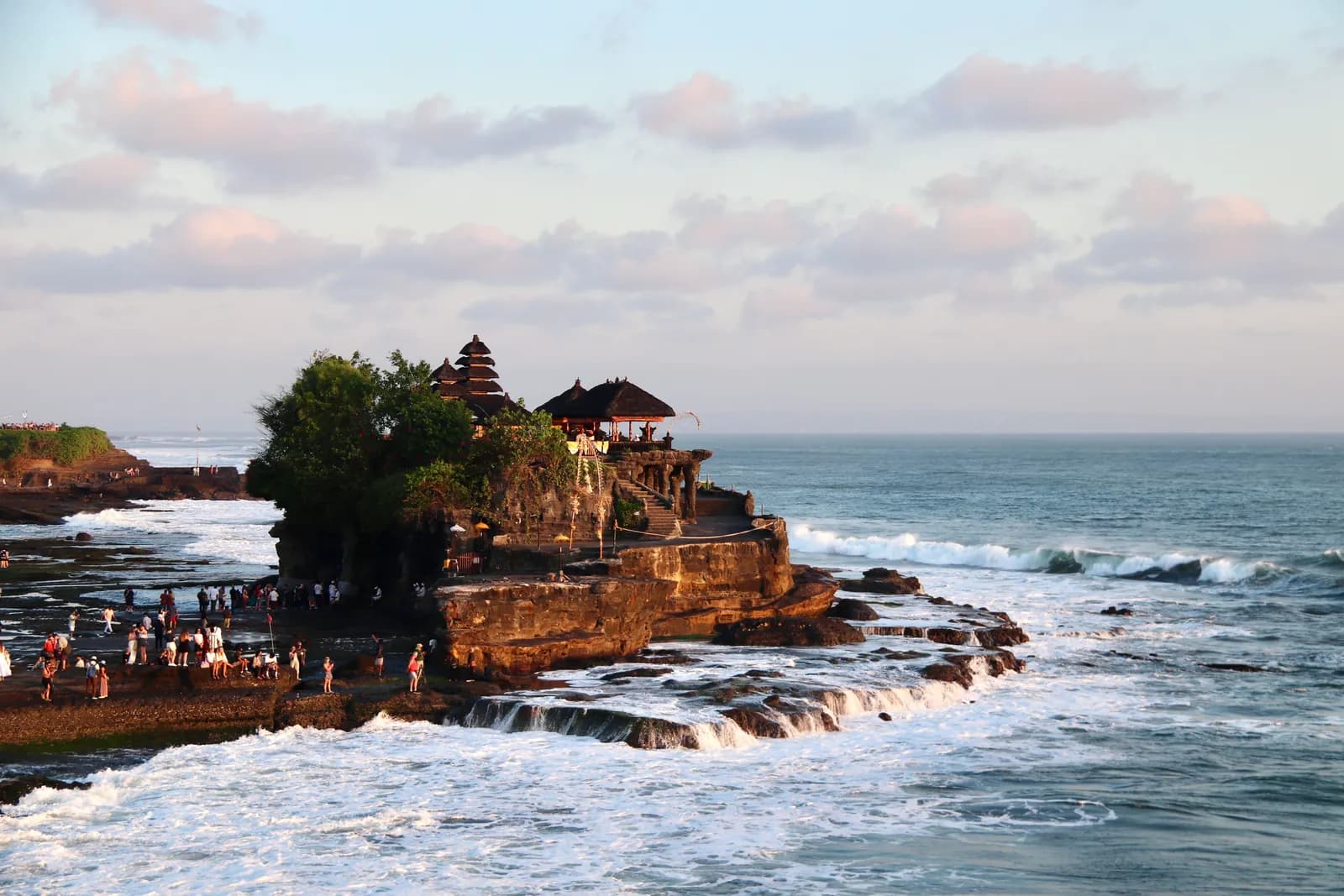
- ✓Terraces in the morning, the lake temple at Bedugul, and Tanah Lot for sunset on the way back
- ✓The driver waits, so you choose how long a loop to walk
- ✓Check whether the Jatiluwih ticket is included before you book: on many listings it is not
Affiliate link. Booking through GetYourGuide costs you nothing extra and supports the guide. Price and rating checked October 2026. Both move with season and demand.
On this page
What the Jatiluwih rice terraces look like
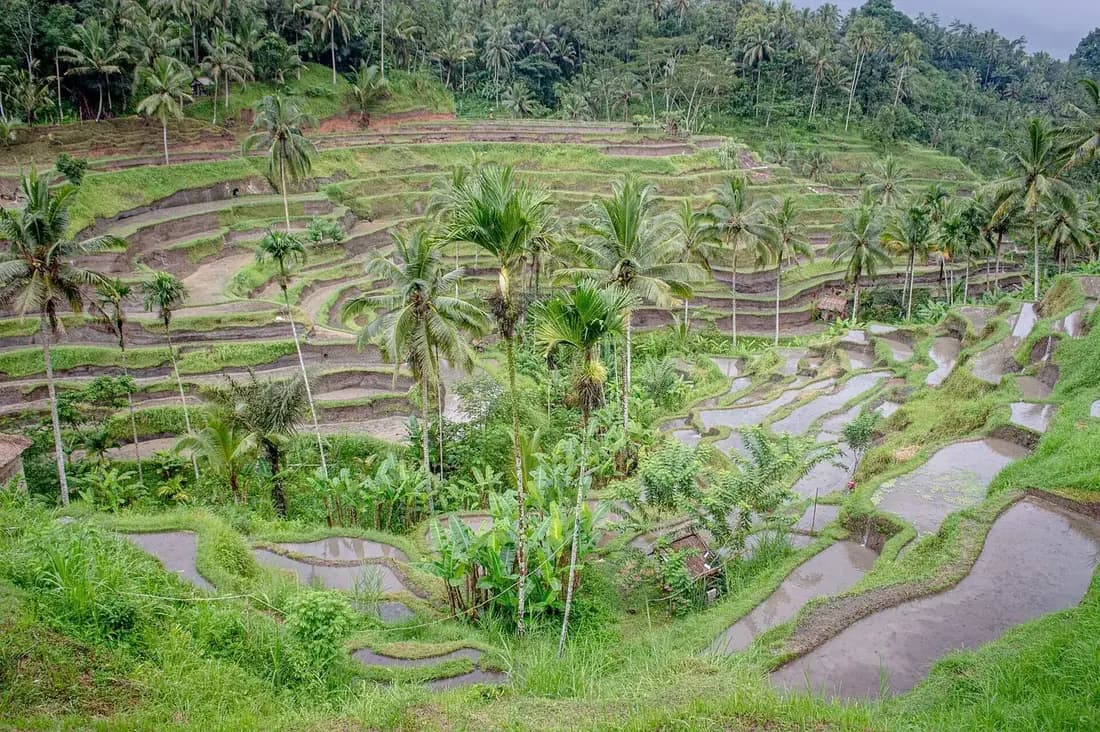
Not a valley. That is the first thing to know if your idea of a Bali rice terrace comes from the steep amphitheatre at Tegallalang. Jatiluwih is an open, rolling plateau at around 700 metres, where more than 600 hectares of paddies follow the contours of the land in long, wide, shallow steps. Behind them the forest climbs towards the summit of Batukaru, the second highest volcano on the island, usually with a cap of cloud on it.
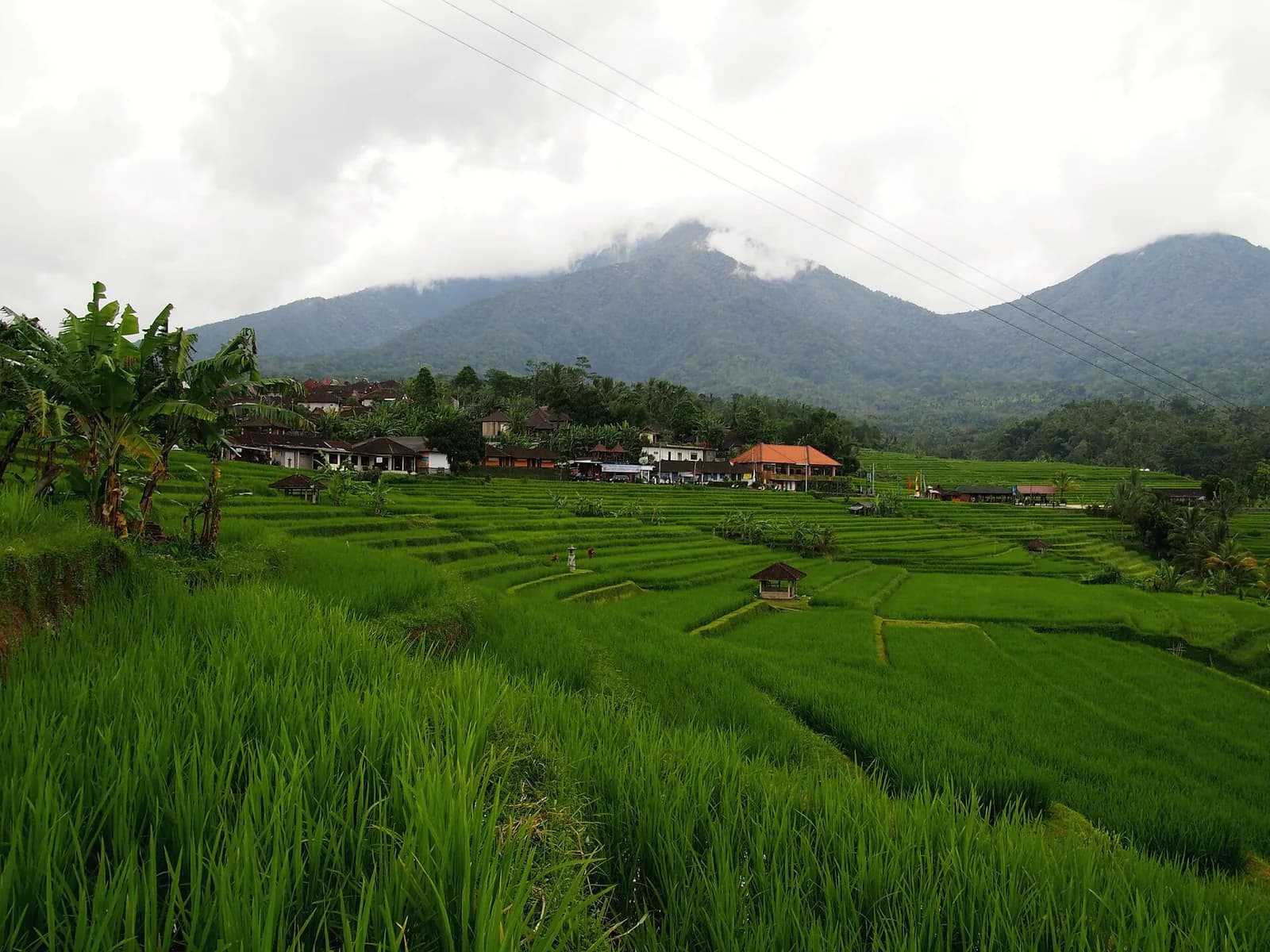
The scale is the attraction. From the main road through the village the fields run away in every direction, broken by coconut palms, small shrines and the thatched shelters farmers use at midday. There is no single viewpoint that holds the whole thing, which is why walking matters more here than anywhere else on Bali.
It is also farmland first. The village grows a local red rice, beras merah, alongside ordinary white varieties, and you will find it on the menu in every warung and in bags at the stalls by the road. The fields are planted and harvested on a rolling schedule set by the farmers’ water cooperative, which is why two neighbouring plots can be a different colour on the same day.
Jatiluwih entrance fee and parking in 2026
IDR 75,000 for a foreign adult, as listed by the site’s management in October 2026. The French guides quoting around 75,000 are right. The figures of IDR 40,000 and 50,000 that still circulate on older blogs predate the last increase, and the IDR 100,000 quoted on one well-ranked guide is not on any official list. Dollar figures below use the rate of 9 October 2026.
| Ticket or fee | Detail | Order of magnitude |
|---|---|---|
| Foreign adult | The ticket nearly every reader of this page will buy. Paid at the checkpoint on the road into the village. | IDR 75,000US$4.20 · C$6 |
| Foreign child | The management does not publish the age cut-off. Ask at the booth. | IDR 50,000US$2.80 · C$4 |
| Indonesian adult | Domestic rate, shown here because you will see it on the board and wonder. | IDR 25,000US$1.40 · C$2 |
| Indonesian child | Domestic rate for children. | IDR 15,000US$0.85 · C$1.20 |
| Parking, car | Collected at the car parks along the main road. Not on the official price list, so treat it as approximate. | ≈ IDR 5,000US$0.30 |
| Parking, scooter | Same, at the lower rate. | ≈ IDR 3,000US$0.20 |
You pay once, at a checkpoint on the road as you enter the protected area, and that ticket covers every walking loop. According to the manager, quoted in the Indonesian press in 2024, it also includes accident insurance for the duration of the visit.
Parking is the messy part. Cars and scooters pay a small fee at the private car parks strung along the main road, and on festival weekends they overflow onto the verges. In June 2026 the Tabanan regency said it wanted a single, integrated car park for the area by the end of 2026 or in 2027. Until it exists, the figures in the table are what people report paying, not an official tariff.
Jatiluwih trekking: the marked walking trails
The loops start from the main road around the visitor area and are signposted by colour. This is where the sources fall apart: the management lists five routes, older blog maps show four with different colours, and the distances rarely match. What is consistent is the logic, and that is what you need to choose.
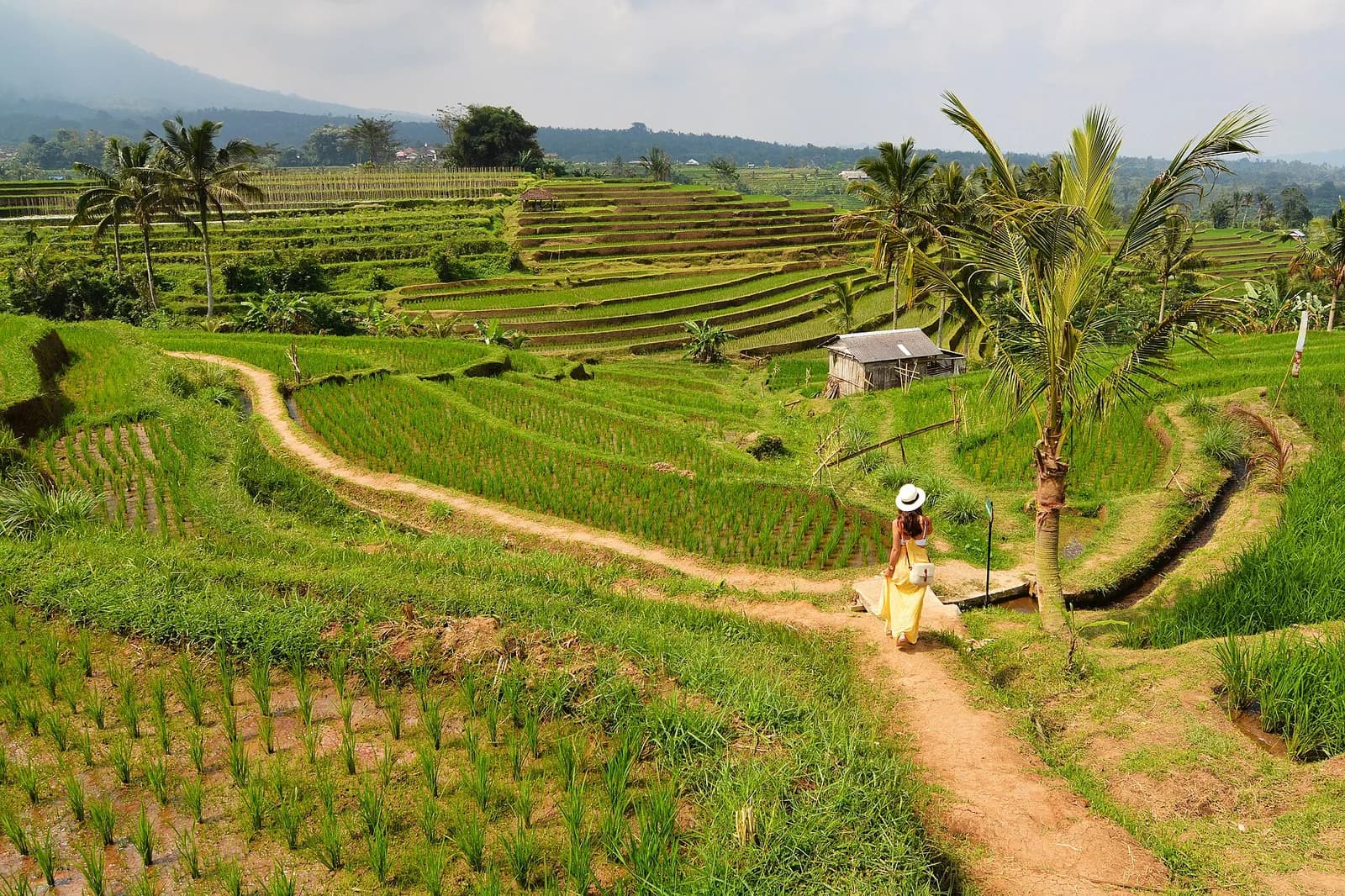
Photo Paxson Woelber, CC BY-SA 4.0
The short loops near the ticket gate
The Red and Yellow routes, which the management puts at around an hour and an hour and ten minutes, run along the ridges just below the road. They are mostly flat, easy to follow and take in the classic views. If you have come on a day trip with other stops, this is your walk.
The half-day routes: White, Green and Blue
The White route is listed at about two hours. Green, at 6 kilometres, takes two and a half to three hours and Blue, at 7 kilometres, around four. These are the ones that leave the cafés behind and drop into the quieter side valleys, with short climbs back up. There is nowhere to buy water halfway, so carry it.
Ask for a map at the ticket checkpoint, or photograph the trail board by the road, and check it against the signs on the ground, which have been repainted and renumbered over the years. Visitors on the longer routes report stray dogs and the odd unmarked hole in a ridge, and every path turns slippery after rain. Shoes with grip, not flip-flops.
Cycling Jatiluwih
A bicycle covers far more of the plateau than you will on foot, and the small roads between the fields are made for it. Several operators run e-bike tours of the terraces, from about IDR 290,000 (US$16 · C$23) for an hour, with full days and lunch costing more. The roads climb and dip constantly, so an electric bike is the sensible choice. The entrance ticket is usually extra.
Yeh Hoo waterfall
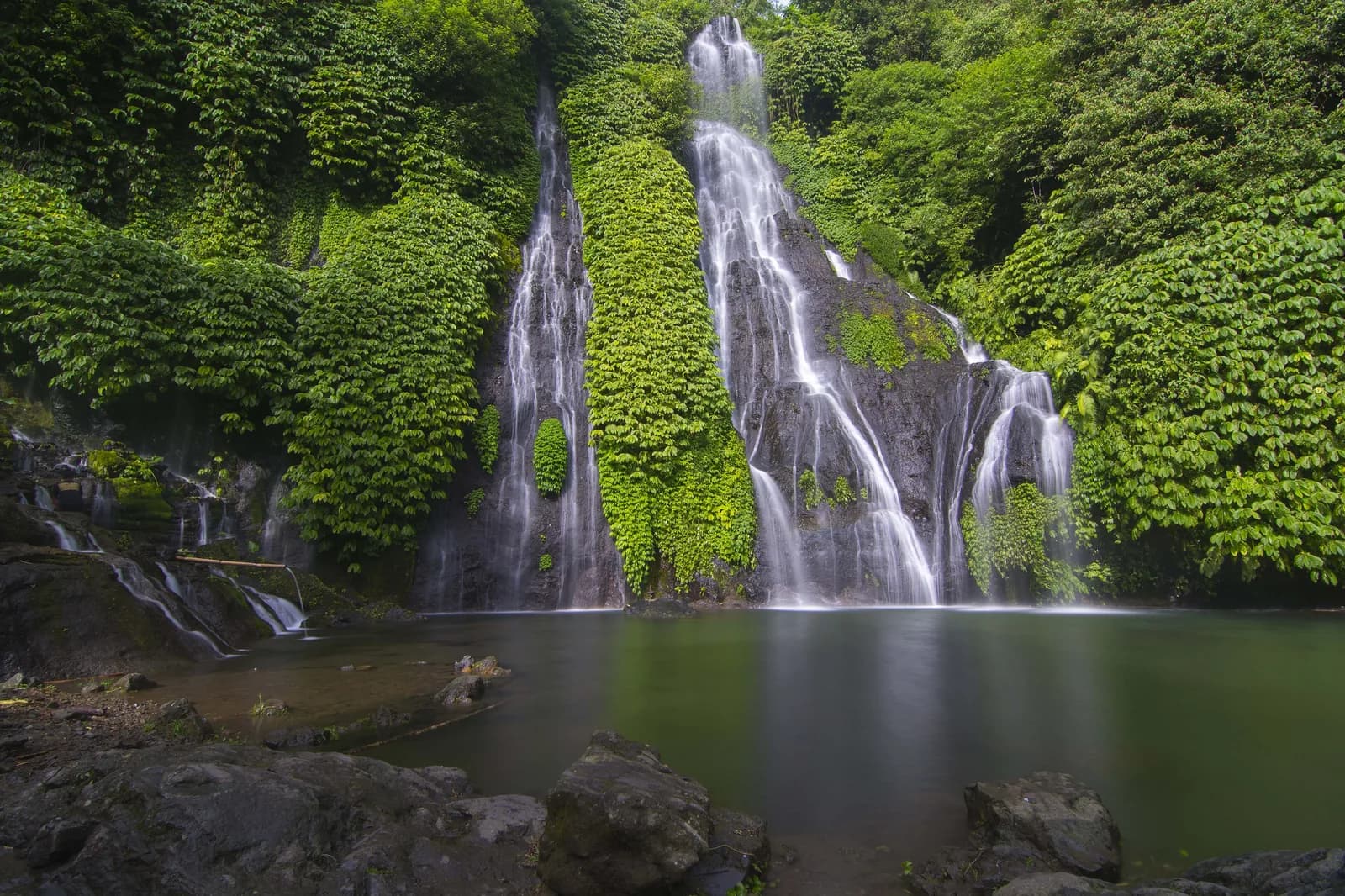
If you want to stretch the morning, Yeh Hoo waterfall is close by, at the bottom of a steep flight of steps that takes about a quarter of an hour on the way down and longer on the way back up. Check the steps are dry before committing to them.
Jatiluwih and the UNESCO subak of Catur Angga Batukaru
In 2012 UNESCO inscribed the Cultural Landscape of Bali Province: the Subak System as a Manifestation of the Tri Hita Karana Philosophy. It is not a blanket listing of Bali’s rice fields. It names a set of sites covering about 19,500 hectares, and Jatiluwih sits inside one of them, the subak landscape of Catur Angga Batukaru, terraces that UNESCO notes are mentioned in a tenth-century inscription.
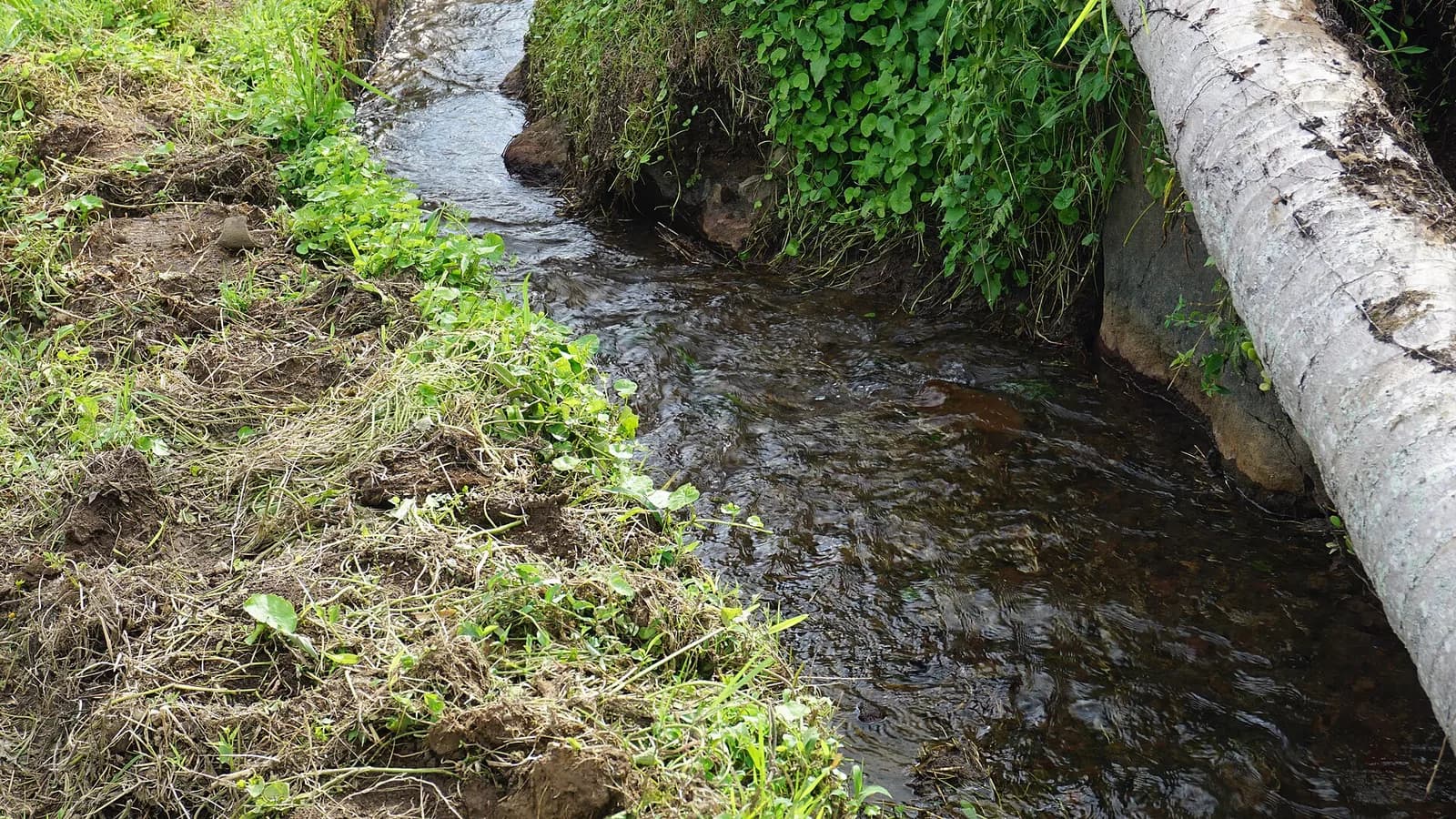
Photo Anggabuana, CC BY-SA 4.0
What a subak is
A subak is a farmers’ cooperative that shares water. Water comes down from the crater lakes and the forest, is split at weirs into canals, and then divided again plot by plot, with each farmer receiving a share in proportion to the land. The whole system is tied to water temples, from the great lake temples down to the small shrine at the head of each field, and the planting calendar is decided together rather than by each family.
Tri Hita Karana, the philosophy in the title of the listing, is the Balinese idea of harmony between people, the gods and the land. In a rice field that is very concrete: the offering at the inlet, the shared decision on when to flood, the rule that nobody upstream takes more than their share.
The other parts of the Bali UNESCO listing
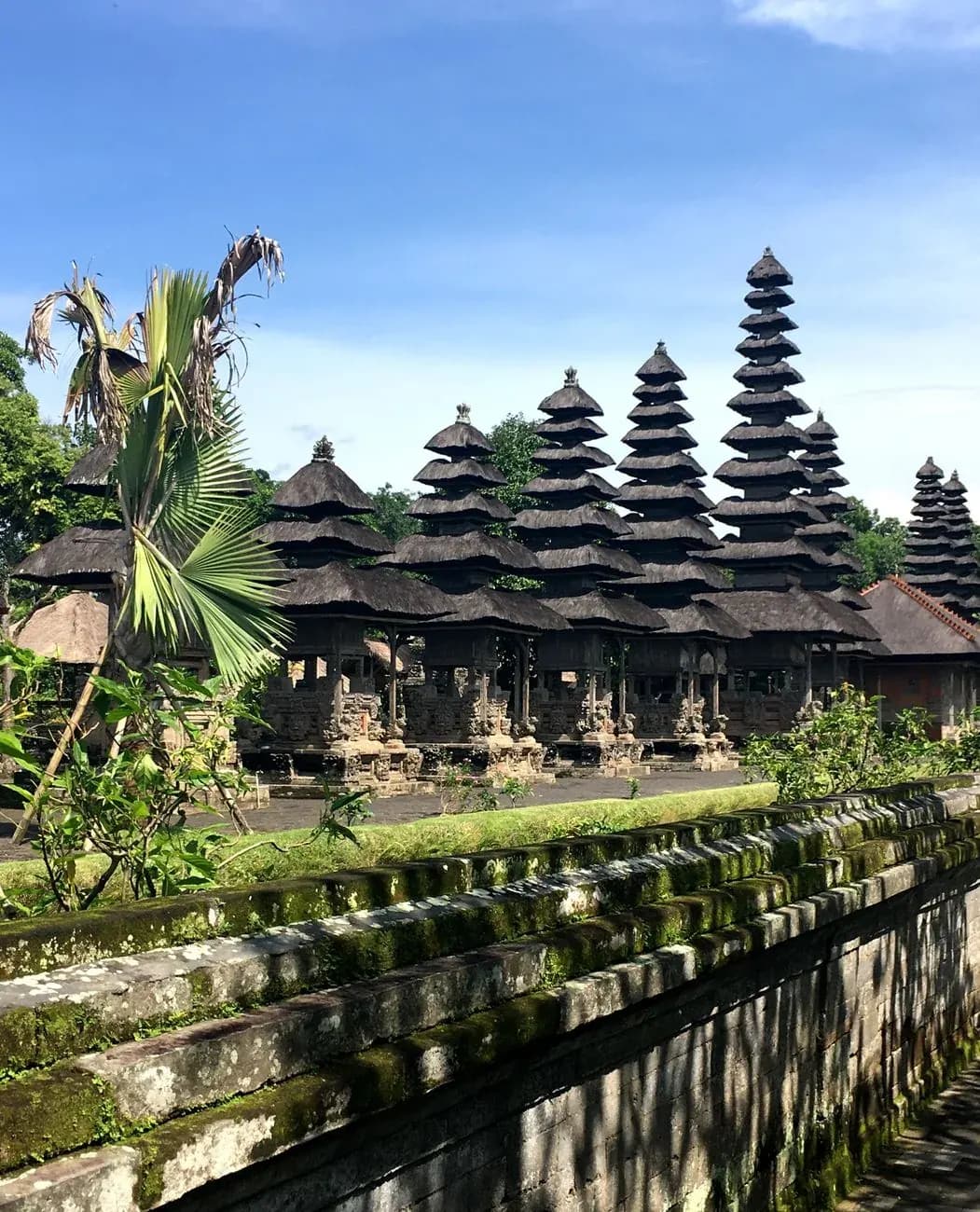
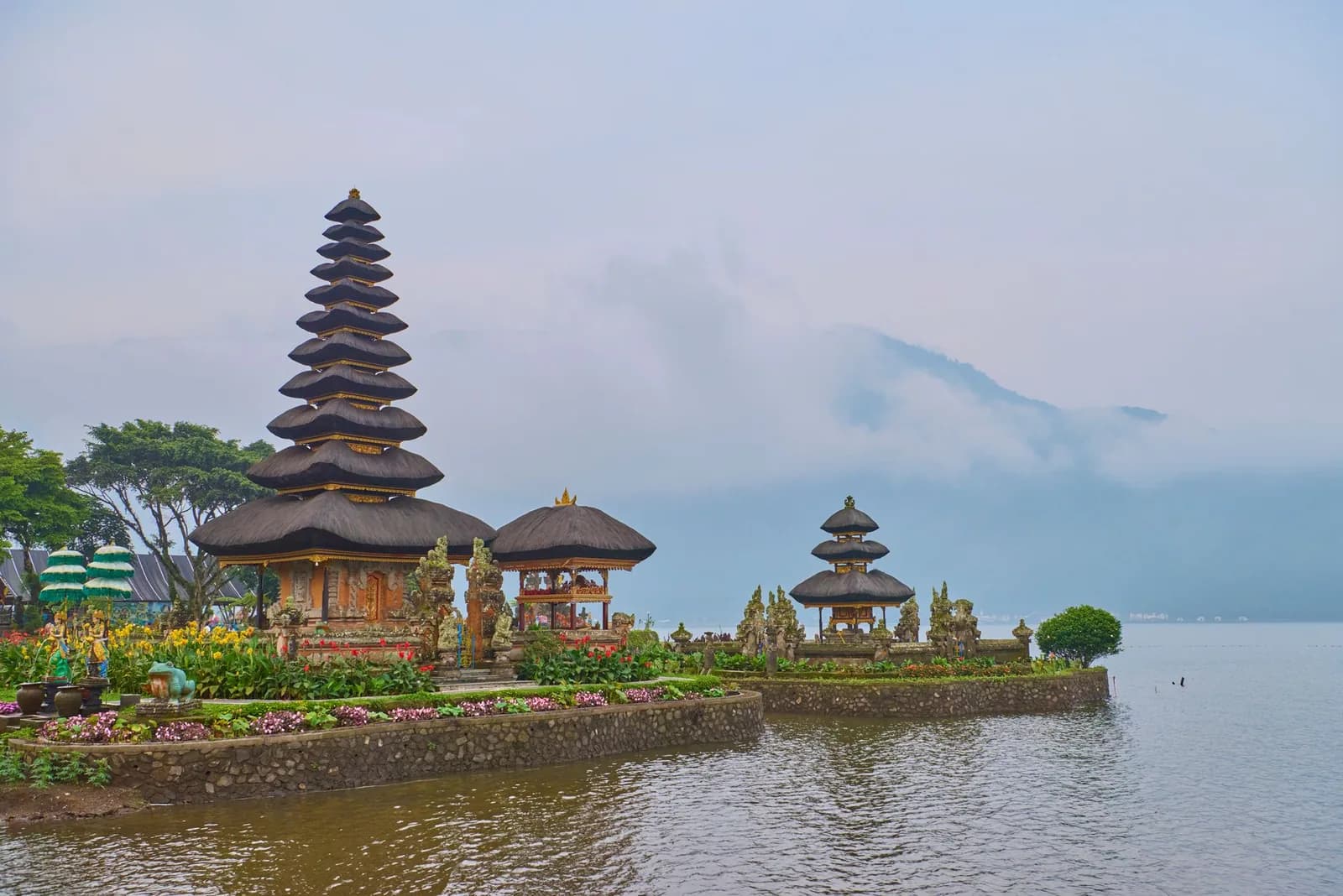
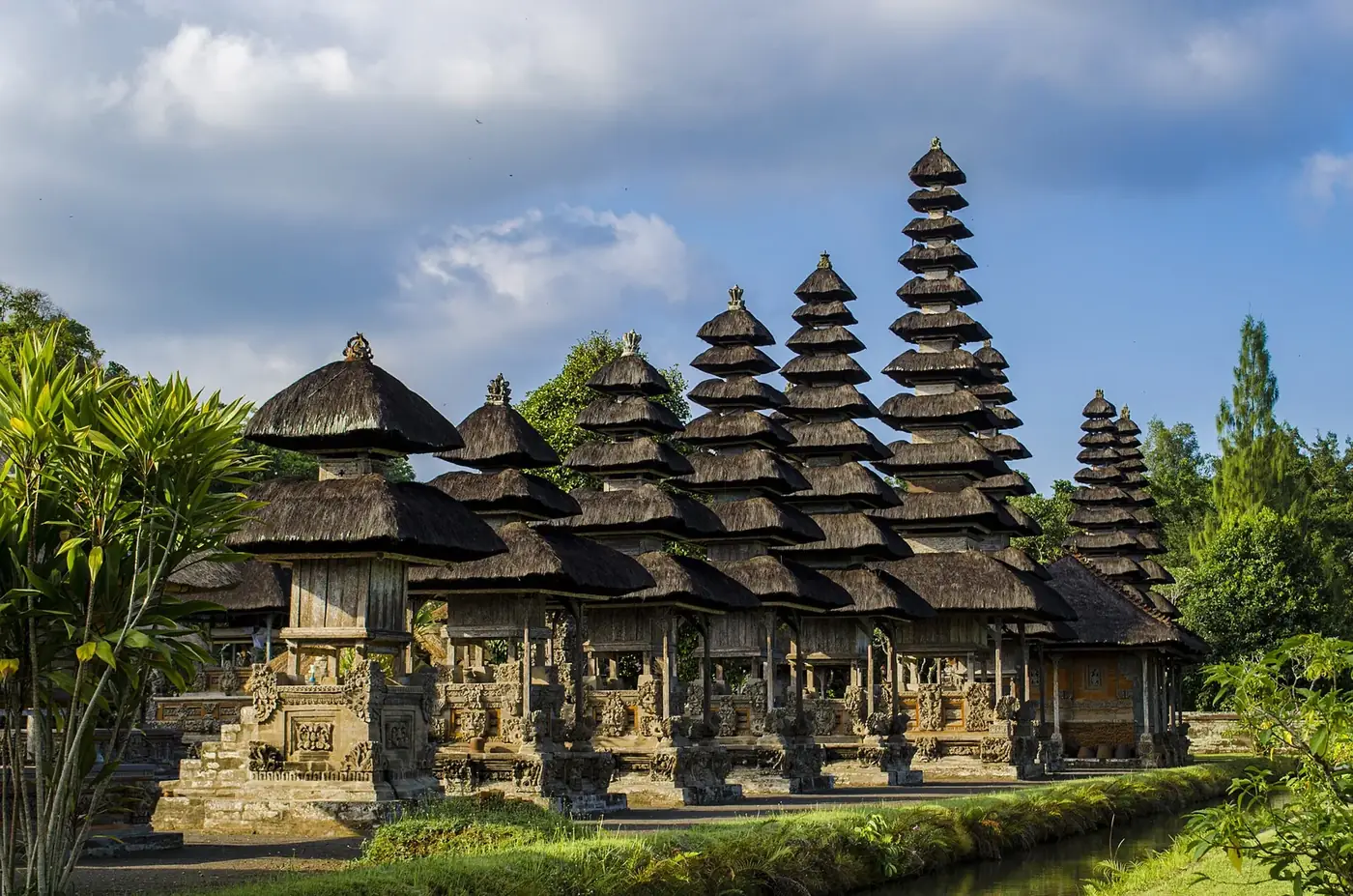
The inscription covers the supreme water temple of Pura Ulun Danu Batur and Lake Batur in the east, the subak landscape of the Pakerisan watershed near Tampaksiring, the Catur Angga Batukaru area around Jatiluwih, and the royal water temple of Taman Ayun at Mengwi. Taman Ayun is thirty to fifty minutes from Jatiluwih, which makes the two an obvious pair. The lake temple at Bedugul, Ulun Danu Beratan, is not one of the inscribed sites, despite being on the same road and governing the water of the same region.
Concrete cafés and the 2025 closures
The listing does not freeze the landscape, and the pressure is visible. UNESCO’s own description calls the cultural landscape highly vulnerable, and the roadside at Jatiluwih has filled with restaurants built on what was paddy. In December 2025, according to Indonesian press reports, Bali’s provincial parliament had a number of concrete restaurant buildings in the subak temporarily closed, with thirteen owners said to be in breach of zoning or permit rules. No formal warning from the World Heritage Committee had been made public at the time of writing. The practical consequence for you: the most honest version of Jatiluwih is ten minutes from the road, on foot.
Best time to visit Jatiluwih rice terraces
When are the rice fields green?
The safest windows for green fields are February to April and September to November. Sources disagree on exact harvest months, and for a good reason: planting is staggered across the cooperative, so outside those windows you still find green plots beside gold ones, flooded fields reflecting the sky, or stubble after the cut. There is always something worth seeing, just not always the solid green of the postcards.
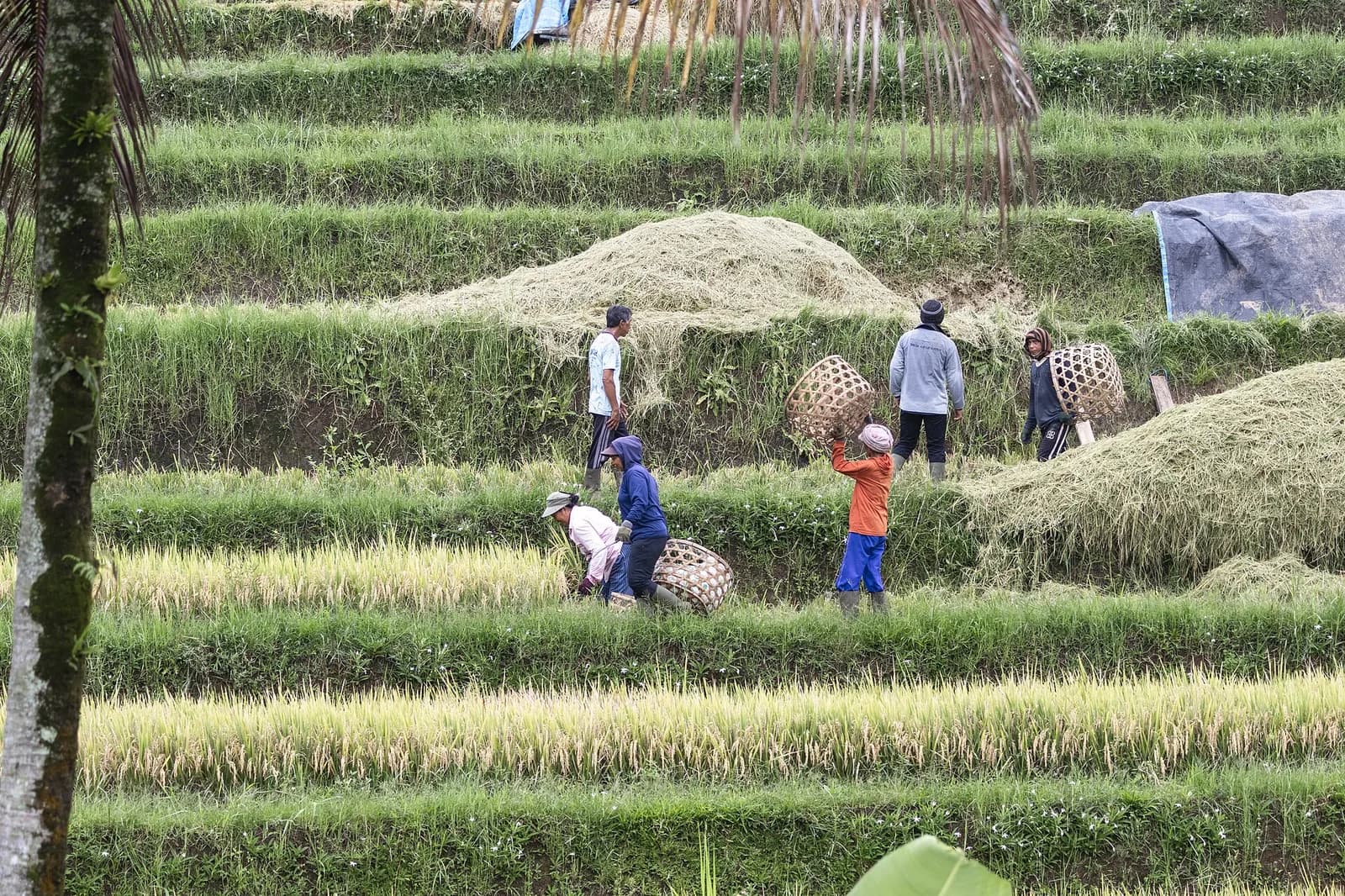
Photo Eka343, CC BY-SA 4.0
Rain is most frequent from November to February. That keeps the fields at their most saturated green, and makes the ridges muddy. Our Bali weather guide covers the month by month picture across the island.
Time of day
Before ten in the morning. Jatiluwih sits on the flank of a high volcano, and cloud tends to build over Batukaru from late morning, flattening the light and often bringing afternoon showers. Sunrise is around half past five and mist lies in the hollows early on, which is beautiful but means leaving the south coast at four. Arriving between eight and nine is the realistic compromise, and it also puts you ahead of the day tours.
How to get to Jatiluwih from Ubud, Canggu or Seminyak
There is no public transport worth the name, so it is a car with a driver, a scooter or a tour. The first column below was measured on empty roads in October 2026. The second is what to plan for in daytime traffic through Tabanan.
| From | Distance | Empty roads | Realistic |
|---|---|---|---|
| Ubud | 47 km | 50 min | 1 h 15 to 1 h 45 |
| Canggu | 55 km | 55 min | 1 h 15 to 1 h 45 |
| Seminyak | 61 km | 1 h | 1 h 30 to 2 h |
| Kuta, the airport | 63 km | 1 h | 1 h 30 to 2 h |
| Sanur | 62 km | 55 min | 1 h 30 to 2 h |
| Uluwatu | 83 km | 1 h 20 | 2 h to 2 h 30 |
With a driver
The usual answer, and the most comfortable. A driver for the day lets you add Taman Ayun, Ulun Danu Beratan or Tanah Lot without thinking about the route, and waits while you walk. Agree the stops and the hours before you leave.
By scooter
Possible for confident riders, especially from Canggu, but the last stretch is a winding mountain road and the ride back in afternoon rain is unpleasant. Allow more time than the map suggests.
Grab and Gojek
Getting there by ride-hailing app works. Getting back does not, reliably: there are few drivers waiting in a farming village on the slopes of Batukaru. Either keep the same driver for the return or book a car that waits.
A day in the west: Jatiluwih, Taman Ayun and Ulun Danu Beratan
Jatiluwih justifies the drive best as part of a loop. The three sights sit in a triangle, each roughly thirty to fifty minutes from the next, which makes a full day of the west without long transfers once you are up there.
From Canggu, Seminyak or Kuta
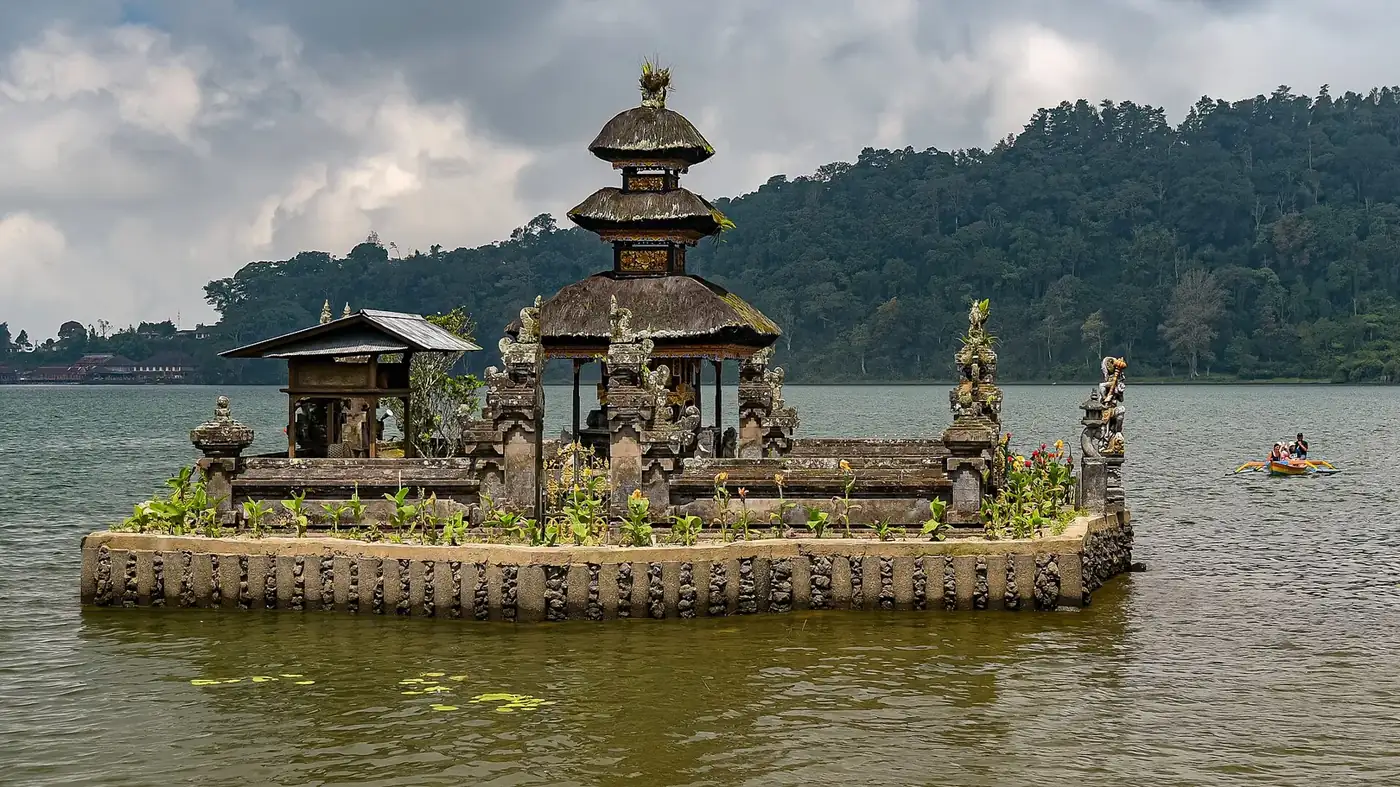
Start at Taman Ayun when it opens, which puts the royal water temple and its moat ahead of the tour buses. Drive north to Jatiluwih and be walking by about ten. After lunch above the fields, continue to Bedugul and Ulun Danu Beratan on Lake Bratan, which is often prettiest when the mist comes off the water in the afternoon.
From Ubud
Reverse the logic and go to Jatiluwih first, for the morning light, then Ulun Danu Beratan, and come home through Mengwi for Taman Ayun in the late afternoon. It is a long day, nine to ten hours with a driver, and it works far better than trying to squeeze Jatiluwih into a morning.
Adding Tanah Lot at sunset
From the south, Tanah Lot is the classic last stop on the way home, and most organised tours of the west end there. It adds an hour and a lot of company. Drop Ulun Danu if you want it without getting back after dark.
Pura Luhur Batukaru and the hot springs
Two quieter detours suit a day spent around Jatiluwih rather than a loop of famous names. Higher up the mountain, Pura Luhur Batukaru is the forest temple at the head of the same Catur Angga Batukaru landscape, mossy, cool and usually close to empty. Lower down on the Bedugul side, the Angseri hot springs are a soak in warm water under the trees after a long walk. Either one replaces Tanah Lot well if crowds are what you came up here to escape.
Jatiluwih vs Tegallalang: which rice terrace is better?
They are not two versions of the same visit. One is a valley you photograph and climb out of in an hour, the other a plateau you walk across for a morning.
| Jatiluwih | Tegallalang | |
|---|---|---|
| Size | Over 600 hectares spread across a plateau | One valley, walked end to end in an hour |
| Altitude | Around 700 metres, noticeably cooler | Around 400 metres, hot by mid morning |
| From Ubud | 1 h 15 to 1 h 45 each way | 20 to 30 minutes |
| From Canggu or Seminyak | 1 h 15 to 2 h | 1 h 30 to 2 h |
| Ticket (foreign adult) | IDR 75,000, one payment | Small gate fee plus donation posts down the valley |
| Walking | Marked loops from 1 hour to half a day, mostly gentle | Steep descent and climb, muddy ridges |
| Crowds | Busy at the viewpoint cafés, empty two fields further | Heavy from mid morning |
| Swings and photo props | Almost none | Everywhere |
| UNESCO | Inside the inscribed Catur Angga Batukaru area | Not part of the inscription |
If you are based in Ubud and have one free morning, go to Tegallalang at opening. If you have a day, a driver and want to walk, Jatiluwih is the better landscape and the quieter one. The two sit on opposite sides of the interior, an hour apart even on empty roads, so doing both in one day means most of it in a car. Our guide to Bali’s rice terraces covers the others, from Sidemen in the east to the free walks around Ubud.
Where to eat at Jatiluwih: red rice and warungs with a view
The road through the village is lined with restaurants looking over the fields, and lunch here is part of the day. Expect to pay more than in an ordinary warung, because you are paying for the view. The local dish to look for is anything made with the village’s red rice, often served as a porridge or with ayam or bebek betutu, the slow-cooked spiced chicken or duck of Bali.
Green Talas is known for its red rice porridge and lak-lak, the small Balinese rice cakes. Gong Jatiluwih does a buffet over the terraces that suits a tour group schedule. Warung Tepi Sawah serves betutu and grilled fish. Given the closures of 2025, check that the place you want is open before planning lunch around it.
Jatiluwih practical details: hours, drones, festival
| Where | Jatiluwih village, Penebel district, Tabanan regency, on the southern slopes of Mount Batukaru in west central Bali. |
|---|---|
| Hours | The checkpoint is staffed from early morning until late afternoon. No official hours are published, and sources range from 06:00 to 08:00 for the opening. Arrive before nine and it does not matter. |
| Cash | Bring rupiah for the ticket, parking and the warungs. Do not count on an ATM in the village: withdraw in Tabanan or before you leave the south. |
| How long | Two to three hours for a loop and a meal. Half a day if you want one of the long routes. |
| Drones | Allowed only with permission from the management, arranged in advance, and charged separately. The posted fee differs between sources, so ask before you fly. |
| Festival | The Jatiluwih Festival ran for the seventh time on 20 and 21 June 2026, with a 5K run on the second day. Expect full car parks that weekend. Dates for 2027 had not been announced in October 2026. |
Staying overnight near Jatiluwih
A night in the area gives you the fields at dawn without the four o’clock start, and there are homestays and villas in and around the village. Choose with some care: in March 2024 a landslide hit a villa at Jatiluwih during heavy rain and killed two foreign guests, after local warnings about the slope. A building on flat ground beats a dramatic one hanging over a terrace, particularly in the wet season.