Yes, Australians need a visa for Bali. Indonesia cut its visa free list to thirteen countries in 2024 and every one of them is in ASEAN, so there is no exemption to hope for and no shorter, cheaper option for a two week trip. What you need is the 30 day visa on arrival, it costs IDR 500,000, roughly US$28 or C$39, and you can buy it either before you fly or when you land.
Which of those two you choose has never mattered much, because they cost the same. That is the part about to change. Everything on this page was checked in August 2026. Indonesian entry rules have been rewritten repeatedly over the last two years, so confirm anything decisive on the immigration portal at evisa.imigrasi.go.id before you travel.
Not Australian? The rules below are the same for American, British, Canadian, New Zealand and EU passports. All of them buy the same 30 day visa on arrival at the same IDR 500,000, and the only thing that changes is what your bank charges you for it. The thirteen countries that enter Bali without a visa at all are the ASEAN members.
On this page
What Australians need to enter Bali
The three routes into Bali, read as a two state tariff. Today all three cost the same. The announcement of 12 August 2026 would pull them apart.
| Route | Today | Proposed |
|---|---|---|
| e-VOA, bought online before you fly | IDR 500,000 (about US$28 / C$39) | IDR 750,000 (about US$42 / C$59) |
| VOA, paid at the counter on arrival | IDR 500,000 (about US$28 / C$39) | IDR 1,000,000 (about US$56 / C$79) |
| Anything longer or other than tourism | Priced separately | Not affected |
You clear immigration through the automated gates instead of the visa payment queue, which is the whole reason to bother. Apply at least 48 hours before departure. The friction is the payment page: Australian cards are declined there often enough that leaving it to the night before is a bad plan.
Nothing to do in advance. Today this costs exactly the same as doing it online and it is a perfectly reasonable choice. Under the proposal it would cost a third more than the e-VOA, which is the point of the proposal: immigration wants the queue shorter.
The 30 day VOA covers a holiday and nothing else. Working remotely, staying two months, or entering repeatedly (60 day and multi entry) all sit outside it, and all have to be applied for online before you travel rather than sorted out at the airport. Usually needs an agent, and takes weeks.
The Proposed column is not in force. It comes from a briefing given by the Directorate General of Immigration on 12 August 2026, and no implementing regulation has been published. Pay today's figures, and check the official portal before you fly.
The fee rise announced in August 2026, and what it would change
It is a proposal, it is not law, and it is the reason the advice on most Bali visa pages is about to go stale.
On 12 August 2026, the Director General of Indonesian Immigration, Hendarsam Marantoko, set out a new pricing structure for the visa on arrival at a briefing in Jakarta. Under it, a visa arranged online before departure would cost IDR 750,000, and one bought after landing in Indonesia would cost IDR 1,000,000. The announcement was covered across the Indonesian national press the same week. The stated reasoning was twofold: the existing IDR 500,000 was considered too low, and splitting the price gives travellers a reason to apply from home and stop filling the arrivals hall.
What has not happened is everything that would make it real. There is no implementing regulation, no published start date and no notice on the immigration portal. The fee you pay today is still IDR 500,000, and anyone quoting you the higher figures right now is quoting a press briefing rather than a tariff.
What the visa costs, and what it does not cover
Three different authorities want money from you before you reach a beach, and none of them accepts a receipt from either of the others.
| What you are paying for | Detail | Order of magnitude |
|---|---|---|
| Visa on arrival, 30 days | The visa itself, whether you buy it online as an e-VOA or at the counter at Ngurah Rai. Same price either way in August 2026. This page. | IDR 500,000 · US$28 · C$39 |
| One 30 day extension | Available once, and once only. Handled online for an e-VOA, or at an immigration office in Bali for a counter VOA. | IDR 500,000 · US$28 · C$39 |
| Bali tourism levy | A provincial charge, not an immigration one. Separate payment, separate authority, separate QR code. Paying the visa does nothing about it. | IDR 150,000 · US$8.30 · C$12 |
| All Indonesia arrival card | Free, but compulsory, and it will not open until three days before you land. The one formality you cannot get out of the way early. | Free |
| e-VOA processing fee | A small charge the portal adds on top of the visa fee when you pay online. It is a few dollars, not a service you can decline. | A few dollars |
| Longer or multiple entry visas | The 60 day single entry and the multiple entry visas are priced separately and have to be applied for before you travel. | Priced separately |
The line that catches people is the second one down from the visa. The tourism levy is not part of the visa and never has been. Immigration collects the visa on behalf of Indonesia. The levy is collected by the province of Bali through an entirely separate portal, and enforcement officers at Uluwatu and Tanah Lot ask for its QR code specifically. Showing them a visa gets you nowhere. The Bali tourist levy guide covers how it is paid, who is exempt and what happens at a spot check.
Add it up and an adult Australian arrives having spent about US$36 or C$51 before anything else, which is worth knowing when you are budgeting a Bali trip for a family rather than a solo one. Children on their own passports pay both charges at the full adult rate.
Applying for the e-VOA from Australia
Ten minutes on the official portal, and one deadline that is easy to miss.
The application lives at evisa.imigrasi.go.id and nowhere else. You create an account, choose the B1 visa on arrival, and give it your passport details, your arrival date and a photograph of the passport page. It asks for a booked flight out of Indonesia, which needs to be a real reservation rather than a plan, and an address in Bali, for which the first hotel of the trip is enough. Payment is by card at the end.
The deadline is 48 hours before departure. The portal stops accepting e-VOA applications inside that window, and there is no appeal to it: miss it and you are buying the visa at the counter instead, which today costs the same and simply means queueing. Applying a week out rather than the night before also leaves room for the payment to fail, which happens to Australian cards more often than it should.
What comes back is a PDF by email. Save it to your phone, screenshot it, and do not rely on being able to open an inbox in the arrivals hall. With the e-VOA in hand you skip the visa payment desk entirely and go straight to immigration, where Australian passports can generally use the automated gates. The Bali airport arrival guide times every queue from the aircraft door to the kerb, with and without it.
When it goes wrong
Every airline page tells you what the rule is. This is the part nobody writes down: what actually happens when the rule does not go to plan, and which of these ends a trip rather than delaying it.
The payment page declines your Australian card
Common enough that it is not worth treating as a sign something is wrong with your application. The portal runs on a regional payment processor and Australian bank fraud rules do not love it. Try a different card, try a card that is not a debit card, and tell your bank you are about to make an Indonesian payment. If none of that works, stop. You have lost nothing. Buying the visa at the counter on arrival is a normal route today and costs the same. That equivalence is what the proposed fee rise would end.
You paid but the e-VOA never arrives by email
Check the spam folder first, then log back into the official portal and look at the application itself rather than waiting on the email. The visa exists in your account whether or not the message reached you, and it can be downloaded again from there. What matters at the gate is having the PDF on your phone and a screenshot of it, because Ngurah Rai arrivals at six in the morning is not the place to discover your inbox will not load.
Your passport is worn, torn or water damaged
This one ends trips before they start, and it is the failure Australians are least prepared for. Indonesian immigration rejects damaged passports strictly. A torn laminate, a page separating at the spine, or water staining is enough to be refused, and airlines increasingly refuse boarding rather than fly someone who will be sent back. There is no arguing it at the desk. If your passport has been through a washing machine or a wet backpack, replace it before you book, not before you fly.
Your passport expires less than six months after you land
Six months of validity counted from the date of arrival is the requirement, and it is checked at the airline counter in Australia before anyone in Indonesia sees it. Five months and three weeks is a refusal. The trap is arithmetic rather than paperwork. People check the expiry against today rather than against their arrival date, and a trip booked eight months out can slip under the line by the time it happens.
Thirty days turns out not to be enough
The VOA extends once, by thirty days, and once means once. An e-VOA can be extended online through the immigration system. A VOA bought at the counter has historically meant going to an immigration office in Bali, which in practice is three visits spread over a fortnight. Start it around a week before the first thirty days run out rather than in the last few days. If you already know you want two months, the 60 day visa applied for before you leave Australia is the cleaner answer.
You overstay, by a day or by a month
Overstaying is charged by the day at the airport when you leave, at a rate set by regulation, and it is paid before you are allowed to check in. A day or two is an expensive inconvenience settled at a counter. A long overstay is a different category of problem that can bring deportation and a re entry ban, and it is not something to plan around. Nobody talks their way out of this one, so treat the date on the stamp as the date.
The three things that are not the visa
Sorting the visa does not mean you are done. Three more sit alongside it, and one of them stops people at the check in desk in Australia.
Six months of passport validity
Counted from the day you arrive, not from today, and checked by the airline before Indonesia ever sees it. This is the one that ends trips at the departure gate. Damaged passports are refused just as firmly, so a torn laminate or a water stained page is worth replacing before you book.
The Bali tourism levy
IDR 150,000 a head to the province, once per trip, paid through its own portal and checked at the famous sites rather than at the border. The levy guide has the exemptions and what an officer does at a spot check.
The All Indonesia arrival card
Free, compulsory, and locked until three days before you land. The arrival card guide walks through each step of the form, and the arrival checklist puts all four formalities in the order they happen, with the window for each.
Travel insurance is not a visa requirement, and that is not the point
Indonesian immigration will not ask to see a policy, so nothing here is a condition of entry. The reason it belongs on a visa page is that this is the moment people are doing paperwork, and it is the last moment before the trip when anyone thinks about it at all.
Two things push Bali up the list of places worth being covered for. The first is scooters. Most Australian policies exclude motorcycle injuries unless you hold a licence valid for the bike at home and wear a helmet, and the standard Bali scooter hire arrangement fails that test for a large share of the people who take it. Reading that clause before you rent is worth more than any amount of comparison shopping afterwards.
The second is that serious treatment usually means a medical evacuation to Singapore or back to Australia rather than care in Denpasar, and that is the bill that runs into six figures. Everyday problems are cheap in Bali. The rare bad day is not.
Paperwork done
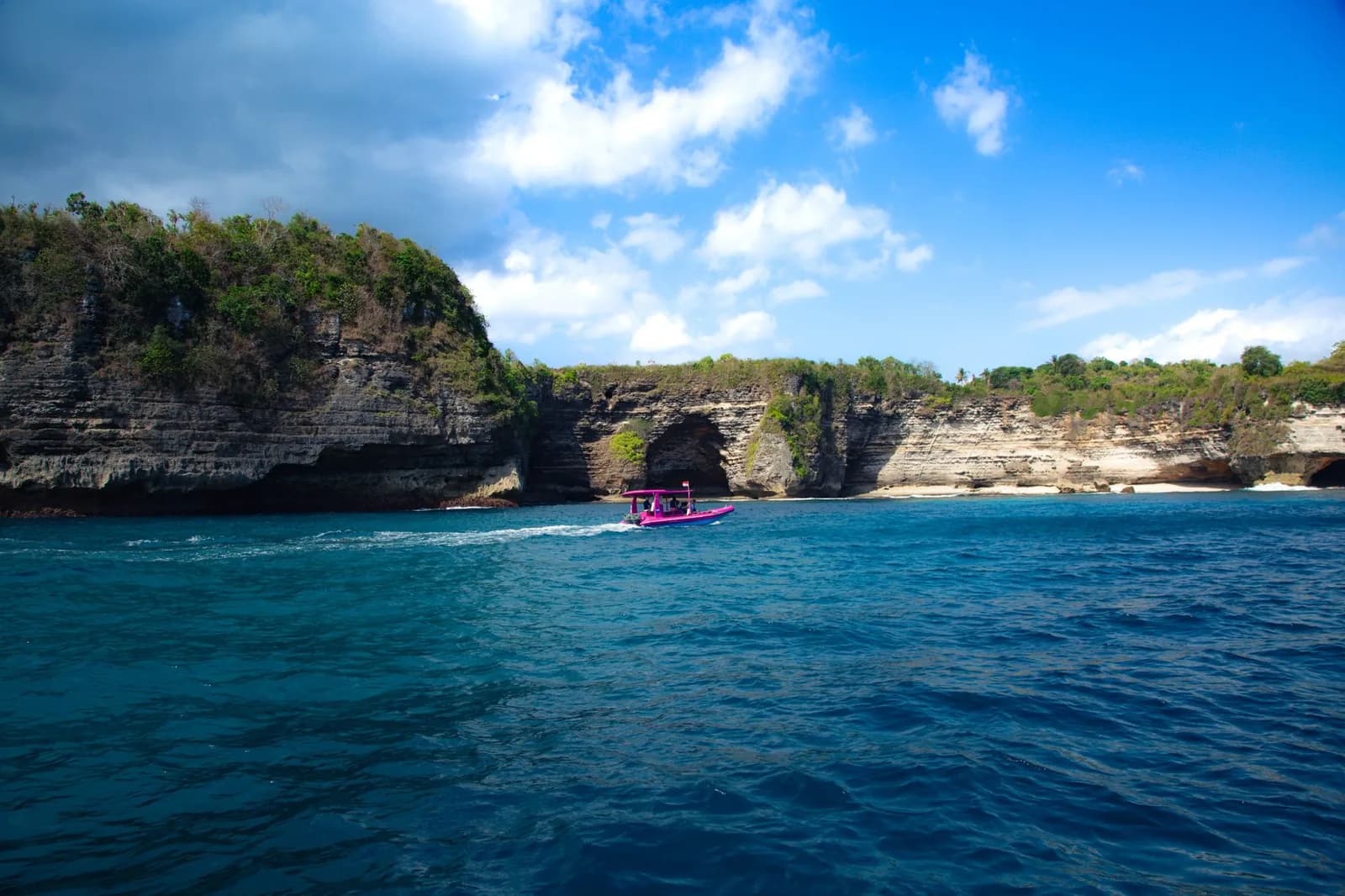
The one day trip worth booking before you arrive rather than from a hotel desk, because the boats sell out and the good operators sell out first.
Booked in advance
Free cancellationNusa Penida full day tour with hotel transfers
- ✓Fast boat from Sanur and the island driver included
- ✓Hotel pickup on the Bali side, which is the part that goes wrong alone
- ✓The west coast viewpoints in one day
Affiliate link. Booking through GetYourGuide costs you nothing extra and supports the guide. Price and rating checked October 2026. Both move with season and demand.
This is a partner link. Booking through it costs you nothing extra and supports the guide. The Nusa Penida day trip guide compares what the tours actually include, and makes the case for staying a night instead.
Bali visas: the questions people ask
Answers as at August 2026. Indonesian entry requirements change more often than most destinations, so confirm anything decisive on evisa.imigrasi.go.id before you fly.