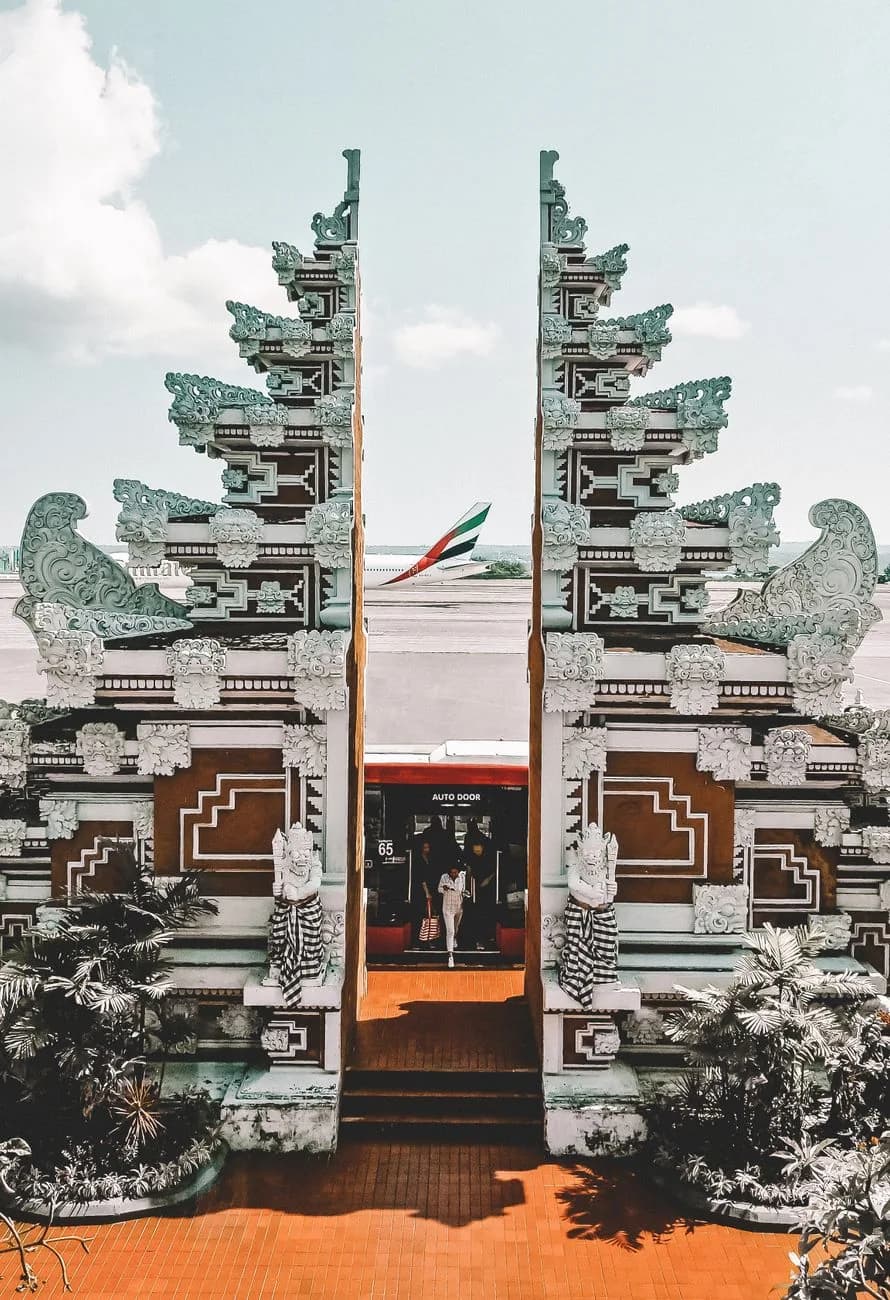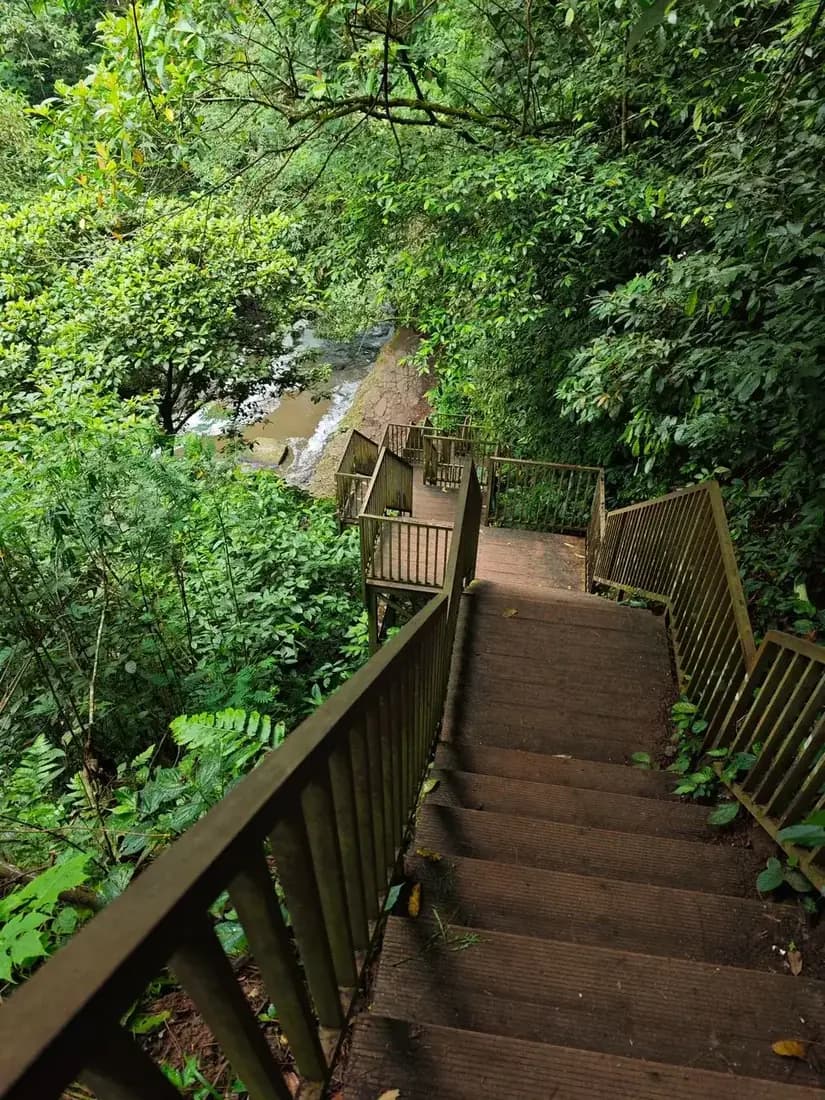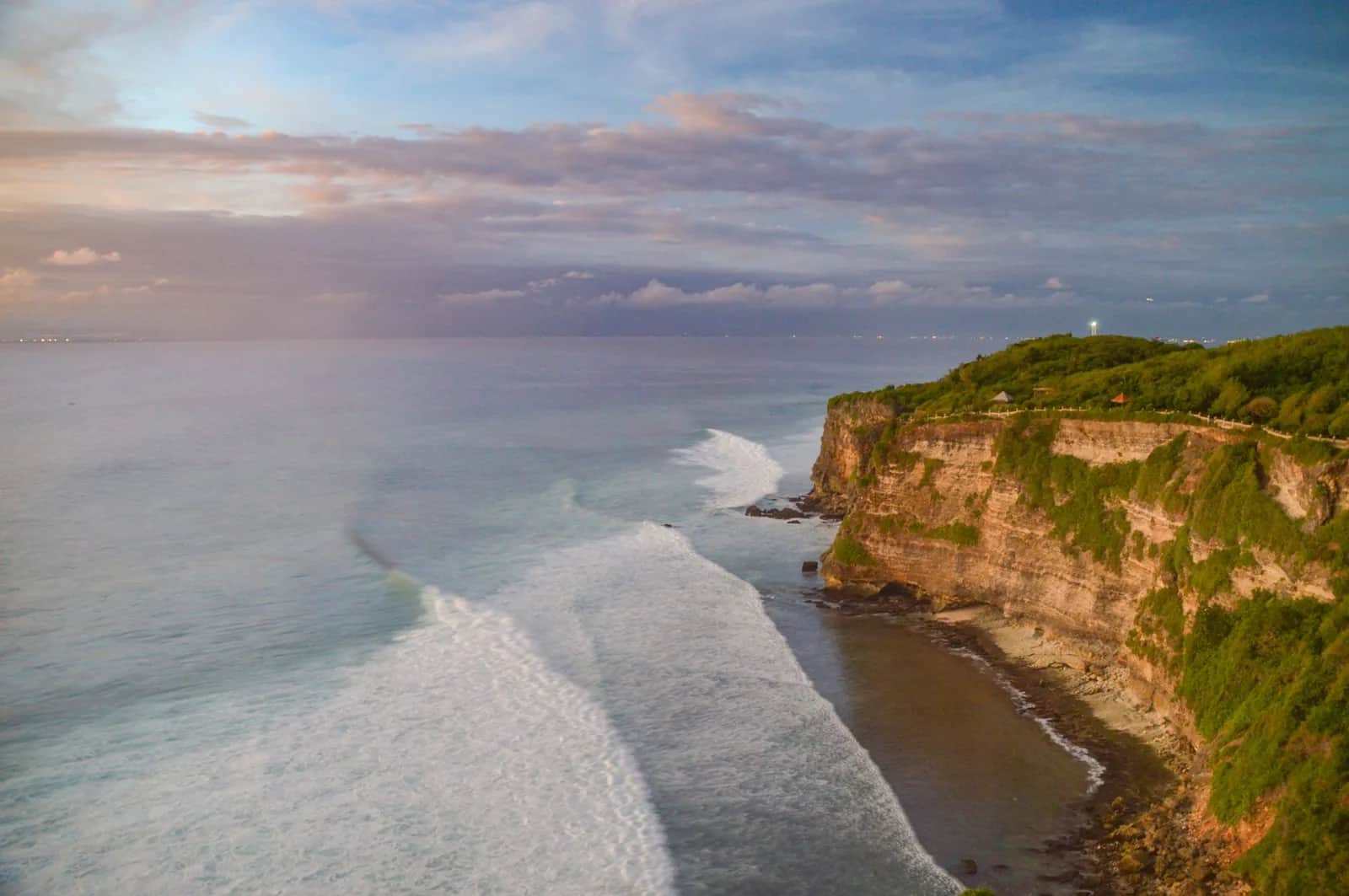
Uluwatu is not a town, and that is the thing to understand before you book anything here. It is the name of a temple that has been stretched to cover the whole south western end of the Bukit, a raised limestone plateau that stops in cliffs seventy metres above the Indian Ocean.
What that geography produces is a coast of hidden coves, and a catch. Every one of those coves is at the bottom of a staircase, and the good ones are a long way from each other. So the useful list is not the beaches in alphabetical order. It is the beaches ranked by how hard they are to get down to.
Eight beaches, ordered by how hard it is to get down to them. That order is the single most useful thing to know about the Bukit, and it is the one thing no guide to Uluwatu tells you. The step counts below are orders of magnitude, not measurements.
| Beach | The descent | In the water | Suits |
|---|---|---|---|
| Melasti | A road cut through the cliff | Swimmable | Anyone who does not want to earn a beach |
| Pandawa | A ramp between two carved cliff walls | Swimmable, calmest here | Families, and swimming rather than surfing |
| Balangan | A short flight of concrete steps | Reef, and tide dependent | A long lunch and a surf watch |
| Padang Padang | Stone steps through a gap in the rock | Shorebreak, and it dumps | The photograph, in the first hour of the day |
| Bingin | A long unmarked staircase through the buildings | Reef break, not a swimming beach | Surfers, and anyone happy to climb back up |
| Suluban, or Blue Point | Stairs, then a passage through a sea cave | Barely a beach at high tide | The cave, and watching the Uluwatu break |
| Green Bowl | Several hundred steps, exposed | Rock pools and reef at low tide | People who want an empty beach and will pay in stairs |
| Nyang Nyang | The longest staircase on the Bukit, no shade | Big, open and not for swimming | Emptiness, and nothing else |
Melasti
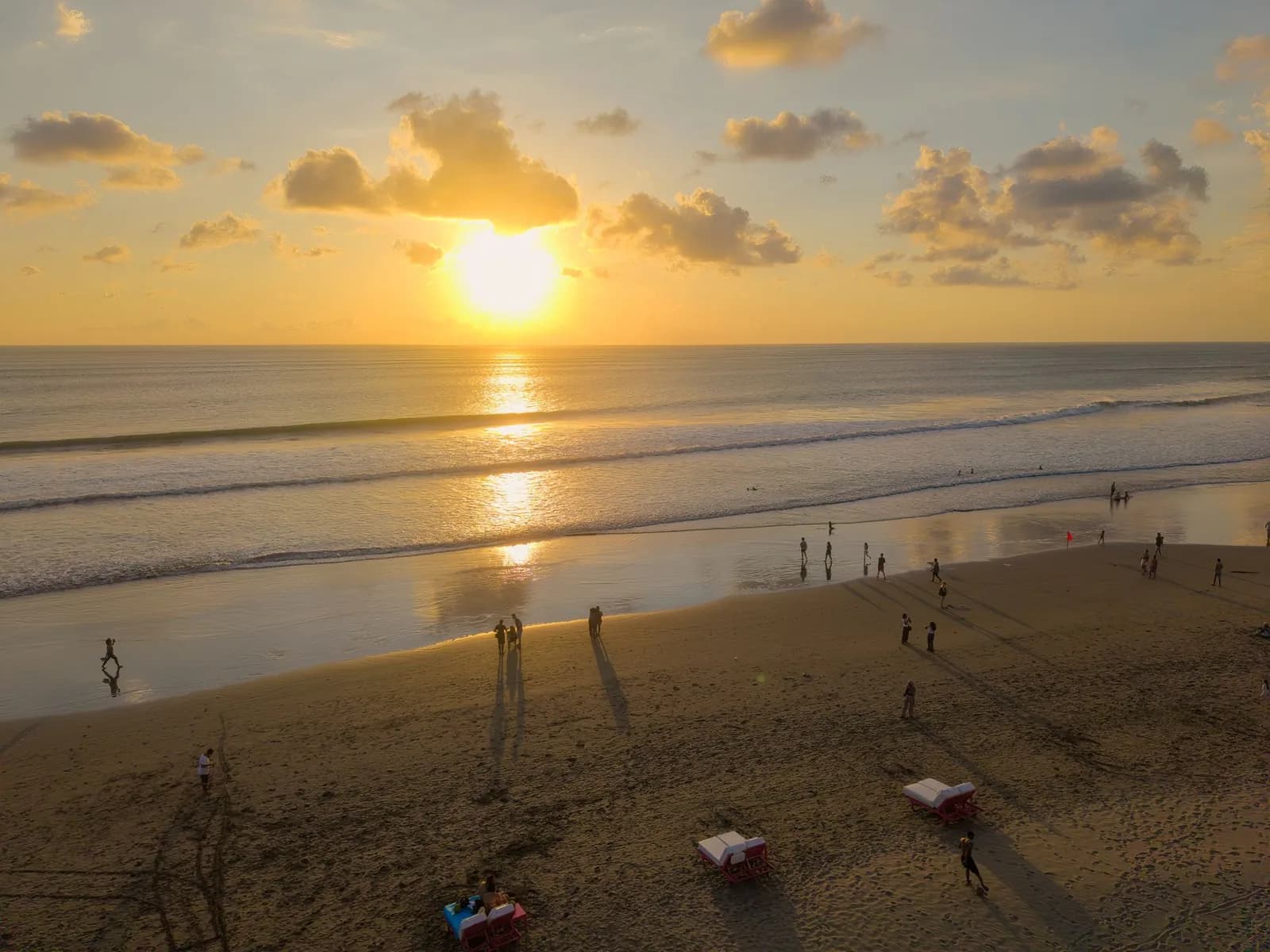
The only beach on the Bukit you arrive at rather than climb down to. A road was cut straight through the limestone in a series of white switchbacks, and it delivers a car to a car park on the sand. That single fact explains everything else about Melasti: it is the widest, the busiest, the most developed, and the one place here a family with small children or anyone with bad knees can actually use. The water is calm enough to get into at most states of the tide, there are day beds and warungs along the back, and a beach club on the southern end. What it is not is a hidden cove, and people who arrive expecting one are disappointed by the car park they just parked in.
Parking: Paid car park at the bottom.
Pandawa
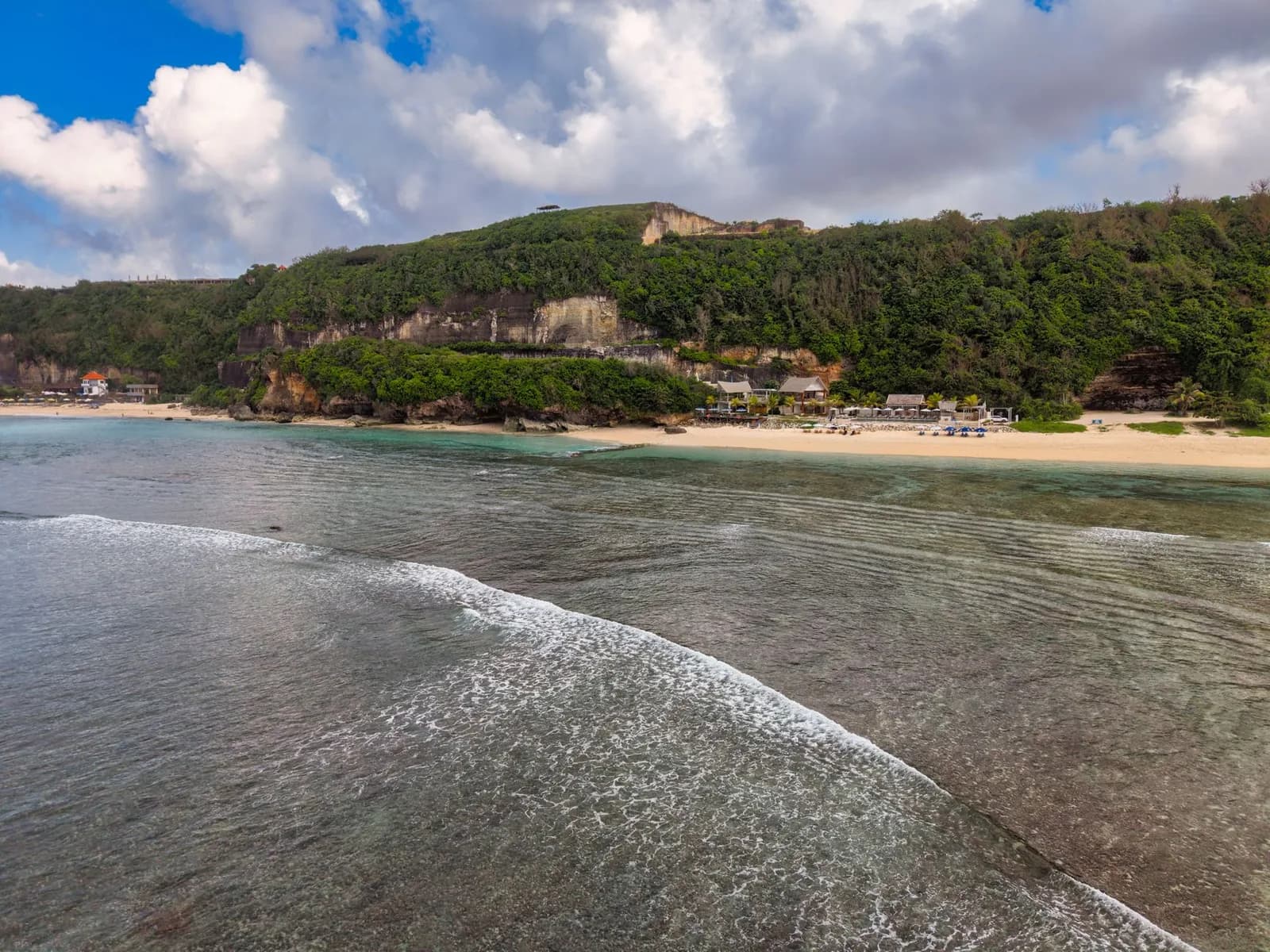
Pandawa is the other one that opens with a road instead of a staircase, and it has the flattest water on the peninsula. The approach is a cutting with five figures from the Mahabharata carved into the rock face on one side, which is the reason it photographs. At the bottom is a long strip of sand facing a bay shallow enough for kayaks and paddleboards, with almost no shorebreak. It is comfortably the best Bukit beach for children and the worst for anyone who came here to surf. It is also further east than most people realise, which puts it closer to Nusa Dua than to the temple.
Parking: Large car park, close to the sand.
Balangan
The gentlest of the real descents: you park on the cliff, walk past a row of warungs, and drop down a short concrete staircase to the sand, two or three minutes, no drama, a bag carried down easily. The beach itself is a long strip of pale sand with a reef running along the front of it, so at low tide the water pulls back over rock and swimming stops being the point. The warungs above the sand are the best part of Balangan and the reason to stay for two hours rather than twenty minutes.
Parking: On the clifftop, a few minutes above.
Padang Padang
The famous one, and the smallest. You pay at a booth on the road bridge, go down a stone staircase and squeeze through a crevice in the rock barely wide enough for two people, which is what makes the arrival memorable. The beach on the other side is a single short cove between two cliffs, and it fills completely by mid morning. Monkeys work the staircase and the crevice with more confidence than anywhere else on the Bukit except the temple. On any real swell the water dumps hard onto a steep shelf, and it only turns into a swimming cove at mid tide on a small day.
Parking: Roadside, small and it fills. The full Padang Padang guide
Bingin
Bingin is where the Bukit stops being convenient. From the clifftop car park a staircase drops through a stack of guesthouses and warungs built into the rock face, narrow, uneven, turning back on itself, with no single obvious route down. Coming back up in the middle of the afternoon is a genuine climb and it is the thing nobody mentions when they recommend Bingin. At the bottom the sand only exists at low tide, and what it fronts is a reef break rather than a swimming beach. Worth it, but know what you are agreeing to before you carry a cool box down there.
Parking: Clifftop, then you are on foot.
Suluban, or Blue Point
The strangest arrival on the peninsula. A staircase drops from the clifftop bars down through a cleft, and the last section is a passage under the rock that opens out onto the sand through a natural arch. At low tide there is a beach and a set of rock pools. At high tide there is almost nothing and the passage itself can be wet. Suluban is the access point for the Uluwatu surf break, so the traffic on those stairs is mostly boards. Check the tide before you go, because the wrong half of the cycle turns it into a staircase to a wall of water.
Parking: Clifftop above the warungs.
Green Bowl
Around three hundred steps down a cliff face with very little shade on them, and that is the whole filter. What that buys is a beach that stays quiet on a day when Padang Padang is shoulder to shoulder, with two sea caves at the back of it and bats living in one of them. The reef sits close in, so this is a low tide destination and a rock pool beach rather than a swimming one. Go down in the morning, because the climb back at two in the afternoon in full sun is the part people remember.
Parking: Clifftop, then a long way down.
Nyang Nyang
The one that is genuinely remote. A rough track leaves the main road, and then a staircase of several hundred steps runs down an open cliff face with no shade anywhere on it. At the bottom is a kilometre and a half of wide sand that is usually close to empty, a shipwreck that has been photographed by everyone who has made the descent, and no shop, no warung and no water. Bring your own, and do not start down after midday. Nyang Nyang is the clearest illustration of the deal the whole peninsula offers: the emptier the beach, the more vertical the price of admission.
Parking: Track off the main road, then the stairs.
The way around having no transport
Free cancellationUluwatu tours, temple evenings and beach days
- ✓Hotel pickup included on most listings, which solves the one real problem here
- ✓Temple and kecak evenings sold with the seat and the drive home together
- ✓Multi beach days that cover ground you would spend an hour a leg reaching alone
- ✓Free cancellation on most of them if the swell or the sky turns
Affiliate link. Booking through GetYourGuide costs you nothing extra and supports the guide. Prices are indicative and vary by option and season.
On this page
What the Bukit actually is, and why nothing is close to anything
The single most useful fact about Uluwatu is a map fact, and the guides that list thirteen beaches in a row quietly leave it out.
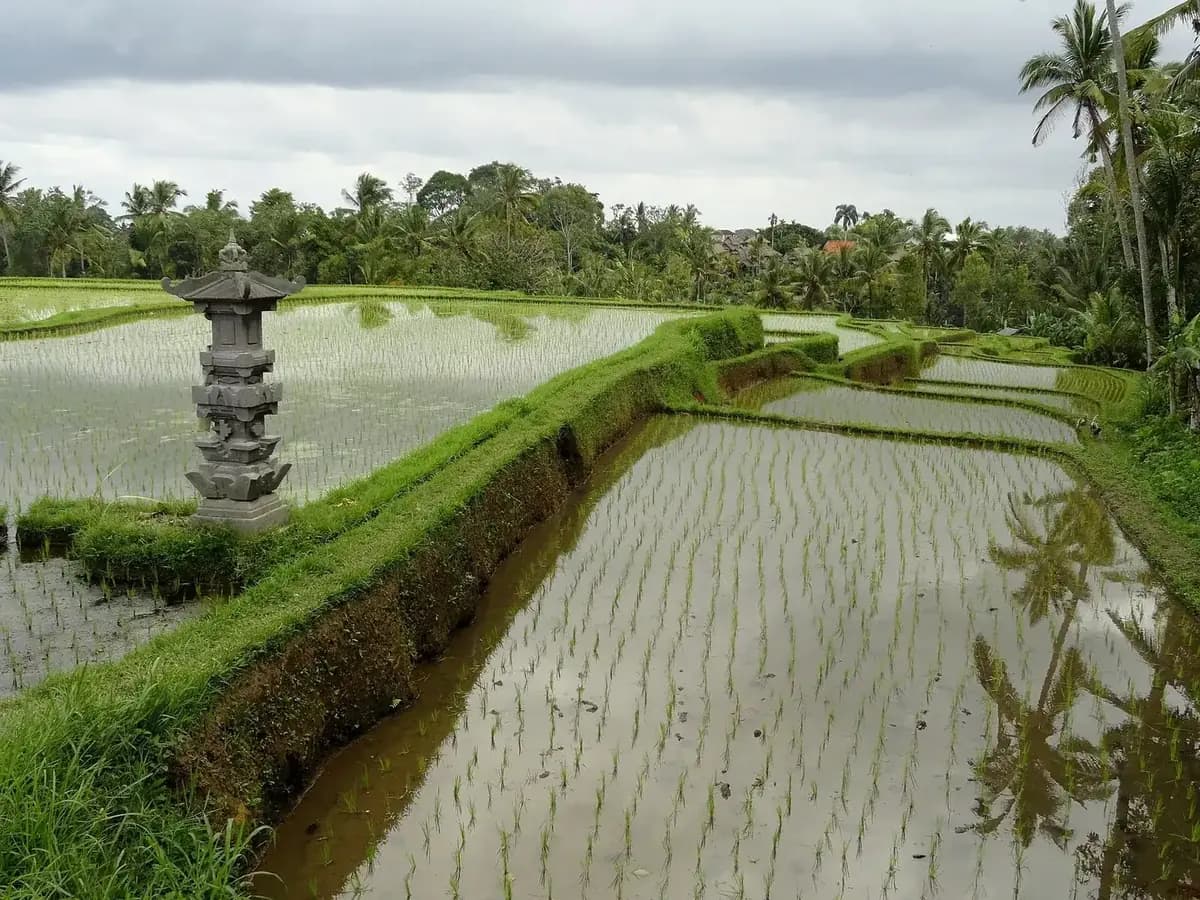
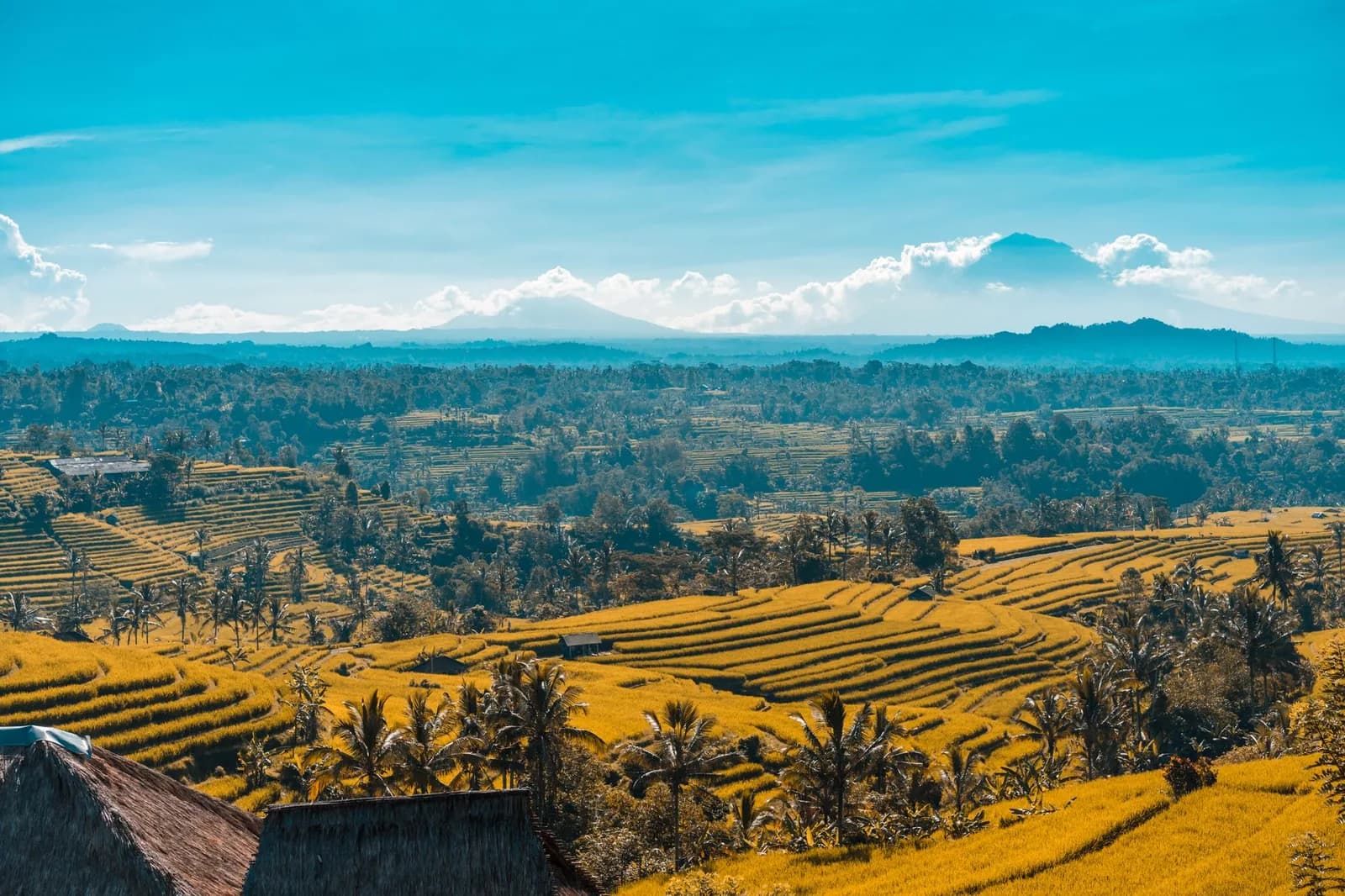
The Bukit is the lump of land hanging off the bottom of Bali, joined to the rest of the island by a narrow neck at Jimbaran. Geologically it has nothing to do with the volcanic island above it. It is uplifted coral limestone, dry, scrubby and porous, which is why it has no rice fields, no rivers and none of the green terracing people picture when they picture Bali.
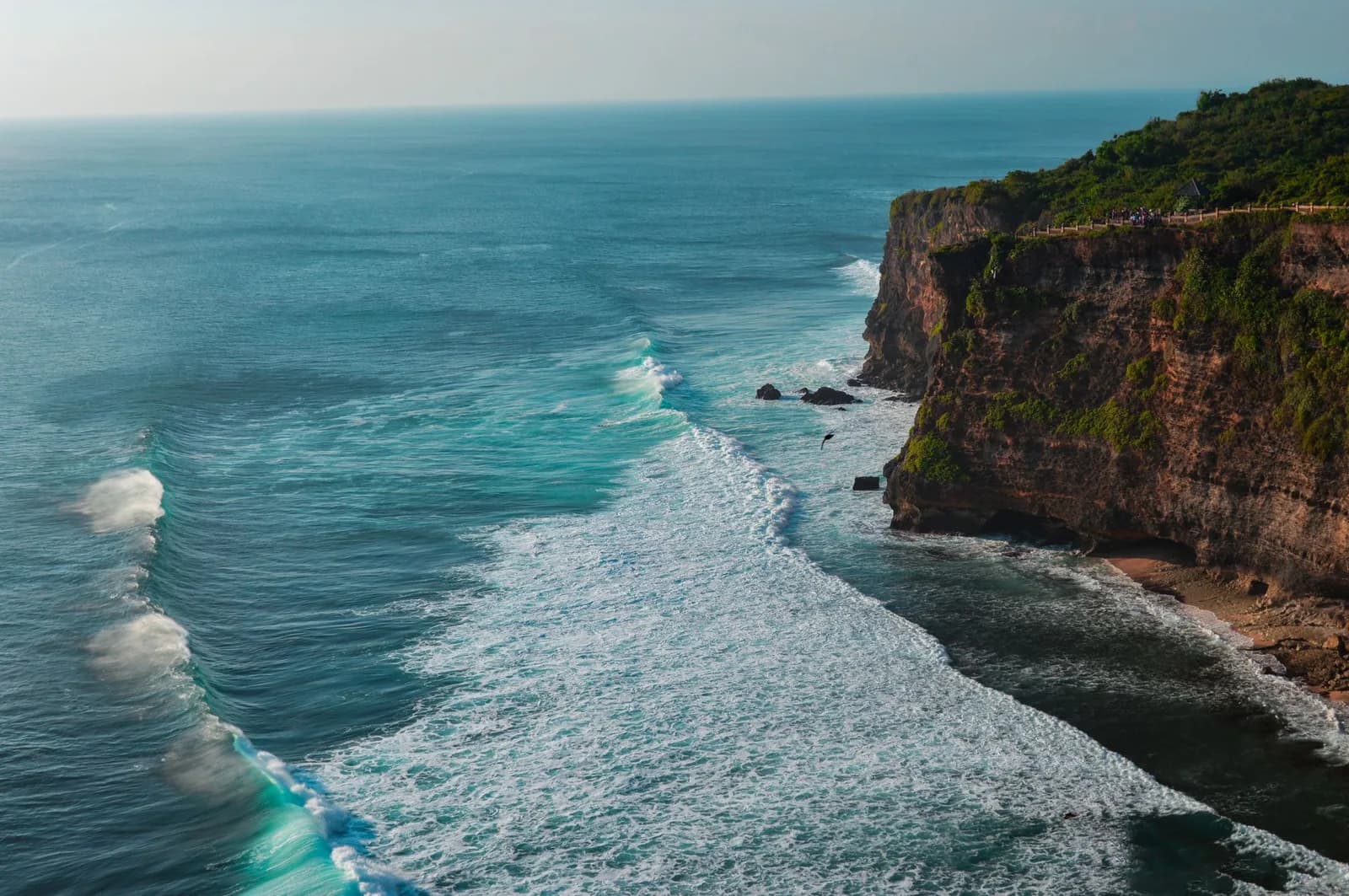
That limestone is also why the coast looks the way it does. The sea has undercut the plateau into cliffs and carved caves and clefts along the base of them, and the beaches are the pockets of sand caught in those clefts. It is a spectacular arrangement and a deeply inconvenient one, because a plateau edge does not give you a coast road. There is no corniche here. To get from one beach to the next you drive inland, across the top, and back out again.
Add the second fact and the picture is complete: there is no public transport on the Bukit whatsoever, and almost no pavement. The result is a place that reads as a compact destination on a listing site and behaves like a rural district the size of a small city.
Pick where you would sleep and look at how far apart everything else sits. There is no bus, no train and nothing walkable between these points, so every figure below is a scooter or a car ride, outside the afternoon peak and outside high season. Add a third on a Saturday.
| From | Temple | Padang Padang | Bingin | Melasti | Pandawa | GWK park | Airport | Seminyak |
|---|---|---|---|---|---|---|---|---|
| Pecatu | 8 min | 10 min | 12 min | 25 min | 35 min | 25 min | 45 min | 70 min |
| Bingin, Uluwatu village | 12 min | 8 min | 3 min | 30 min | 38 min | 25 min | 45 min | 70 min |
| Balangan | 18 min | 14 min | 8 min | 30 min | 40 min | 18 min | 35 min | 60 min |
| Ungasan | 20 min | 22 min | 22 min | 12 min | 20 min | 22 min | 40 min | 65 min |
| Nusa Dua | 40 min | 42 min | 45 min | 30 min | 25 min | 20 min | 25 min | 45 min |
| Seminyak | 65 min | 65 min | 68 min | 70 min | 75 min | 55 min | 40 min | — |
Pecatu is the closest thing to a centre, and still a fifteen minute ride to dinner: next to the temple and the surf, and forty minutes from an airport that is only eighteen kilometres away. Bingin and Uluwatu village are the most walkable square kilometre on the Bukit, reaching a dozen warungs on foot and nothing east of Balangan without a ride. Balangan is the compromise, ten minutes closer to the airport than the temple end and ten minutes further from the sunset everyone comes for. Ungasan has cheap rooms and quiet nights on a plateau with nothing walkable at all, and is only sensible with a scooter or a driver already arranged. Nusa Dua is closer to the airport and to a swimmable beach, and further from every cliff on this page, a different holiday that happens to share a peninsula. From Seminyak, Uluwatu is a day trip rather than a stay: leave at three, take the temple and the kecak, and accept a dark drive home. It works, and it eats an entire afternoon.
This is the arithmetic that decides whether a trip here works. Booking a clifftop room at Ungasan and planning to walk to dinner is the mistake this page exists to prevent. Sort out how you are going to move before you sort out where you are going to sleep, and the Bukit becomes the best few days of a Bali trip rather than the most frustrating.
The temple and the kecak, in short
The thing the area is named after, and the one evening here that everybody should do.
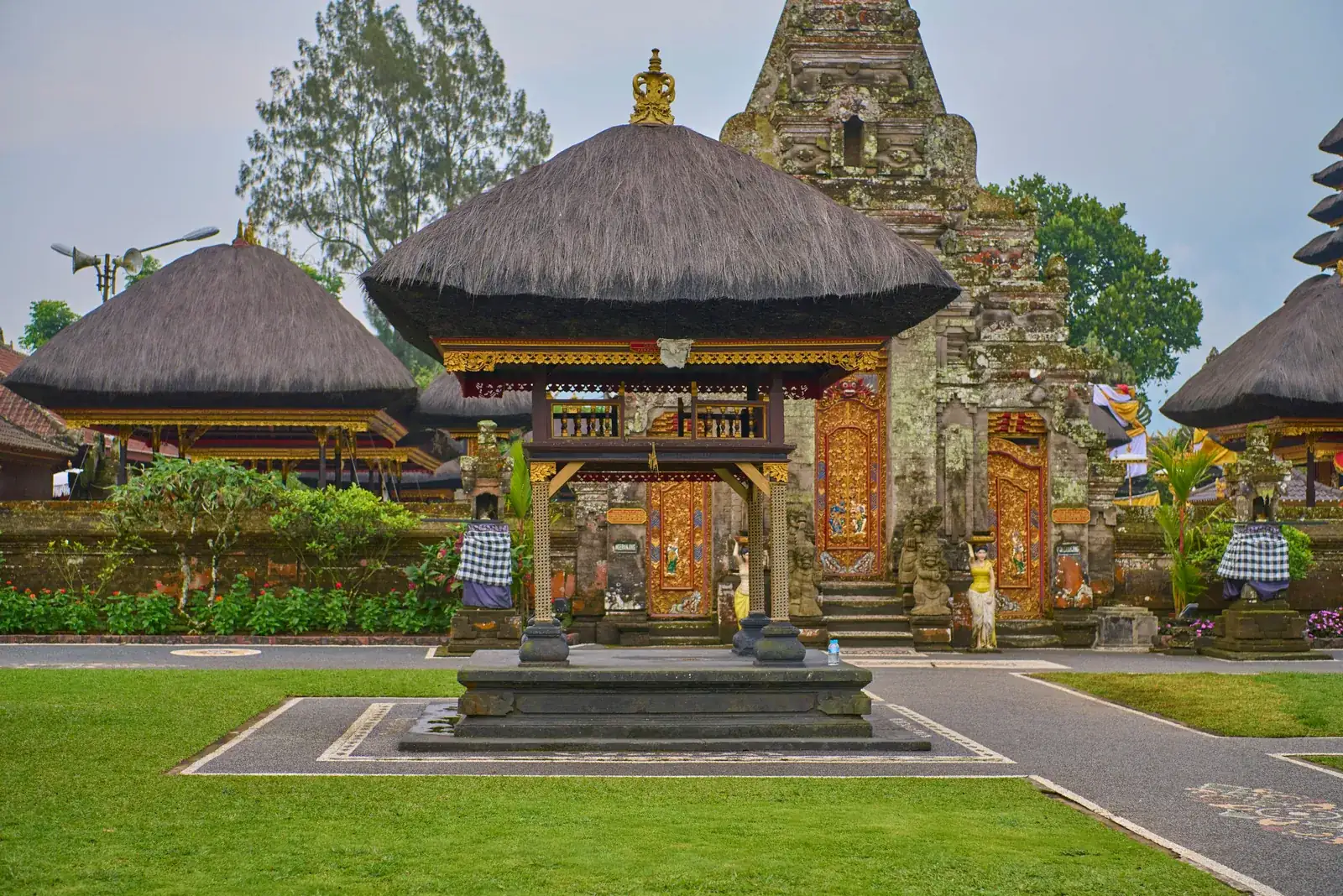
Pura Luhur Uluwatu sits on the cliff edge at the south western tip of the peninsula, one of the six directional temples that are held to protect Bali. The temple itself is small and you cannot go into the inner courtyards, so what you are really there for is the setting: a paved path along the rim of a seventy metre drop, with the ocean on one side and a resident troop of macaques on the other. The monkeys take sunglasses, phones and hats, and they are practised at it. Uluwatu temple has the entry price, the opening hours and the protocol that keeps your glasses on your face.
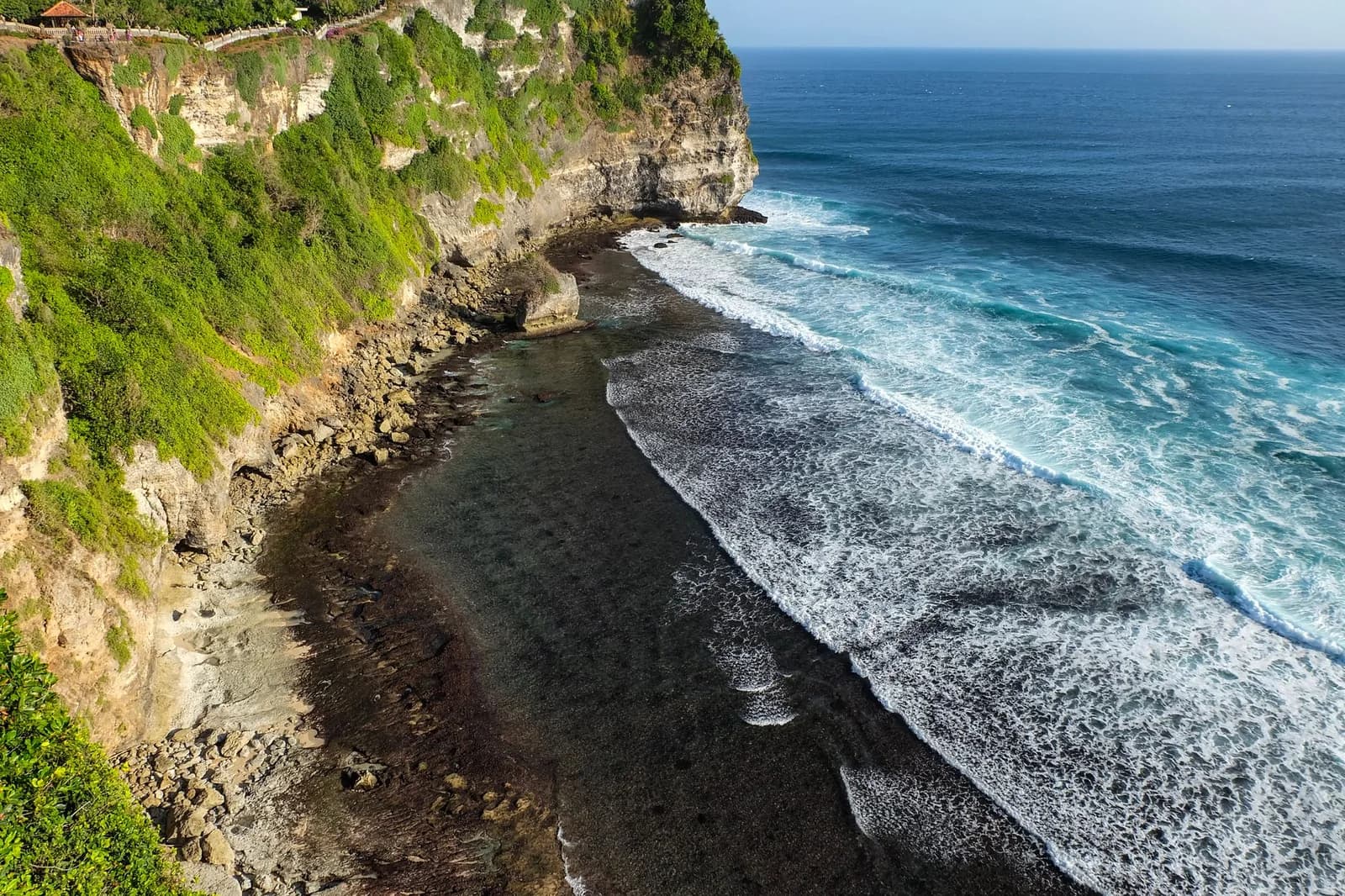
Next to the temple is an open air amphitheatre where a kecak is performed every evening as the sun goes down. Fifty or so men chanting in a circle, no instruments, a fire, and the Ramayana told in an hour against an open horizon. It is the best single evening in the south of Bali, and worth arranging your day around.
It is also a subject of its own, because the seating is unnumbered, the amphitheatre fills long before the advertised start, and where you sit changes what you see. The Kecak dance at Uluwatu covers the arrival time that gets you a seat, which part of the bowl to aim for, and how to get through the monkeys with your belongings.
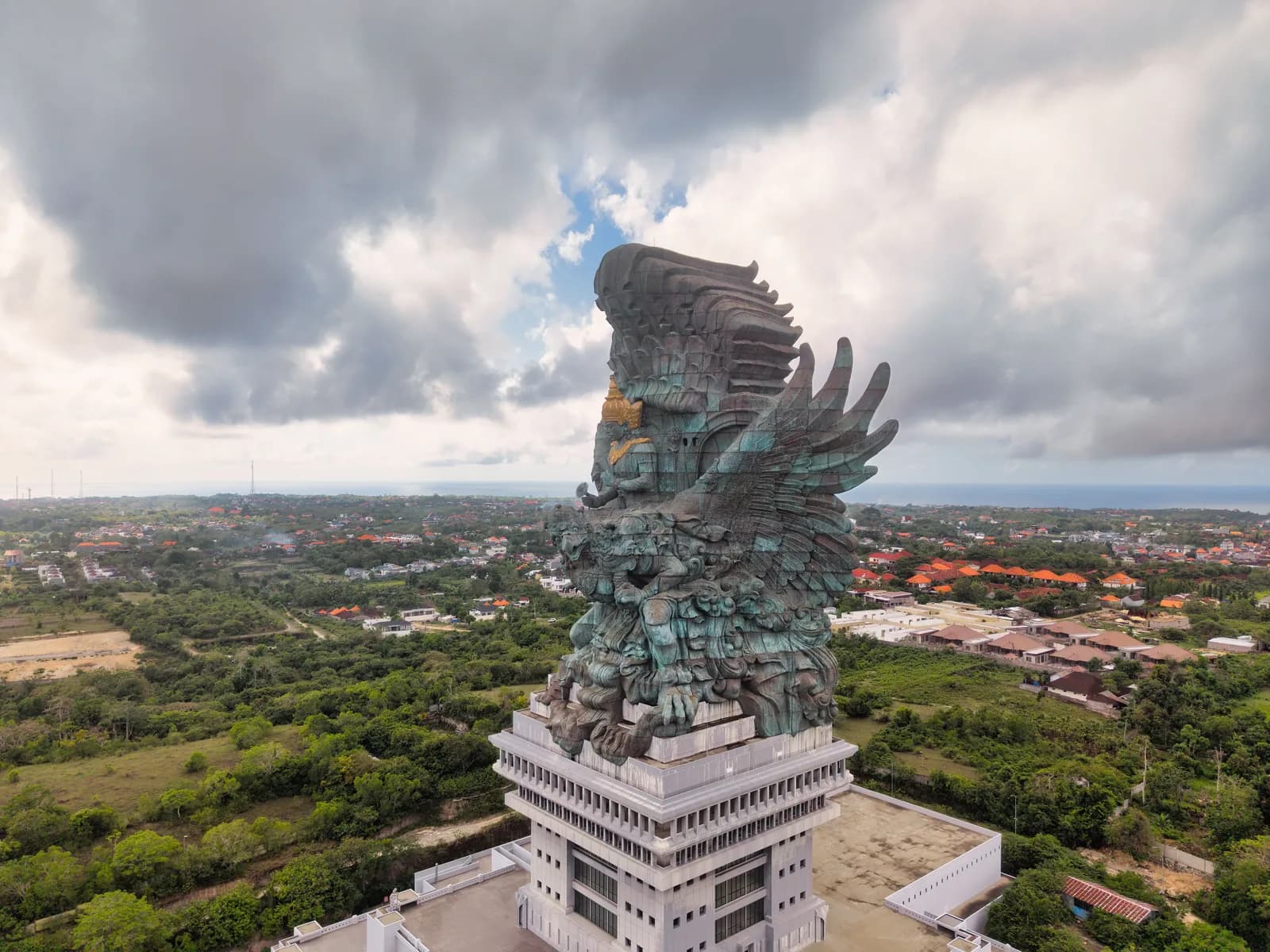
The other landmark on the peninsula is inland: the Garuda Wisnu Kencana statue in Ungasan, 121 metres of Vishnu on Garuda on the road in from the airport. GWK Cultural Park takes two hours to do properly, which is why it rarely fits on the same afternoon as the kecak.
Beach clubs and cliff bars: where to take the sunset
The Bukit faces west into open ocean with nothing between it and the horizon. That is the reason half of these places exist. They are not equivalent, and the price gap between them is enormous.
Single Fin
Best for: First time, and anyone who wants the famous one.
Three levels of terrace hanging directly over the Uluwatu break, so you watch the surf and the sun go down in the same frame. It is the single best view on the peninsula and it is not a secret: Sunday evening here is closer to a festival than a bar, and the road in backs up for a kilometre.
What you pay: No entry, drinks at cliff prices, and a long wait for a table at six.
Ulu Cliffhouse
Best for: A pool and a full day rather than an hour.
A saltwater pool cut into the clifftop with a deck and a proper kitchen behind it. This is the one that works as a destination in itself, which matters on the Bukit because getting anywhere else takes half an hour.
What you pay: Day bed minimum spend, higher at weekends and redeemable against the bill.
The warungs above Bingin
Best for: Anyone who does not want a beach club.
Plastic chairs on a clifftop terrace, a fan, and the same ocean the places above charge forty dollars to look at. The sunset is identical. The bill is not, and this is the honest answer to what an evening on the Bukit should cost.
What you pay: The price of what you eat, which is a few dollars.
Melasti and the southern clubs
Best for: Sunset with your feet actually in the sand.
The only stretch here where a beach club sits on a beach rather than on a cliff above one. It faces south west rather than west, so the sun drops beside the view instead of into it, and the water is calm enough to be in while it happens.
What you pay: Entry or minimum spend, plus the beach parking fee on the way in.
One planning note that saves an evening. The sunset and the kecak happen at the same time, roughly six o'clock all year because Bali sits close to the equator and the daylight barely moves. You cannot do both on the same night. Take the temple and the performance on one evening, and a cliff terrace on the next. If you would rather have the sunset from a daybed on flat sand, the Seminyak beach clubs are an hour north.
Surfing in Uluwatu, by what you can actually ride
The waves here are the reason the peninsula was developed, and they are almost all reef breaks. That is the sentence the booking pages leave out.
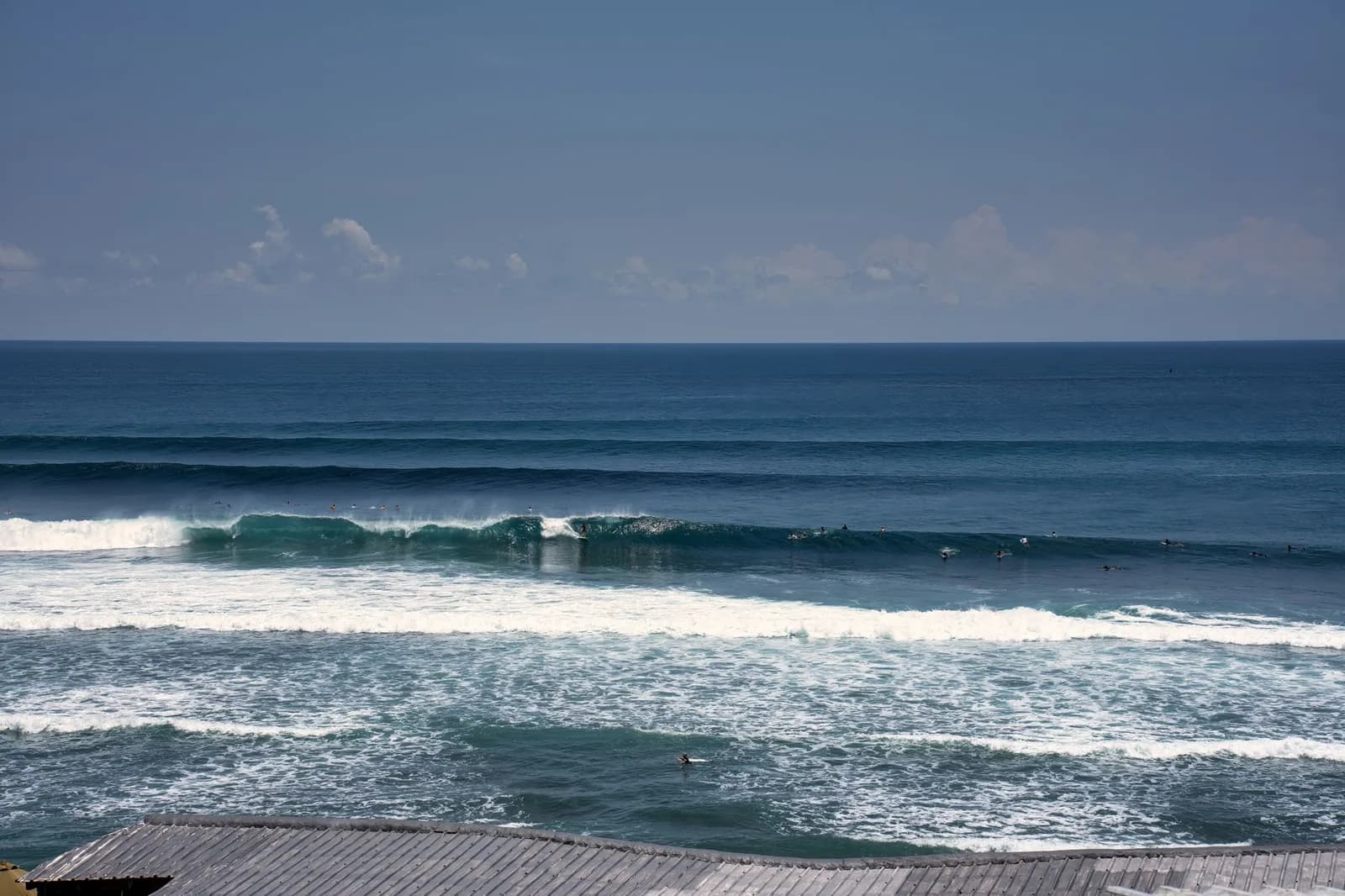
A reef break is not a beach break with better scenery. The wave stands up over shallow coral and limestone, the takeoff is in one place rather than anywhere along a sandbar, and the consequence of falling in the wrong spot is cuts rather than a mouthful of sand. Uluwatu is a world class wave, and a world class wave for people who already surf. Reef cuts are the routine injury here, and they land mostly on visitors who were told the surfing was good and were not told what kind.
Uluwatu
Advanced only. A left hand reef break with five named sections, reached by paddling out of a sea cave. Shallow, crowded and unforgiving. This is the wave the whole peninsula was built around. It is not a place to learn and not a place to try your third session.
Padang Padang
Expert, or the beach break next door. The famous barrel is one of the heaviest waves in Bali over a shallow reef, and it only works on a decent swell. Padang Padang Right, around the corner, is a far gentler wave and the one most people who say they surfed Padang actually surfed.
Bingin
Intermediate to advanced. Short, fast and very shallow at low tide, breaking over dry reef in places. Excellent if you can already ride a reef break, and a good way to lose skin if you cannot.
Balangan
Intermediate. A longer, more forgiving left than its neighbours, and the most reasonable first reef break on the Bukit. Still a reef, still not a beginner wave.
Dreamland and Melasti
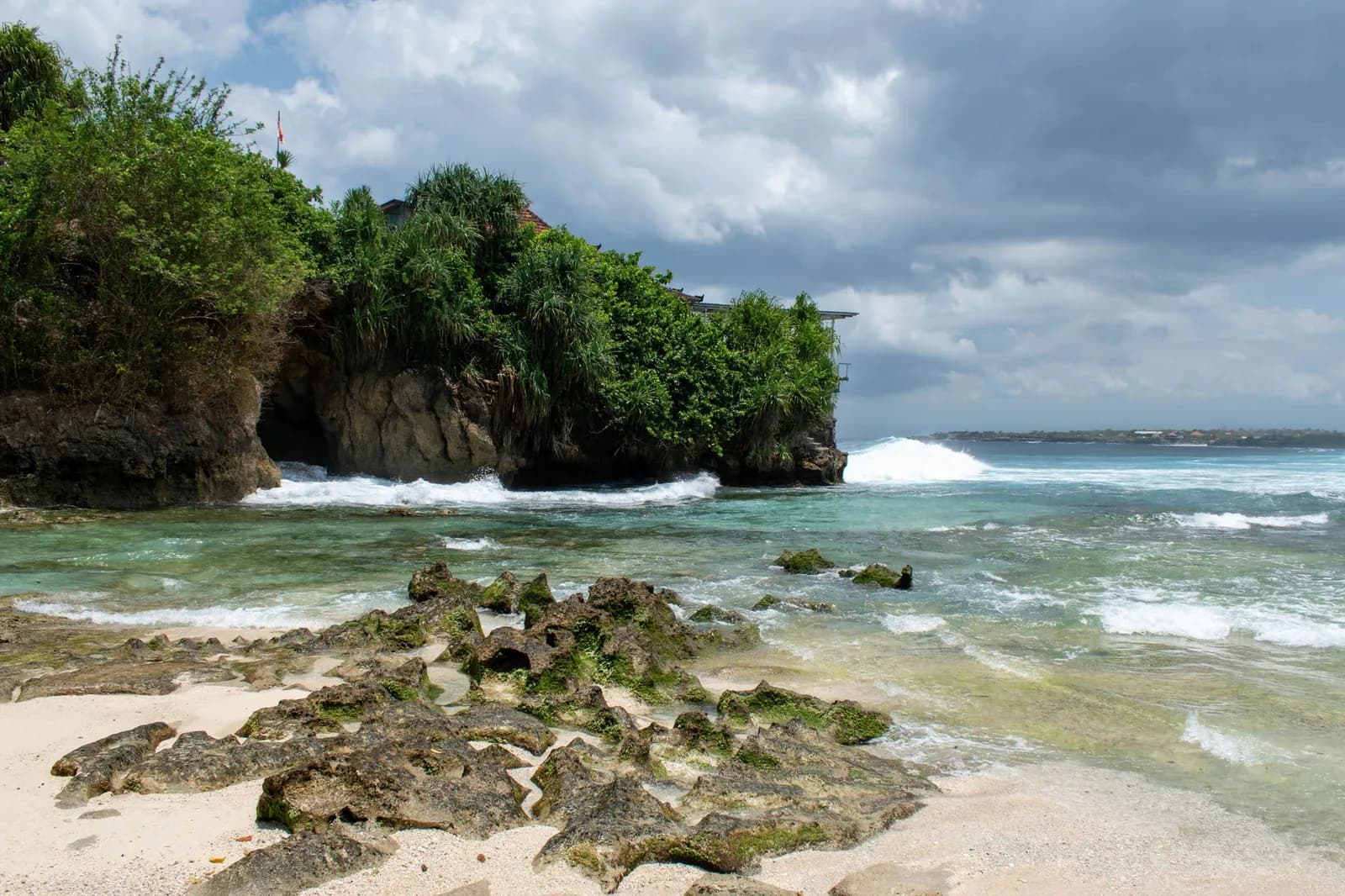
Beginner, in the right conditions. Sand bottomed and much softer, which makes them the only sensible places to take a first lesson without leaving the peninsula. On a big swell they close out and the lesson moves to Kuta, which is the right call.
The right wave for a first session
Free cancellationSurf lessons, on sand rather than reef
- ✓Beginner listings run on sand bottomed beaches, not the Uluwatu reef
- ✓Board, rash vest and an instructor in the water included
- ✓Pickup from the Bukit on a lot of the listings, which matters with no transport
- ✓Free cancellation on most of them if the swell is wrong on the day
Affiliate link. Booking through GetYourGuide costs you nothing extra and supports the guide. Prices are indicative and vary by option and season.
Should you stay in Uluwatu, or come for the day?
The question behind most searches for this place, and the one the hotel listings are least useful on.
Stay here if you surf, if the landscape is the reason you came to Bali, or if you want a few days that feel like somewhere rather than like a resort strip. Three nights on the Bukit, with a scooter or a driver, is one of the best things you can do with a week in southern Bali.
Come for the day instead if you have four or five days total, if you are travelling with young children, or if the idea of arranging transport for every meal sounds like work. Uluwatu does an excellent afternoon and evening from Seminyak: leave at three, take the temple and the kecak, eat on a cliff, and drive home in the dark.
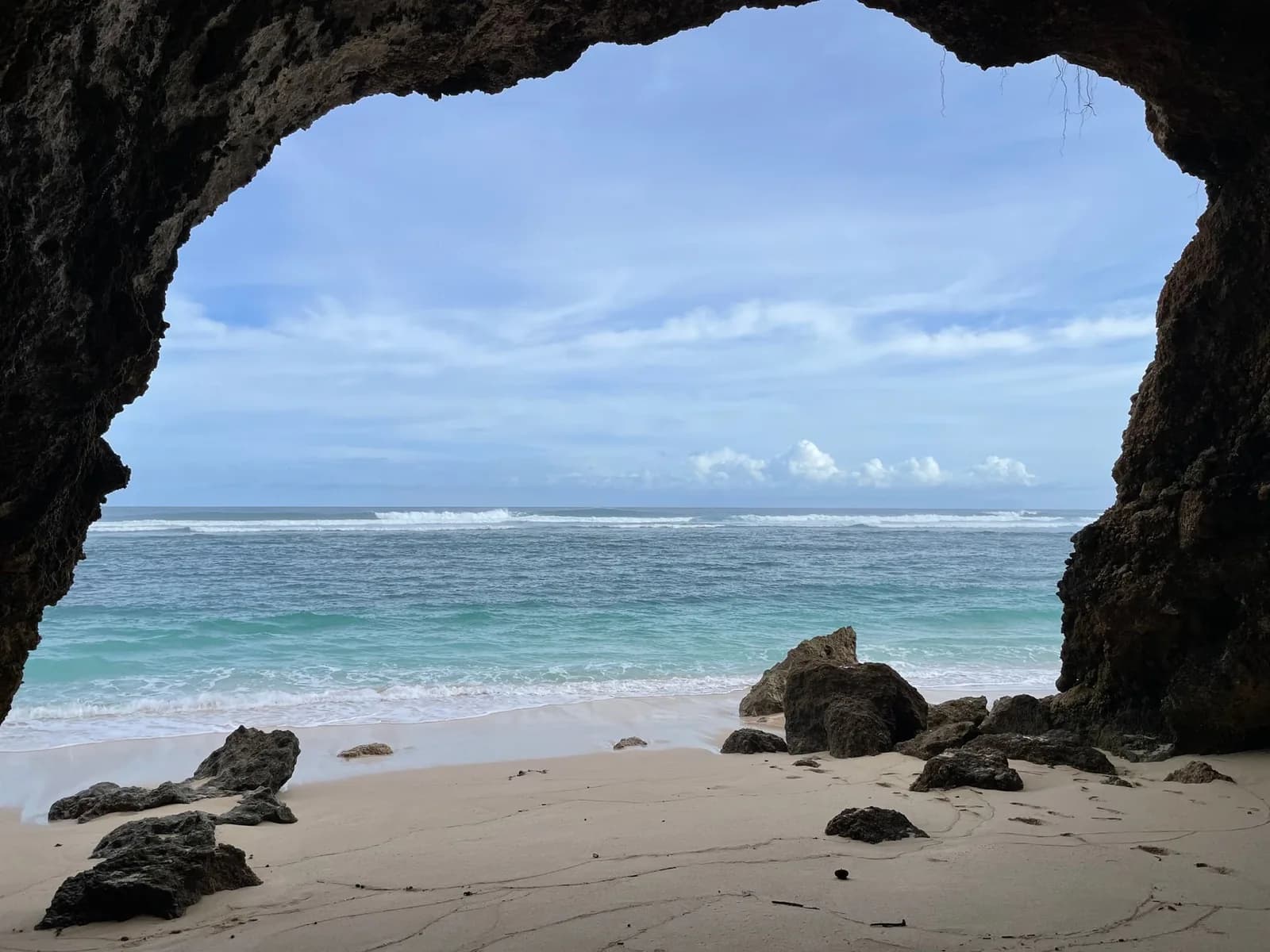
If you are staying, the choice is between four quite different addresses.
- Bingin and Uluwatu village for the only cluster here you can use on foot. Warungs, guesthouses, surf shops and the staircase to the beach, all within ten minutes.
- Pecatu for proximity to the temple and the main break, with more mid range hotels than the village and slightly less character.
- Balangan for the compromise: closer to the airport, quieter, and still on the good side of the peninsula.
- Ungasan for the clifftop resorts, which are spectacular, isolated, and only sensible with a car.
Then do the one check that matters. Open the map pin on the listing and measure the distance to the nearest food that is not the hotel restaurant. On the Bukit that number ranges from two minutes to twenty five, and it does not track the price of the room at all.
The single decision that makes the Bukit work
Free cancellationAirport transfers and a car with a driver
- ✓A fixed price agreed before you land, for a drive that takes an hour
- ✓A driver for the day is how most people cover the peninsula properly
- ✓Beach parking and waiting time handled, at four or five stops in a day
- ✓Free cancellation on most listings if your flight moves
Affiliate link. Booking through GetYourGuide costs you nothing extra and supports the guide. Prices are indicative and vary by option and season.
Getting to Uluwatu, and getting around once you are there
Eighteen to twenty five kilometres from the airport, and between forty and sixty minutes of it.
From the airport
South through Jimbaran, then up onto the plateau. Pre book a car rather than negotiating in arrivals, and expect the last third of the drive to be narrow and slow. Nothing about the distance predicts the time, because the road quality drops as you go.
There is no public transport
None at all on the Bukit. No bus, no shuttle, nothing that runs to a timetable. Every guide that lists thirteen beaches assumes you have solved this and none of them says so, which is why people arrive expecting to work it out on the ground.
Grab and Gojek, with gaps
They work, less reliably than in Seminyak. Local driver associations hold the pitch at several beaches and clifftop venues, so you can regularly get somewhere by app and not get back the same way. Ask your warung or hotel to call a car when that happens, which is normal and costs a little more.
A scooter
The way most people do the Bukit, and the roads here are steeper, narrower and busier with board racks than anywhere north. If you have never ridden, this is the wrong place to start. An international permit carrying the motorcycle category is what stands between a scrape and an uninsured scrape.
A car with a driver
Forty five to sixty dollars for eight to ten hours, and the answer for anyone who wants to see four beaches in a day. It costs about what two scooter hires do once you count the parking fees at each stop, and it removes the problem of getting back from a beach at four in the afternoon.
Walking
Only inside Bingin and Uluwatu village, and only in daylight. There is essentially no pavement on the peninsula, the verges are narrow and the traffic is fast on the straight sections. The staircases are the walking here, and there is plenty of it.
Before any of that there is the paperwork, shorter than its reputation: a passport with six months on it, a visa on arrival, the tourism levy and an arrival card that will not open until three days before you fly. What you have to sort before you land sets out all four, with what each one costs.
How many days, and what a good three of them look like
Three nights is the number. Here is the shape that gets the most out of them without spending the trip in a car.
Day one: the west side, and the descent you came for
Start at Balangan for breakfast at a warung above the sand, because the descent is gentle and it wakes you up to what the coast is. Move to Bingin in the late morning and go down the staircase, then eat on a terrace above it while the tide comes in. Finish on a cliff at Bingin or Single Fin for the sunset, and do not attempt the temple as well.
Day two: the temple, the monkeys and the kecak
Take the morning slowly, because the evening is the point. Get to Pura Luhur Uluwatu around four thirty, walk the cliff path with nothing loose on you, and be at the amphitheatre well before the advertised start for a seat that faces the sun. Dinner afterwards is at Pecatu rather than back at your hotel, because the road out of the temple car park takes half an hour to clear.
Day three: the easy coast, or the hard one
Two ways to spend it. Either east to Melasti and Pandawa for a day where you park on the sand and actually swim, the right call with children or after two days of staircases. Or south to Green Bowl or Nyang Nyang, down several hundred steps to a beach with nobody on it, which is the one people talk about afterwards. Start early either way, because the climb back in the afternoon sun is the hard part.
Past three nights the peninsula starts repeating itself, and the rest of Bali is a long way north. The natural next move is Ubud and the interior, which is ninety minutes to two hours away and is the other half of most good trips here. A day out to Nusa Penida is possible from the Bukit, and it makes for a very long day, because the boat leaves from Sanur on the other side of the island.
Uluwatu prices: what things actually cost
Orders of magnitude rather than prices, because prices on Bali move and a page with exact figures on it is wrong within a year.
| What you pay for | Detail | Order of magnitude |
|---|---|---|
| A room | Guesthouse in Bingin village, up to a clifftop resort at Ungasan | ≈ $25 to $400 a night |
| Airport transfer | Pre booked car for two, forty minutes on the toll road and through Jimbaran | ≈ $15 to $25 |
| Beach parking and entry | Per beach, per visit. Melasti, Padang Padang and Pandawa all charge | ≈ $1 to $3 |
| Temple entry and sarong | Pura Luhur Uluwatu, sarong included in the ticket rather than hired | ≈ $3 to $4 |
| Kecak dance ticket | Unnumbered seating in the clifftop amphitheatre, bought at the gate | ≈ $10 to $12 |
| Clifftop sunset drink | One cocktail at a headline cliff bar, and the queue is free | ≈ $9 to $14 |
| The same drink at a warung | Beer on a clifftop terrace above Bingin, same ocean | ≈ $2 to $3 |
| Surf lesson | Two hours with a board and an instructor, on sand rather than reef | ≈ $30 to $45 |
| Scooter hire | Per day, fuel on top, and the hills here are steeper than the north | ≈ $5 to $8 a day |
| Car with a driver | Eight to ten hours, which is how most people actually see the Bukit | ≈ $45 to $60 |
| Grab or Gojek across the Bukit | Car, Bingin to the temple or down to Melasti, where you can get one | ≈ $4 to $9 |
The line that decides an Uluwatu budget is not the room. It is the gap between the two drinks in this table, and the transport that is not in it at all. A week here with a driver most days costs several hundred dollars more than the same week in a place you can walk around, and nobody budgets for it because the distances look small on a map. Rates move with the season on top of that, and the month you come shifts them further than the address you choose.
Uluwatu, in detail
The individual guides underneath this hub, each one on a single question rather than a list.
Guide
GWK Cultural Park Bali: Tickets, Statue and When to Go
Garuda Wisnu Kencana Cultural Park: 2026 ticket prices, the shows included, the hour to beat the heat, and whether it earns a stop on the way to Uluwatu.
Read the guide →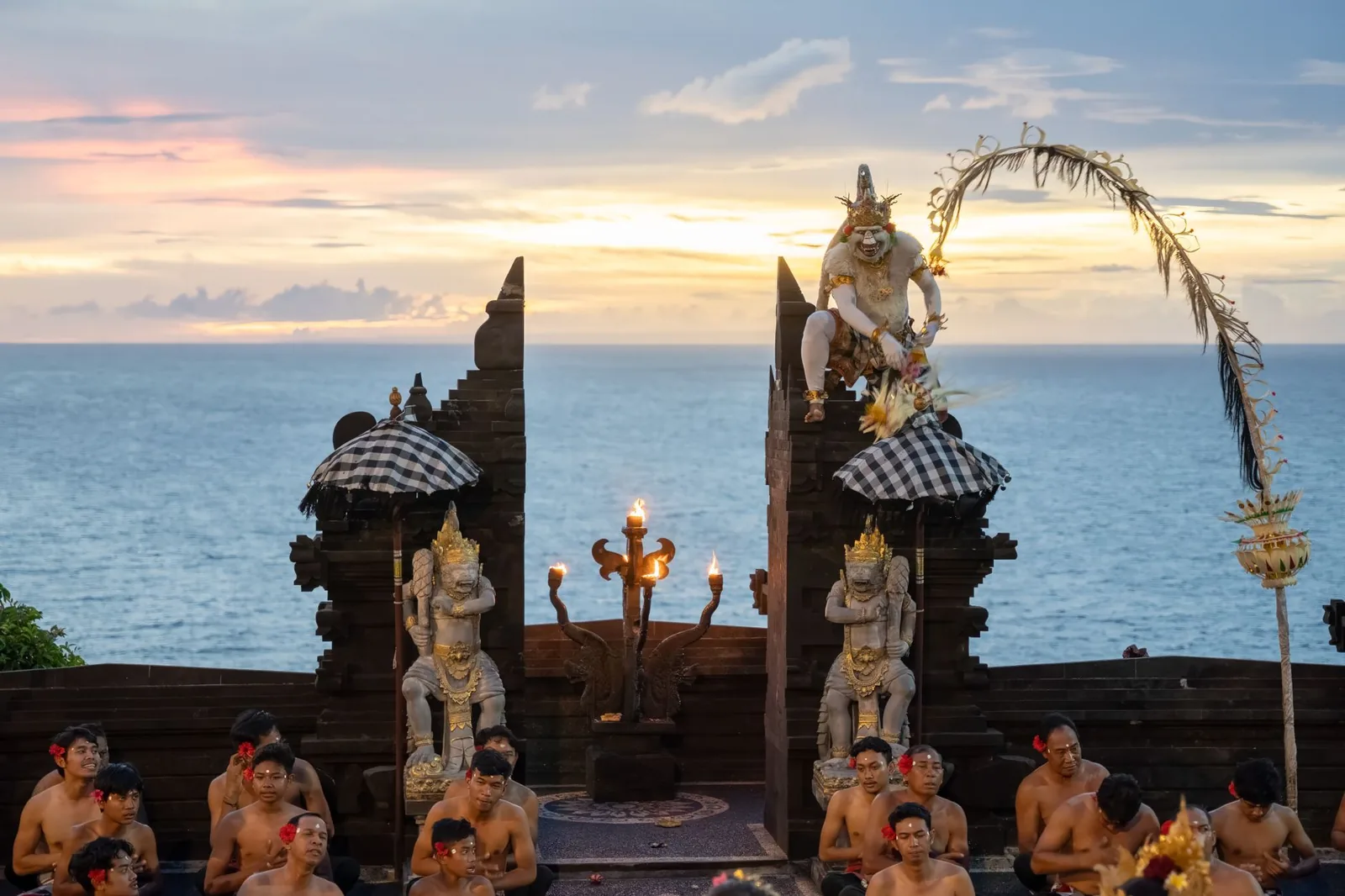
Guide
Kecak Dance Uluwatu: What Time to Arrive, Where to Sit
The Uluwatu kecak fills up and the seating is unnumbered. When to leave your hotel, which part of the bowl to aim for, and what the monkeys take on the way in.
Read the guide →Uluwatu: frequently asked questions
The questions people arrive with, including the two the hotel listings avoid.