Updated September 2026
Uluwatu Temple
Fifty thousand rupiah, a lent sarong, and a cliff path the coach groups never finish. What Pura Luhur Uluwatu costs, when to arrive, and how to keep your sunglasses.
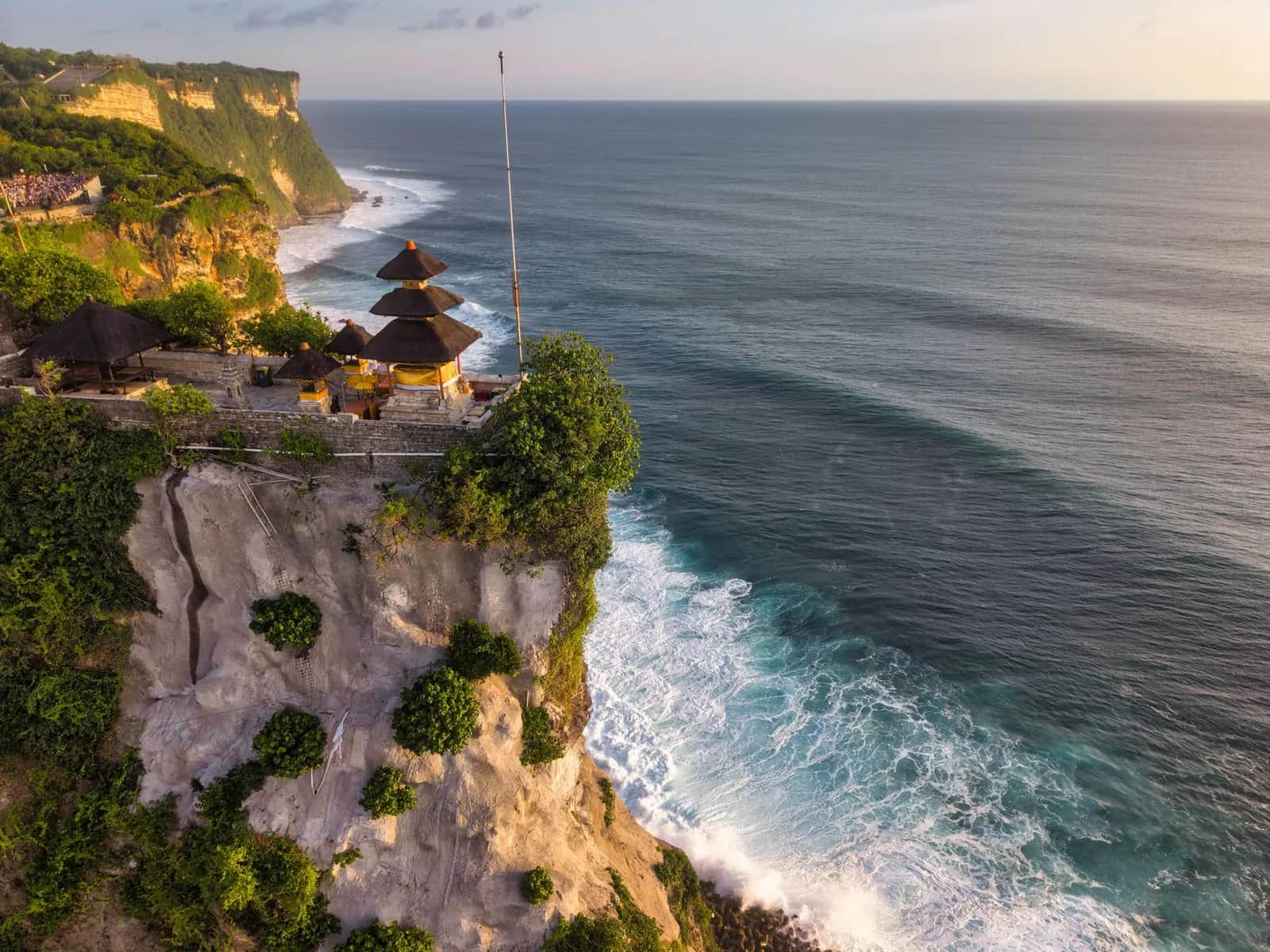
Uluwatu temple, or Pura Luhur Uluwatu, sits on the rim of a seventy metre limestone cliff at the southwestern corner of the Bukit, and the thing worth understanding before you go is that the temple is the smallest part of the visit. You cannot enter it. You will look at it for half a minute.
What you are actually paying for is the paved path that runs along the top of that cliff on either side of it, and the macaques that work it. Both are excellent. Neither gets much space in the guides that rank for this place.
What it costs, and when it is open
Entry is fifty thousand rupiah for an adult and thirty for a child, paid in cash at a window by the car park. That is roughly five Australian dollars, or three US, and it includes the sarong. There is no online ticket for the temple itself and no queue worth pre-empting, whatever the resellers imply.
The gates open at seven in the morning and close at seven in the evening, every day of the year except Nyepi, when the whole island shuts. Bring notes. The booth takes cash and the nearest reliable machine is back down the road in Pecatu.
| At Uluwatu temple | Detail | Order of magnitude |
|---|---|---|
| Adult entry | Paid in cash at the booth by the car park, per person. The sarong and sash are handed to you with the ticket and cost nothing extra, which is not the case at every temple on the island. | IDR 50,000 · ≈ A$5 / US$3 |
| Child entry | Under twelve, roughly. Nobody checks a passport at the window. | IDR 30,000 · ≈ A$3 / US$2 |
| Parking | Charged on the vehicle at the gate, separately from the tickets. A scooter pays less than a car. | IDR 2,000 to 5,000 |
| Kecak ticket | The six o'clock performance in the clifftop amphitheatre, sold at its own window inside the grounds and separate from temple entry. Sold out most evenings in July and August. | IDR 150,000 · ≈ A$15 / US$10 |
| Sarong, if you want your own | The stalls outside sell them, and the ones inside the grounds are lent for free. This is a souvenir purchase, not a requirement. | IDR 50,000 to 150,000 |
| Car and driver for the afternoon | From Seminyak, Canggu or the airport, including the wait through the show and the drive back. Split between four it is the cheapest part of the evening. | ≈ A$50 to A$95 |
Rupiah figures are the posted rates and the dollar equivalents are rounded orders of magnitude, not a quote. The temple sets its own prices and reviews them without announcing it.
Morning or sunset, and why nobody offers you the choice
Every guide to this temple sends you at sunset, because the kecak is at six and the light is good. That is one true reason and one lazy one. The morning is the better visit of the two if what you came for is the cliff, and the only thing it costs you is the show. Set against it, two in the afternoon, which is when most organised tours arrive, is the worst hour of the day on every count.
The temple opens at seven and closes at seven. Three moments inside that window are worth arriving for, and they do not win on the same things. Pick one and watch the four readings move.
- Crowd on the path
- A handful of people on a kilometre of cliff
- Light for photographs
- Low and clean, the sea reads turquoise
- Monkey activity
- Still waking up, barely working the railing
- Queue at the gate
- Straight through, no wait
The version of Uluwatu almost nobody books, and the one that leaves the best impression. You get the cliff to yourself and you lose the kecak, which means coming back another evening or accepting you will not see it.
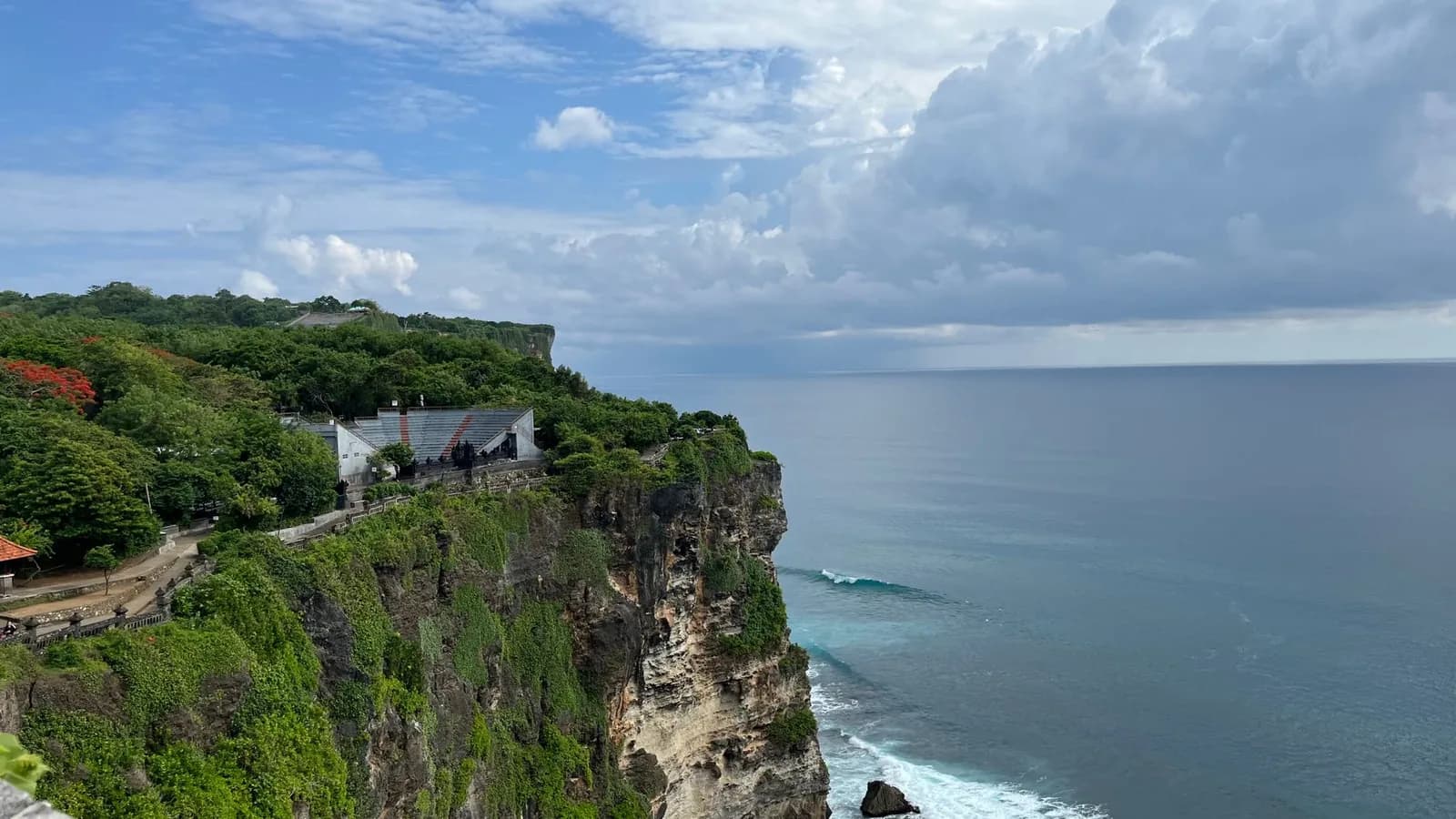
Which month you come in changes the sunset more than the hour does. The dry season gives you a hard horizon and a sun that drops into open water; the wet season gives you a bank of cloud that swallows it at twenty degrees and a show that can be rained off entirely. The month by month breakdown is the place to settle that.
The monkeys, and how to keep your sunglasses
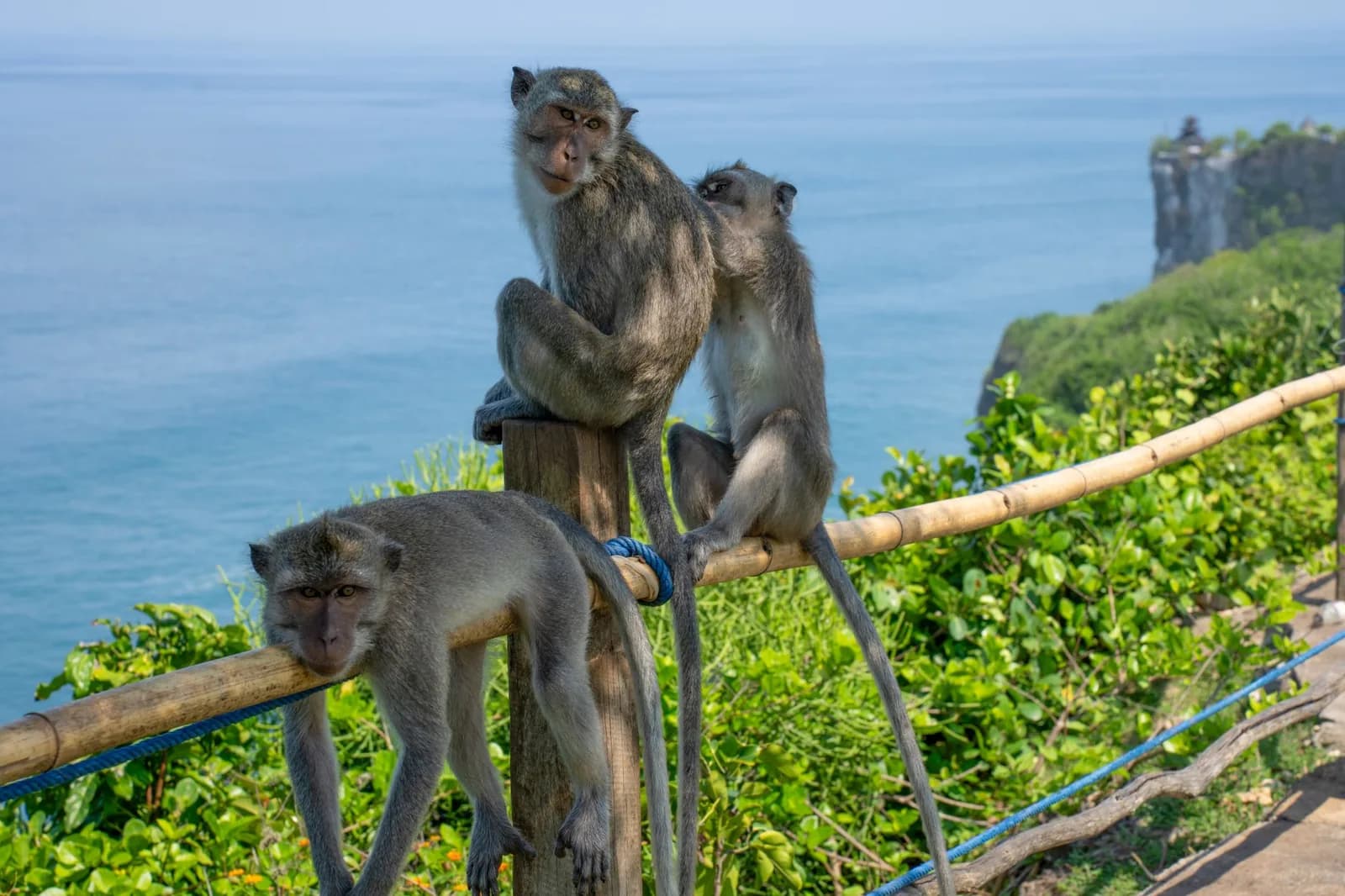
The troop of long-tailed macaques on the Uluwatu cliff is not a background detail and it is not the docile crowd you meet at the Monkey Forest in Ubud. These animals have worked out something specific: an object taken off a tourist can be exchanged for food, and the exchange is reliable enough to be worth organising around.
That makes theft here deliberate rather than opportunistic, which changes what you do about it. You are not avoiding wildlife. You are walking through a stretch of path where a system is running, and thirty seconds of preparation at the gate takes you out of it almost entirely.
What they actually go for
In rough order of how often it happens on the stretch between the gate and the first viewpoint.
- Sunglasses on your head
- The single most stolen object on the site. Perched above the hairline they read as loose, and a macaque takes them from behind while you look at the sea.
- Phones held out at arm's length
- Filming with one hand near the railing is an invitation. Two hands and elbows in is enough to stop most attempts.
- Caps, hair clips, earrings
- Anything that moves or catches the light. Dangling earrings are the one that ends in a scratch rather than a shrug.
- Open bags and water bottles
- A side pocket with a bottle in it is the easiest grab on the path, and they have learned that bottles hold something worth taking.
Before you walk through the gate
Sunglasses go on your face or inside a zipped bag, never on your head. Empty every open pocket, take the bottle out of the side mesh, close the bag and wear it in front. Buy nothing edible before the walk, and carry no plastic bag of any kind. Doing this costs thirty seconds and removes almost the whole problem.
If one takes something
Do not chase it, do not grab at it and do not look it in the eye. The macaque will carry your glasses a few metres up a wall and wait, because the exchange is the point. There are staff on the path whose job is exactly this: they trade a piece of fruit for the object and they are quick about it. Tip them. Trying to negotiate yourself is how a theft becomes a bite.
If you are bitten or scratched
Treat it seriously the same hour, not the next day. Wash the wound under running water with soap for a good fifteen minutes, then get to a clinic. Rabies is present in Bali and the post-exposure vaccine is given locally as a course of injections; the decision to start it belongs to a doctor, not to the internet. The clinics in Jimbaran and Nusa Dua are the closest to the temple and handle this constantly.
The cliff walk, which is the actual attraction
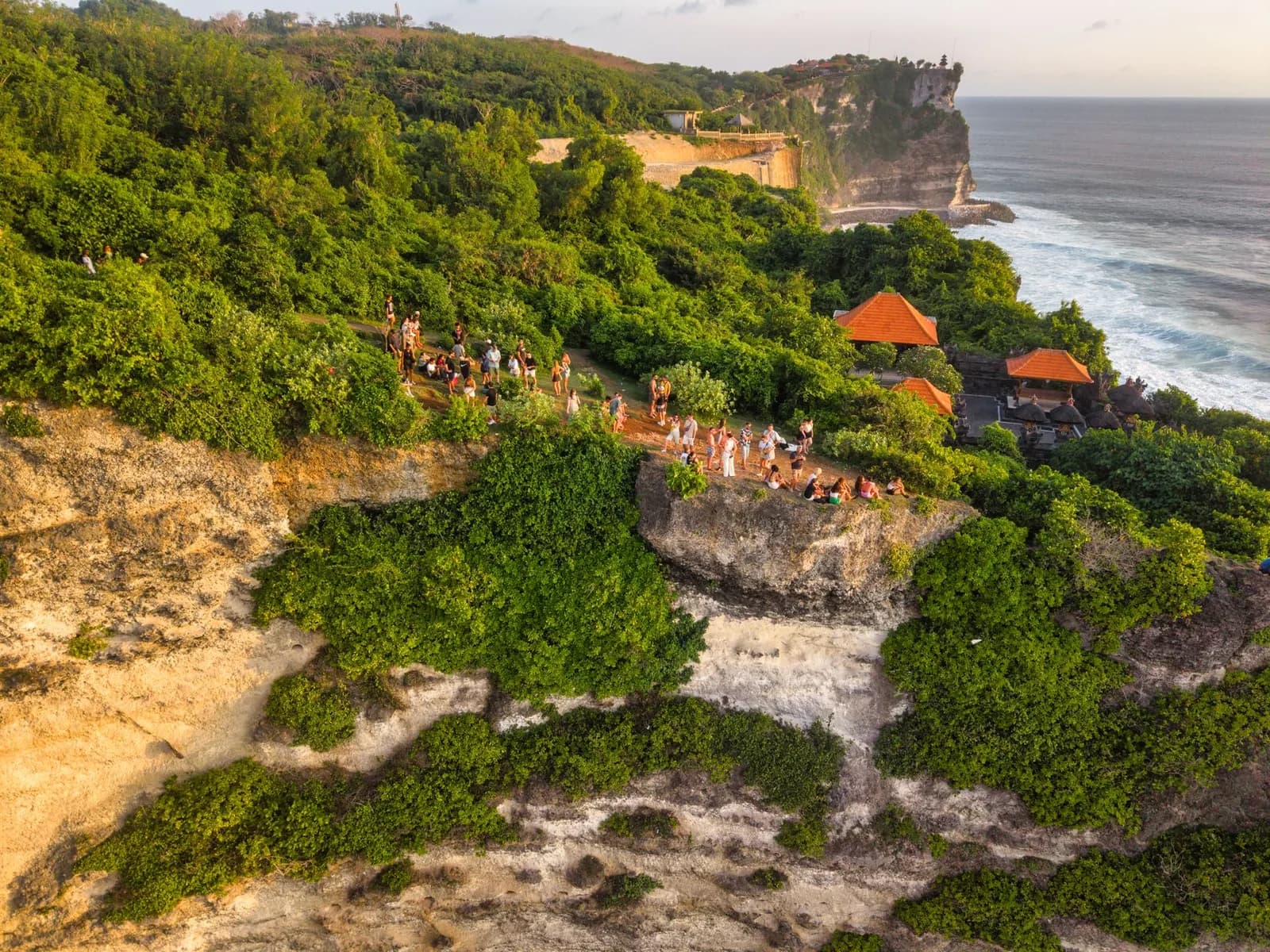
From the temple wall, a paved path runs both ways along the rim, railed on the ocean side and stepped where the ground drops. The whole loop is well under a kilometre and takes thirty to forty-five minutes at a pace that lets you stop. Coach groups are given five minutes and turn around at the first viewpoint, which is why the far ends of both branches are quiet at every hour of the day.
North, towards the amphitheatre
The shorter branch, and the busier one, because it ends at the kecak bowl and everyone walks it twice on a show evening. It gives you the classic view back at the shrine on its point, which is the photograph you came for, and it is where the macaques are thickest.
Walk it first if you arrive before nine, when there is nobody standing in the frame.
South, towards the quiet end
Longer, with more steps and fewer people, running out along the rim towards open ocean. The reward is the drop itself: sheer white limestone with the surf breaking on the reef seventy metres below, and the surf break at Uluwatu working in the middle distance.
This is the stretch that changes people's minds about the place. Skip it and you have paid for a wall.
The path is paved throughout but it is not flat, and the steps are uneven in places. Sandals are fine. Wet season afternoons make the limestone slick, and there is no shade on either branch, which is a second argument for the morning.
What you can enter, and what you cannot
Balinese temples are built in three courtyards, from the outer world inwards, and the innermost one is the consecrated ground. At Uluwatu that inner courtyard, the jeroan, holds the shrine on the point, and it is open to Balinese Hindus who have come to pray. Everyone else stops at the wall.
This is not a restriction invented for tourists and it is not a queue you can pay to skip. Pura Luhur Uluwatu is one of the six sad kahyangan, the sanctuaries that hold the spiritual balance of the island, and it is in constant use. If a ceremony is running when you arrive, the outer terraces may close too, and that is a better thing to witness than the view.
What this costs you in practice is close to nothing. The shrine is small, it photographs from the north path better than it does from ten metres away, and how a Balinese temple is laid out is a more useful thing to carry in than a wish to get closer.
The sarong, and what the gate actually enforces
Shoulders and knees covered, and here it is checked rather than suggested. You do not need to turn up dressed for it: a sarong and a sash come with the ticket and are wrapped over whatever you are already wearing. Shorts underneath are normal and nobody minds.
The sash matters more than visitors expect. It marks the line between the upper and lower halves of the body in Balinese thinking, which is why it is tied at the waist and never higher, and why long trousers do not exempt you from it.
Hand both back on the way out. They are lent, not sold, and the stall outside will happily sell you your own if you would rather keep one.
Getting there, parking, and the way out
The temple is at the far southwestern tip of the Bukit, past Pecatu, and nothing on the peninsula is as close as it looks. Reckon on forty-five minutes to an hour from the airport or Jimbaran, an hour and a quarter from Seminyak, ninety minutes or more from Canggu, and the best part of two hours from Ubud. Those are daytime figures, before the evening traffic.
Parking
A large car park a few minutes' walk below the ticket booth, paid on the vehicle at the barrier. On kecak evenings it overflows onto the approach road and the walk lengthens accordingly.
Scooter
Straightforward in daylight on a road that is in good condition. Riding back down the Bukit in the dark after the show, in a column of cars, is a different proposition and not one to take lightly.
The way out
Everyone leaves within ten minutes of the show ending, on one road. Either walk out during the last scene or sit somewhere with a drink for half an hour and let it clear.
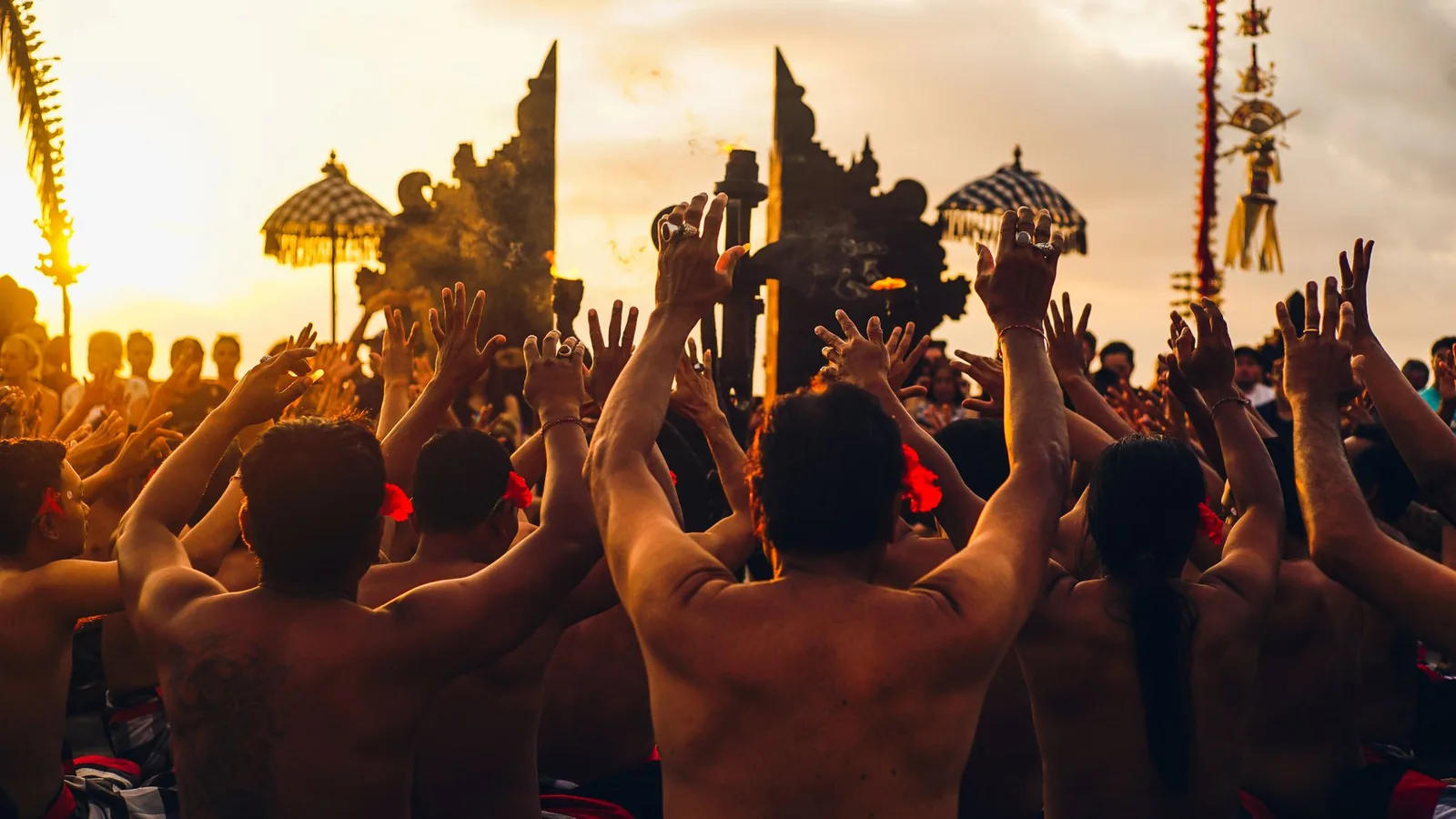
The combination that makes the evening work
Free cancellationUluwatu temple and kecak, with a driver
- ✓Temple entry and a seat at the six o'clock kecak in one booking, which are two separate windows on site
- ✓A driver who waits through the show, so the drive back down the Bukit in the dark is not yours
- ✓Most listings pick up from Seminyak, Kuta, Jimbaran and the airport side of the south
- ✓Free cancellation on most listings, worth having in the wet season when the show can be rained off
Affiliate link. Booking through GetYourGuide costs you nothing extra and supports the guide. Prices are indicative and vary by option and season.
Booking a combined tour buys the driver and the seat, not a discount on the temple ticket. If you already have a car for the day, the gate price is the same price.
Chaining the temple into the kecak
The kecak is staged in an open amphitheatre cut into the cliff a few minutes north of the temple, at six every evening, with the sun going down behind the stage. It is a separate ticket bought at a separate window inside the grounds, and it is the reason the site has a rush hour.
If you want both in one visit, the shape that works is through the gate at five, cliff path first, seated by half past. The reverse, arriving at six for the show and promising yourself the walk afterwards, does not work: it is dark when the chorus stops.
Which seat to take, which side the sun actually sets on, and how early the good rows go, are worth reading before you turn up. The kecak at Uluwatu covers the evening in detail, and the Bukit as a whole covers what to put either side of it.
Eleven centuries on a corner of the island
The site is old. The padmasana, the lotus throne that anchors the shrine, is attributed to Empu Kuturan, a Javanese priest who reorganised Balinese temple practice in the eleventh century and who is credited with several of the island's directional sanctuaries.
Five hundred years later, Dang Hyang Nirartha is said to have ended his life here, reaching moksha on the point rather than dying in the ordinary way. He is the same priest credited with founding Tanah Lot, which makes the two sea temples bookends of the same story from opposite corners of the south.
The name splits into ulu, the head or the tip, and watu, stone. The temple at the end of the rock, which is exactly where it is.
Why it is one of the six
Balinese Hinduism places six temples, the sad kahyangan jagat, at the points that hold the island in balance. Uluwatu holds the southwest and faces the open ocean; Besakih holds the centre on the flank of Agung. The list varies slightly between traditions, which tells you these are living classifications rather than a heritage register.
What it means for a visitor is simple enough. This is a working sanctuary with a ceremonial calendar, not a monument with opening hours, and the day you arrive during an odalan you will see something no tour sells.
Uluwatu temple: common questions
Is Uluwatu Temple worth going to?
Is Uluwatu Temple free entry?
Is there a dress code for the Uluwatu Temple?
Can I wear shorts to the Uluwatu Temple?
Are there monkeys at Uluwatu Temple?
What to do if a monkey bites you in Bali?
Can tourists enter Uluwatu Temple?
How long is the walk to Uluwatu Temple?
How long does it take to look around Uluwatu Temple?
What's special about Uluwatu Temple?
What's the best time to visit Uluwatu Temple?
Do you need tickets for Uluwatu Temple in advance?
Read next
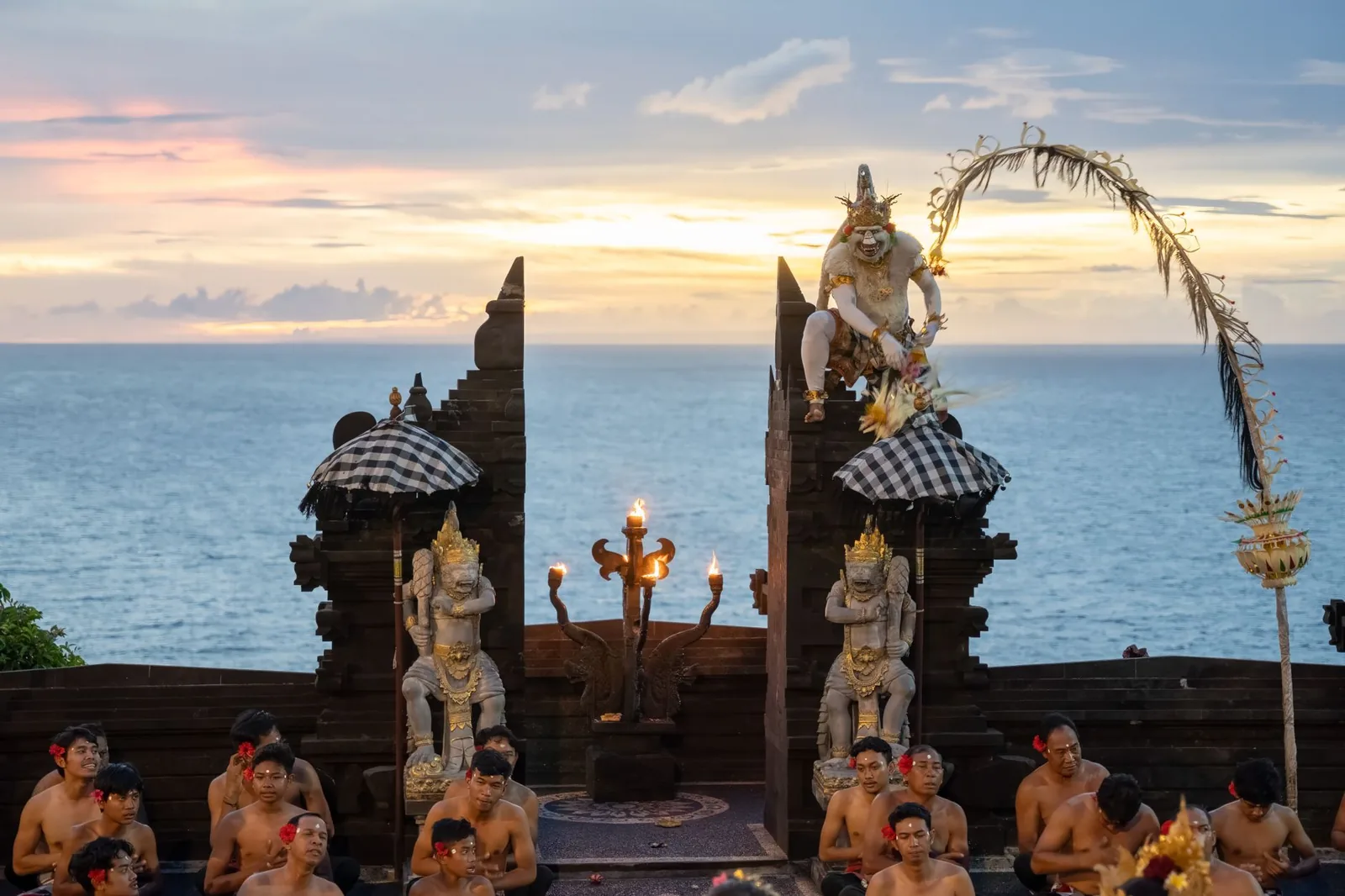
The kecak at Uluwatu
What time to leave your hotel, where to sit, and which side the sun goes down.
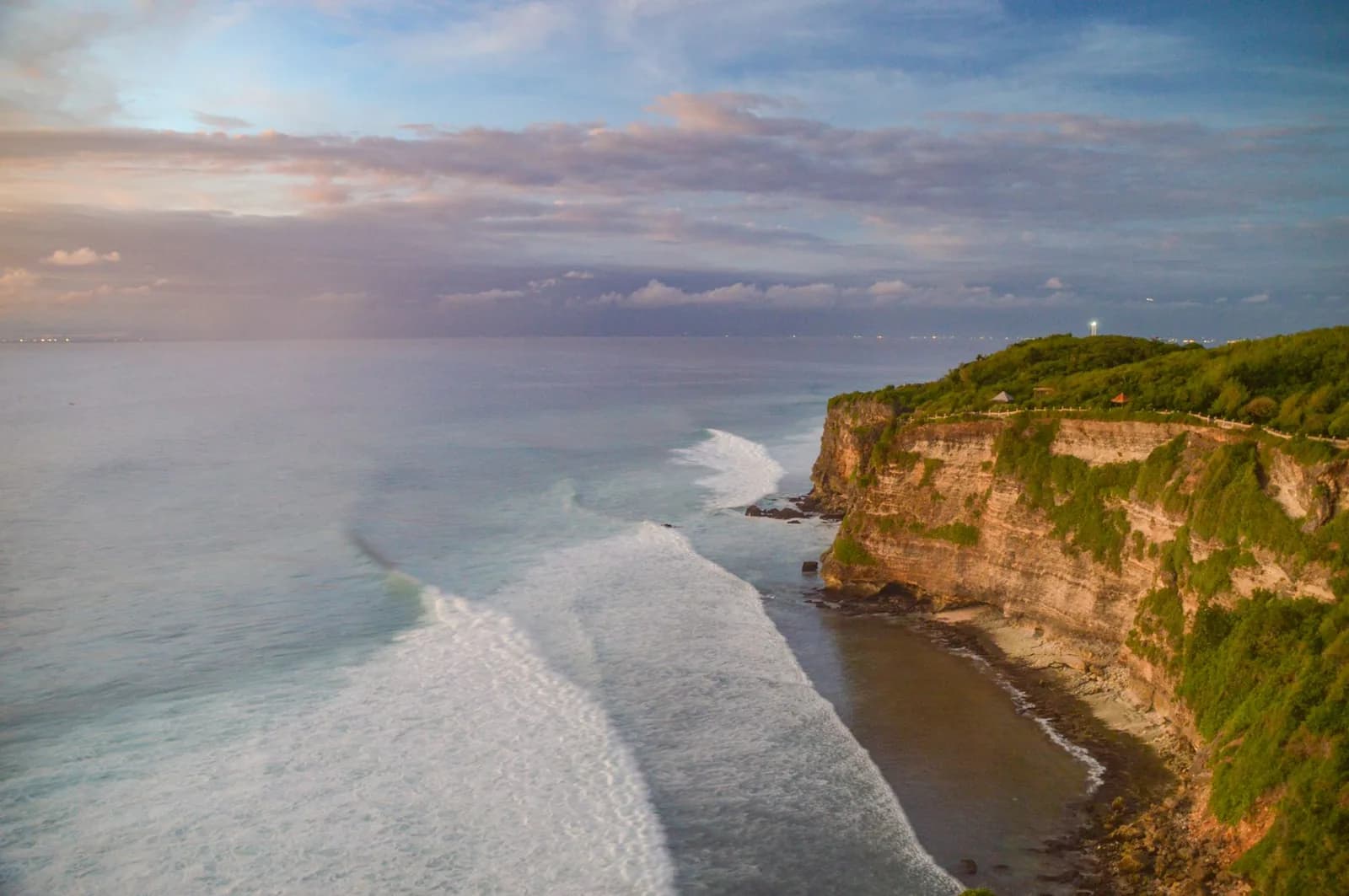
Uluwatu and the Bukit
The cliffs, the beaches, the beach clubs and the catch nobody mentions.
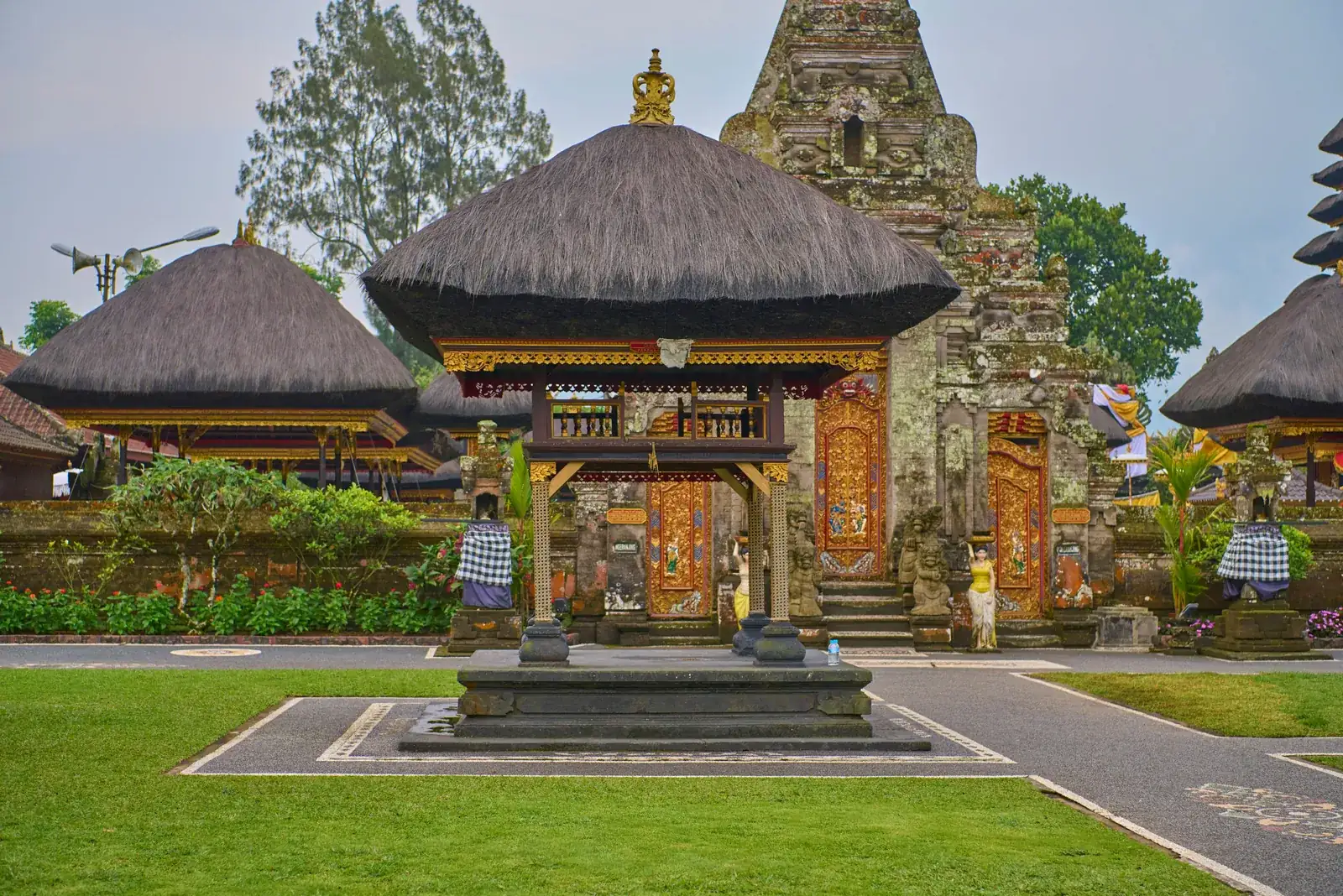
Bali temples
Which ones are worth the drive, how to read one, and the dress code.
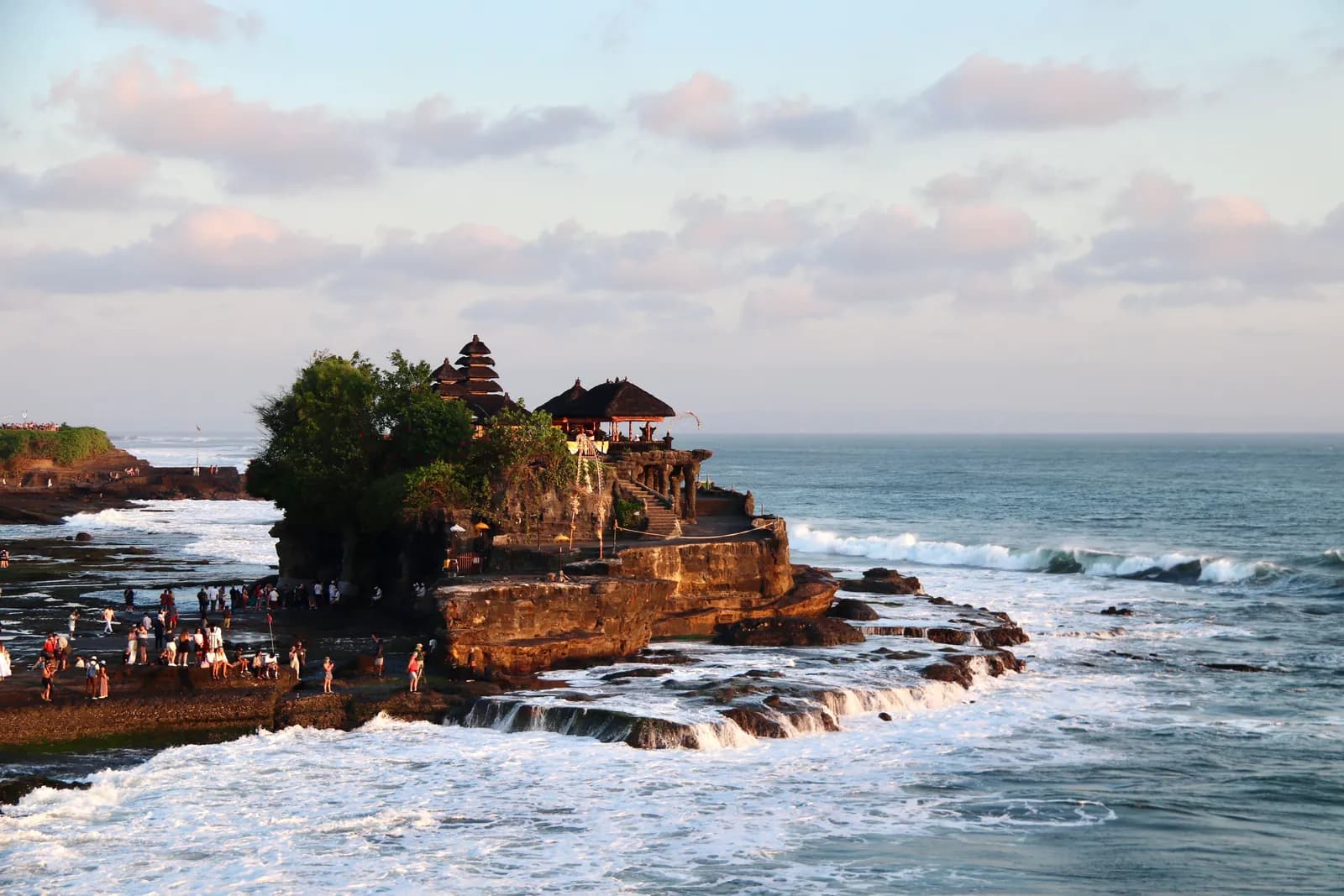
Tanah Lot
The other sunset temple, and the tide that decides your visit.
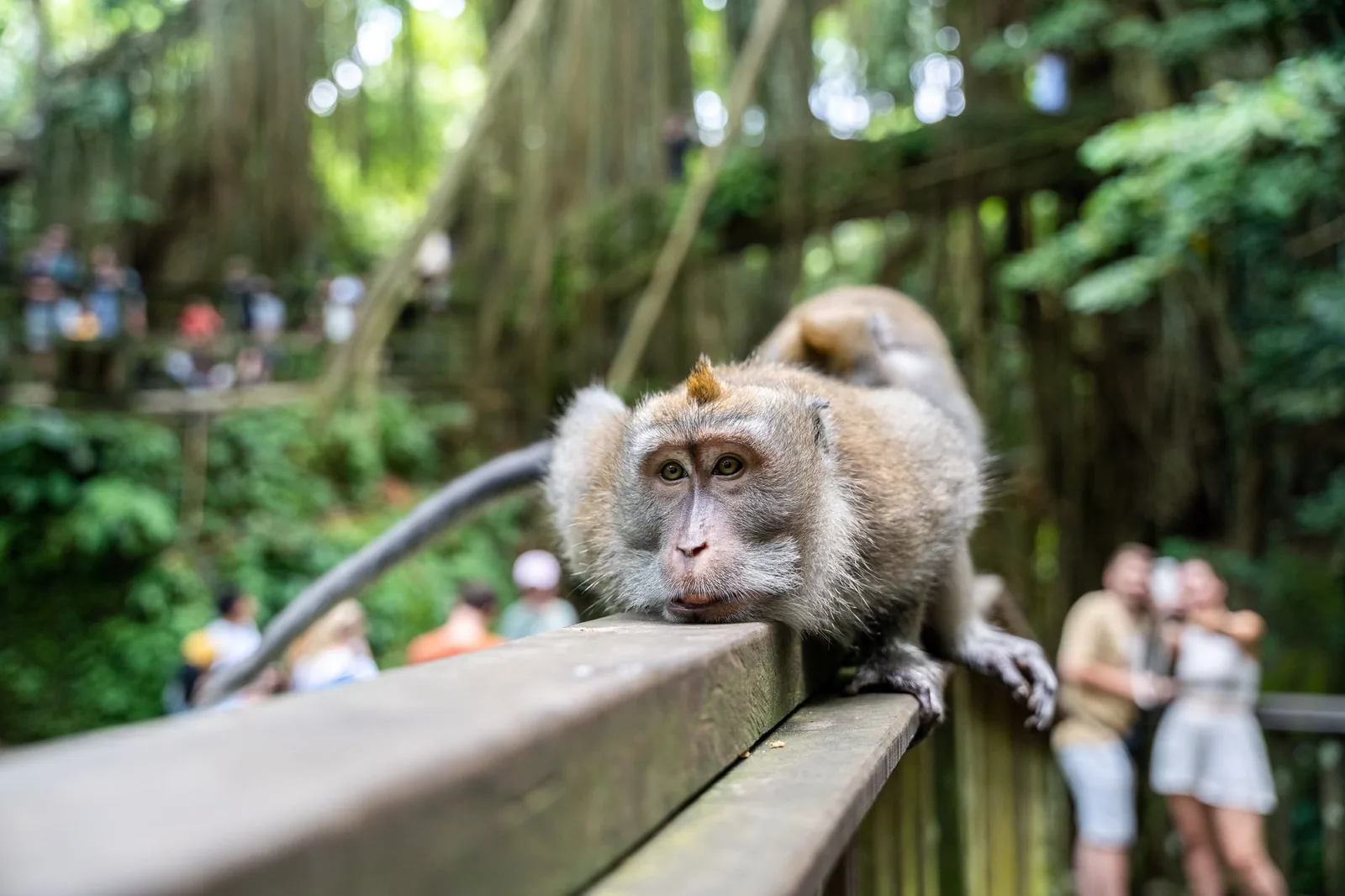
The Monkey Forest
The other macaques, and why they behave nothing like the Uluwatu troop.
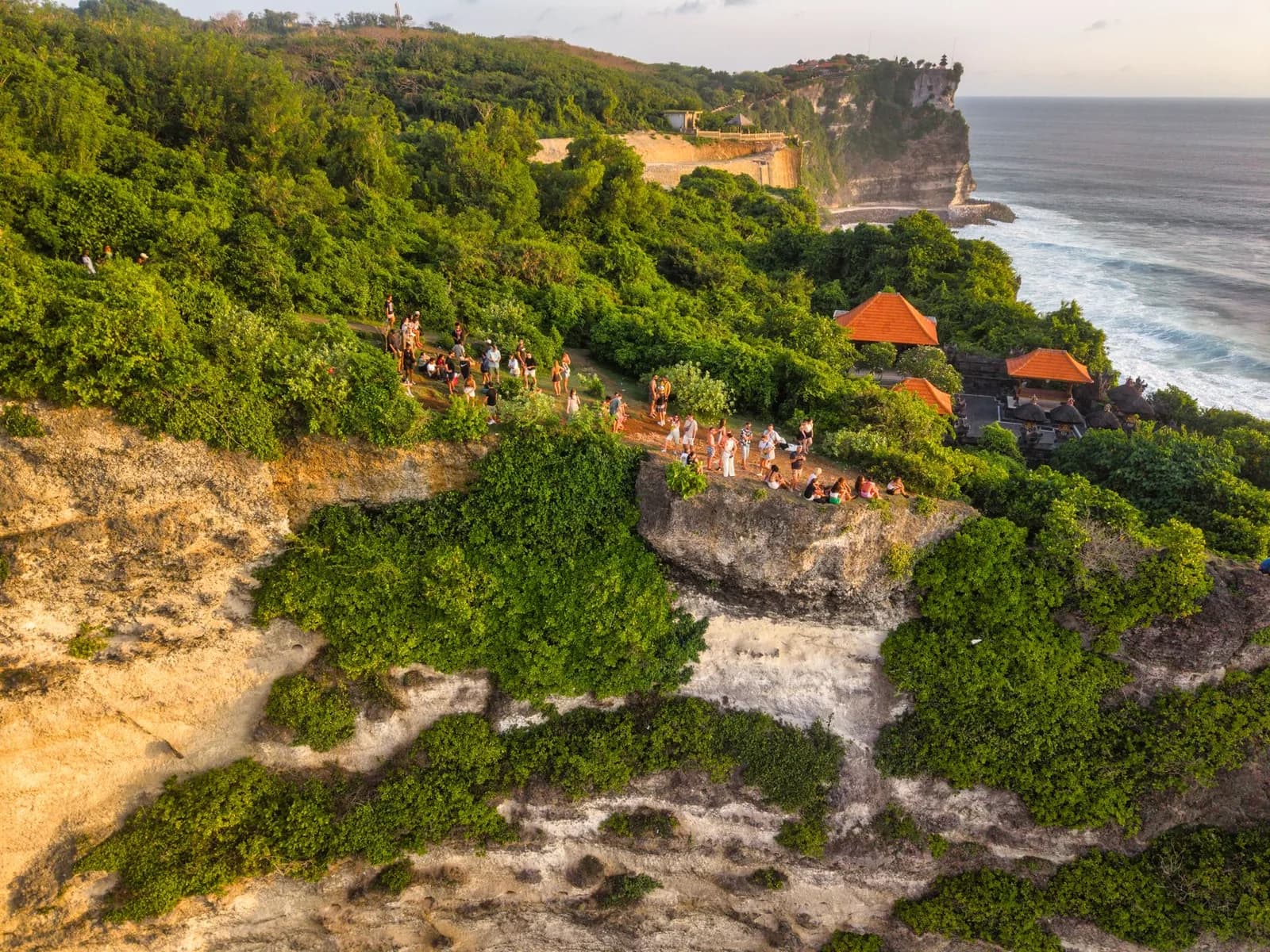
The Bali tourist levy
What you pay on arrival, and the spot checks at the big sites.