The Sacred Monkey Forest Sanctuary is twelve hectares of old nutmeg and banyan at the bottom of Monkey Forest Road in Ubud, with three working temples inside it and around 1,200 long-tailed macaques living across the site. It belongs to the village of Padangtegal, which runs it as a community reserve rather than as an attraction.
That distinction is the whole page. These animals are wild, unrestrained and habituated to people, which is a different thing from tame. They take objects from visitors several times a day because it works, they read a direct stare as a threat, and a small number of visits each week end with a scratch or a bite.
None of that is a reason to skip it. It is a reason to walk in knowing what the animals are doing and what to do back, which almost nothing written about this place will tell you.
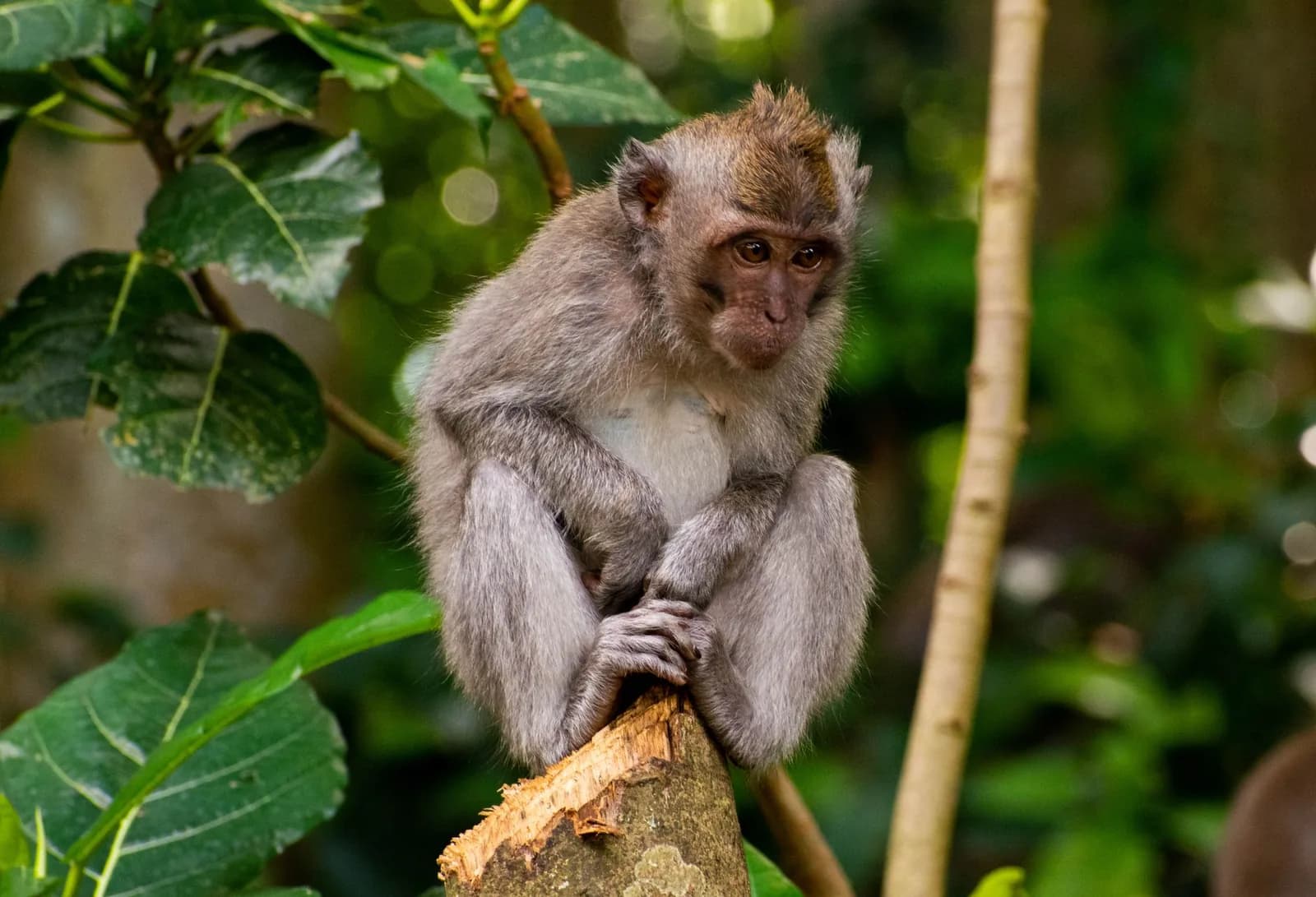
The entry ticket, and someone who reads the animals
Free cancellationUbud Monkey Forest guided walk, ticket included
- ✓Entry to the sanctuary is included, so this replaces the queue at the booth rather than adding to it
- ✓A guide reads the group dynamics for you, which is the difference between watching monkeys and understanding what they are about to do
- ✓The temples and the dragon bridge in the ravine get explained, and they are the part most visitors walk straight past
- ✓Free cancellation on most listings, which matters here because ceremonies close parts of the site without notice
Affiliate link. Booking through GetYourGuide costs you nothing extra and supports the guide. Price and rating checked October 2026. Both move with season and demand.
On this page
Tickets, hours and what the money covers
Everything here is bought on the day at the gate. There is nothing to book ahead and no queue worth avoiding.
| What you pay for | Detail | Order of magnitude |
|---|---|---|
| Adult entry | Bought at the booth on Monkey Forest Road. Cash and card both work. | ≈ $5 to $6 |
| Child entry, roughly 3 to 12 | Under threes usually go in free. Bring the passport if it is borderline. | ≈ $4 |
| Guide, hired at the entrance | Optional. An hour walking the loop with someone who reads the group dynamics. | ≈ $12 to $20 |
| Scooter or car parking | Attendant-run space at the north entrance, which fills by mid morning. | ≈ $0.25 to $0.60 |
| Bananas sold at the gate | Sold to visitors, and the reason a good part of what follows on this page exists. | Skip it |
The gate is on Jalan Monkey Forest, at the southern end of the road that runs down from the centre of town. There is a second entrance on the Nyuh Kuning side, which matters if you are staying in that village: the forest is the direct footpath between Nyuh Kuning and central Ubud during opening hours, and a longer ride around the outside once it shuts.
Opening is generally around 09:00, with the gates closing about 18:00 and last entry an hour or so before. Going at opening does two things at once. The macaques feed and move most in the first couple of hours, so there is more happening, and the coach groups have not arrived, so the ravine and the temples are quiet.
The ticket covers the whole site: the trail network, the three temples from the outside, the bathing pool and the ravine. There is no separate charge inside, no photography fee and no sarong hire, because visitors do not enter the temple courtyards themselves.
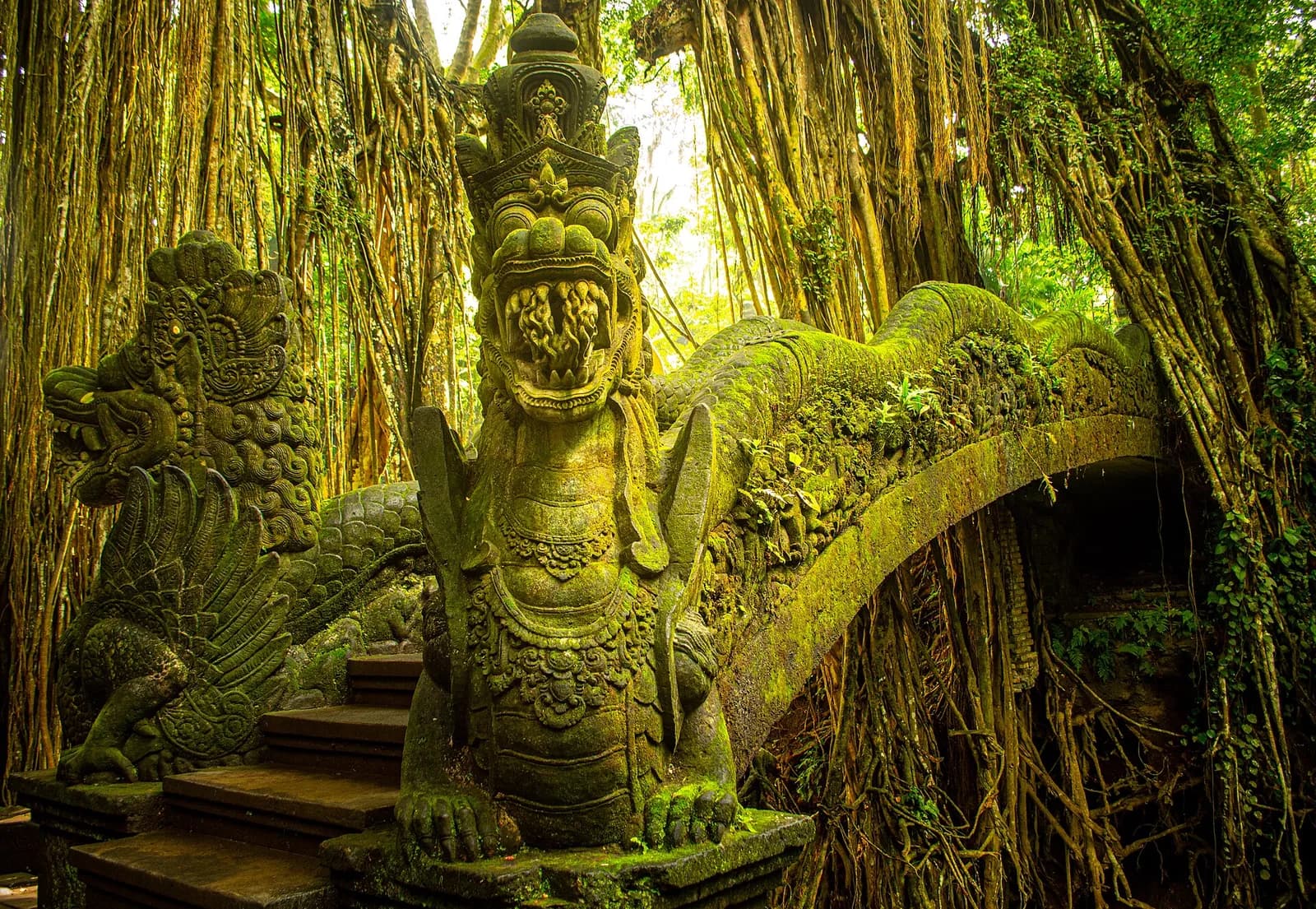
Photo Philip Nalangan, CC BY 4.0
What to do when it happens
Four situations, ordered by how serious they get. The first two happen to somebody every few minutes. The last one needs a clinic the same day.
Four situations, from routine to urgent. The table gives the short version, the paragraphs below give the rest.
| Situation | How serious | In short |
|---|---|---|
| It took something | Routine | This is the normal outcome, not an incident |
| It climbed on you | Common | Stand still and let it finish |
| It bared its teeth | Warning | You are being told to back off, and you should |
| It bit or scratched you | Act today | Wash it for fifteen minutes, then go to a clinic the same day |
It took something
A macaque has your sunglasses, your water bottle or your phone. It is not attacking you and it is not confused. Taking loose objects from visitors is a learned foraging strategy that works for these animals several times a day, and the individual that took yours has done it before.
- Do not: Do not pull the object back. Holding on to one end of something a macaque has claimed is the single most common way people get bitten here, because it turns a theft into a contest.
- Do not: Do not chase it. You will not win, and following an animal into the trees puts you under the rest of its group.
- Do not: Do not offer food in exchange. It teaches the trade and makes the next visitor's problem worse.
- Do: Let go immediately and step back a couple of metres.
- Do: Tell a staff member in the green uniform. They carry the sanctuary's own approach to retrieving items and they know which individuals drop things quickly.
- Do: Wait. Objects with no food value are usually abandoned within a few minutes, often close to where they were taken.
Phones and prescription glasses are worth reporting straight away rather than waiting it out yourself.
It climbed on you
A macaque is on your shoulder, your back or your head. Nine times out of ten it is searching you for food, and it has climbed you because you were carrying a bag, holding a bottle, or standing next to somebody who was feeding them. Staff will sometimes place one on a visitor for a photograph, which is a separate matter and worth declining.
- Do not: Do not grab at it or try to lift it off. A hand moving towards a macaque that is holding on to you reads as a threat at very close range.
- Do not: Do not scream or spin round. Sudden noise and movement is what turns a search into a defensive reaction.
- Do not: Do not lean forward to shake it off, which puts your face at the level of its face.
- Do: Stand still, arms low and loose, and look at the ground rather than at the animal.
- Do: Let it establish that you have nothing. Most stay a few seconds.
- Do: If it settles in, walk slowly and steadily towards the nearest staff member without raising your arms.
It bared its teeth
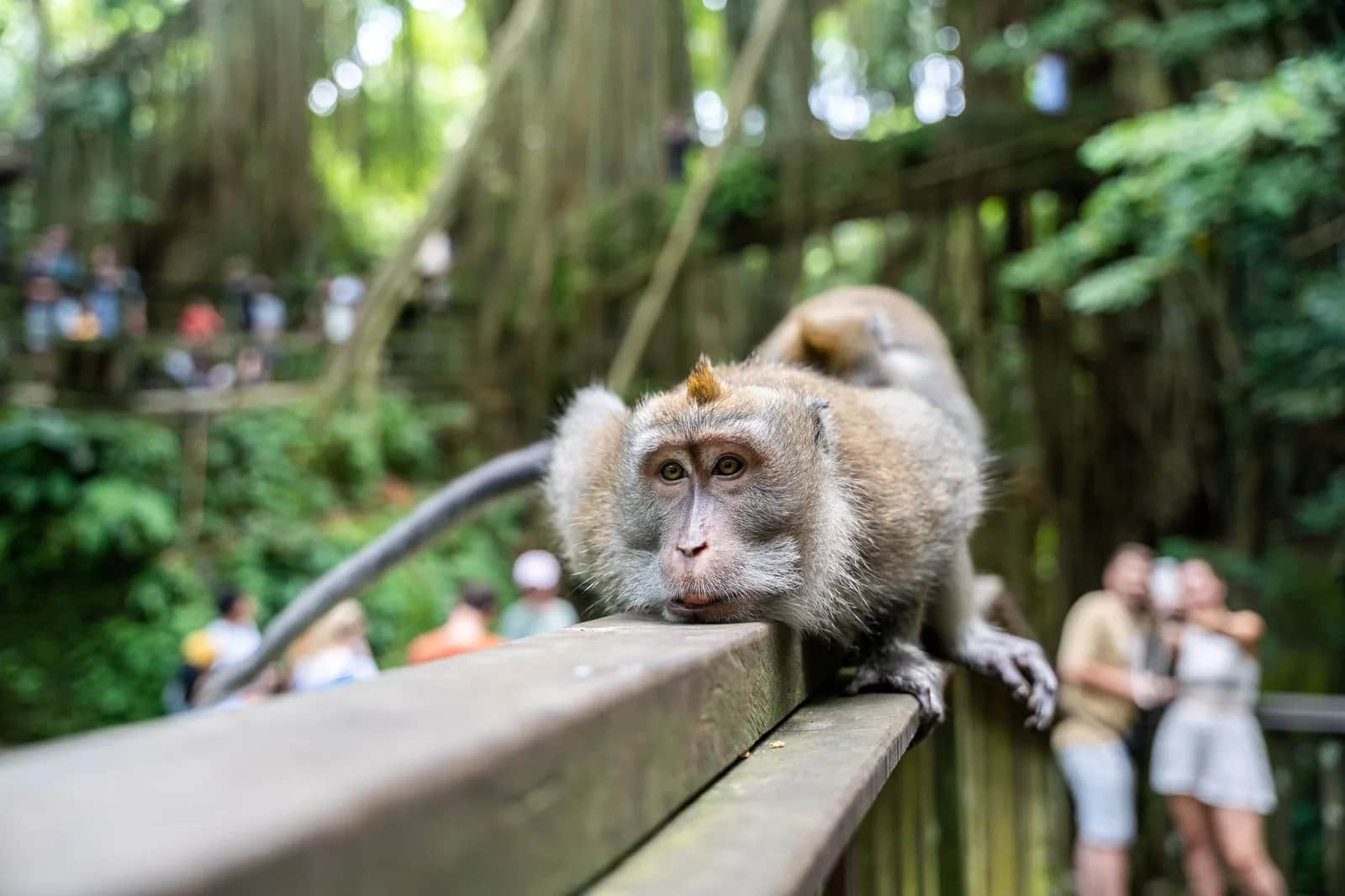
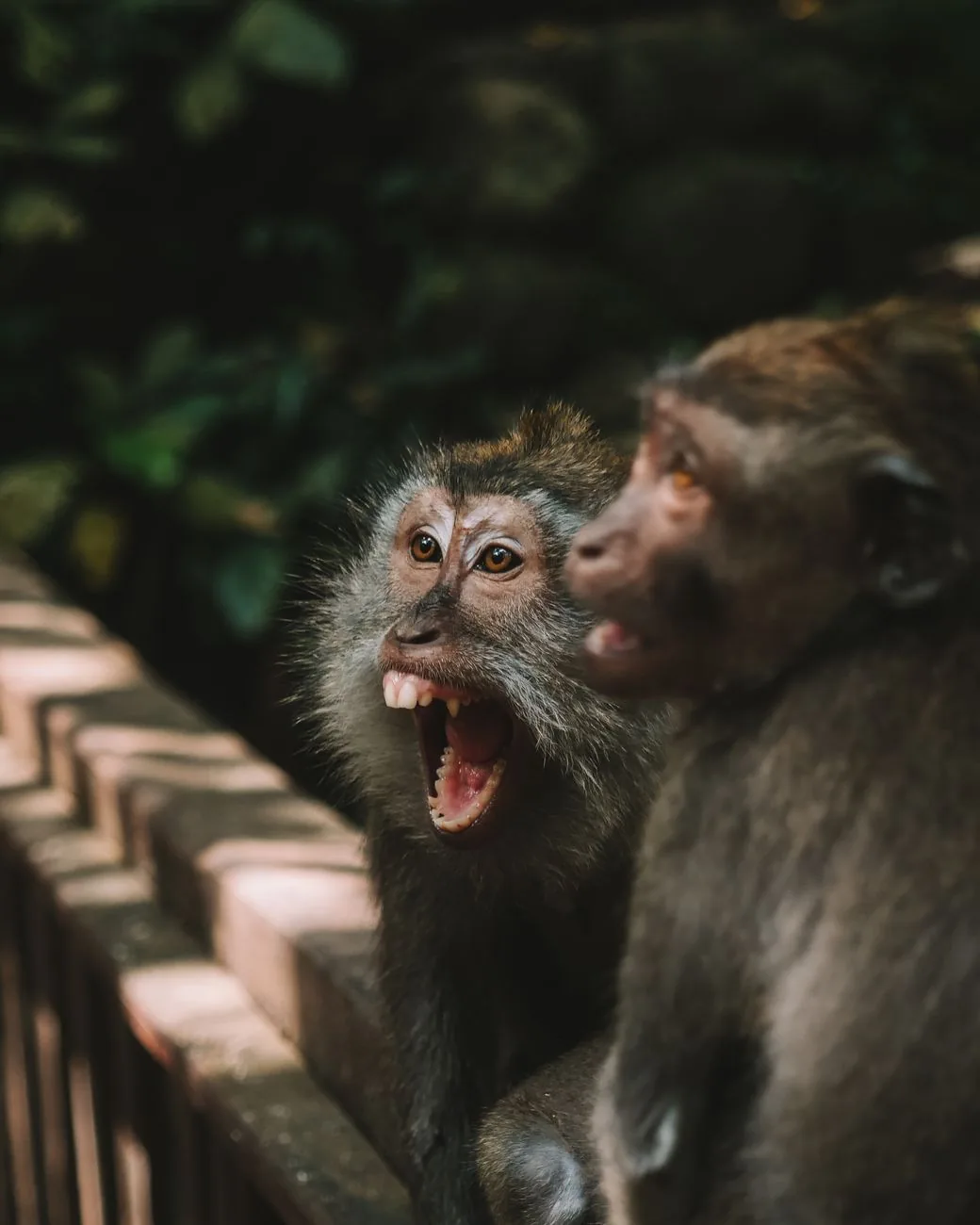
An open mouth with the canines showing, a hard stare, raised eyebrows, a short lunge, or a slap at the ground. These are threat displays and they are directed. Read them as a full stop rather than as an attack in progress: the animal is giving you the chance to withdraw. Large males with long canines produce the display that frightens people most, but a mother with an infant is at least as likely to escalate.
- Do not: Do not hold eye contact. A direct stare is itself a threat in macaque signalling, which is why photographing an animal head on at close range so often provokes one.
- Do not: Do not smile with your teeth showing. It reads as the same display you are receiving.
- Do not: Do not turn and run. Running triggers pursuit.
- Do: Break eye contact and turn your body slightly away.
- Do: Back off slowly and give it a wide margin, especially if there is an infant nearby or food on the ground between you.
- Do: Put something solid between you if the display continues: a step, a wall, a tree.
Selfie sticks, phones held at arm's length and camera lenses all read as a stare being pushed towards the animal.
It bit or scratched you
Any bite or scratch that breaks the skin is treated as a rabies exposure on Bali, because the island has had circulating rabies since 2008 and macaques are a recognised vector alongside dogs. That is not a reason to panic and it is not a reason to wait and see. Post-exposure treatment is close to fully effective when it is started promptly, which is exactly why the timing matters more than the size of the wound.
- Do not: Do not decide it is too small to matter. A scratch that barely bleeds counts.
- Do not: Do not put off the clinic until the end of your trip or until you are home.
- Do not: Do not close the wound with a tight dressing before it has been washed properly.
- Do: Wash the wound under running water with soap for a full fifteen minutes. This is the single most effective thing anyone does about rabies, and almost nobody does it for long enough.
- Do: Apply an antiseptic such as povidone iodine or alcohol afterwards.
- Do: Go to a clinic the same day and say the words: monkey bite, rabies post-exposure prophylaxis. Ask specifically whether they stock both the vaccine and the immunoglobulin.
- Do: Tell your travel insurer straight away. The vaccine course runs over several appointments and you will want the claim opened before the second one.
The sanctuary's own first aid post can clean a wound, but it is not a substitute for a clinic that holds the vaccine.
Why so many people miss the warning
Almost every signal a macaque sends is one that means something else on a human face. The open mouth above is a threat, not a yawn. A fixed stare is a challenge, not curiosity. Raised eyebrows are a display rather than surprise, and bared teeth are the opposite of a smile.
So the visitor who gets bitten is rarely the one who was frightened. It is usually the one who found the animal charming, leaned in, held eye contact and raised a phone to its face, receiving three separate warnings and reading all three as an invitation.
Treat any open mouth as a full stop. Break eye contact, turn your shoulder, and take a step back. The display has done its job at that point, and the animal has no interest in going further.
None of this is a reason to be frightened of the place. Thousands of people walk the loop every day and the overwhelming majority never have a hand laid on them. The point is that the small number of visits that do go wrong nearly all go wrong the same way, through food, through grabbing, or through a camera pushed into an animal's face, and all three are entirely within your control.
What they take, and why they are so good at it
Theft here is not mischief and it is not aggression. It is a foraging strategy that a whole population has learned, and it pays.
Long-tailed macaques are opportunists with excellent hands and a short memory for fear. Somewhere along the line the population at Padangtegal worked out that objects taken from visitors either contain food or can be exchanged for it, and the behaviour spread the way learned behaviour spreads in a primate group: by watching. In the temple troop at Uluwatu it has gone further still, into a recognised barter pattern where higher value items are held for longer and traded for better food.
What that means for you is simple. The animals are not testing whether they can take your sunglasses. They know they can, and the only variable is whether you are carrying anything worth the trip.
What actually goes
- Sunglasses pushed up on your head. The single most taken object on the site, because it is at exactly the right height and it comes away in one movement.
- Phones held out at arm's length. A phone in a raised hand is an object being offered, as far as a macaque is concerned. Two hands and elbows in.
- Water bottles. Clear, light, and full of something. They open them.
- Anything in an unzipped bag, and the bag itself if it smells of the snack it carried yesterday.
- Loose jewellery, hair ties, earrings and lanyards. Anything that dangles and catches light.
- Hats and hotel key cards, which get taken and abandoned within a minute, having proved to be neither food nor useful.
The countermeasure is not vigilance, it is packing. Sunglasses in a zipped pocket rather than on your head, phone in two hands or put away, water in a rucksack you keep closed, and no food on you at all. Do that and the whole category of problem stops existing.
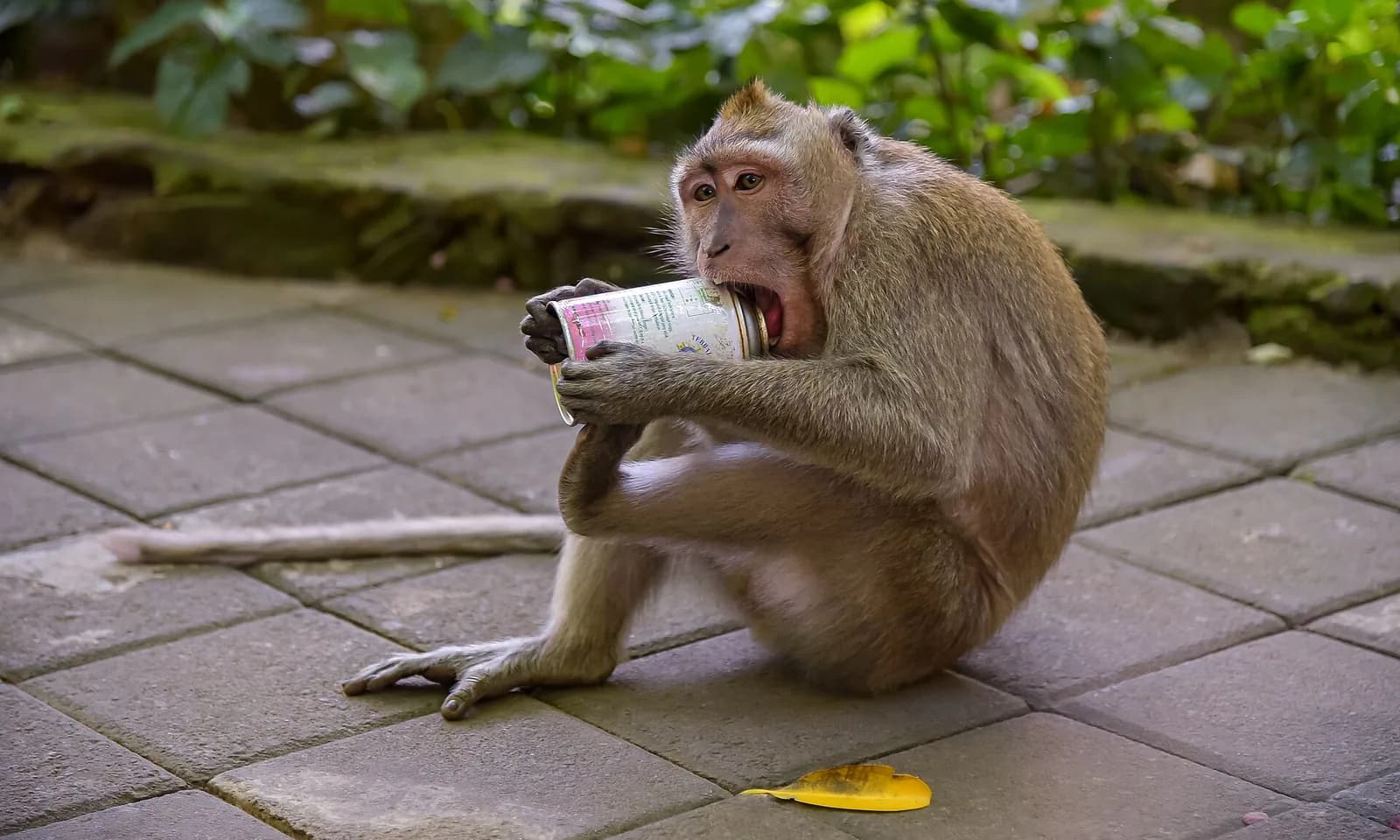
Photo Jorge Franganillo, CC BY 2.0
Bites, scratches and the rabies question
Asked constantly, answered almost nowhere. Here is the position, without the alarm and without the hand waving.
Where the risk actually sits
Bali has had circulating rabies since an outbreak began in 2008, and it has never been fully eliminated. The overwhelming majority of human cases on the island come from dogs, not monkeys. No rabies case has been recorded in the Ubud macaques, and the sanctuary runs veterinary monitoring of the population.
That is genuinely reassuring, and it does not change the medical advice by a single step. Rabies is effectively untreatable once symptoms appear and effectively preventable before they do, so every mammal bite on Bali is handled as a possible exposure regardless of the animal. The calculation is not about likelihood, it is about what happens if the unlikely thing is true.
Tetanus is the other reason to be seen: a puncture wound from a canine tooth is deep, dirty and prone to infection quite apart from anything viral.
Where to go from Ubud
In Ubud itself, Toya Medika Clinic and Ubud Care Clinic both handle animal bites and are a few minutes from the forest. Both work with international insurers.
For the immunoglobulin, which is the harder half to find, the reliable answer is Denpasar: BIMC Hospital in Kuta or Nusa Dua, and Sanglah, the public hospital, which runs the island's main rabies centre. Allow an hour or more for the drive from Ubud in traffic.
Ring ahead rather than turning up, and say the word rabies on the phone. Stock moves between sites and a five minute call can save you a wasted journey to the wrong end of the island.
What to do, in order
- Wash it for fifteen minutes under running water with soap. Not thirty seconds. This step alone removes a large part of the risk and it is the one nearly everybody cuts short.
- Disinfect with povidone iodine or alcohol, and leave the wound uncovered rather than sealing it tightly.
- Report it at the office before you leave the site. There is a first aid post, and the staff log incidents, which matters for the animal as well as for you.
- Get to a clinic the same day and ask for rabies post-exposure prophylaxis by name. Ask whether they hold both the vaccine and the immunoglobulin, because not every clinic stocks the second and you may be referred on.
- Call your insurer that day. The course runs over several appointments across a fortnight, and opening the claim before the second dose saves an argument later.
This page is written for travellers and it is not medical advice. Any bite or scratch should be assessed by a doctor.
Is it ethical?
A fair question, asked often enough to show up in the search results themselves, and it deserves a better answer than yes or no.
What it has going for it
- The macaques are wild and unrestrained. Nothing is caged, chained, trained or made to perform, and the animals move freely in and out of the forest.
- It is owned by the village of Padangtegal, and the ticket revenue funds the site and the community rather than a private operator.
- It is a genuine conservation and research site, with veterinary care, population monitoring and long-running primatological work carried out on the troops.
- The forest itself is protected old growth in the middle of a town that has otherwise been built over, and the temples inside it are still in ceremonial use.
What is harder to defend
- The population is well above natural carrying capacity for twelve hectares, and it is provisioned to stay there. Density drives conflict between groups.
- Feeding is sold to visitors, which sits awkwardly beside the request not to feed the animals and directly produces the begging and theft.
- Visitor volume changes behaviour. Habituation on this scale is not a neutral thing to do to a wild primate population.
- Staff sometimes place animals on visitors for photographs, which is a handling practice rather than an observation one, and it is fine to decline.
Set against elephant riding, tiger selfies, civet coffee farms and the dolphin boats at Lovina, this is at the good end of animal tourism on Bali by a distance. It is a nature reserve that people are allowed to walk through, not a show. But calling it a sanctuary in the rescue sense is not right either: nothing here was rescued, and the crowding is a consequence of how it is run.
The version of this visit that holds up is the quiet one. Go early, keep your distance, decline the photograph with an animal on your shoulder, do not buy the fruit, and spend as much of the hour looking at the forest and the stonework as at the monkeys. That visit is worth the ticket and costs the animals almost nothing.
The part people walk straight past
Three fourteenth century temples and a ravine, and most visitors leave having photographed neither.
The Balinese name for the site is Mandala Suci Wenara Wana, the sacred monkey forest, and the sacred half is not decorative. Three temples stand inside the grounds, all founded around the middle of the fourteenth century and all still in use by the village.
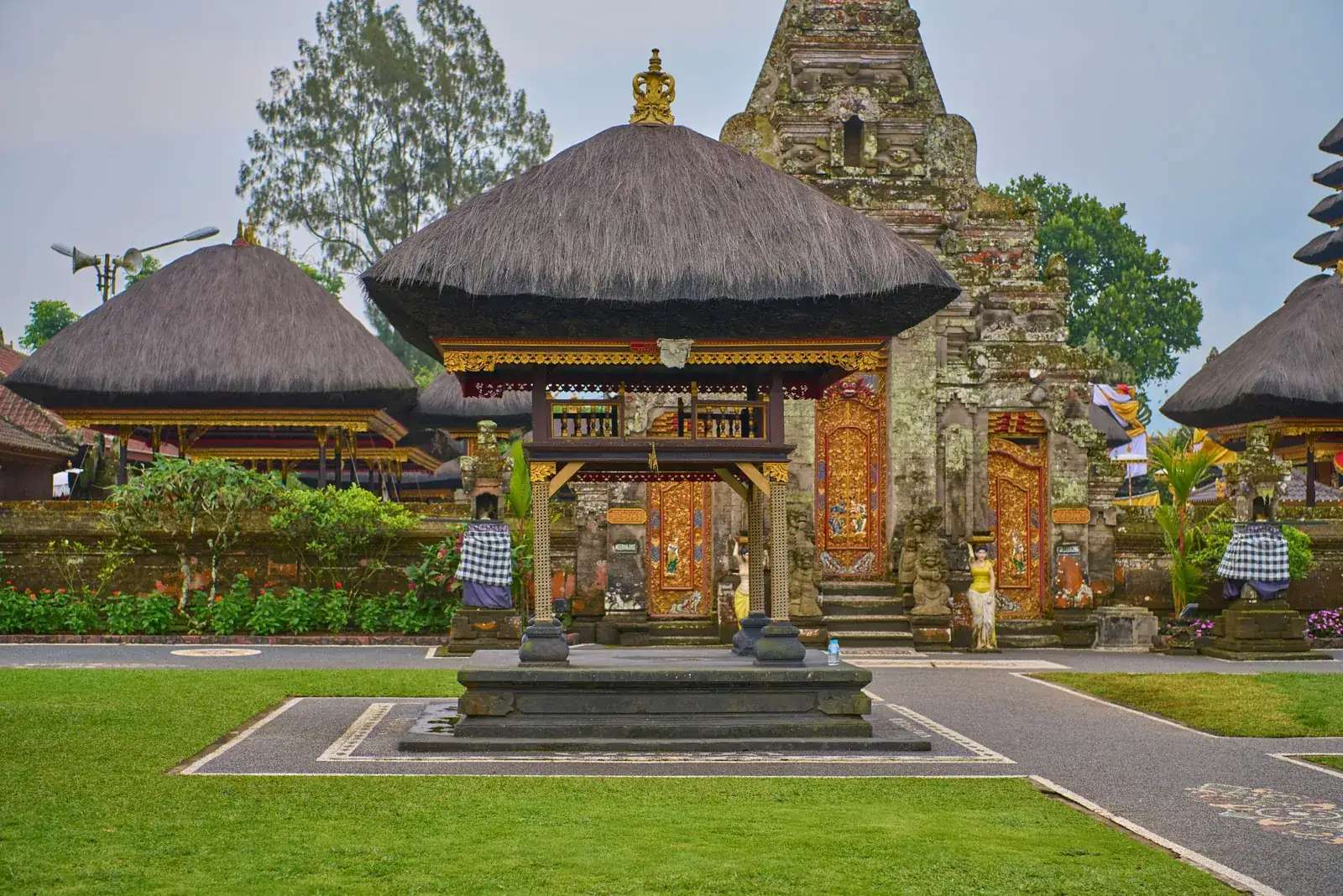
Pura Dalem Agung Padangtegal is the main one, the temple of death, dedicated to Hyang Widhi in the form of Siwa the recycler. Its gate is the piece of carving worth stopping for: a Bhoma face over the doorway, moss in every crevice, and the whole thing backlit through the canopy in the morning.
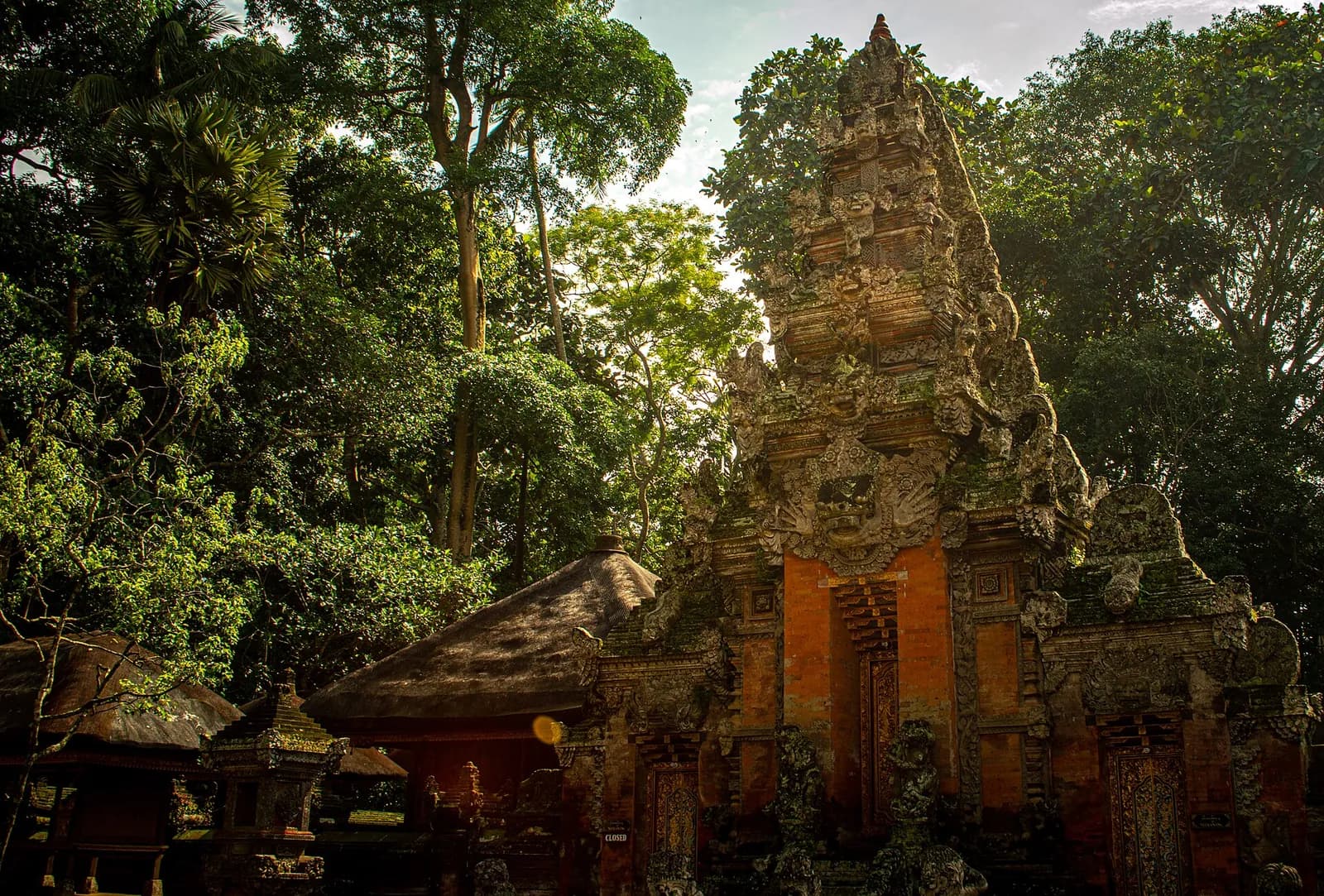
Photo Philip Nalangan, CC BY 4.0
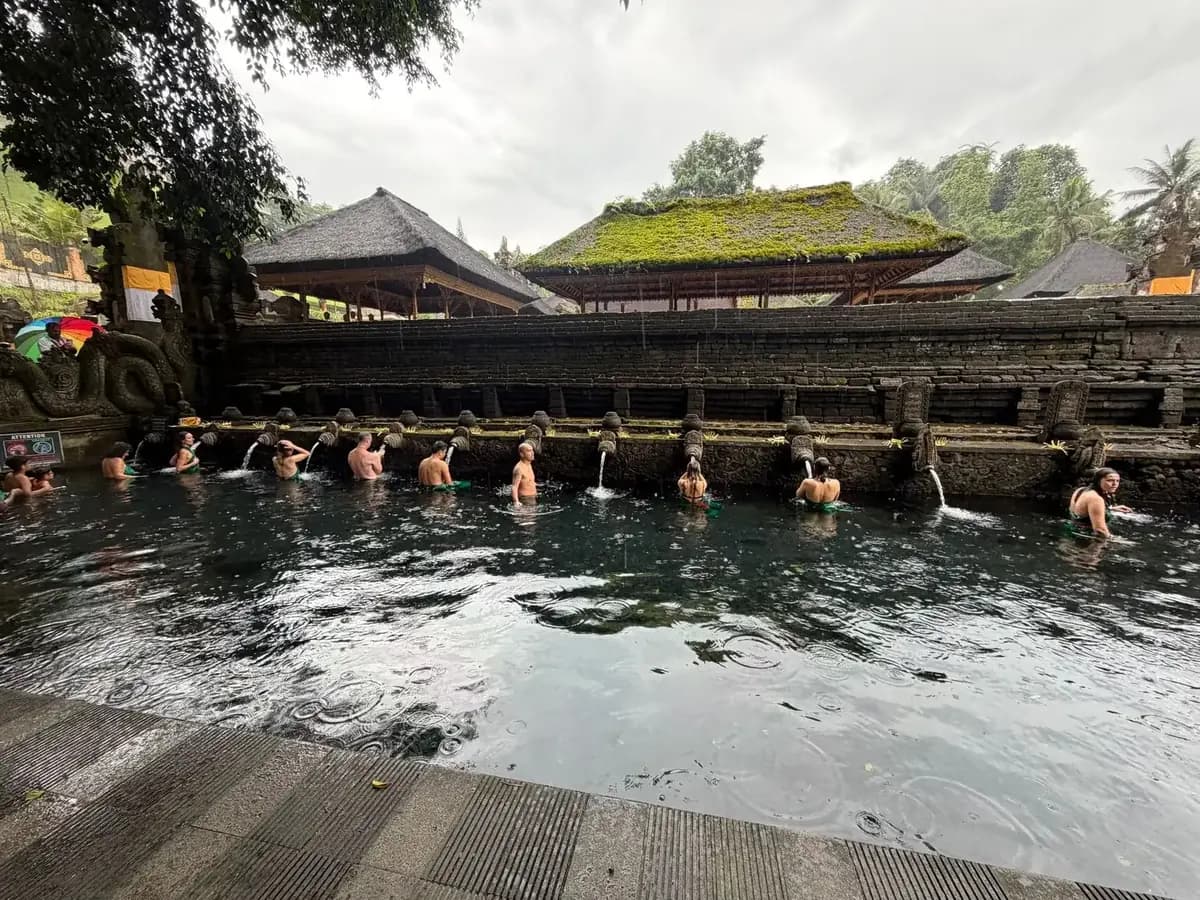
Down in the ravine at the bottom of the site are the bathing temple, Pura Beji, dedicated to Gangga and used for purification before ceremonies, and the third temple, Pura Prajapati, associated with cremation. Getting to them means taking the steps down towards the river, which is exactly why they are quiet: the loop at the top is easier and most people stay on it.
The dragon bridge in the ravine is the single best thing to look at in the sanctuary, and it is in the photograph at the top of this page. Stone dragons flanking an arch, moss over everything, and banyan roots hanging in curtains around it. Take the steps.
Visitors do not enter the temple courtyards, which is why there is no sarong hire at the gate. You are looking at them from the outside, and during a ceremony parts of the site may be closed off entirely with no notice. That is the correct order of priorities on a working temple site and it is worth taking in good humour.
Where it fits in a day in Ubud
The forest is at one end of a walk that takes in most of central Ubud, and doing it in the right order saves you the heat.
Start at the forest at opening, when the animals are busy and the paths are empty. Ninety minutes later you come out at the top of Monkey Forest Road, which runs straight back into the centre in about fifteen minutes on foot past most of the town's cafes.
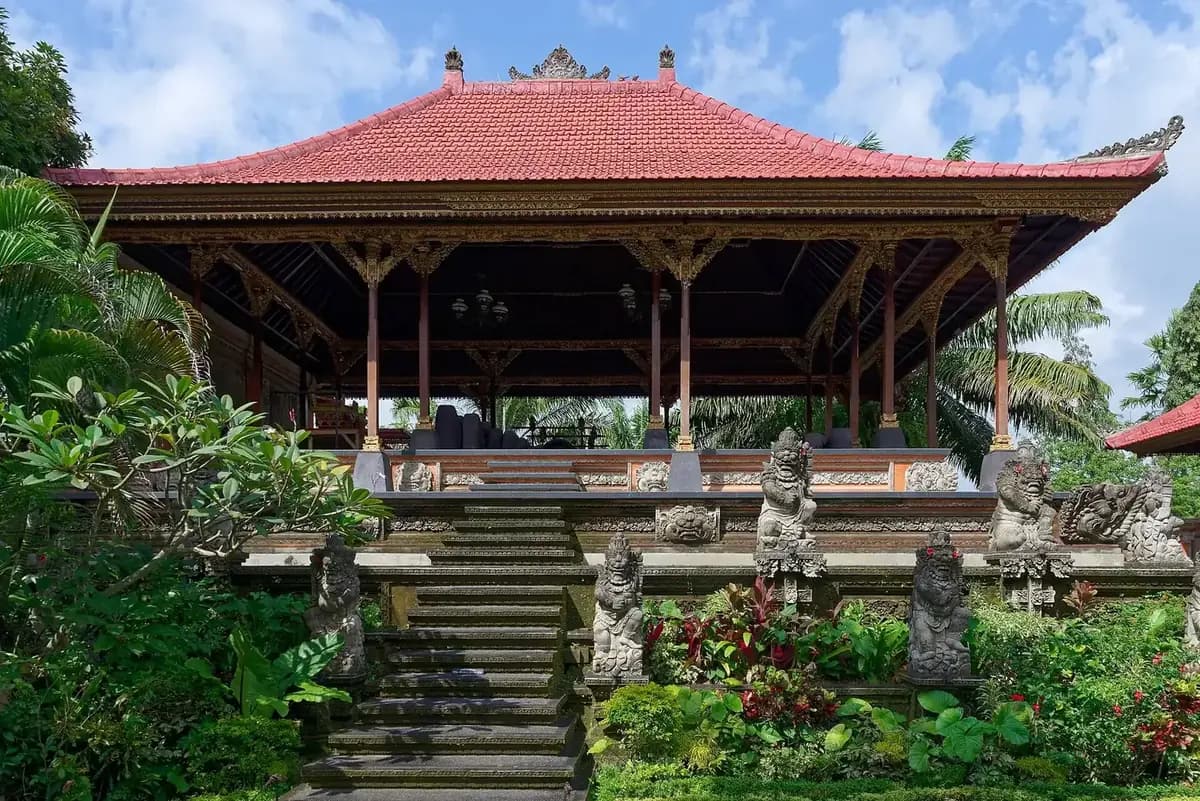
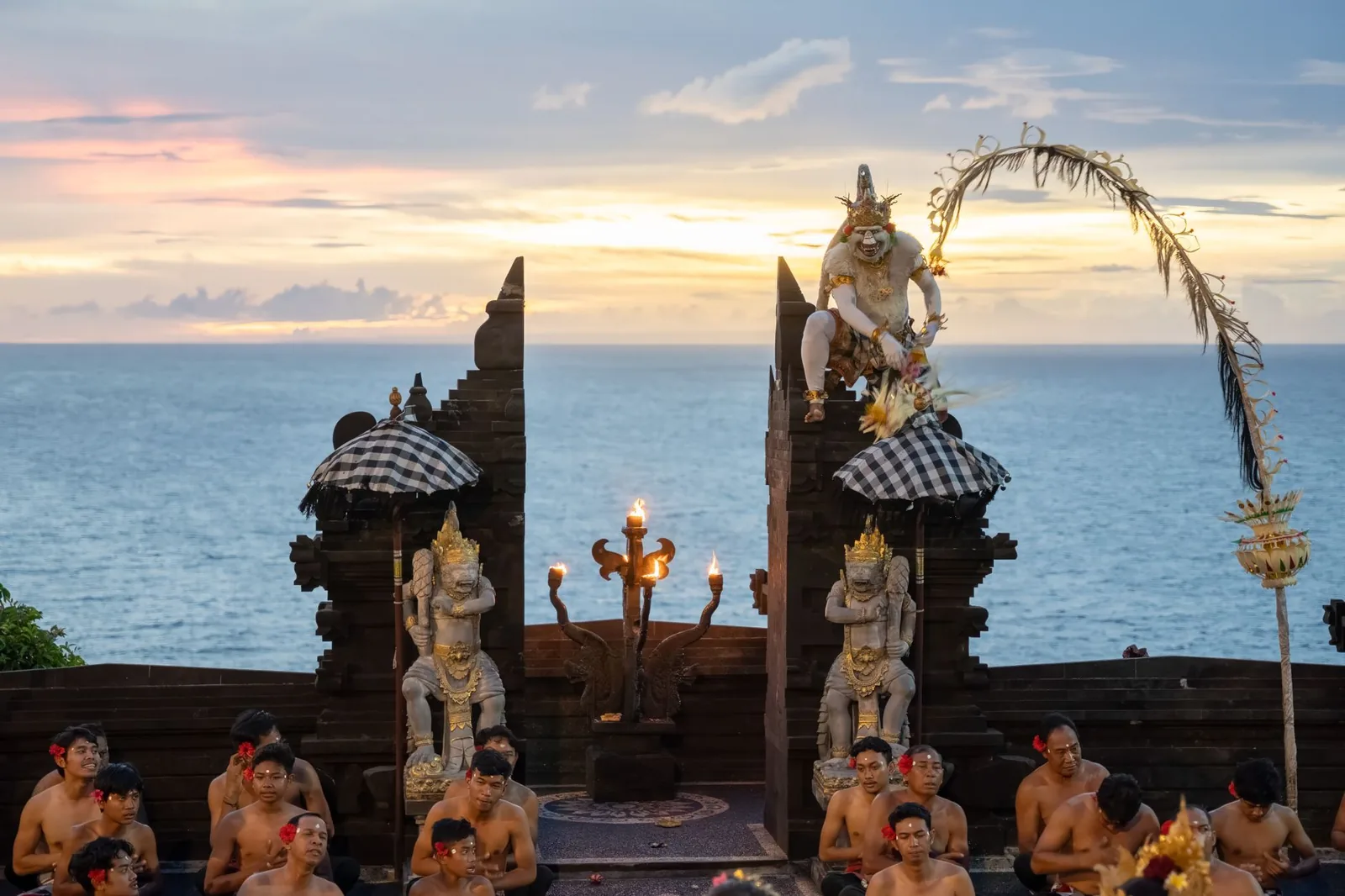
At the top of that road you are on the main crossroads, which puts Ubud Palace and the market directly in front of you. The palace takes fifteen minutes in daylight and costs nothing, and it is worth knowing that the evening dance in its courtyard is the thing most people remember about the town.
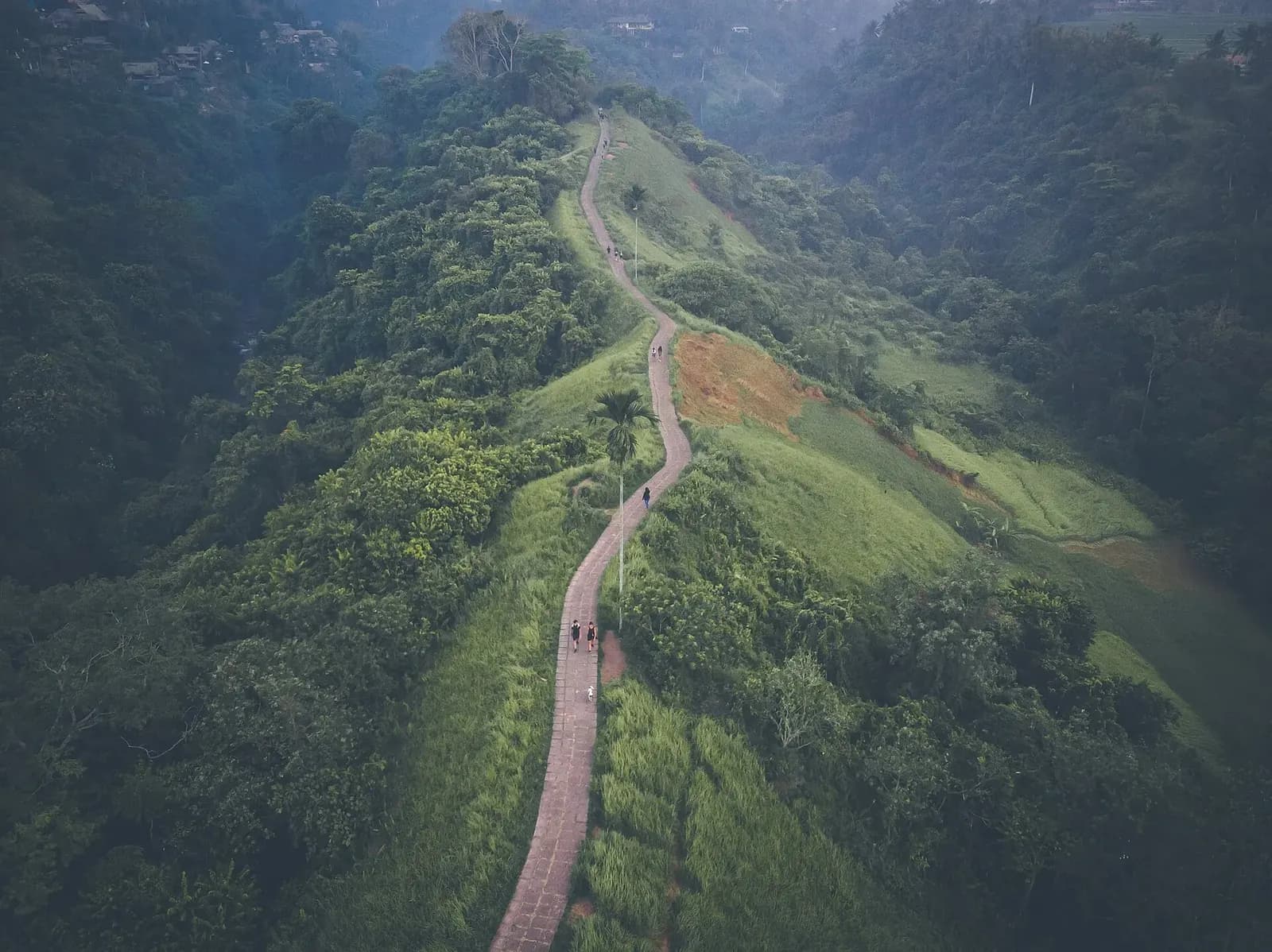
Carry on west along Jalan Raya for another twelve minutes and you reach the start of the Campuhan Ridge Walk, which is free and has no gate. That is a better second walk than a second temple, though the crest has no shade at all, so it works far better as a dawn outing on a different morning than as an afternoon follow-up to the forest.
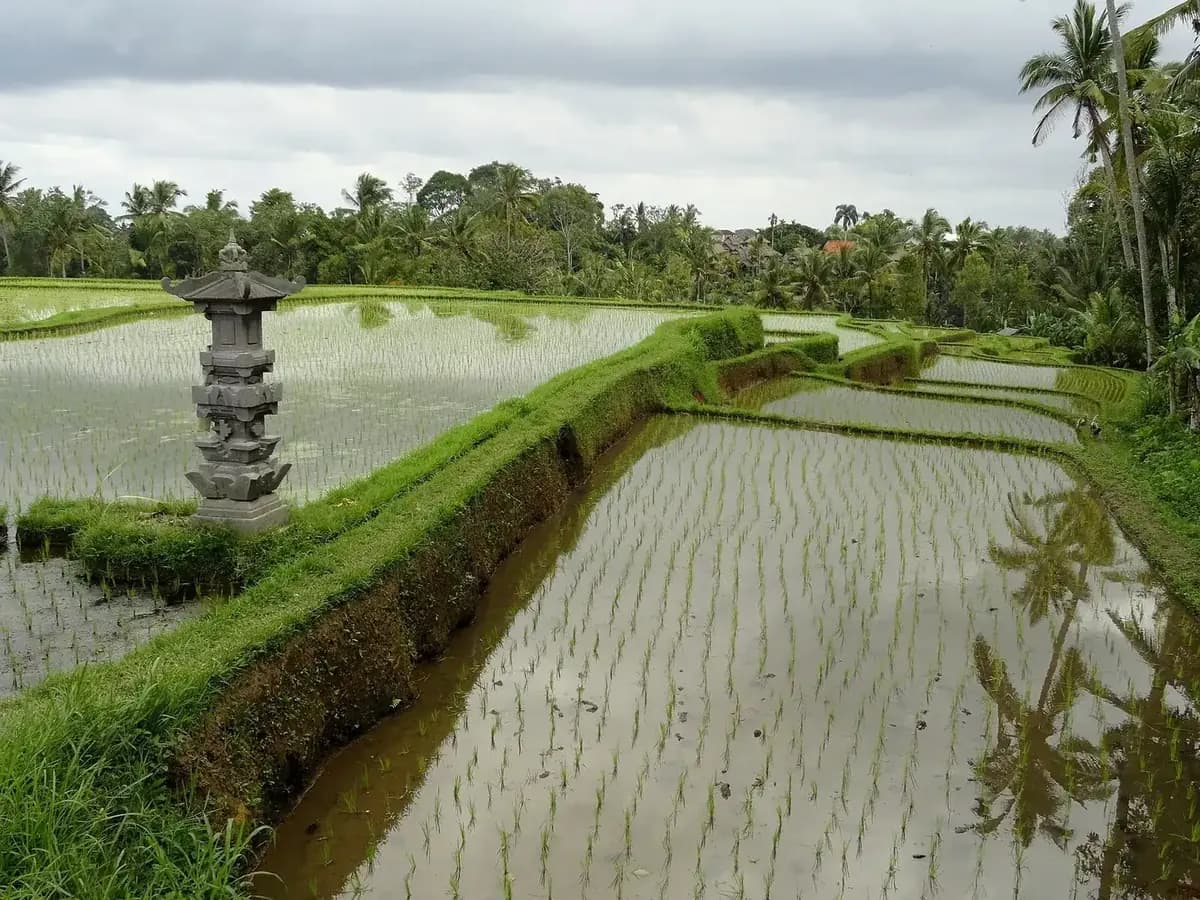
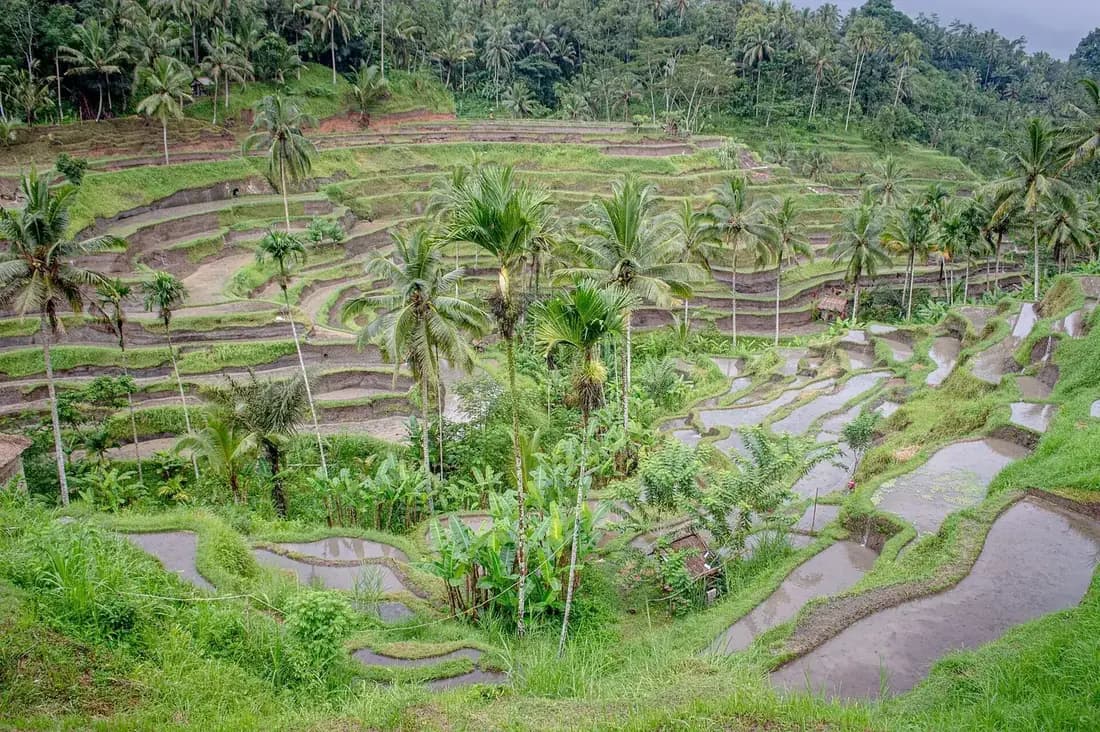
If you want the terraces as well, they are twenty minutes north by scooter or car and belong to a separate half day rather than this one. Tegallalang has its own set of things worth knowing before you arrive, starting with how the donation posts in the fields work.