Updated August 2026
Bali weather, month by month
Two seasons, twelve months and one fact that changes how you read all of them: on Bali the rain arrives in bursts, not in days.
Bali has a dry season from April to October and a wet season from November to March, and the temperature barely moves between them. What moves is the rain, the sea, the price of a room and the number of people standing where you want to stand. The season also decides which coast to swim on.
Those four do not move together, and that is the whole planning problem. The driest weeks are the most expensive and the most crowded. The emptiest weeks are the wettest. Everything below is built to help you pick a side of that trade rather than to tell you, as every other page will, to come in the dry season.
Rainfall across the year
Monthly totals on the south coast, in millimetres. Pick a month.
Shoulder
April
- Rain
- 90 mmabout 8 wet days
- Day
- 31 °C88 °F, nights near 24 °C
- Sea
- 29 °C84 °F, all year within two degrees
- Sun
- 8 haverage hours per day
The best value month of the year and the one most people skip. The island is still soaked green, the falls still run hard, the sea has calmed for the islands, and neither the crowds nor the prices have arrived. If you can pick freely, pick this.
- Sea state
- Settled. Crossings run most days
- Crowds
- Still low
- What you pay
- Shoulder, well below June
The twelve months, side by side
Temperatures and wet day counts are orders of magnitude measured on the south coast, which is where every published average for Bali comes from. Ubud runs a little wetter and cooler at night, the highlands a lot of both. A wet day means rain fell, not that the day was lost.
| Month | Season | Typical day | Wet days | Sea | Crowds | What you pay |
|---|---|---|---|---|---|---|
| January | Wet, peak | 30 to 31 °C · 86 to 88 °F | About 20 | Rough, crossings cancelled often | Busy to the 5th, then quiet | Peak, then the year's lowest |
| February | Wet, peak | 30 °C · 86 °F | About 18 | Rough, most cancellations | The quietest month | Lowest of the year |
| March | Wet, easing | 30 to 31 °C · 86 to 88 °F | About 15 | Improving through the month | Quiet, apart from Nyepi | Still wet season rates |
| April | Dry begins | 31 °C · 88 °F | About 8 | Settled most days | Still low | Shoulder |
| May | Dry | 30 to 31 °C · 86 to 88 °F | About 6 | Calm and predictable | Building, still comfortable | Rising |
| June | Dry, peak begins | 30 °C · 86 °F | About 4 | Calm, water at its coolest | High season from mid month | Steps up sharply |
| July | Dry, peak | 29 to 30 °C · 84 to 86 °F | About 3 | Calm, strong wind swell | Busiest, with August | Peak across the board |
| August | Dry, peak | 29 to 30 °C · 84 to 86 °F | Two or three | Calm, best visibility | Peak | Peak, rooms hard to find late |
| September | Dry ends | 30 °C · 86 °F | Three or four | Calm | Emptying after the first fortnight | Falling back |
| October | Transition | 31 °C · 88 °F | About 8 | Mostly calm | Quiet | Shoulder again |
| November | Wet begins | 31 °C · 88 °F | About 14 | Turning rough late in the month | Low | Low, before the spike |
| December | Wet, holiday peak | 30 °C · 86 °F | About 18 | Rough, regular cancellations | Quiet for three weeks, then packed | Steepest of the year at Christmas |
Read down the wet days column and the season looks decisive. Read across a single row and it stops being. February gets rain on roughly eighteen days and is the cheapest, quietest month of the year. August gets rain on two or three and is the month you are most likely to queue for twenty minutes at a temple gate. Neither of those is the better month in the abstract. They are answers to different questions.
What the two seasons actually change
Six things move between November and August, and only one of them is the number in a rainfall chart. These are the ones that change what a day on the island is like.

One day, four hours apart
Morning, cloud, downpour, evening. This is the sequence people are imagining when they picture a washed out fortnight, and it takes about six hours from end to end.
01
The shape of the rain, not the amount
This is the fact that changes a decision, and almost nobody states it plainly. Wet season rain on Bali arrives as a burst, usually in the afternoon or overnight, and it is often over in an hour. A wet day is rarely a lost day. It is a morning that works and an hour spent under cover, after which the island looks better than it did before. The trips that go wrong in the wet season are the ones scheduled for two in the afternoon.
02
The sea, which decides the boat days
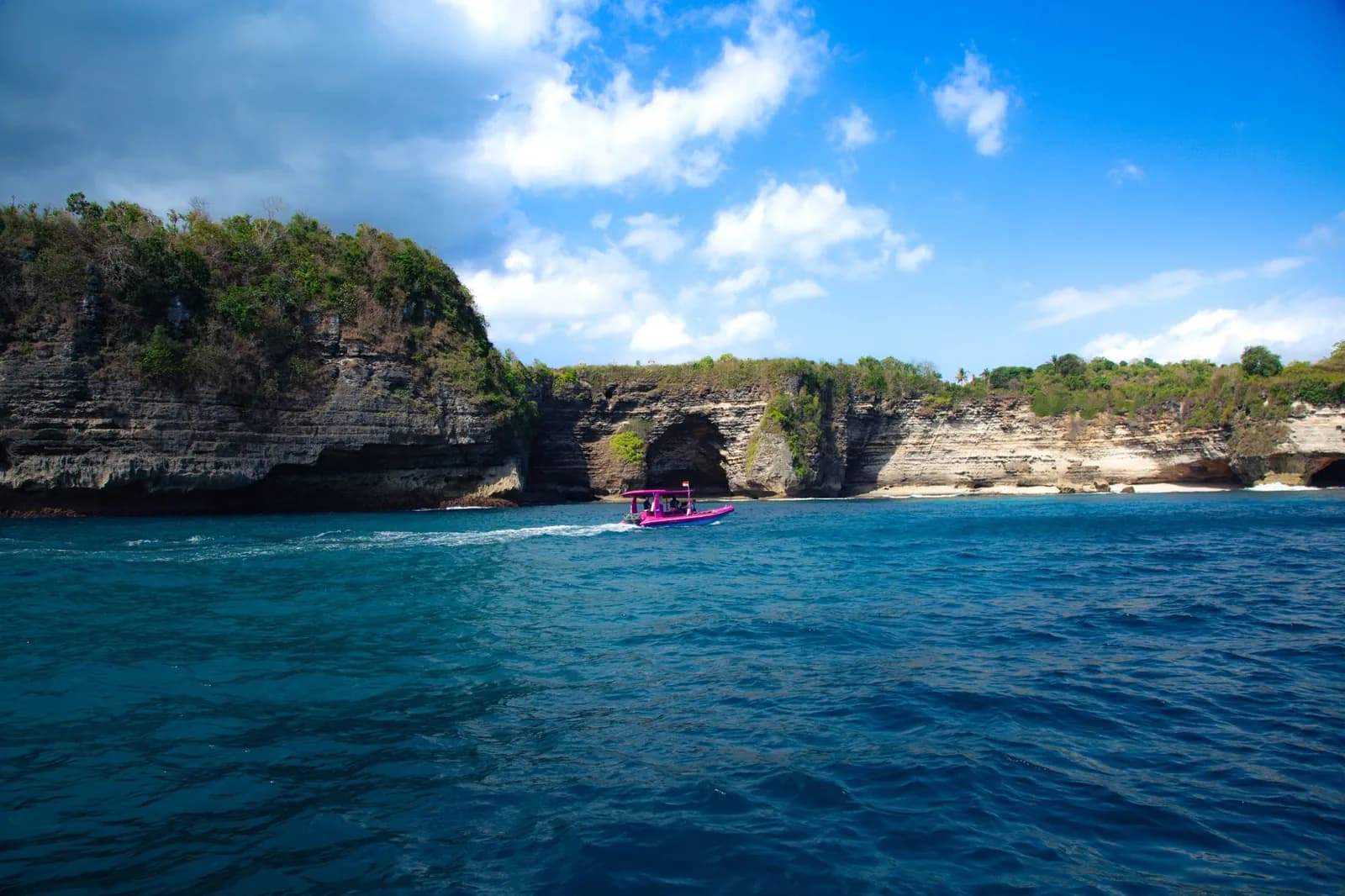
The variable the temperature tables leave out entirely. From December to March the channel between Bali and the Nusa islands gets rough enough that fast boats are cancelled at short notice, sometimes on the morning itself. The same crossing is routine in the dry season. If your trip depends on reaching an island, that one line matters more to you than any rainfall figure.
03
Waterfall flow, which runs backwards
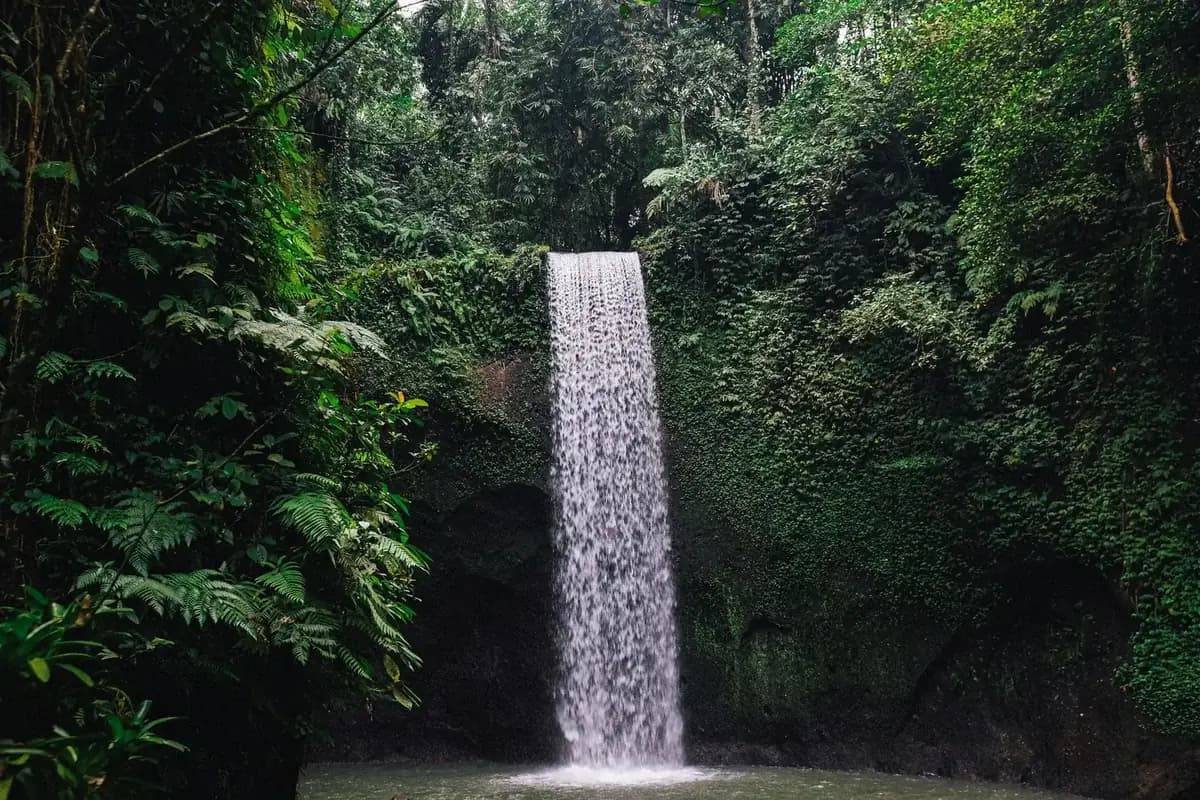
Wet season falls run hard and look spectacular, and the water is brown. Swimming is off the table. By late September the smaller ones are at their thinnest of the year and the photograph you were promised is a narrower version of itself. April and May sit in the middle: volume left over from the rains, water clear enough to get into.
04
Haze, and whether you see the volcanoes
For half the year a soft haze sits over the interior and the high views are a rumour. It lifts around June and Agung and Batur come back properly for a few months. If the reason you are climbing anything is what you see from the top, that window is your answer.
05
Humidity, which is the constant
Temperature barely moves on Bali. The coast sits around 30 °C by day and 23 to 24 °C at night, all year, and the sea stays between 27 and 29 °C whatever the month. What moves is humidity, roughly 75 percent in August and closer to 85 in January. The wet season does not feel hotter on a thermometer, it feels heavier, and that is what shortens a day of walking.
06
Price and crowds, which move against the rain
The driest weeks are the most expensive and the most crowded, and the emptiest weeks are the wettest. Those three curves do not move together, and the gap between them is where the good months hide. A February room can cost less than half a July one for the same place, which buys a lot of tolerance for a wet afternoon.
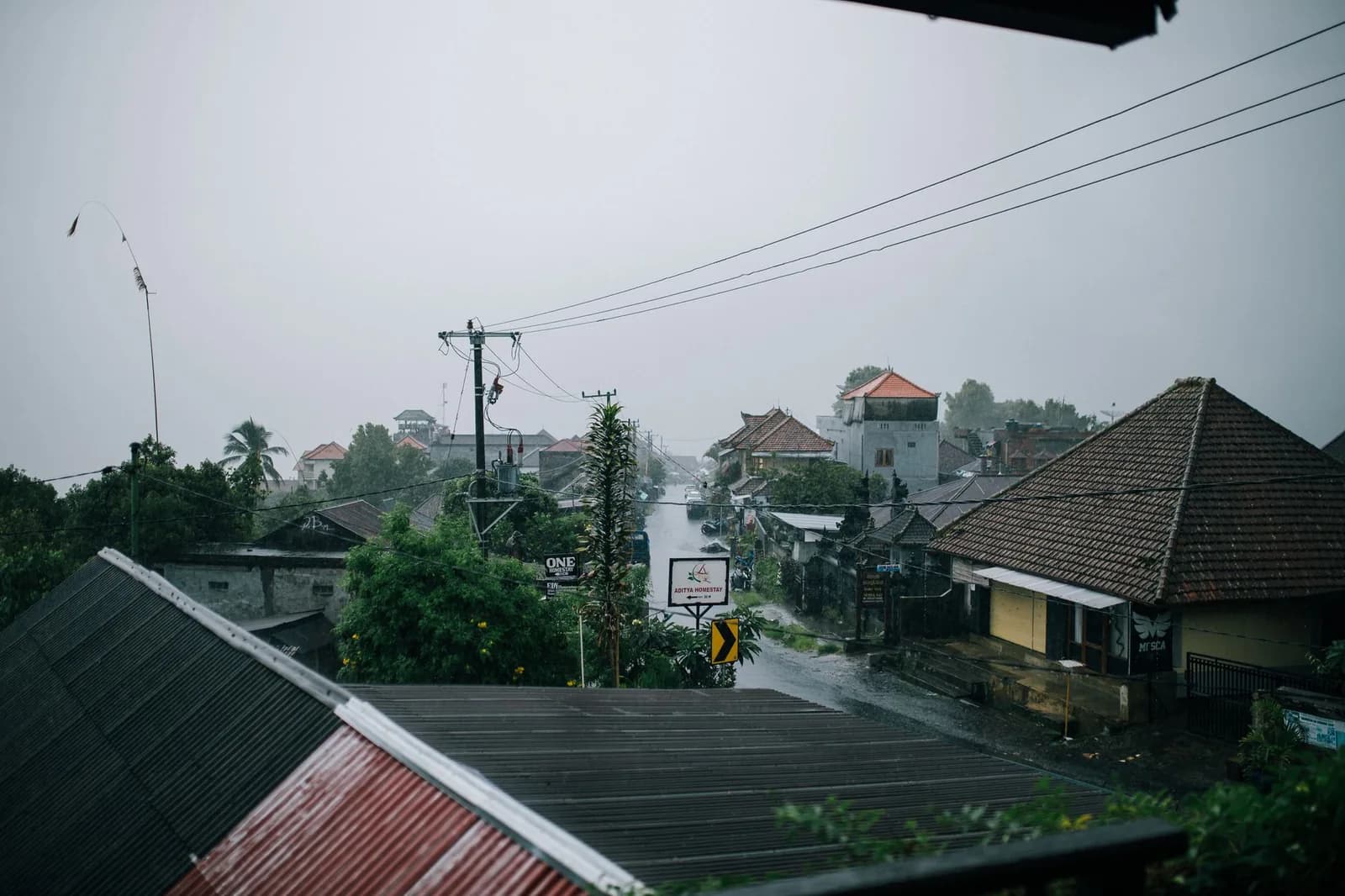
Look at what a wet season afternoon on Bali actually is. The street is not flooded. The shops are open, the traffic is moving. An hour later the road is dry and steaming.
The version of the wet season that ruins a holiday is the one people imagine, not the one that arrives. What it genuinely ruins is a plan with a boat in it. The five wet months, the streets that do flood and the activities that change are in our Bali rainy season guide.
The rule that replaces the season
Do your sightseeing before noon, whatever month you come in.
In the wet season that puts you ahead of the rain. In the dry season it puts you ahead of the tour vans, which reach the famous sites between nine and ten. One habit solves both problems, and it is the only piece of advice on this page that holds in all twelve months.
The three months worth choosing
If your dates are genuinely open, this section is the only part of the page you need. April, May and October are the months where two or three of the four curves are favourable at once, and they are the ones no booking site is incentivised to point you towards. What a day then costs on the ground is on the Bali trip cost page.
If you can choose freely, choose this one
April
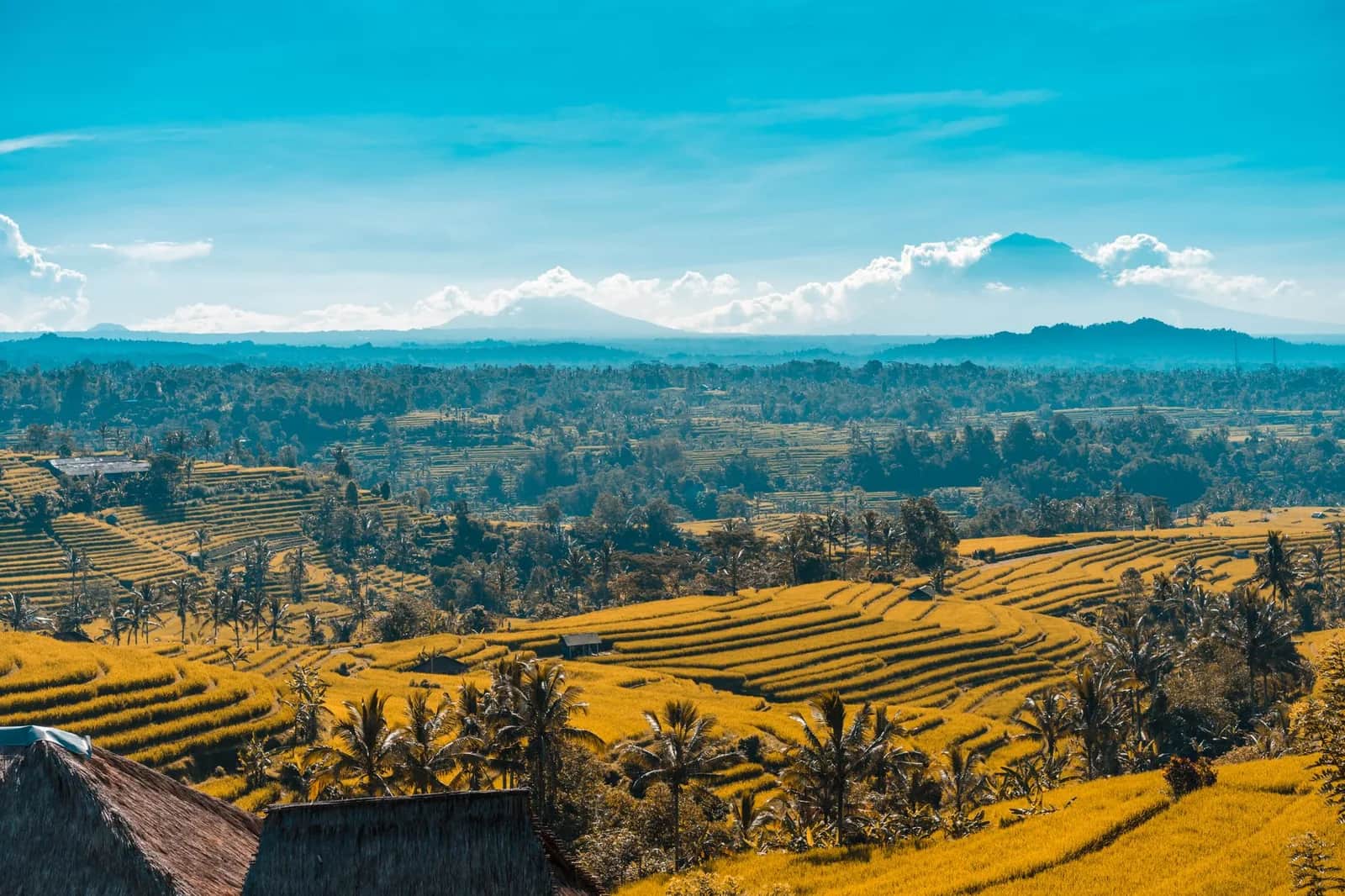
The best month of the year and the most overlooked. The island is still soaked green from the rains, the waterfalls still run hard but have cleared enough to swim in, the sea has settled enough for the crossings, and neither the crowds nor the peak rates have arrived.
- Rain
- 90 mm
- Wet days
- 8
- Crowds
- Low
- Rates
- Shoulder
May, the safer version
Drier than April and still quiet. Skies hold, the pools are clear, the boats run. Prices have started climbing towards June without having made the jump yet. If you want the dry season without the dry season crowd, this is it.
October, April in reverse
The first storms come back before the visitors do, so you get quiet sites, a landscape greening up again and rates well below summer. The trade is that the smaller waterfalls are still at their thinnest after the long dry, and take a few weeks of rain to recover.
The months that lose on this reading are June and December, for opposite reasons. June has excellent weather and the first full week of peak pricing, which means you pay high season rates for conditions May gives you cheaper. Christmas and New Year stack peak prices on peak crowds on wet season weather, the only point in the year where all three go the wrong way together.
Booking around a sky you cannot predict
Free cancellation is what a booked day actually buys you between November and March. That, and somebody who checked the sea and the road before you got up. In August you are paying for a driver. In January you are paying for the right to change your mind at seven in the morning.
The days the weather decides
Free cancellationDay tours and boat trips across Bali
- ✓Free cancellation on most listings, right up to the day before
- ✓Pre dawn departures, the only version of a sunrise trip that beats the cloud
- ✓Operators who cancel a crossing on sea state rather than let you find out at the pier
- ✓One driver covers temples, terraces and waterfalls in the half day the rain leaves you
Affiliate link. Booking through GetYourGuide costs you nothing extra and supports the guide. Prices are indicative and vary by option and season.
Bali does not have one climate
The island is small and steep, and it runs from sea level to over three thousand metres in about forty kilometres. Every forecast you read for Bali is a forecast for the south coast. It is wrong by a useful margin the moment you drive inland.

Sea level to three thousand metres
About forty kilometres separate the beach from the crater rim. Everything on that line has its own weather, and the forecast on your phone describes the far left of it.
Sea level
The south coast
Seminyak, Canggu, Uluwatu, Sanur. The hottest and the driest part of the island, and the one every average you read online is measured on. Sea breeze in the afternoon, and the shortest rain of anywhere on Bali when it comes.
About 200 m
Ubud and the middle
Two hundred metres up, and it shows. Ubud gets noticeably more rain than the coast, cools to around 22 °C at night, and greens up faster after the first rains. It also handles a wet afternoon better than the beach does, because there is somewhere to be indoors.
1 000 m and up
The highlands
Bedugul, Munduk, Kintamani, anywhere above a thousand metres. Genuinely cool, 18 to 22 °C by day and colder after dark, cloudy far more often than the coast, and wet even in the dry season. Bring a layer. People arrive here in a swimsuit and regret it.
Offshore and exposed
The Nusa islands and the Bukit
Drier and more exposed than the mainland, with less vegetation and harsher sun. The trade off is the crossing: the same wind that keeps them dry is the wind that cancels the boats.
Two practical consequences. A rainy forecast for Denpasar tells you very little about whether the lake temple at Beratan will be in cloud, because it usually is regardless. And a wet afternoon is far easier to spend in Ubud than on a beach, which is a real argument for where to base yourself if you are coming between November and March.
The one date that is not weather
Nyepi, the Balinese day of silence, falls in March and moves every year because it follows a lunar calendar. For twenty four hours the entire island stops. The airport closes, nothing is open, nobody goes outside, and lights stay off after dark. It is enforced, and it applies to visitors as much as to residents: you stay inside your accommodation.
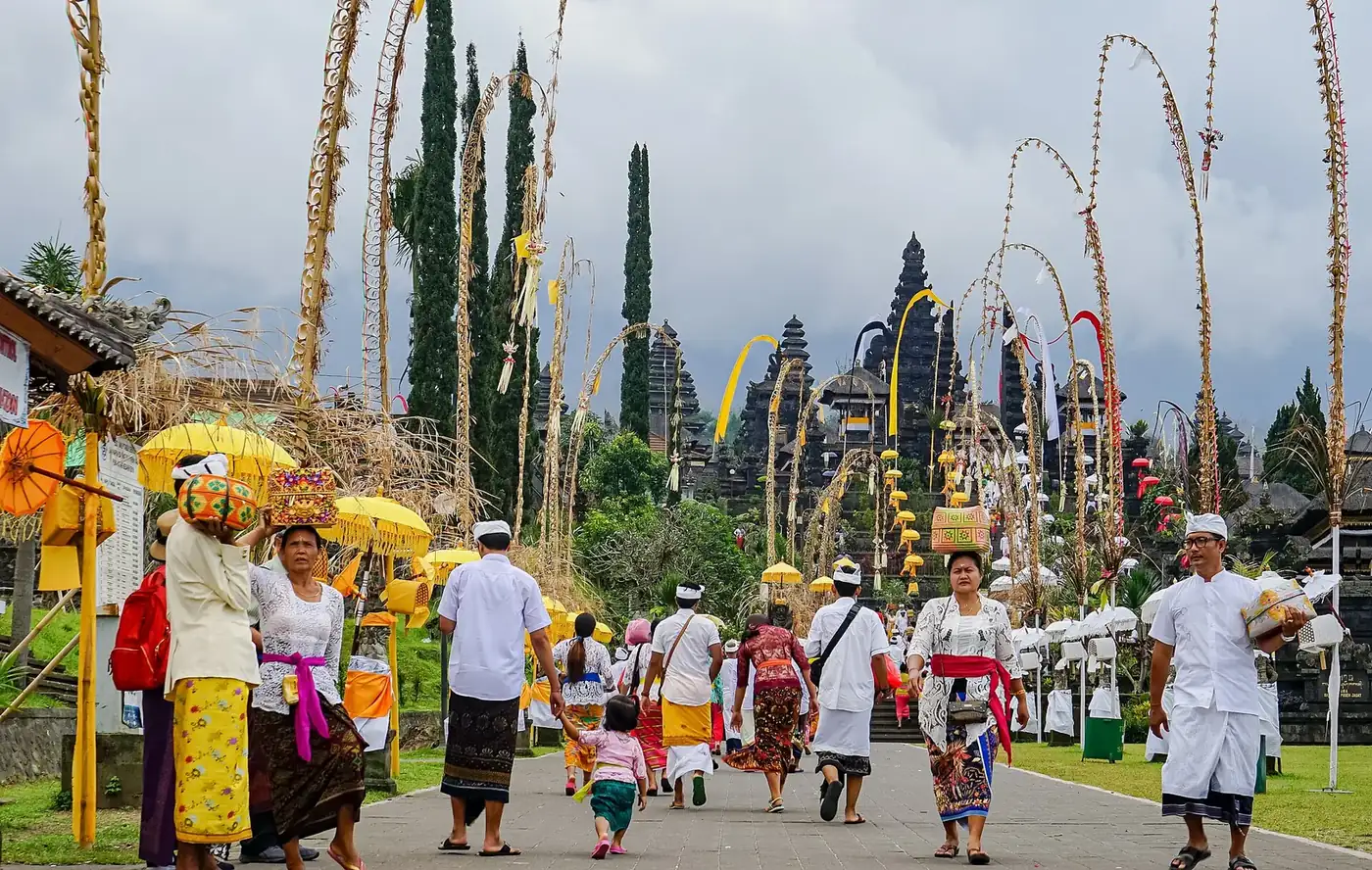
Travellers come away calling it either the best day of their trip or a wasted one, and which of the two it is depends almost entirely on whether they knew it was coming. The night before brings the ogoh ogoh parades, giant demon effigies carried through every village and burned. Plan around that one. The morning after, the island is quieter than you will ever see it.
Check the date before you book flights, because a closed airport is not a thing you work around on arrival.
What the month changes in your bag
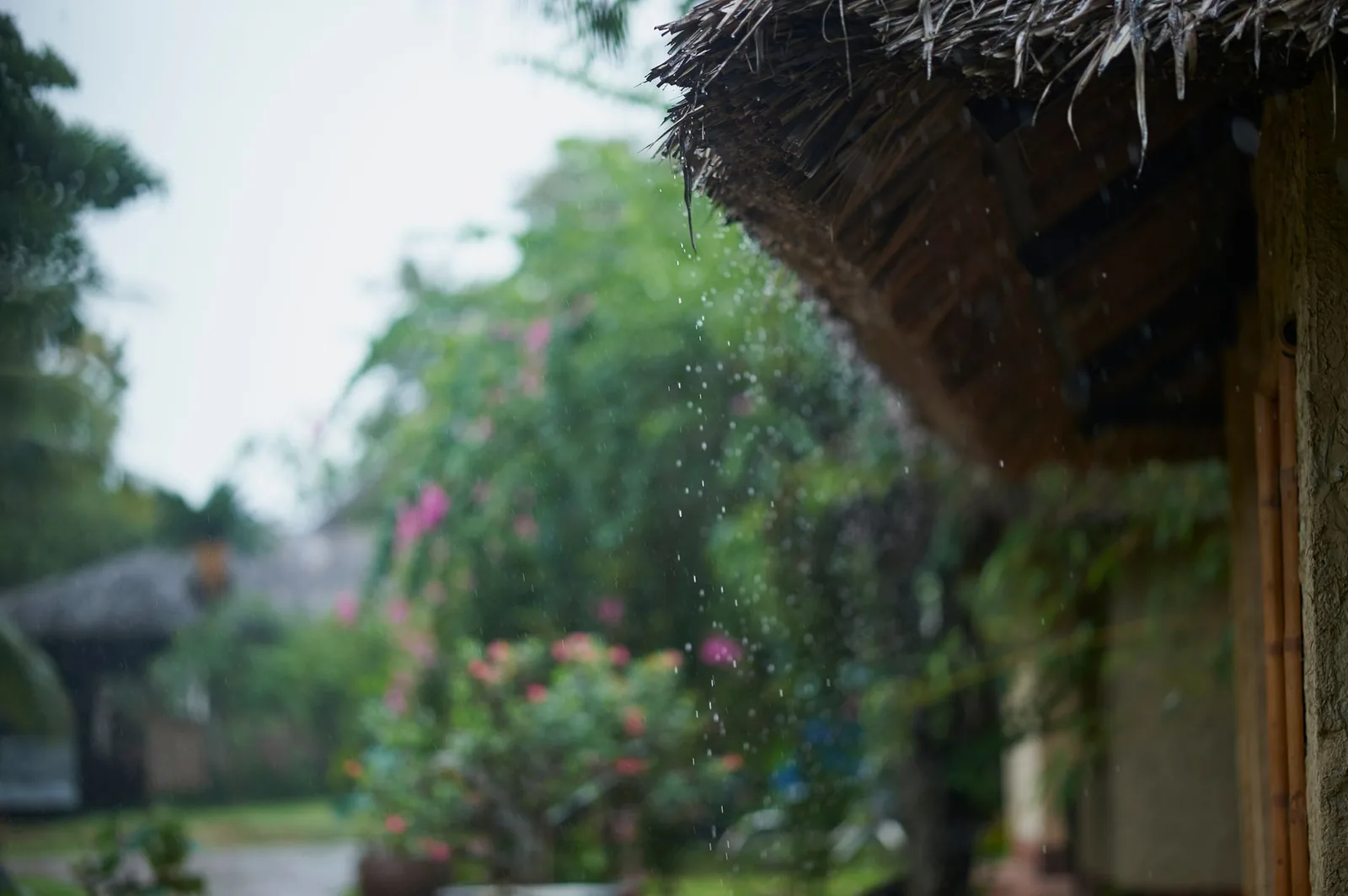
Less than people expect, because the temperature does not move. Four things are worth deciding on the basis of when you come.
A light rain layer, always
Not a waterproof coat, which you will never wear at 30 °C and 85 percent humidity. A cheap poncho, sold on every corner, and a dry bag for a phone.
Something warm for the highlands
One layer covers Kintamani at dawn and any sunrise trek, in every month. It is the item people most often wish they had brought, and on the Mount Batur rim it is the difference between a good half hour and a cold one.
Shoes with grip, in the wet season
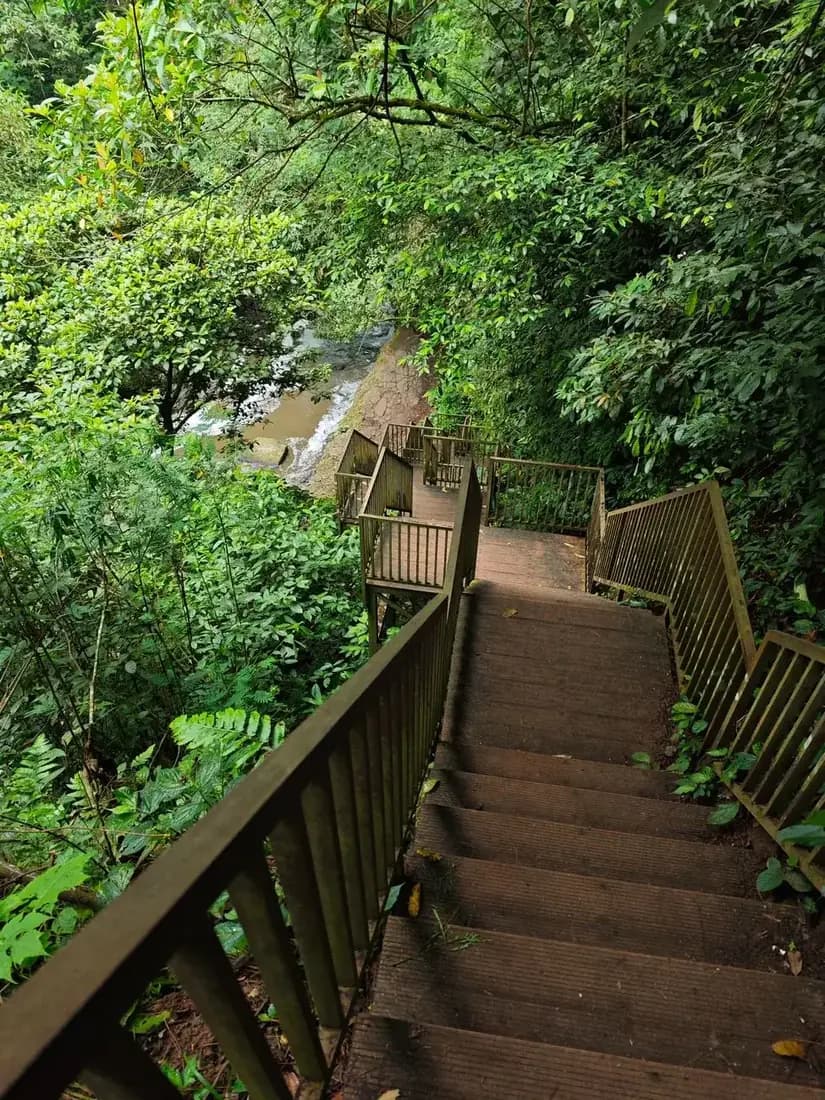
Temple steps and waterfall paths are wet stone from November to March. Flip flops are how people fall, and they fall on the way down.
Mosquito repellent, year round
Worse in the wet season and never absent. Dengue is present on Bali and the mosquito that carries it bites during the day.
This page is not a forecast
Everything above is climate, which is what a month usually does. It is the right tool eight months out, when you are choosing dates, and the wrong one three days out, when you are deciding whether tomorrow works for the crossing.
For the days themselves, use whatever forecast you already trust, and read it knowing two things. It is almost certainly modelled on Denpasar, so it says little about Ubud and less about the highlands. And a forecast showing rain on six of the next seven days is a normal wet season week, not a washout: it is telling you that rain will fall somewhere in each of those days, which on this island it usually does, in the afternoon, for about an hour.
Month by month, in detail
What each month is really like on the ground, what it costs, and what it is the best month to do. Rainfall and daytime highs are orders of magnitude on the south coast.
Wet season
January
Wettest of the year, emptiest after the 5th
345 mm · 20 wet days · 30 °C
Wet season
February
The cheapest month on the calendar
275 mm · 18 wet days · 30 °C
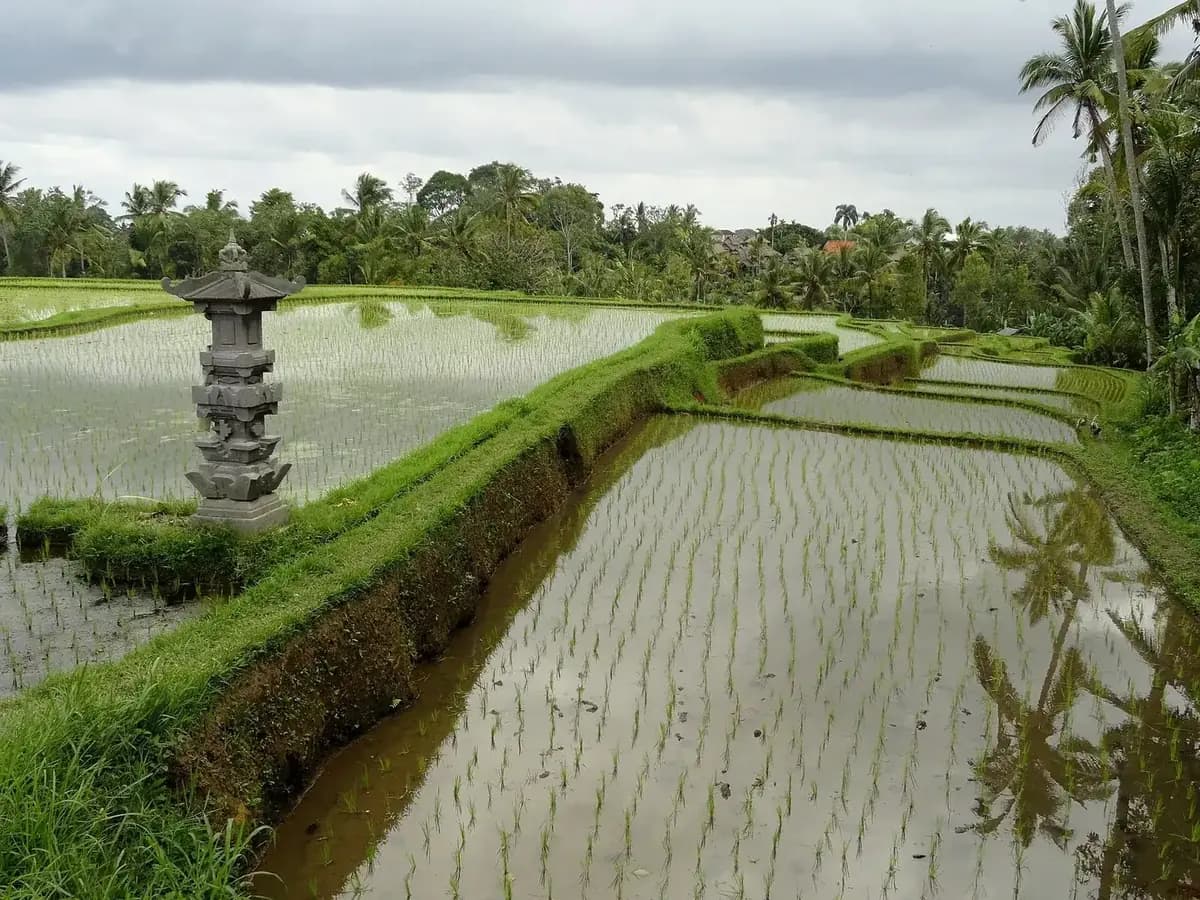
Wet season
March
The rain eases, and Nyepi lands
220 mm · 15 wet days · 31 °C
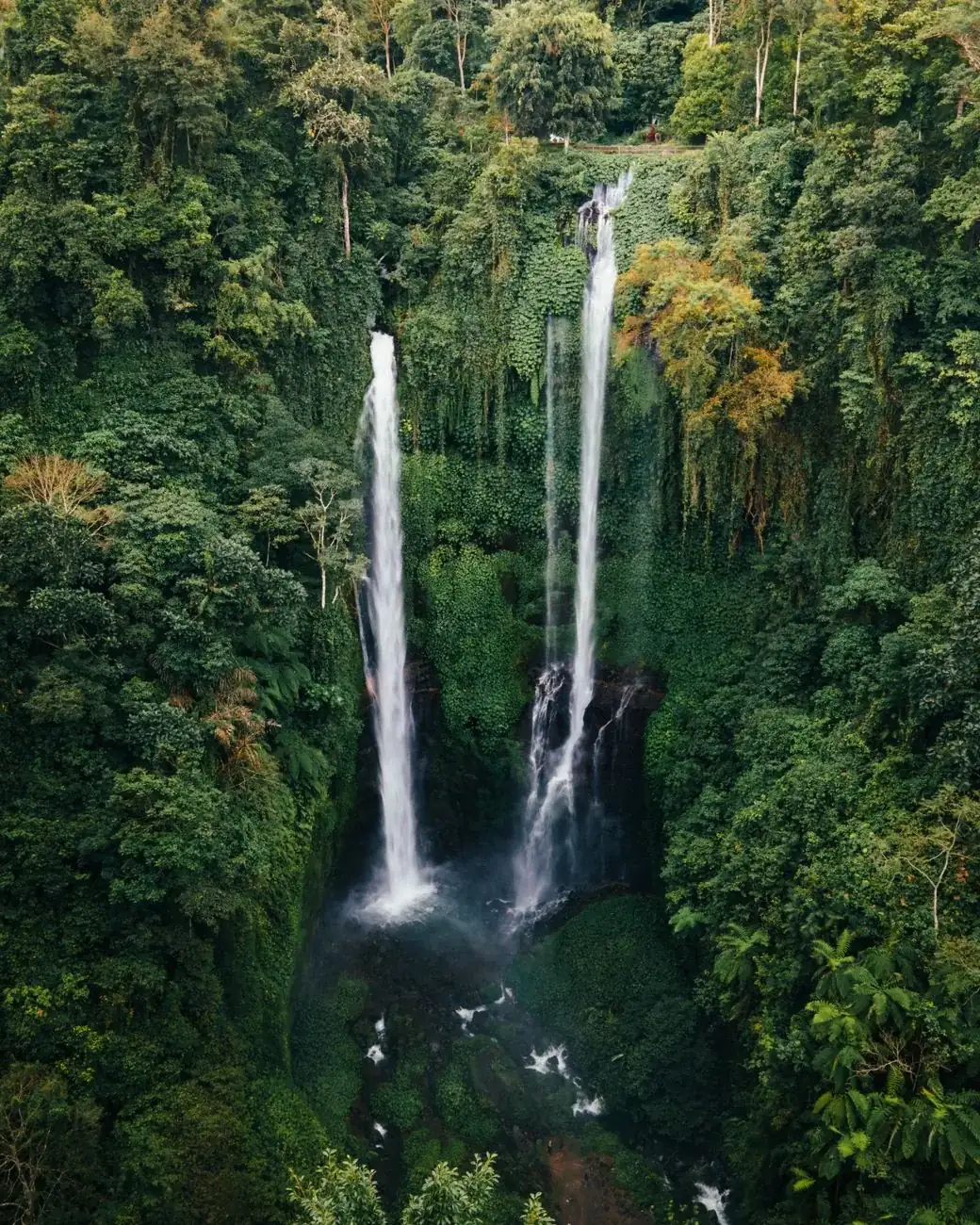
Shoulder
April
The best month of the year
90 mm · 8 wet days · 31 °C
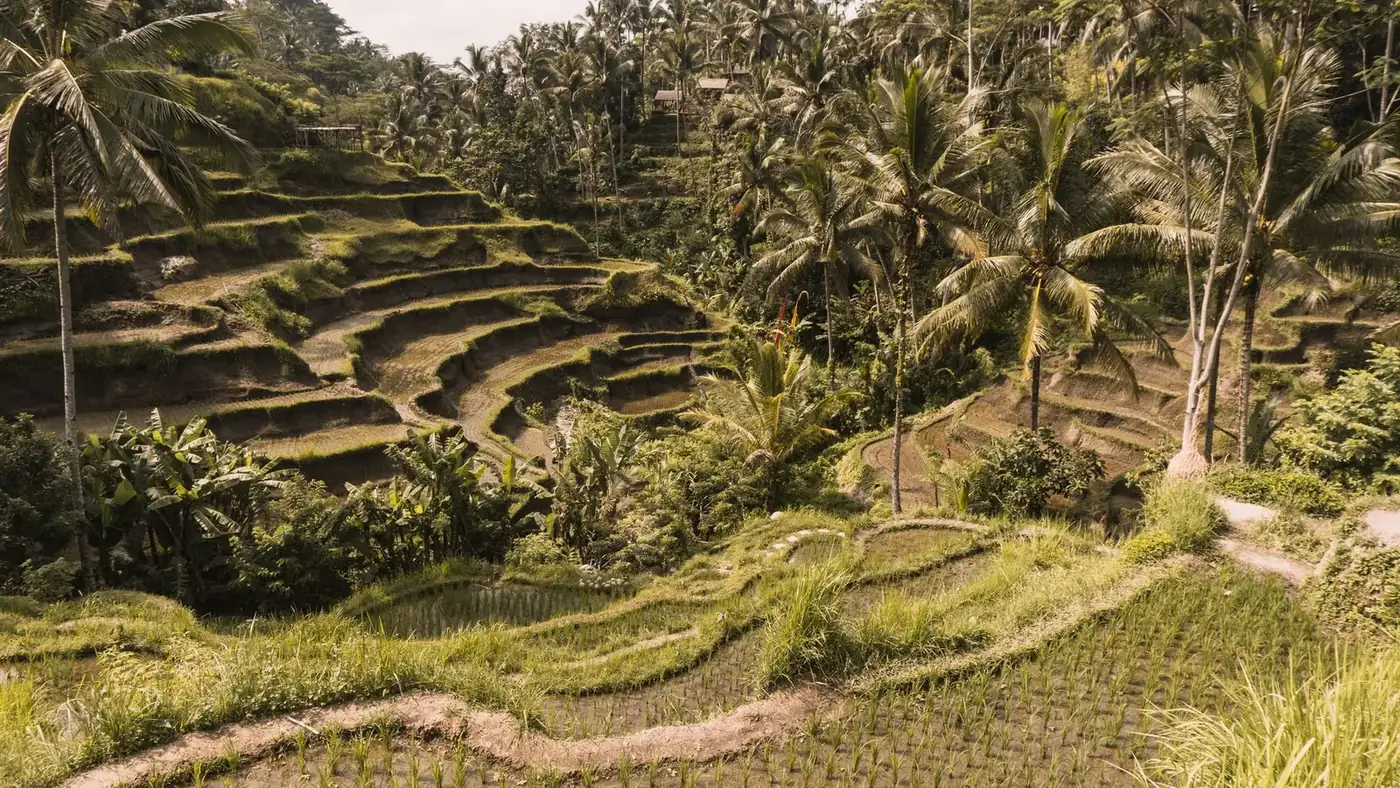
Shoulder
May
The last one before the price wall
80 mm · 6 wet days · 31 °C
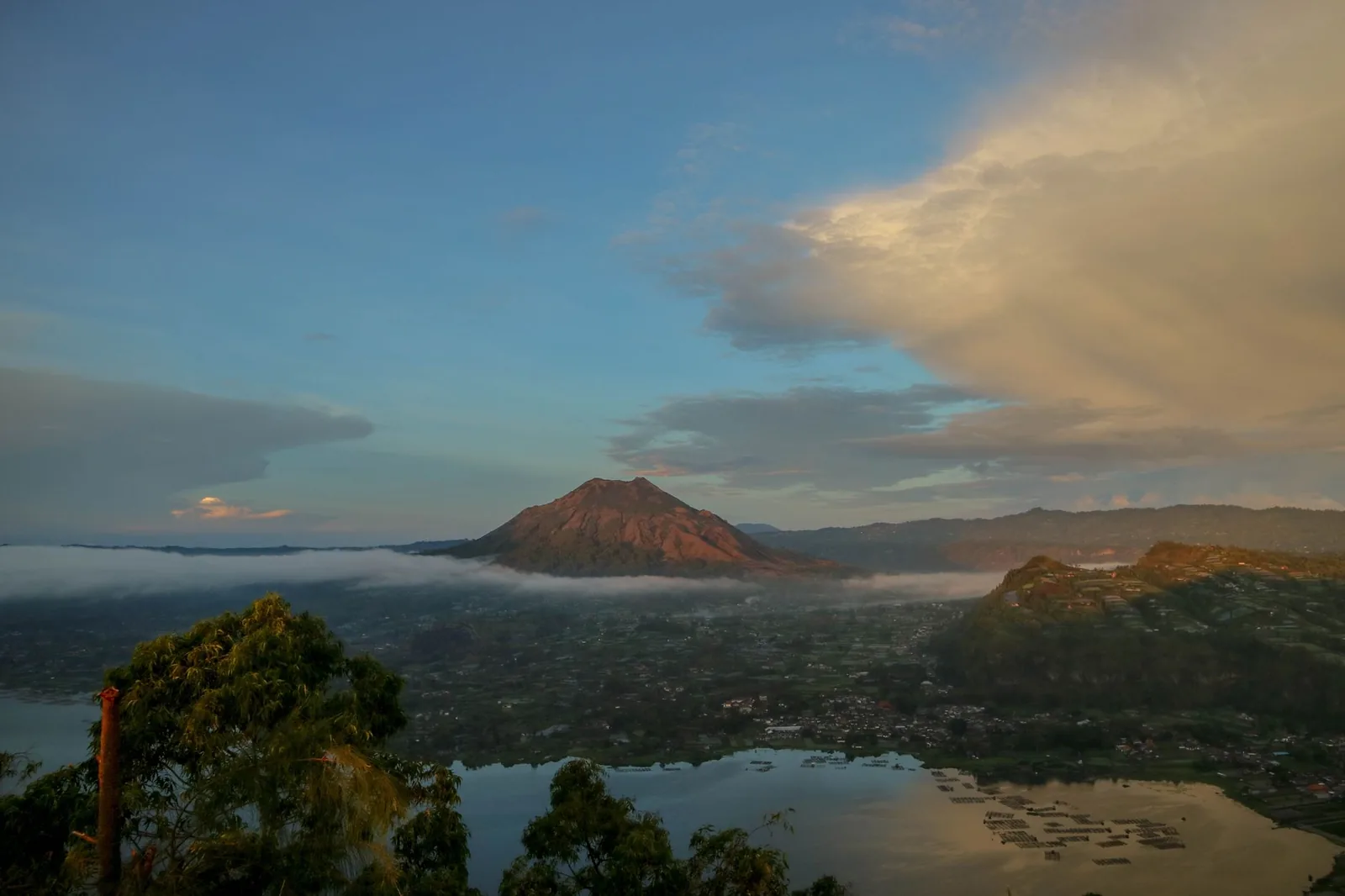
Dry season
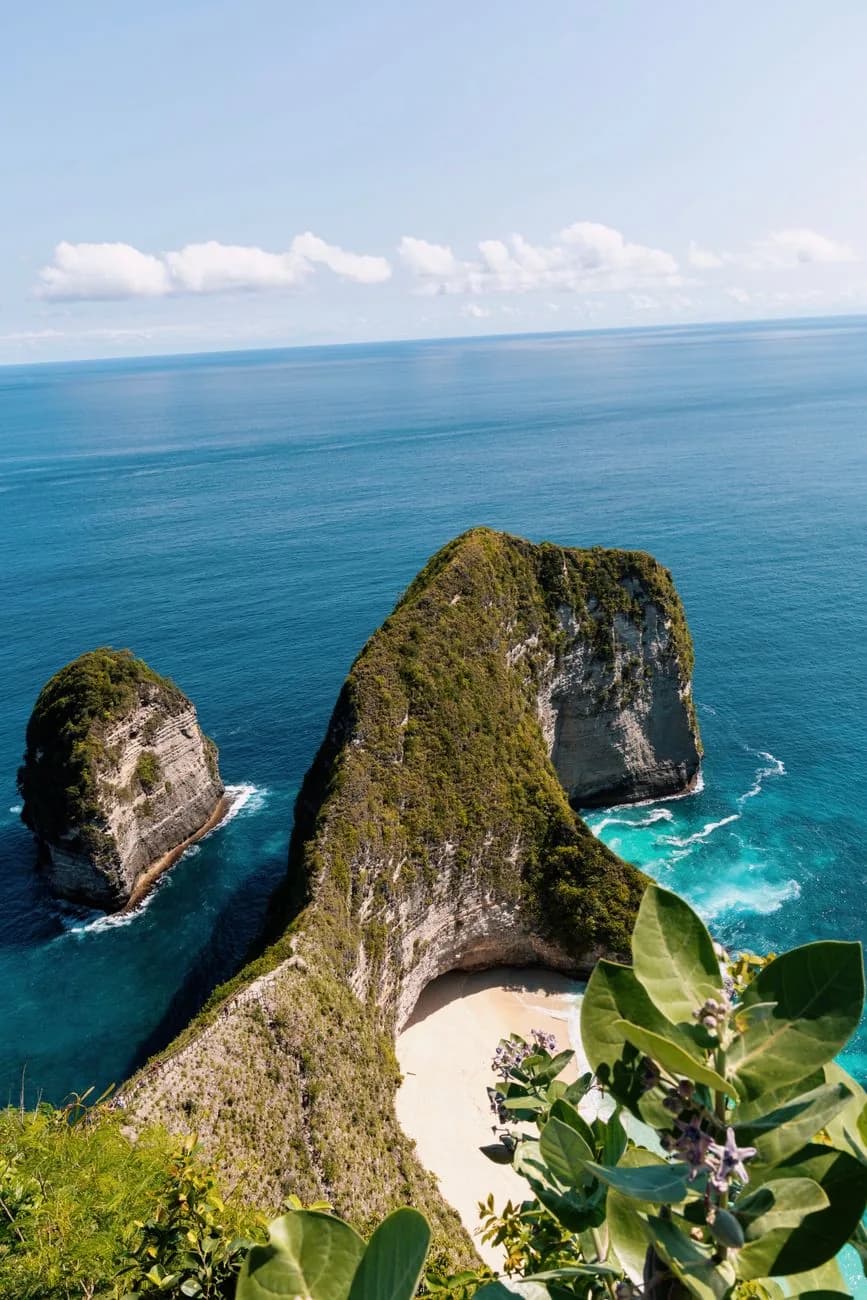
June
The haze lifts, prices follow
65 mm · 4 wet days · 30 °C
Dry season
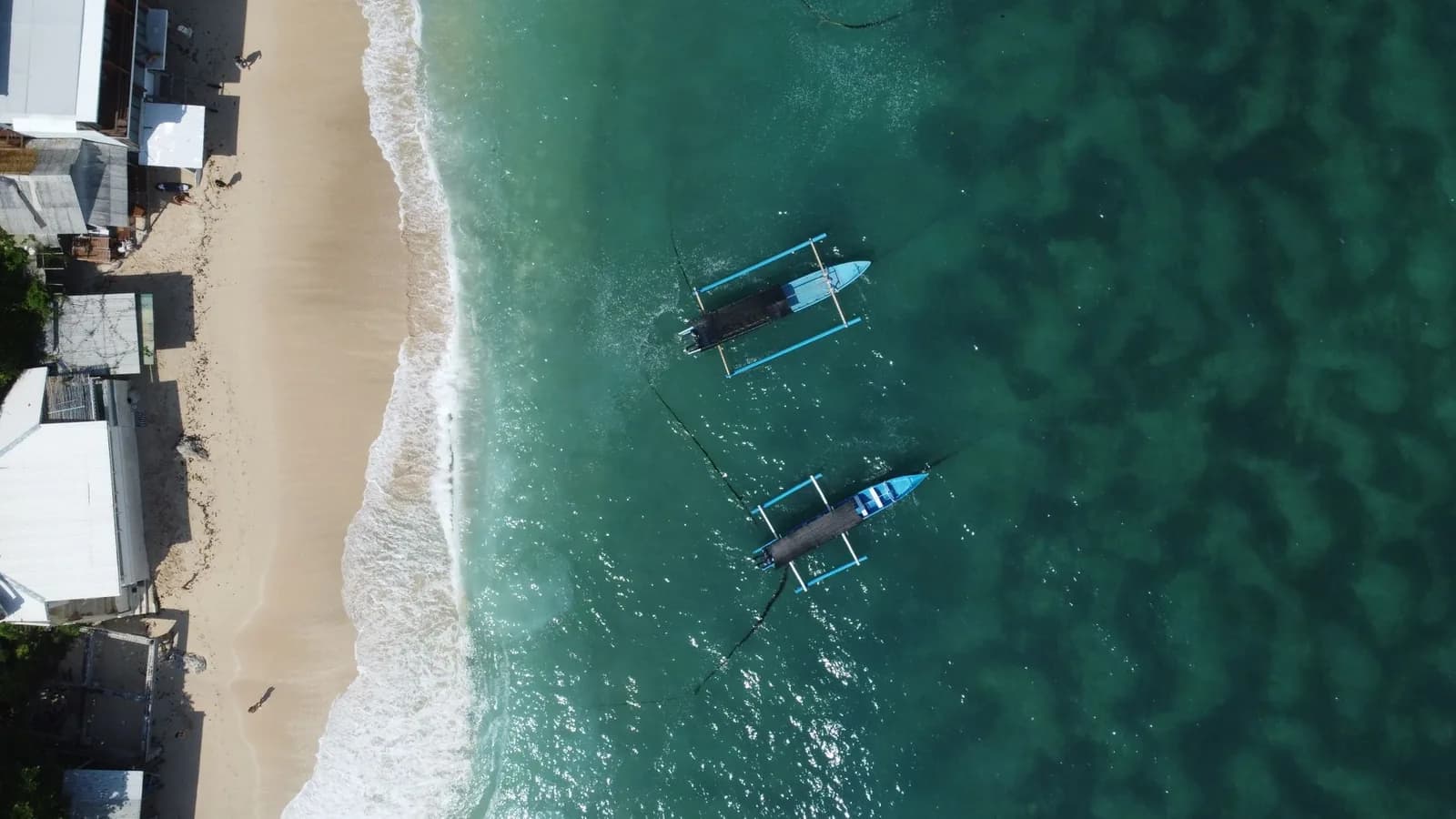
July
Perfect weather, peak crowds
50 mm · 3 wet days · 29 °C
Dry season
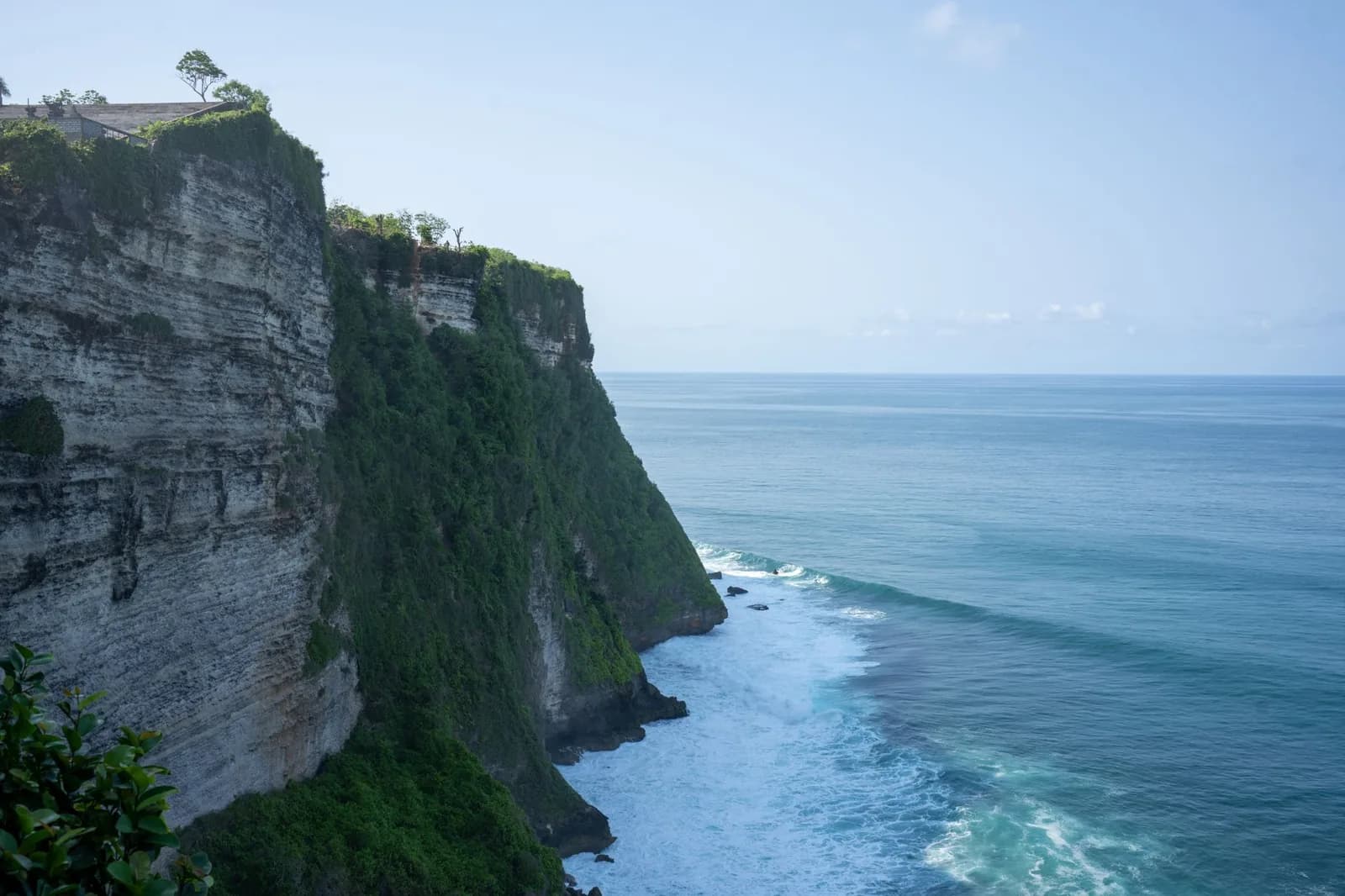
August
The clearest water of the year
30 mm · 3 wet days · 29 °C
Dry season
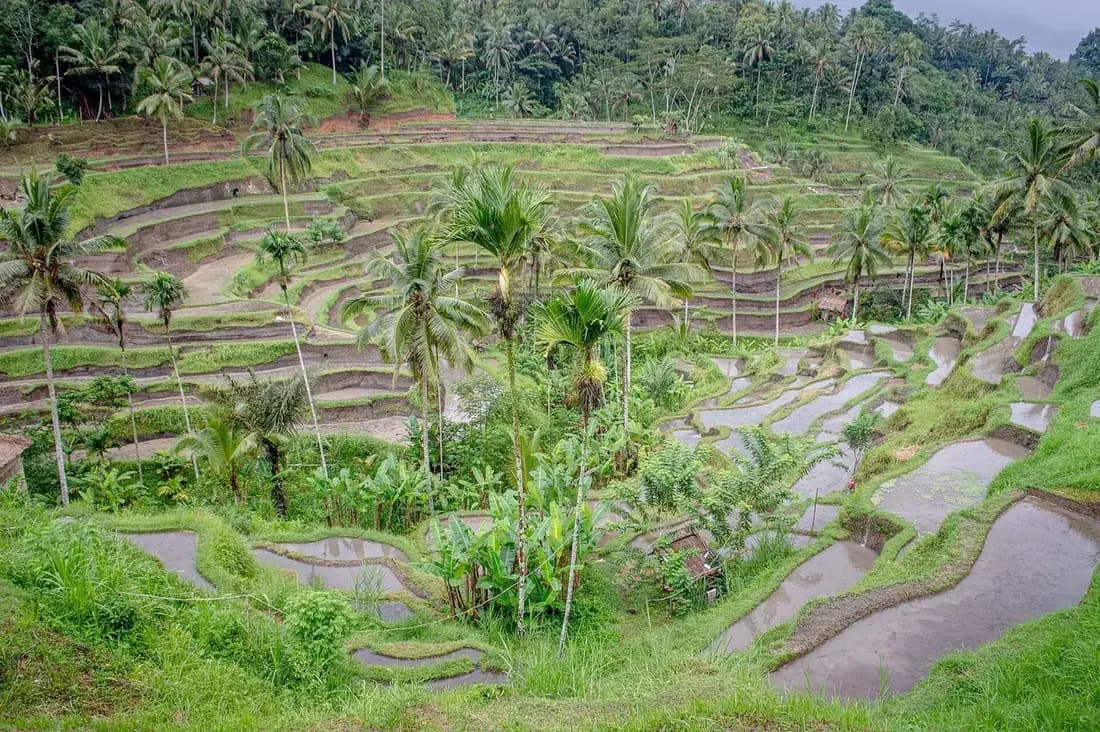
September
Three months in one, and one is quiet
45 mm · 4 wet days · 30 °C
Shoulder
October
Quiet sites, rates fall back
85 mm · 8 wet days · 31 °C
Wet season
November
Unpredictable, and cheap
150 mm · 14 wet days · 31 °C
Wet season
December
Two months in one, split at the 20th
250 mm · 18 wet days · 30 °C
Bali weather: common questions
Seasons, rain, temperatures, sea state and the months to avoid.
What is the best month to go to Bali?
What is the rainiest month in Bali?
Which month should you avoid in Bali?
Is it rainy season in Bali now?
Does it rain all day in Bali in the wet season?
How hot is Bali, in Fahrenheit?
Are boats to Nusa Penida cancelled because of the weather?
Does Bali get cyclones or typhoons?
When is the sea clearest for snorkelling and diving?
What the month decides
Bali waterfalls
Flow, clarity and whether you can swim, all of which turn on the season.
Nusa Penida day trips
The crossing that gets cancelled, and how to build a wet season trip around it.
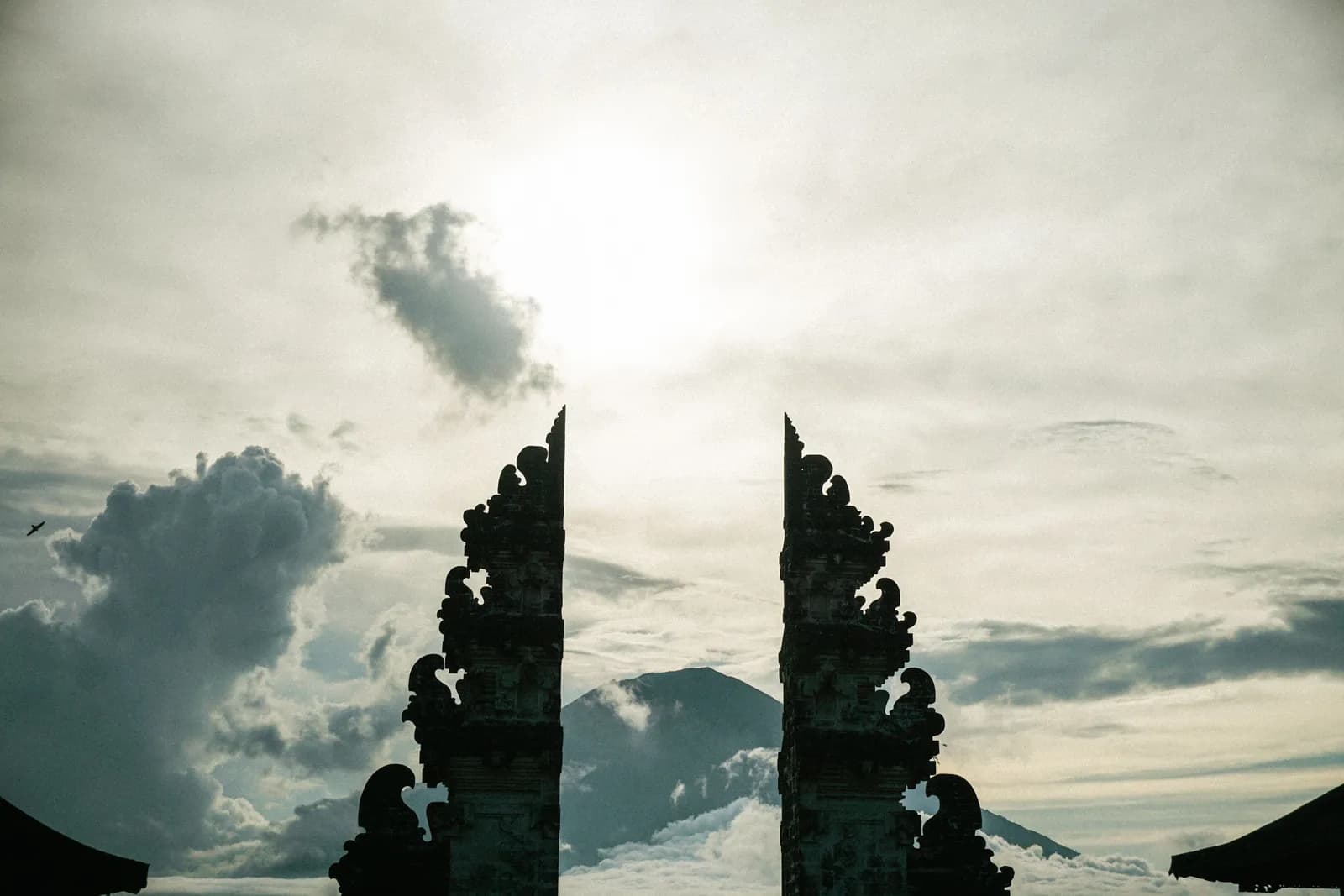
The Gates of Heaven
Whether Mount Agung is visible behind the gate depends entirely on the month.
Ubud
The base that handles a wet afternoon far better than the coast does.
Now pick the part of the island
The month tells you what the sky will do. These tell you where to spend the mornings it gives you, what each place is really like and what it costs.