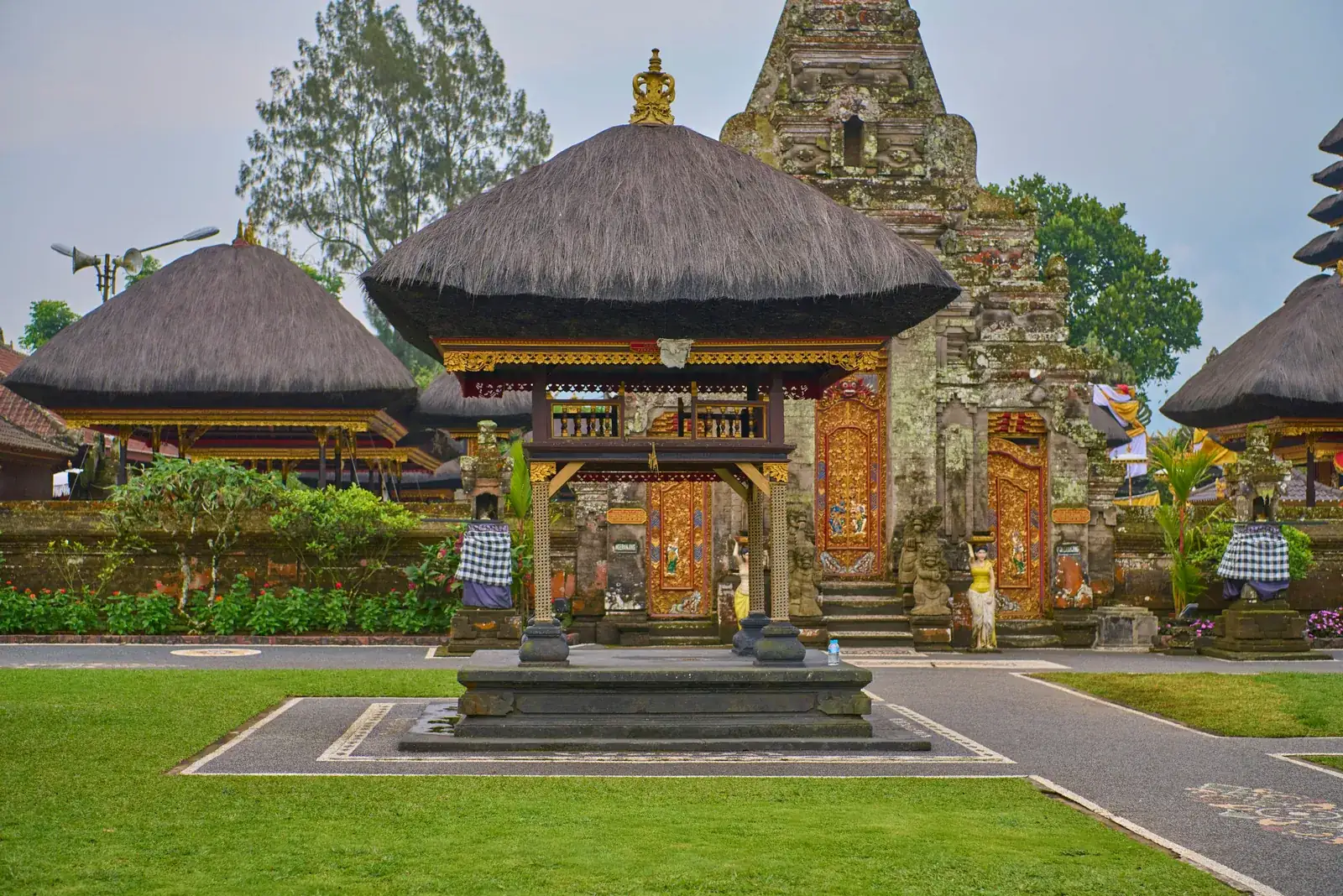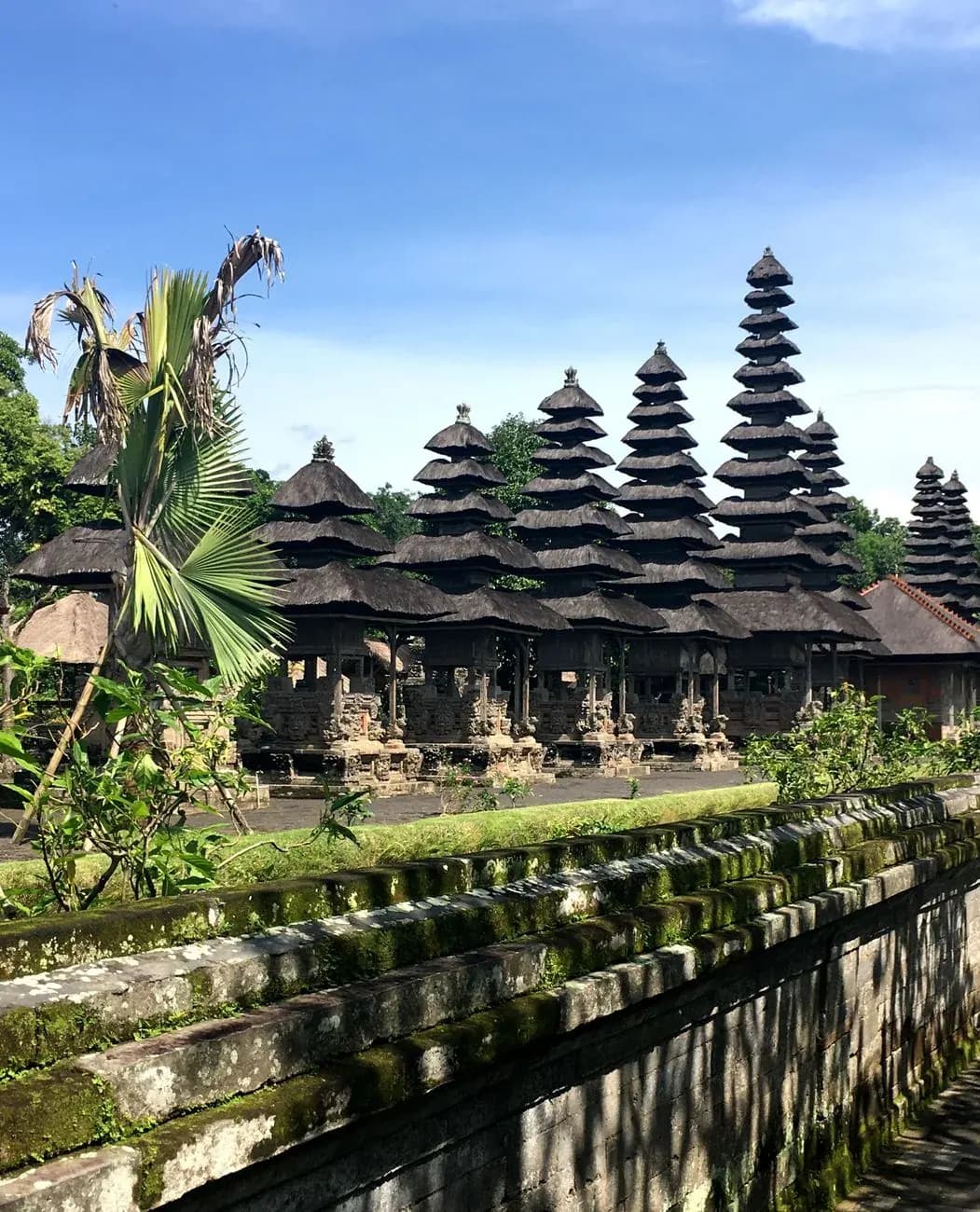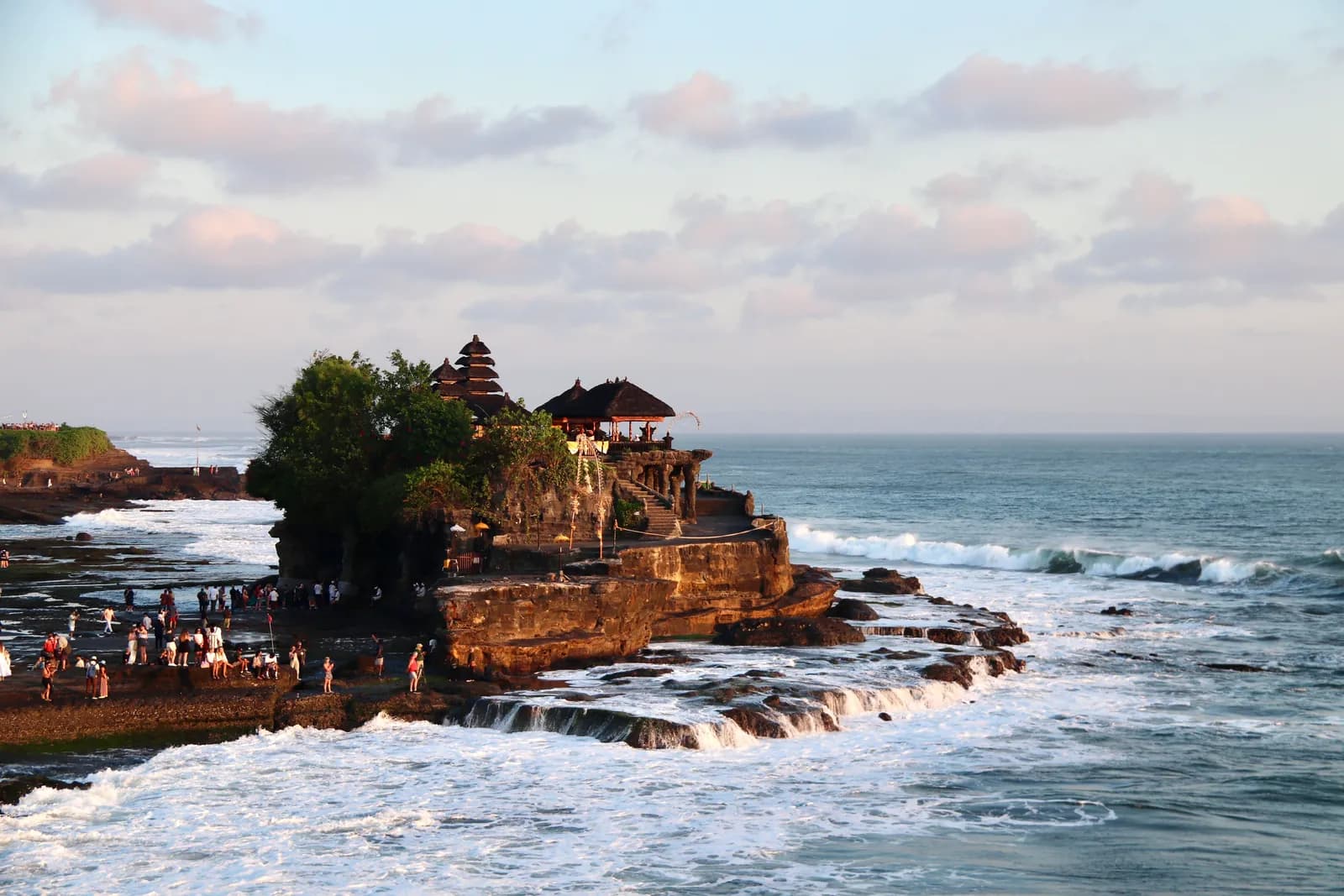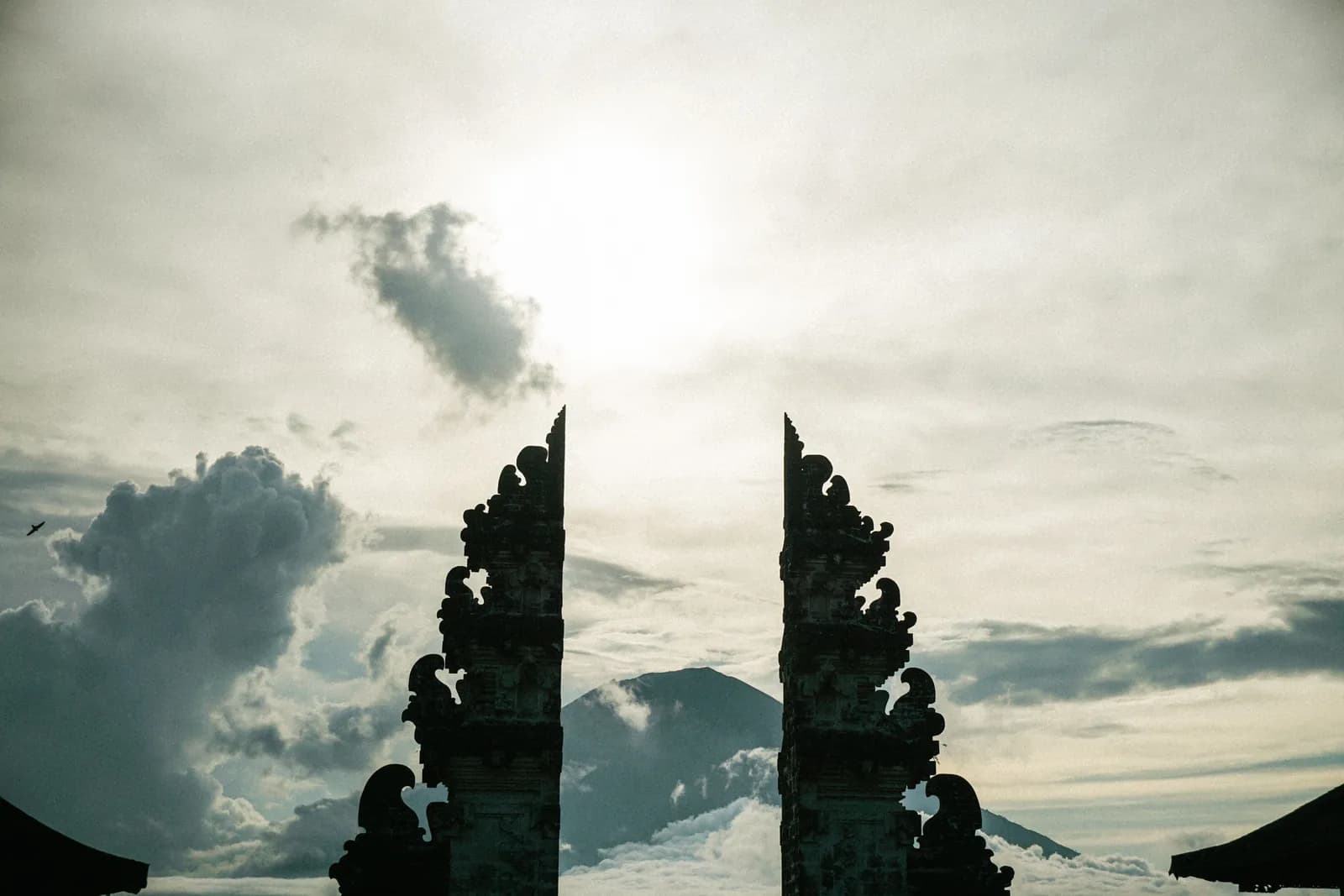
Ulun Danu Beratan sits at around twelve hundred metres on the shore of a crater lake, in a part of Bali that is cool, often misty and completely unlike the coast most visitors arrive from. It is dedicated to Dewi Danu, the goddess of the lakes, and it sits at the top of the irrigation hierarchy that waters the rice terraces spread out below it. It is also the single most reproduced structure in Indonesia, printed on the 50,000 rupiah note and on roughly every tourism poster the country has ever issued.
All of those photographs were taken on the same kind of morning, in the same few months of the year, from the same narrow spit of land. That is not a scandal. It is simply the piece of information nobody hands you before you spend a morning in a car, and it is the difference between walking away delighted and walking away wondering what the fuss was about.
This page is organised around the two variables that actually decide the visit: the level of the lake, which changes by month, and the hour you walk through the gate, which changes everything else. Everything after that is logistics.
The temple plus the rest of the highlands
Bedugul and north Bali day trips
- ✓Hotel pickup, which matters because there is no practical public transport to Bedugul
- ✓Almost all of them chain the temple with Handara, the twin lakes and a waterfall near Munduk
- ✓A driver who waits, so the day does not collapse if the weather makes you wait out a shower
- ✓Free cancellation on most listings if the forecast for the highlands turns
Affiliate link. Booking through GetYourGuide costs you nothing extra and supports the guide. Price and rating checked September 2026. Both move with season and demand.
On this page
The thing that decides your visit: how high the lake is
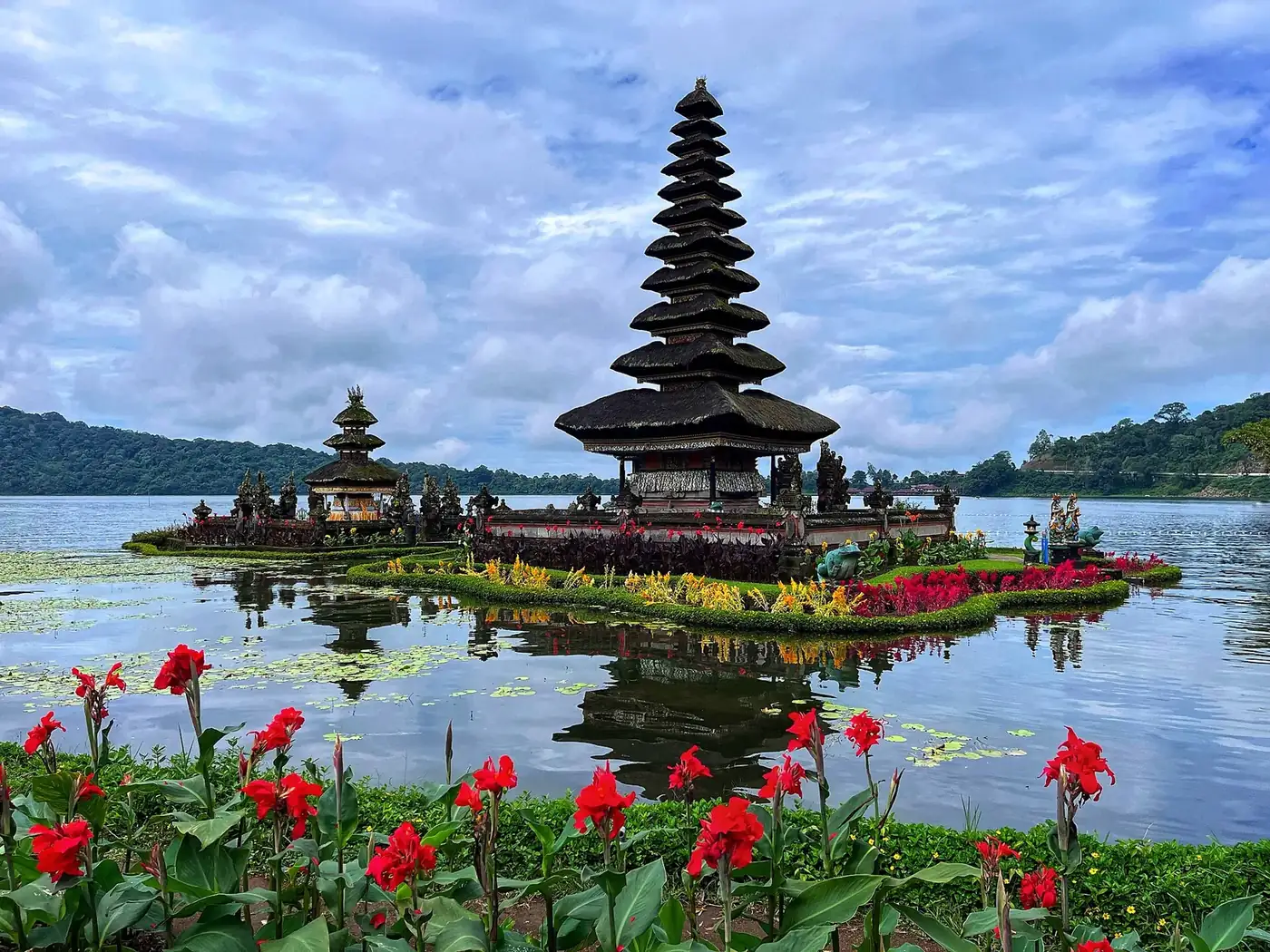
Every famous picture of this temple shows a tiered shrine apparently rising straight out of still water. That is a real view. It is simply not available all the time, and the calendar tells you when it is.
| Months | Water level | The floating photo | Crowds |
|---|---|---|---|
| January to February | Fullest of the year | The postcard, exactly as advertised | Lowest of the year |
| March to April | Still high, drying out | Full floating effect, clearer mornings | Building, not saturated |
| May to June | Dropping, still convincing | Illusion holds from most angles | High season starting |
| July to August | Well down | Workable from the water side only | Absolute peak |
| September to October | Lowest of the year | Not available | Easing off, still steady |
| November to December | Refilling, unevenly | A lottery | Quiet, then very busy at Christmas |
January to February: the lake is at its fullest
Peak of the wet season. The water reaches the retaining walls and the shrines genuinely sit in the lake. The eleven-tiered meru is surrounded on three sides and reflects when the surface is still, for the lowest visitor numbers of the year outside the New Year fortnight.
Visually the best month of the year and the one nobody books, because it rains. You will get the floating temple and a serious chance of getting soaked while you photograph it. Go at opening, before the daily downpour builds.
March to April: still high, and drying out
The rains taper off but the lake stays near its maximum, since the catchment takes weeks to drain. Expect the full floating effect, with a much better chance of a clear morning than in January, and crowds still building rather than saturated.
This is the sweet spot most people miss. High water from the wet season, drier mornings from the coming dry season, and the coaches have not fully returned. If you have any choice in the matter, this is when to come.
May to June: dropping, but still convincing
The lake has begun its slow fall. A band of the shrine platform starts to show above the waterline, but the illusion holds from most angles: shoot low and close to the shore and nobody will know the difference. Weather is reliable and crowds are growing, mid morning is already busy.
You will still come home with the photograph, and you will share the causeway with a lot of people while you take it.
July to August: the compromise months
Well into the dry season, water is visibly down and the base courses of the shrine platforms are exposed. The shot is workable from the water side but disappointing from the gardens, so the framing you choose starts to matter. This is also the absolute peak of the crowd, with coaches from mid morning without a break.
Nothing is wrong with the temple. The water simply is not where the marketing pictures put it. Arrive at opening or accept a lot of strangers in your frame.
September to October: the lowest water of the year
End of the dry season. The shoreline pulls back and the shrines can stand on exposed stone with mud and weed in front of them. The floating temple is not available. What you get is a handsome tiered shrine on a spit of land beside a lake, with crowds easing off after August but still steady.
This is where the disappointed reviews come from. The visit is still pleasant, the gardens are at their best in the dry, and the mountain air is glorious. Just do not drive two hours expecting the banknote picture, because it is not there in September.
November to December: refilling
The rains return and the lake climbs back through these two months, unevenly and unpredictably. The result is genuinely a lottery. Early November can still look like September, and late December usually looks like January. Crowds stay quiet until the Christmas fortnight, then get very busy.
This is the only period where checking recent photographs before you leave is not optional. Two weeks of heavy rain changes the entire look of the site, and two weeks without changes it back.
Lake Bratan fills the floor of an old volcanic caldera and it has no real outflow to speak of, so its level is a straight function of how much rain the catchment has taken in over the preceding weeks. Through the wet months the water climbs until it reaches the retaining walls and laps at the base of the shrines. Through the dry it falls, slowly and then noticeably, until the platforms the merus stand on are fully exposed and there is a strip of mud, weed or bare stone in front of them.
September and October are the low point, which is a cruel piece of scheduling given how many people visit Bali at the end of the dry season. January through April is the high point, which is when the least people come. The photographs that sold you the place were mostly taken in the second window and are mostly viewed by people planning a trip in the first.
None of this makes the temple less interesting. It makes it a seasonal sight, in the same way that a waterfall is a seasonal sight, and it deserves to be planned like one. If you can move your highland day within your trip, move it towards rain rather than away from it.
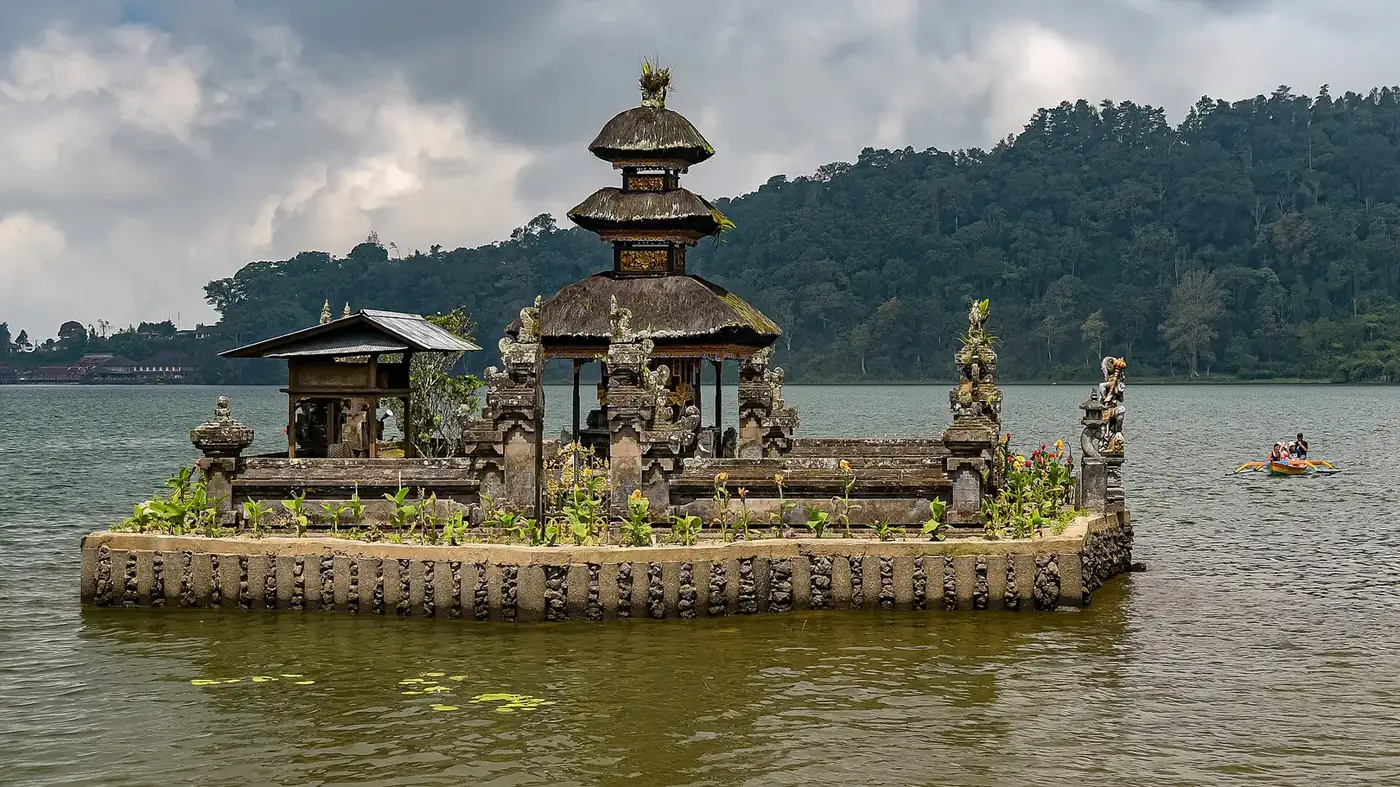
Photo Jorge Franganillo, CC BY 2.0
What you are actually looking at
The word temple undersells and oversells this at the same time. There are several shrines here, they are not all Hindu, and none of them can be walked into.
Photo LukeTriton, CC BY-SA 4.0
The tall meru on the water
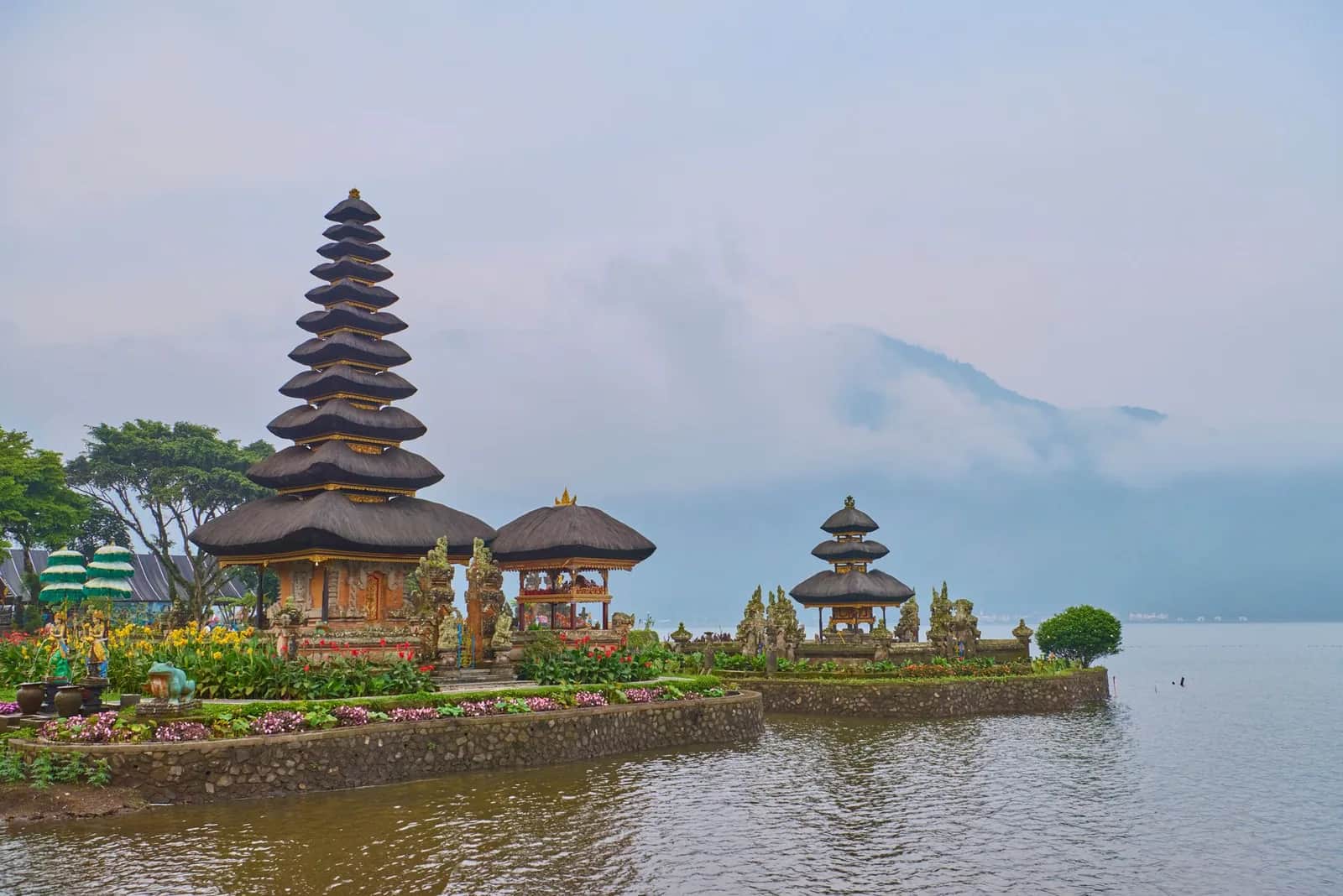
The structure everyone photographs is a meru, a pagoda-like tower of stacked thatched roofs whose count is a statement of rank. The tallest one here carries eleven tiers, which is the highest number normally used and marks a shrine of the first importance. It is dedicated to Dewi Danu and it stands on its own walled platform at the tip of a promontory.
A smaller meru sits further out on a separate islet, and depending on the water it may be entirely cut off. A third, lower structure and a thatched pavilion complete the group. From the shore they read as one composition, which is why almost every photograph is taken from one of two spots.
The Buddhist stupa nobody mentions
Set back in the gardens, on a stepped stone base among the conifers, there is a genuine Buddhist stupa with seated Buddha figures in niches around its drum. It is not decoration and it is not a modern addition for visitors: it reflects the long presence of Buddhist practice alongside Balinese Hinduism at this site.
Almost everyone walks straight past it towards the water, which makes it the quietest and oldest-feeling corner of the whole park. If you have twenty minutes and the causeway is jammed, spend them here instead.
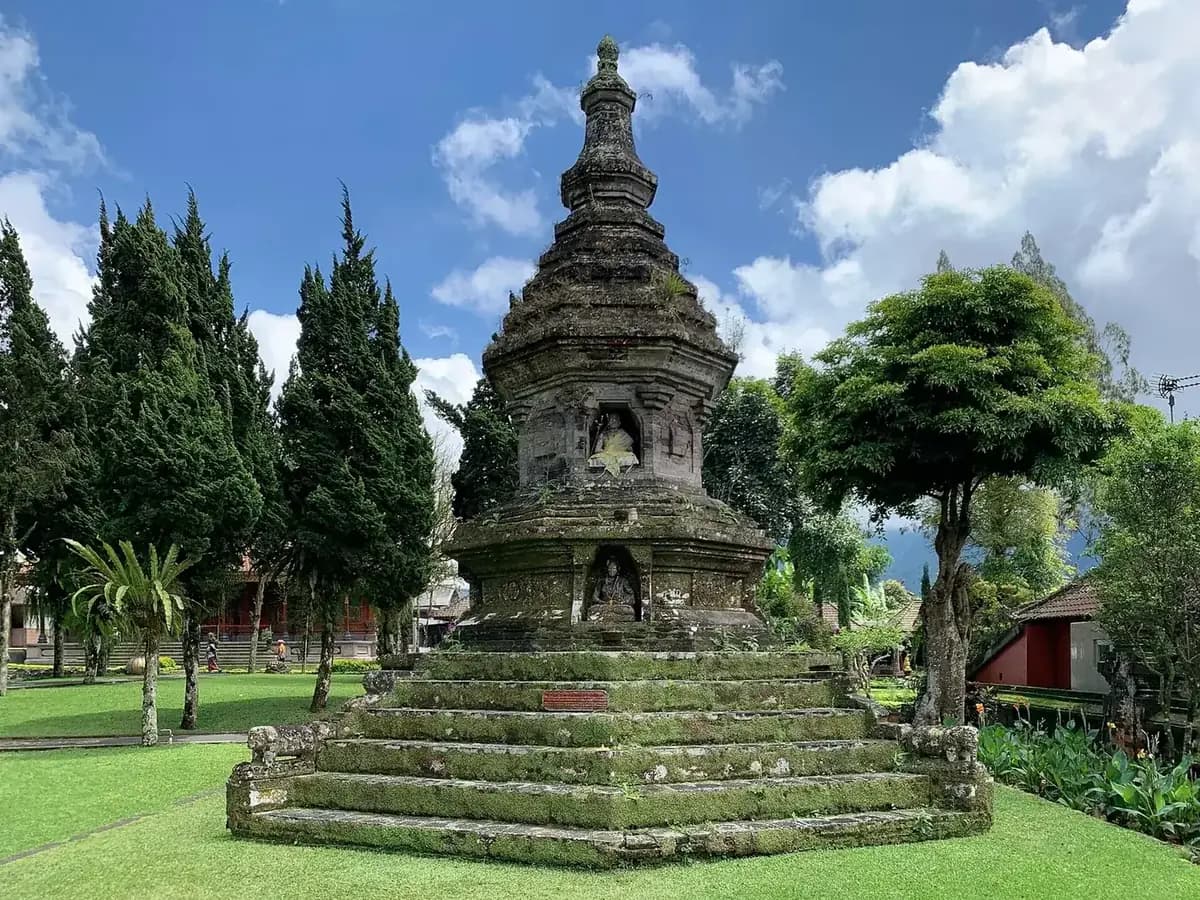
Photo Chainwit., CC BY-SA 4.0
Why a temple is standing in a lake in the first place
Bali grows rice on terraces that step down mountainsides for tens of kilometres, and the water for those terraces comes out of the crater lakes in the middle of the island. Sharing it is not a plumbing problem, it is a social one, and the Balinese solved it centuries ago with the subak, a network of farming cooperatives that allocate water by rotation and settle their disputes through the temple system rather than through an administration.
A lake temple sits at the top of that structure. Its priests preside over the source itself, and the offerings made here concern the water supply of every subak downstream. This is why the building is on the water rather than merely near it: the shrine and the resource are meant to be the same object. The temple complex is generally dated to the seventeenth century and associated with the kingdom of Mengwi, whose royal temple at Taman Ayun you pass on the road up from the south.
It is worth holding that in mind while you are standing in what is unmistakably a landscaped park with a car park attached. The gardens are recent and the coach traffic is recent. The reason there is anything here at all is that a large number of farmers a long way downhill needed a way to agree about water, and they still do.
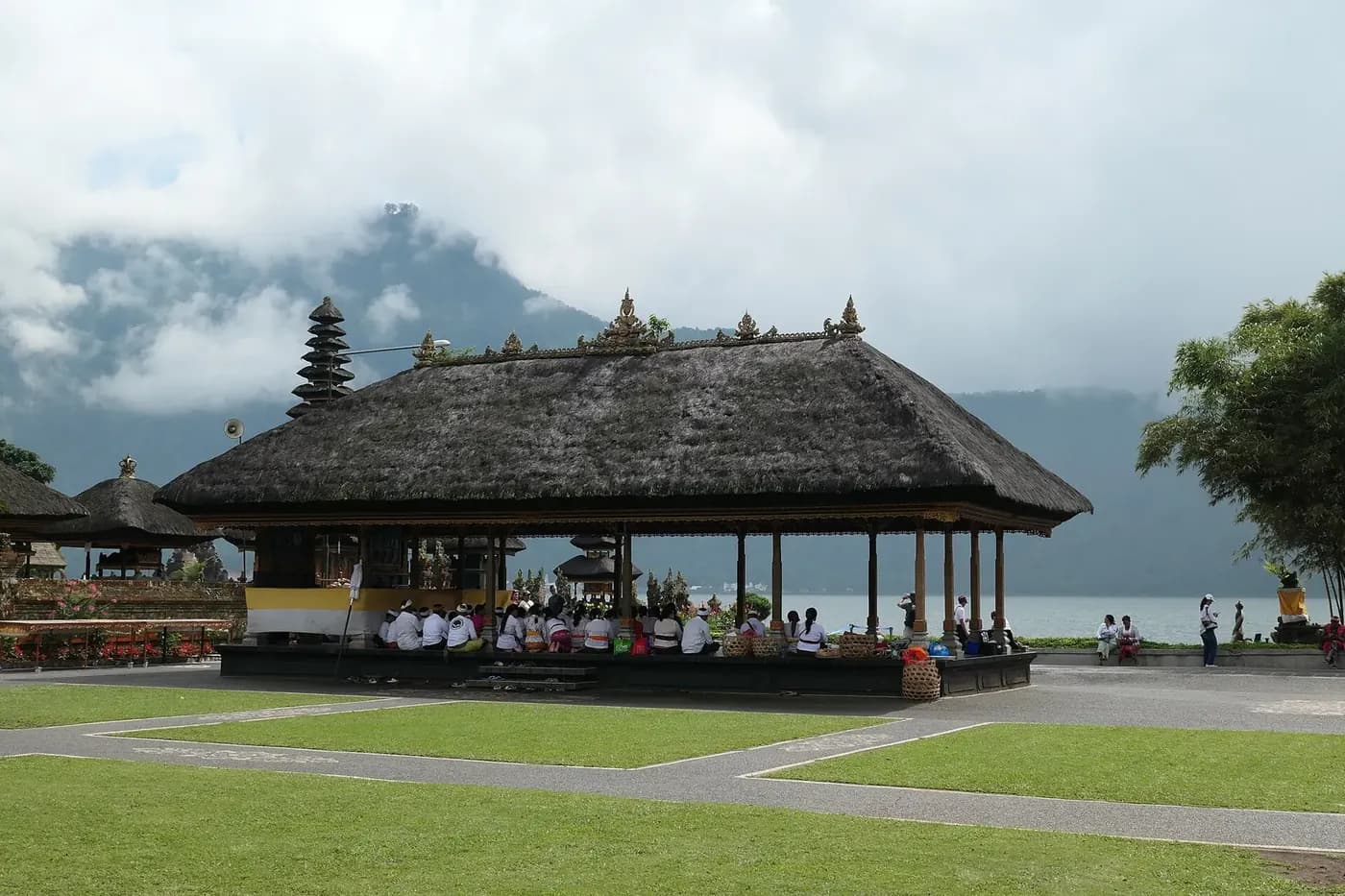
Photo Anandajoti Bhikkhu, CC BY-SA 4.0
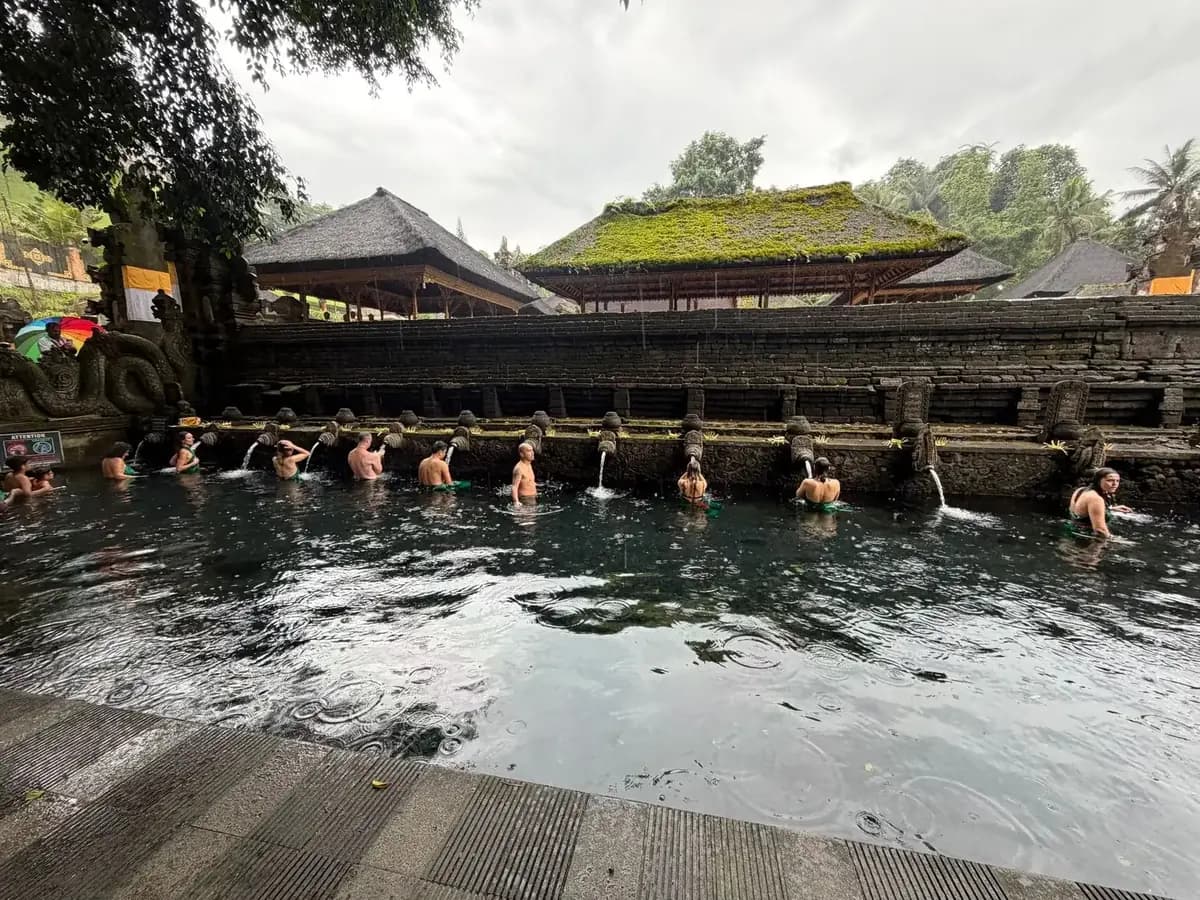
Bali has several of these water temples and they follow the same logic. If the subak side of the island interests you more than the photograph, the purification spring at Tirta Empul and the terraces at Tegallalang are the two other pieces of the same story, and both are closer to Ubud than they are to here.
The hour you arrive, and how cold it is when you do
Bedugul is high enough to have its own climate, and that climate runs to a daily timetable. Mist first, then a clear window, then cloud down on the rim by the afternoon.
| Arrival | Temperature | Sky over the lake | Crowds |
|---|---|---|---|
| Before 07:00 | 16 to 18 °C, damp | Mist on the water | Nobody, gate not open |
| 07:00 to 09:00 | 18 to 21 °C, warming fast | Mist lifting, volcanoes appear | A handful of people |
| 09:00 to 11:30 | 21 to 24 °C, pleasant | Usually clearest, flattest light | Coaches arriving continuously |
| 11:30 to 14:00 | 22 to 25 °C, muggy | Cloud building over the rim | Peak of the day |
| After 14:00 | 20 to 23 °C, often wet | Low cloud, frequent rain | Thinning out |
Before 07:00: not open yet, but worth the drive
You cannot get inside yet, but the lake road above the site gives you the mist over the water that half the famous photographs use as a backdrop. It is the coldest you will be on Bali outside a volcano hike, so bring a proper layer. Worth building into the drive rather than treating as wasted time.
07:00 to 09:00: the correct answer
Still water for the reflection, mist breaking up rather than blanketing, the gardens empty, and the light coming across the shrines instead of straight down on them. Only a handful of people are around, mostly photographers and worshippers. Bring a light jacket you can take off by nine, and closed shoes since the lawns are wet.
Everything this page recommends flows from arriving in this window.
09:00 to 11:30: the window every tour arrives in
On the way to or from Jatiluwih. The sky is usually the clearest of the day and the light the flattest, but coaches arrive continuously and the causeway backs up. Shirt sleeves are fine, and sun cream matters more than it looks since altitude burns faster than the beach.
The sky is often at its best and the site at its worst. You will queue to stand on the small viewing spit, and every frame will contain other people.
11:30 to 14:00: the mountain begins closing in
Cloud builds over the crater rim and the summits go first. Crowds peak for the day, along with the food stalls. Keep something rainproof in the bag from here on, whatever the morning looked like.
You still see the temple perfectly well, but the backdrop of ridge and volcano that gives the composition its depth is disappearing into grey. A functional visit rather than a memorable one.
After 14:00: no sunset worth planning around
Low cloud and frequent rain, sometimes the whole site inside a cloud. Crowds thin out, which is the one thing in its favour. Bring a rain jacket and an umbrella you do not mind losing to the wind.
There is no sunset here worth planning around, because the ridge behind the lake takes the sun early and the cloud usually gets there first. If this is the only slot you have, treat it as a garden visit with a temple in it and set expectations accordingly.
The temperature is the part almost nobody plans for. Bedugul runs eight to ten degrees cooler than the southern beaches, all day, every day. That is not a detail: it is the difference between a pleasant morning and standing in a car park in a wet singlet waiting for the shower to pass. People come up from Seminyak in beach clothes because it was twenty-nine degrees when they left, and they regret it within ten minutes of getting out of the car.
The other half of the altitude is rain. The highlands take considerably more of it than the coast and they take it year round, including in the middle of the so-called dry season. A shower here does not mean the day is finished. It usually means twenty minutes under the roof of a warung. But it does mean carrying something waterproof rather than assuming Bali weather is Bali weather.
What all of that adds up to is a simple rule. Leave early enough to be at the gate when it opens, take a jacket you would take to a European spring morning, and treat anything after midday as a consolation prize.
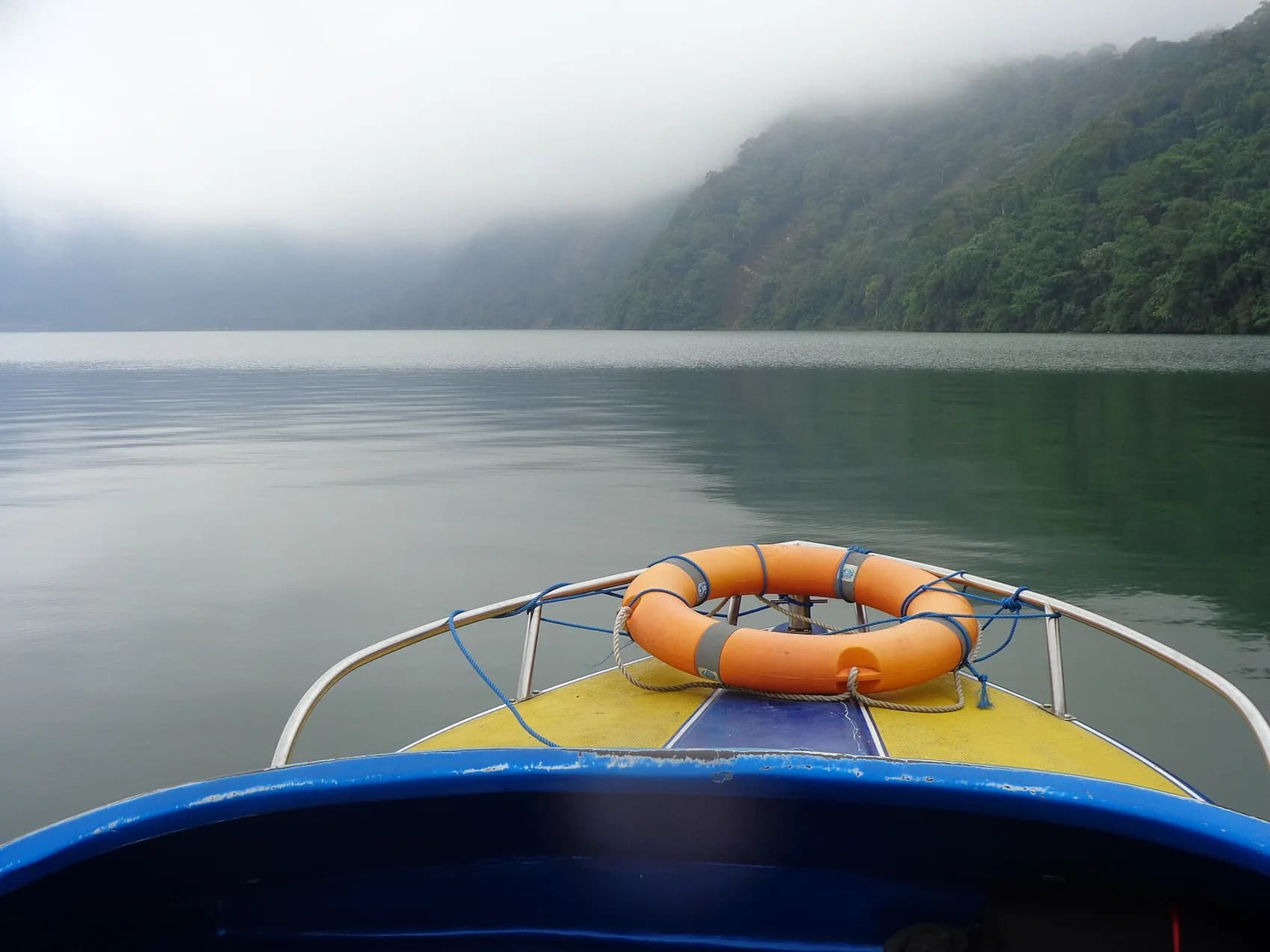
Photo Susan.wibowo, CC BY-SA 4.0
What the rest of the site is like
The shrines occupy a small fraction of what you pay to enter. The rest is a large, well-kept public garden, and how you feel about that determines how long you stay.
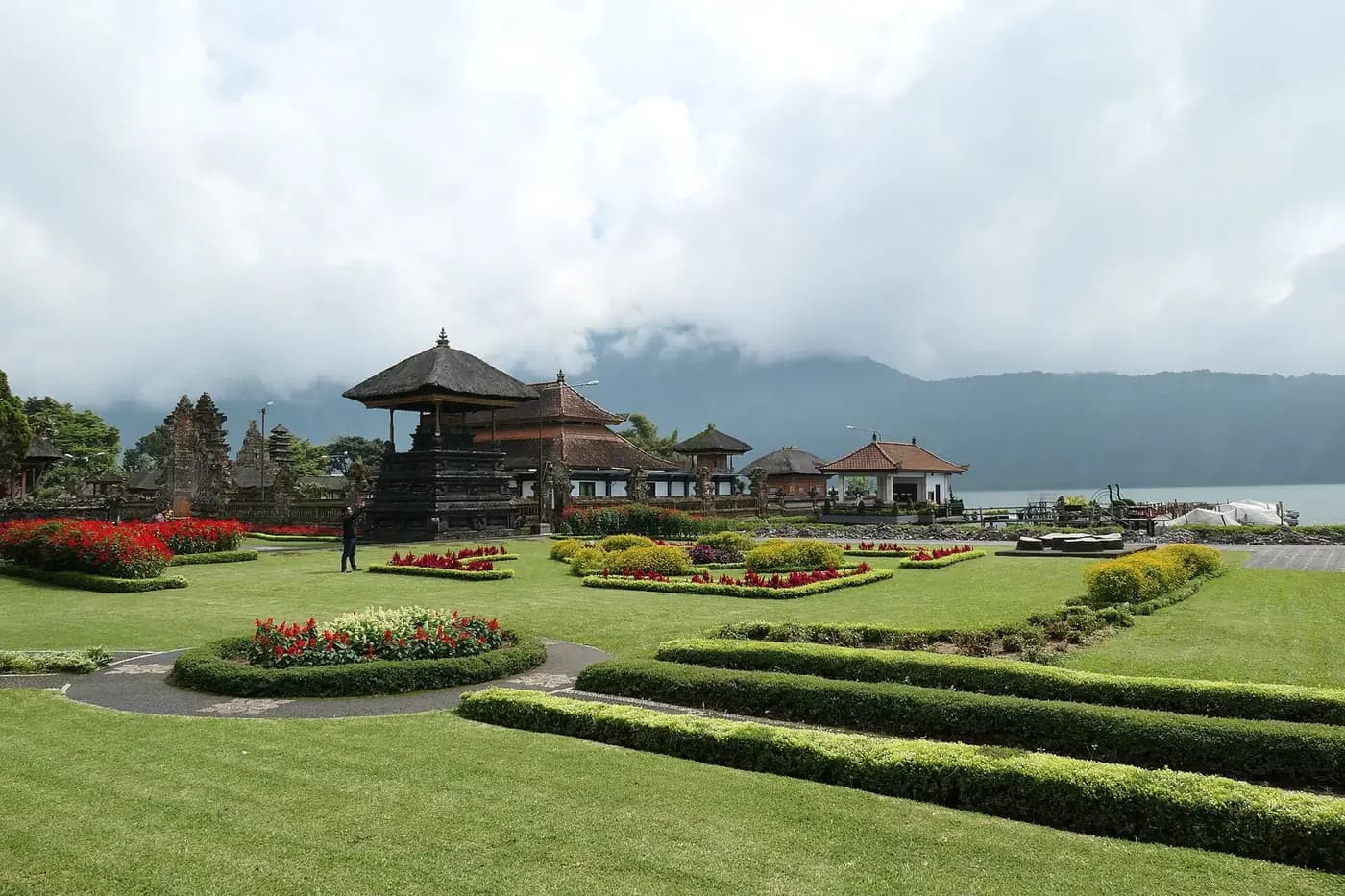
Photo Anandajoti Bhikkhu, CC BY-SA 4.0
The gardens
Lawns, hedges and flowerbeds running down to the water, genuinely well maintained and pleasant to walk. In the cool highland air it feels closer to a botanical garden than a temple compound, and the real botanical garden is next door.
The commerce
Stalls, food, boat hire, costume rental and paid photo opportunities including a couple of captive animals. It is a managed attraction rather than a contemplative site, and pretending otherwise sets you up to be annoyed.
The props
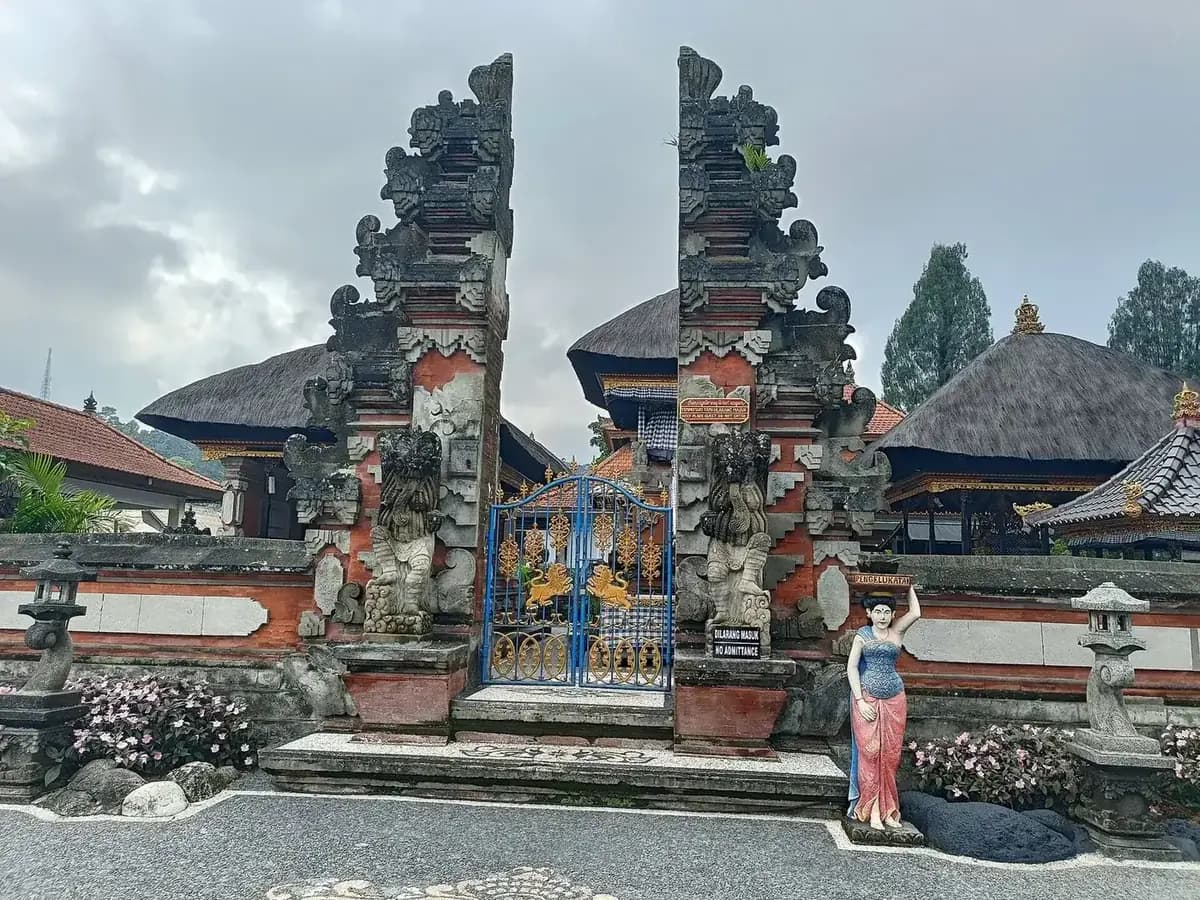
A large blue naga fountain, painted statues, a giant frog and various other things placed for photographs. They are cheerful, they are everywhere in the frame, and they are the main reason wide shots of the gardens rarely look like the marketing.
Going out on the water
The one thing here worth paying extra for is a boat. Traditional outriggers and small speedboats run from a jetty a short walk from the shrines, priced per boat rather than per head for a loop out onto the lake. Fifteen or twenty minutes is the standard trip and you will be asked for a good deal more than the going rate at first, which is normal and negotiable.
It matters because it gives you the only angle the coaches never get. From the water the shrines separate out properly, the crowd on the causeway drops out of frame, and even at a low lake level the composition works because you are shooting from the waterline rather than down at it. On a still morning it is also the quietest twenty minutes available anywhere in Bedugul.
Swimming is a different matter and is not done. The lake is sacred, it is cold, it is deep and there is nowhere sensible to get in. If you want water you can actually be in, the highland option is the waterfalls on the way down towards Munduk, most of which have pools.
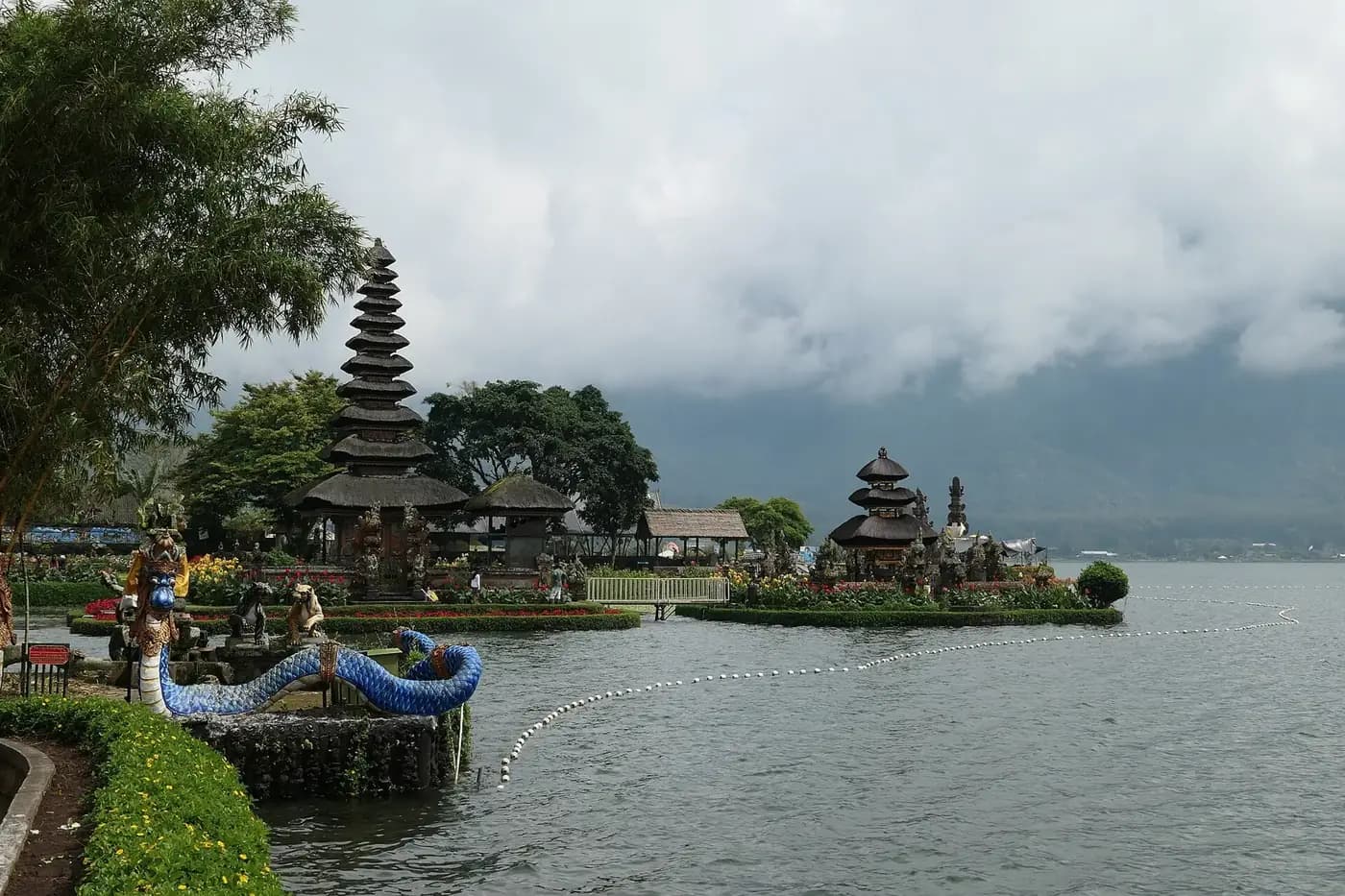
Photo Anandajoti Bhikkhu, CC BY-SA 4.0
Getting to Bedugul
There is one road up from the south and one down to the north coast, and both of them climb. The drive is the real cost of this temple.
| Coming from | Drive | Leave by, for opening | Obvious stop on the way |
|---|---|---|---|
| Seminyak, Canggu, Kuta | 2 h to 2 h 30 | 04:30 to 05:00 | Taman Ayun at Mengwi |
| Ubud | 1 h 30 | 05:30 | Jatiluwih, on the western loop |
| Lovina and the north coast | 1 h to 1 h 15 | 06:00 | Git Git and the Munduk waterfalls |
| Munduk | 30 to 40 min | 06:20 | The twin lakes viewpoint |
| Sanur or Nusa Dua | 2 h 30 to 3 h | 04:00 to 04:30 | Taman Ayun, or nothing at that hour |
Recommended: car with driver
Hired by the day, not by the trip, and the standard way Balinese distances are covered. The driver waits, adjusts the route if the weather turns, and knows where the twin lakes viewpoint actually is.
Easiest: organised day trip
Chains the temple with Handara, the twin lakes and a waterfall. Efficient, and it arrives in the mid-morning window with everybody else, which is the trade you are making.
Experienced riders: scooter
A beautiful ride and a cold, wet one. The climb is long, the road is busy with trucks, and afternoon rain on a mountain descent is how people get hurt. Fine from Munduk, ambitious from the south.
Not really: Grab, Gojek, public transport
Ride-hailing will take you up and then leave you with no way back, because there are almost no drivers waiting in Bedugul. Buses exist on the Denpasar to Singaraja route and are not a realistic plan.
Coming up from the south, the stop that makes the day work is Taman Ayun, the moated royal temple of the Mengwi kingdom, about forty minutes back down the same road. It opens early, it is almost never busy, and it is listed by UNESCO as part of the subak cultural landscape. Doing the two in one morning is the most efficient temple pairing available on Bali and it puts Ulun Danu Beratan in its historical context on the way.
What it costs, and how long you need
The entrance is trivial. Everything around it accumulates, and the transport dwarfs the lot.
| What you pay for | Detail | Order of magnitude |
|---|---|---|
| Entrance to the temple grounds | One ticket covers the whole garden park. Adults and children are priced separately and the rate is set locally. | ≈ $5 |
| Parking | Charged at the gate and separate from the ticket. Cars and scooters pay different rates. | ≈ $0.60 to $1 |
| Boat on the lake | Traditional outrigger or small speedboat, priced per boat for a loop past the shrines rather than per person. | ≈ $8 to $17 |
| Photograph in Balinese dress | Costume rental stands near the entrance, with the sash, headdress and a photographer if you want one. | ≈ $6 to $12 |
| Driver for the day, from the south | A full day car with driver, since Bedugul is a round trip of four hours of driving minimum. | ≈ $40 to $60 |
All of it is cash, none of it is posted on a board in a way you can rely on, and every figure above moves. Treat them as orders of magnitude, carry small notes, and budget slightly more than you expect. The pattern holds across the island: the ticket is nothing and the accumulation is not, and here the driver is by far the largest line.
The temple
25 to 30 minutes. The causeway, the two viewpoints, the shrines from outside their walls. There is no interior to work through.
The gardens
Another 30 minutes for a full lap including the stupa, which most people skip and which is the best quiet corner on the site.
With a boat
Add 30 to 40 minutes including the haggling and the wait for the boat to fill. Worth it for the angle you cannot get from land.
Door to door
Half a day from Ubud, a full day from the southern beaches once you add the stops that make the drive worth doing.
Hours, dress code and behaving well
Hours
Roughly 07:00 to early evening, with the ticket office closing before the grounds. Nowhere authoritative publishes this and it shifts for ceremonies. Arriving in the first two hours after opening is the version of the day that works.
Dress
Looser than at most temples, because the bulk of the site is a public garden. Shoulders and knees covered is the sensible standard, a sarong if you approach the inner enclosures, and a warm layer regardless of any of that.
Bring
Cash in small notes, a rain layer whatever the season, closed shoes for wet grass, and a 50,000 rupiah note to hold up against the view. Sun cream too: the altitude burns faster than the beach does.
Where the line is
This site is more relaxed than a working sanctuary like Besakih, and considerably more relaxed than the purification pools at Tirta Empul. People picnic on the lawns and children run about. Nobody is going to object to a photograph.
The line is the enclosures. Do not climb the low walls, do not step over a gate that is closed, and do not put yourself in front of an altar for a picture. Balinese custom also asks women who are menstruating not to enter temple grounds. Nobody checks, and visitors are trusted to respect it themselves.
Drones and ceremonies
Drone flying over the shrines is restricted and enforcement varies by who is on the gate that day. During a ceremony it is simply not acceptable, and ceremonies here are frequent enough that you should expect to run into one.
If a ceremony is underway, the practical response is to stand back and watch it rather than to work around it. It is the one thing at this site that no photograph on the internet has already shown you, and it is the reminder that the place is still doing the job it was built for.
What else is up here, and why you should use it
An hour at a temple does not justify four hours in a car. The highlands around Lake Bratan do, and everything below is within forty minutes.
If it is specifically the water setting you came for, the other one on the island is Tirta Gangga, a royal water garden in the far east. It is a garden you walk through rather than a shrine you look at across a lake, and it is a different day entirely.
The Handara gate (10 minutes)
A split gate on the drive of a golf resort, framing a mountain road. Entirely a photo stop, there is a queue and a fee, and it takes fifteen minutes. Go because it is on the way, not because it is a destination.
Bali Botanic Garden (next door)
Hundreds of hectares of highland forest, orchid houses and a bamboo collection, with a treetop adventure park inside it. Enormously underused compared with the temple across the road, and the best rainy morning option in Bedugul.
Buyan and Tamblingan (20 minutes)
The twin lakes, seen from a roadside viewpoint on the ridge above them. Quieter, wilder and considerably less commercial than Bratan. Tamblingan still has canoe trips run by the villages on its shore.
Munduk and its waterfalls (40 minutes)
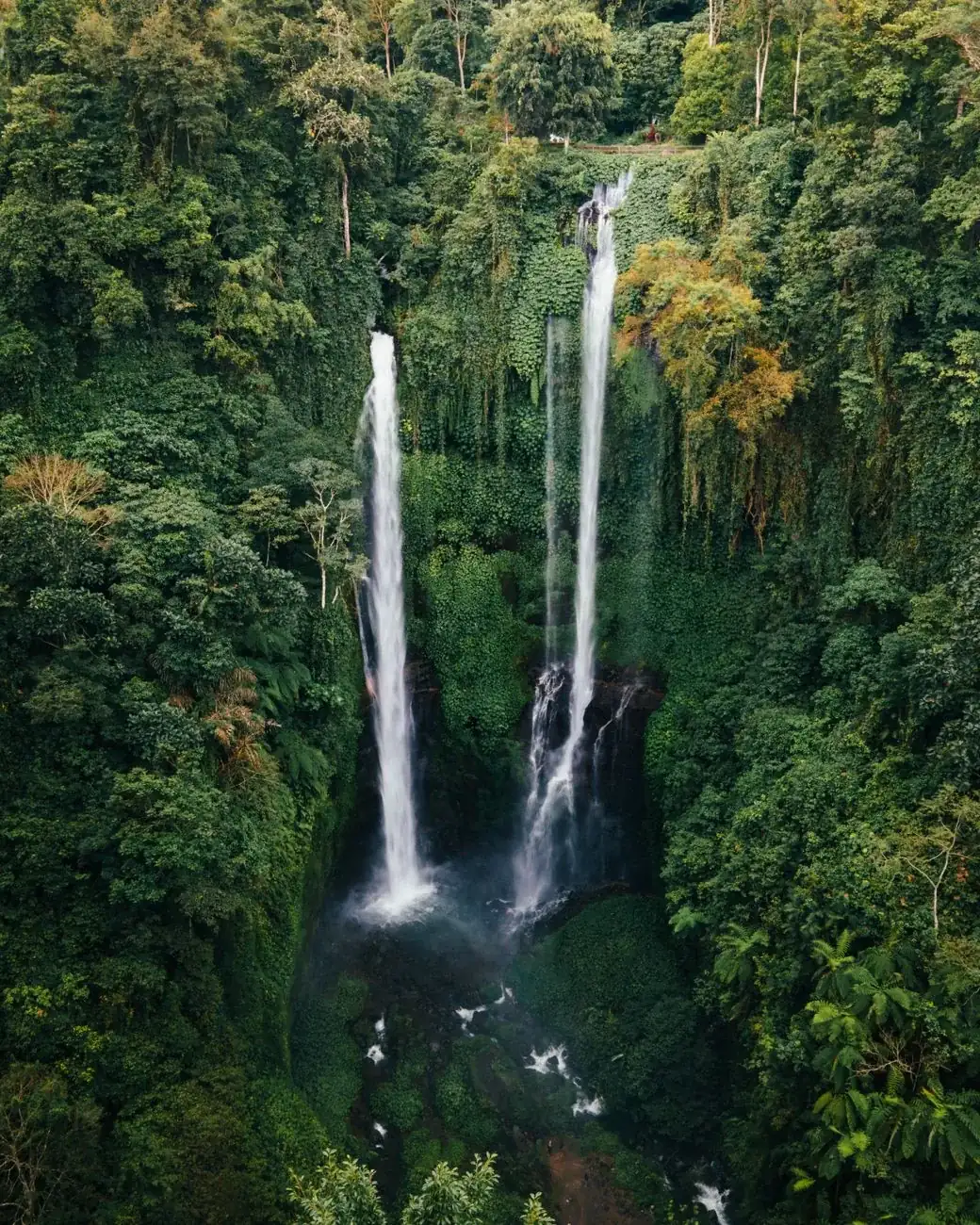
A coffee-growing village on a ridge with a cluster of tall waterfalls below it. If you want to turn a temple stop into a proper day in the highlands, this is where you go, and it is where you should sleep if you can.
Jatiluwih (50 minutes)
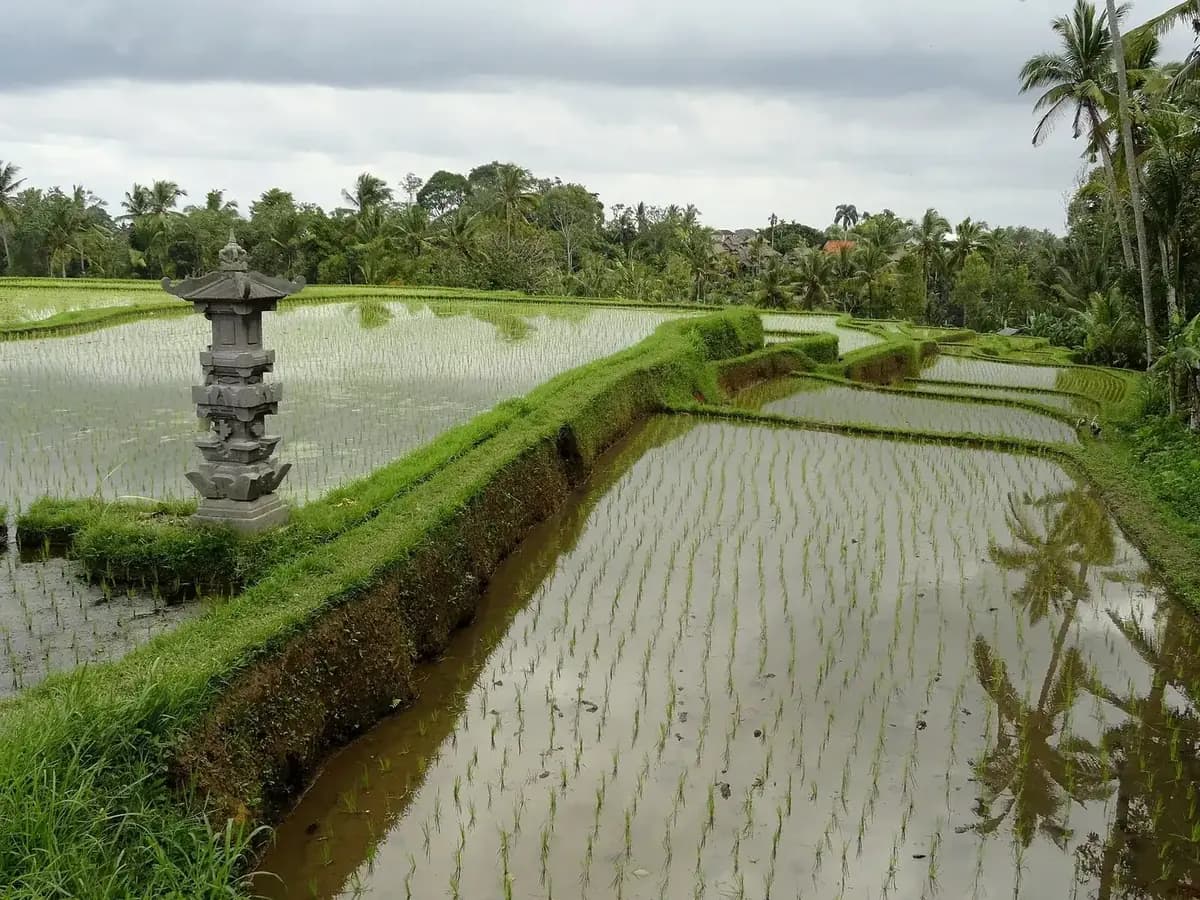
The great subak terraces on the flank of Batukaru, on the western loop back down towards the coast. The counterpart to the lake temple: this is the water arriving where it was always meant to go.
Bedugul market and strawberries (on the roadside)
The altitude grows things the rest of Bali cannot, and the roadside is lined with produce stalls and strawberry farms. A cheap, genuinely local ten minutes and the best place up here to eat something that is not fried.
So is it worth it
Go if
- You are travelling between December and June, when the lake is high and the shrines sit in water.
- You can be at the gate within an hour of opening, which requires leaving the coast in the dark.
- You are making a day of the highlands rather than driving up for one building.
- You are heading to or from the north coast anyway, in which case it is directly on your route.
Skip it if
- You are in Bali for four or five days and based in the south. The drive eats a disproportionate share of the trip.
- It is September or October and recent photographs show the shrine on dry stone.
- You can only get there in the afternoon, when the cloud is down and the light is gone.
- You came for temples rather than scenery, in which case Lempuyang and Besakih are the more serious sites.
The honest summary is that Ulun Danu Beratan is a genuinely beautiful thing in a genuinely beautiful place, badly served by its own fame. Nothing about it is fake and nothing about it is a tourist trap in the way people mean when they use the phrase. It is a working water temple in a spectacular caldera, with a garden around it and a car park beside it, and the internet has promised you a version of it that exists for part of the year and part of the day.
Turn up in that window and you will understand immediately why the country put it on the money. Turn up outside it and you will have driven two hours to look at a nice pagoda by a lake, which is a perfectly pleasant thing to have done and not what you were sold. The whole of this page exists to put you in the first group. For the rest of the island's sanctuaries and how they compare, the Bali temples guide sorts them by what they actually offer rather than by how often they are photographed.