Kopi luwak is coffee made from beans that have passed through an Asian palm civet, and in Bali it comes with a stop. The plantations line the roads north of Ubud towards Kintamani, with more on the Bukit and in the Tabanan highlands, and nearly every day tour pulls into one. Entry is free, a tray of ordinary coffees and teas is often free, and the cup of luwak is the paid extra.
What the guide will not dwell on is the cage at the start of the walk. Two independent studies of Bali's tourist plantations, in 2016 and 2024, found that none of the civets they examined were kept in acceptable conditions. This page covers that first, then what the visit costs and how to do it without paying for the part you would rather not fund.
Your day, your stops, including whether the coffee is one of them
Free cancellationUbud one-day private tour with a driver-guide
- ✓A private driver-guide for the day, so the itinerary is yours rather than the one with a commission built into it
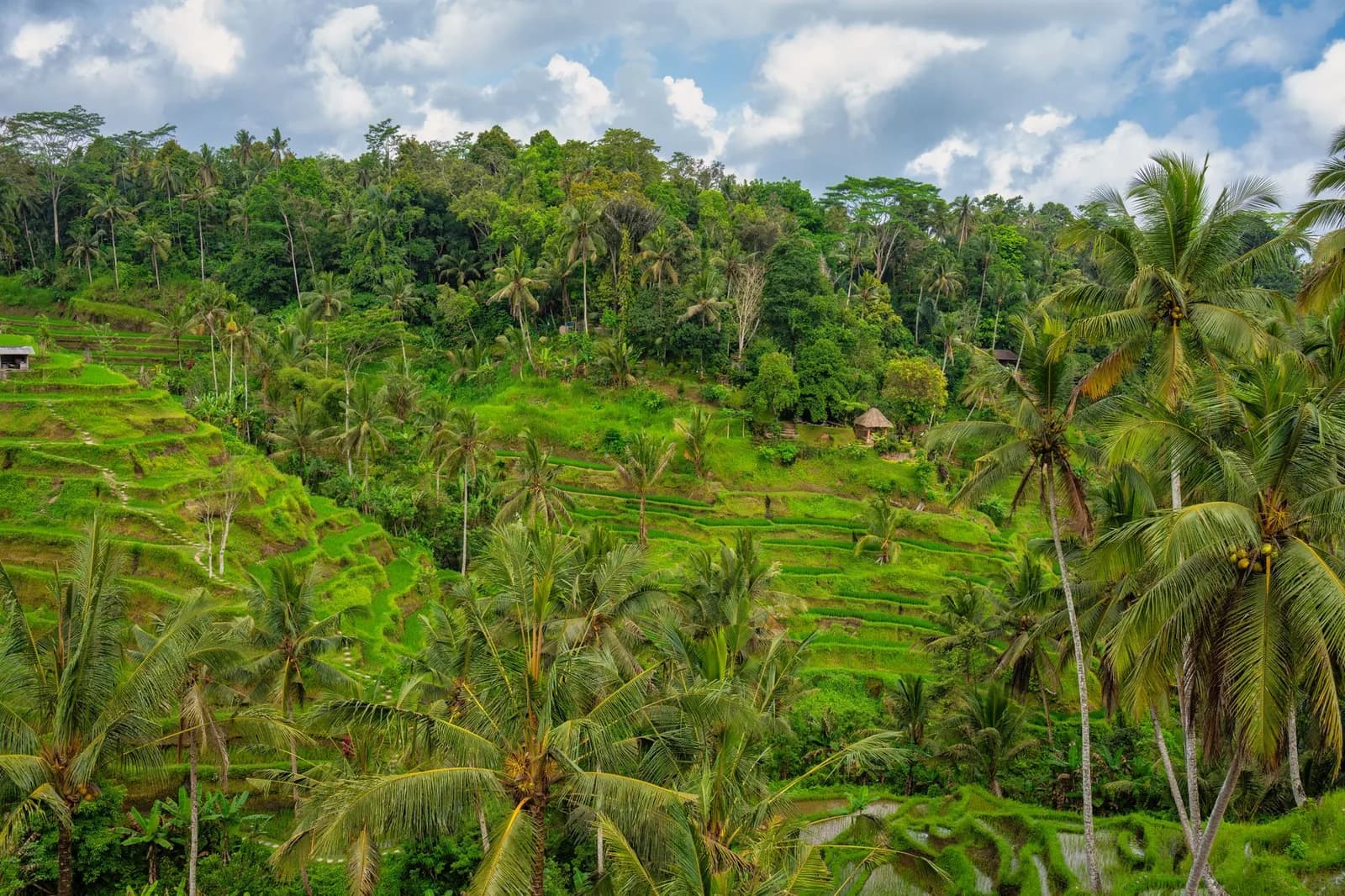
- ✓Tegallalang, Tirta Empul and the Kintamani rim fit in one loop, and a plantation is a stop you can ask for or skip
- ✓Picking the plantation yourself means you can choose a free tasting and leave out the paid luwak cup
- ✓Free cancellation on most listings, useful if rain moves the Kintamani views to another day
Affiliate link. Booking through GetYourGuide costs you nothing extra and supports the guide. Prices are indicative and vary by option and season.
On this page
What is kopi luwak (civet coffee)?
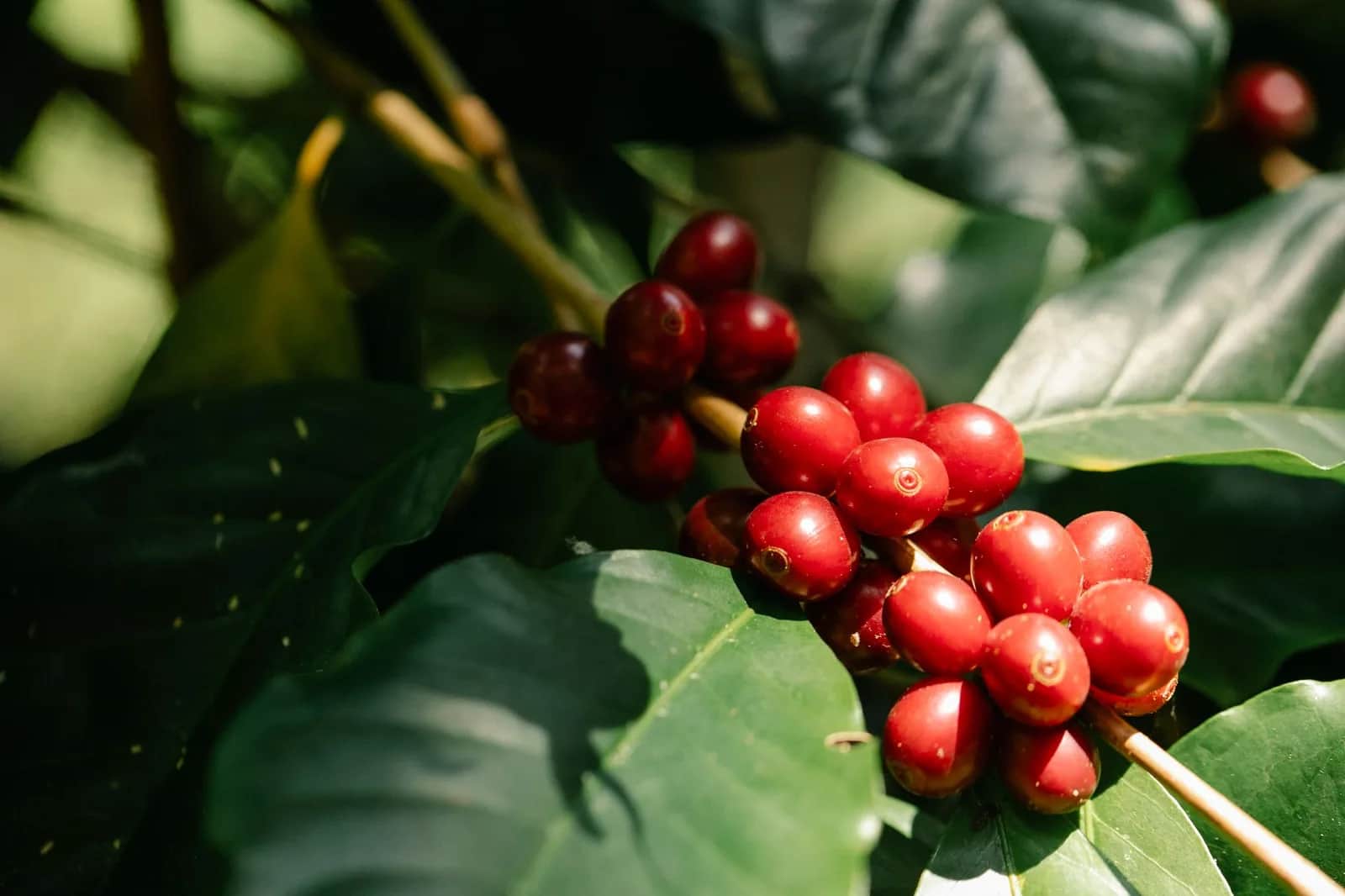
Kopi luwak is not a coffee variety but a process. A civet eats ripe coffee cherries, digests the fruit and passes the beans, which are collected, washed, dried and roasted. Kopi is the Indonesian word for coffee and luwak the local name of the animal, pronounced roughly KOH-pee LOO-wahk. The English trade name is civet coffee.
It is produced on Sumatra, Java, Bali and Sulawesi, as well as in Timor-Leste and the Philippines. The story told at every plantation is that Dutch-era farm workers, barred from picking the crop for themselves, collected the beans the civets left behind. Treat it as the popular version: it is what sells the cup.
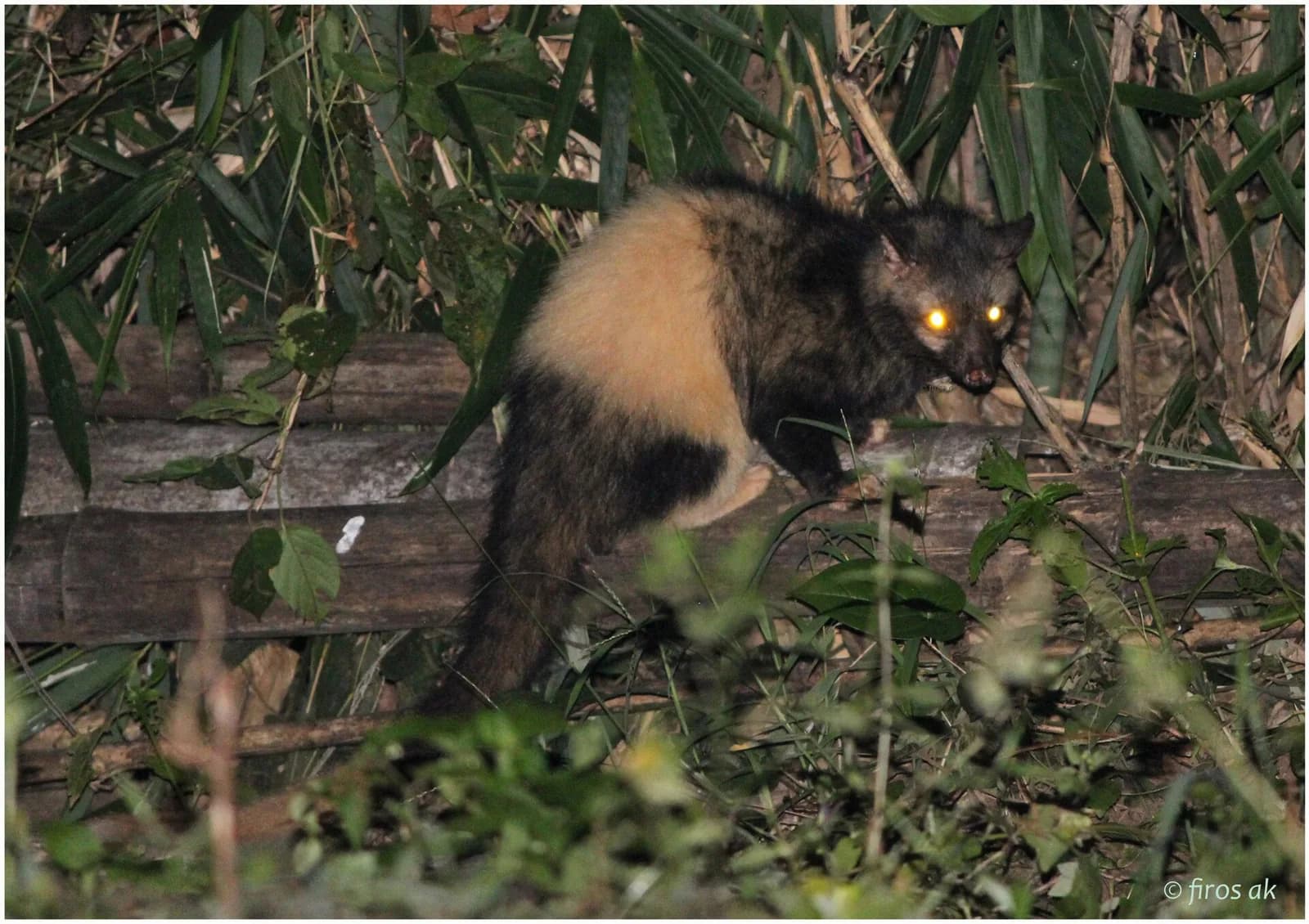
The kopi luwak animal: the Asian palm civet
The animal is the Asian palm civet, Paradoxurus hermaphroditus, a cat-sized, long-tailed mammal that is often called a cat but is not one. It is nocturnal and solitary, it eats fruit, insects and small animals, and it lives wild across Bali, including in gardens and on the coffee slopes themselves.
It is listed as Least Concern by the IUCN. That sounds reassuring and it is part of the problem: a common animal is a cheap one, and Indonesia's capture quotas for civets are widely reported to be ignored.
Does kopi luwak taste better than normal coffee?
Mostly no. Digestion strips some acidity and bitterness, which makes the cup smoother, but it also takes away the fruit and brightness that specialty roasters look for. An Australian roaster, Fish River Roasters, wrote that it had tasted kopi luwak three times and found it lived up to its reputation once. Neil D'Cruze, the Oxford researcher behind the 2016 Bali study, calls the idea that civets pick the best cherries and improve them in the gut a gimmick.
What you taste at a plantation is usually a cup brewed from pre-ground beans with sugar on the side, which tells you very little about the beans.
Is kopi luwak ethical? The cages on the Kintamani road
For the version sold to visitors in Bali, the evidence says no. What matters is where the beans come from. A wild civet eating cherries on a slope at night is one thing, and a civet caught in the wild and kept in a cage to be fed cherries in bulk is another. The plantations on the tour route show the second.
What the 2016 and 2024 studies found in Bali
In 2016, researchers from World Animal Protection and Oxford University's WildCRU published the first welfare study of civet coffee tourism in Bali (Carder et al., Animal Welfare). They visited 16 plantations and examined 48 civets, all wild-caught. None of the plantations met basic welfare requirements. The animals were in small cages, often on wire floors, with little light, little or no social contact, a diet of almost nothing but coffee cherries, and frequently no clean water. Being nocturnal, they were also being kept awake through the day by tour groups.
A second team went back in 2024 (Lewis-Whelan et al., Journal of Applied Animal Welfare Science). They assessed 99 civets across 29 Bali plantations, plus 136 civets in eight wildlife markets. The average plantation scored 2.2 out of 4 and no civet had all five basic welfare freedoms. The markets supplying them were selling an estimated 400 to 800 civets a year at around US$57 (C$80) each. The authors note that the large commercial farms that never see a tourist are probably worse.
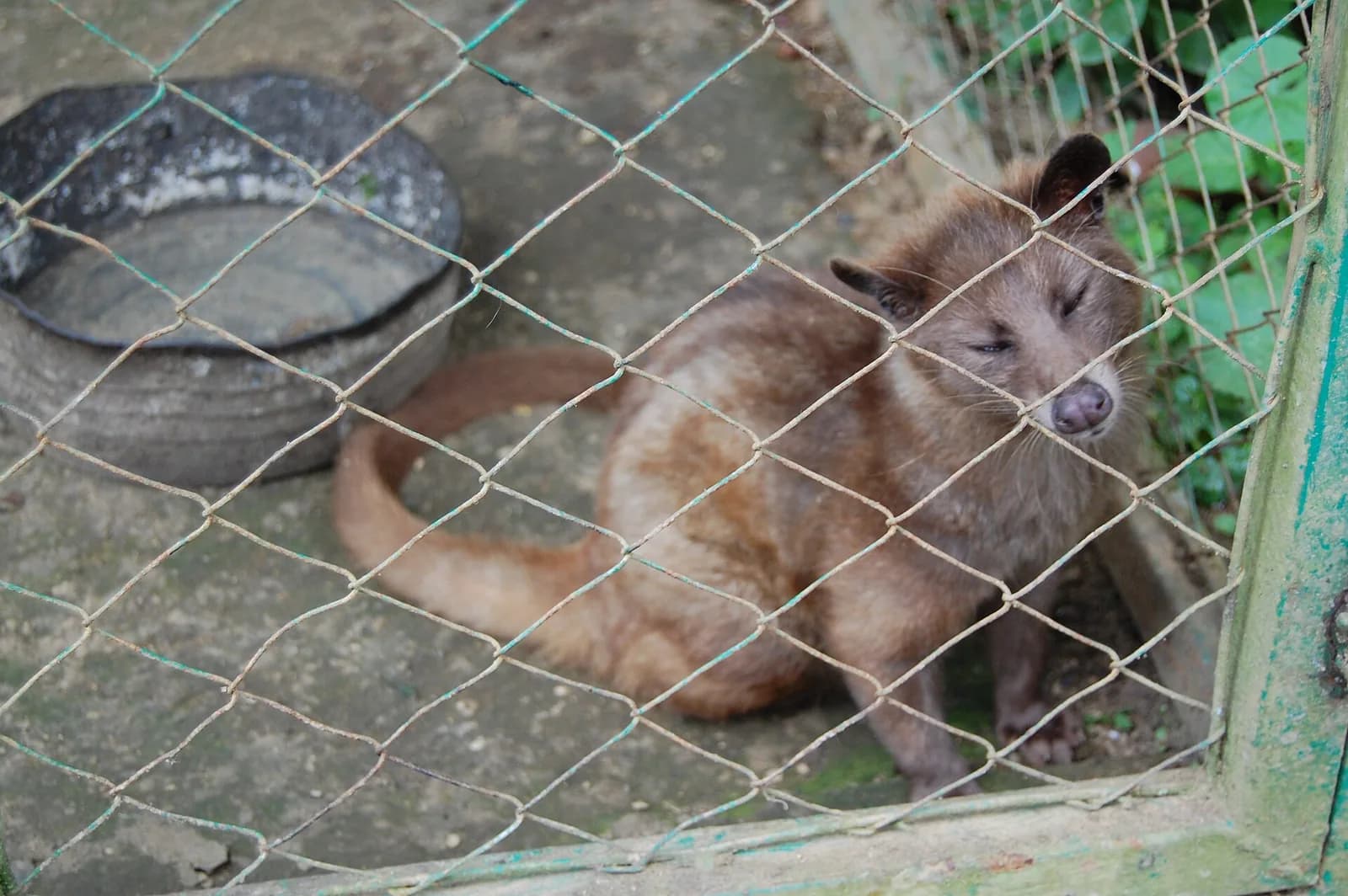
Photo Ellywa, CC BY-SA 4.0
Can you tell wild kopi luwak from caged?
No. In 2013 a BBC investigation found coffee from caged civets being sold in Europe labelled as wild, and the London department store Harrods took kopi luwak off its shelves. The laboratory tests that exist, such as the one published by Jumhawan and colleagues in 2013, tell pure kopi luwak from a blend with ordinary beans. They do not tell wild from caged.
Certification does not help either. In 2016, UTZ refused to certify kopi luwak and the Rainforest Alliance said it was too risky to certify, because it judged the product more likely than not to come from caged animals. A "100% wild" sticker on a bag in a plantation shop is a claim with nothing behind it.
Is there an ethical luwak coffee plantation in Bali?
Not one that can be named with confidence on the Tegallalang or Kintamani road. Every plantation on that route with recent visit reports has caged civets on display, and some guides will tell you the animals are released after a year or set free at night. Those claims cannot be checked from the path.
The researchers' advice is straightforward: civets in cages at a coffee stop are a sign the product involves them, and the most useful thing a visitor can do is not buy the luwak. The tasting of ordinary Balinese coffee, cocoa and tea is a separate thing, and it is perfectly possible to take one without the other. Do not pay for a photo holding a civet either.
What happens at a luwak coffee plantation in Bali
The format barely changes from one plantation to the next. A staff member meets you at the gate and walks you through a small garden of coffee, cocoa, vanilla and pineapple, among others, labelled plant by plant. The civet cages are usually near the start. Then there is often a roasting demonstration over a wood fire, a terrace or pavilion facing the valley, and the tasting.
The whole thing takes 30 to 45 minutes, and it is built to finish at the shop.
The free coffee tasting
At Cantik Agriculture and Segara Windhu, the tasting tray is free: 10 to 14 small glasses of Bali coffee, flavoured coffees, cocoa and herbal teas, brought to your table without anyone asking for money. Many are sweetened blends, so judge them as a sampler rather than as coffee.
One detail worth knowing: the coffee served at Cantik comes from larger highland farms, not from the small garden you just walked through. The garden is a display.
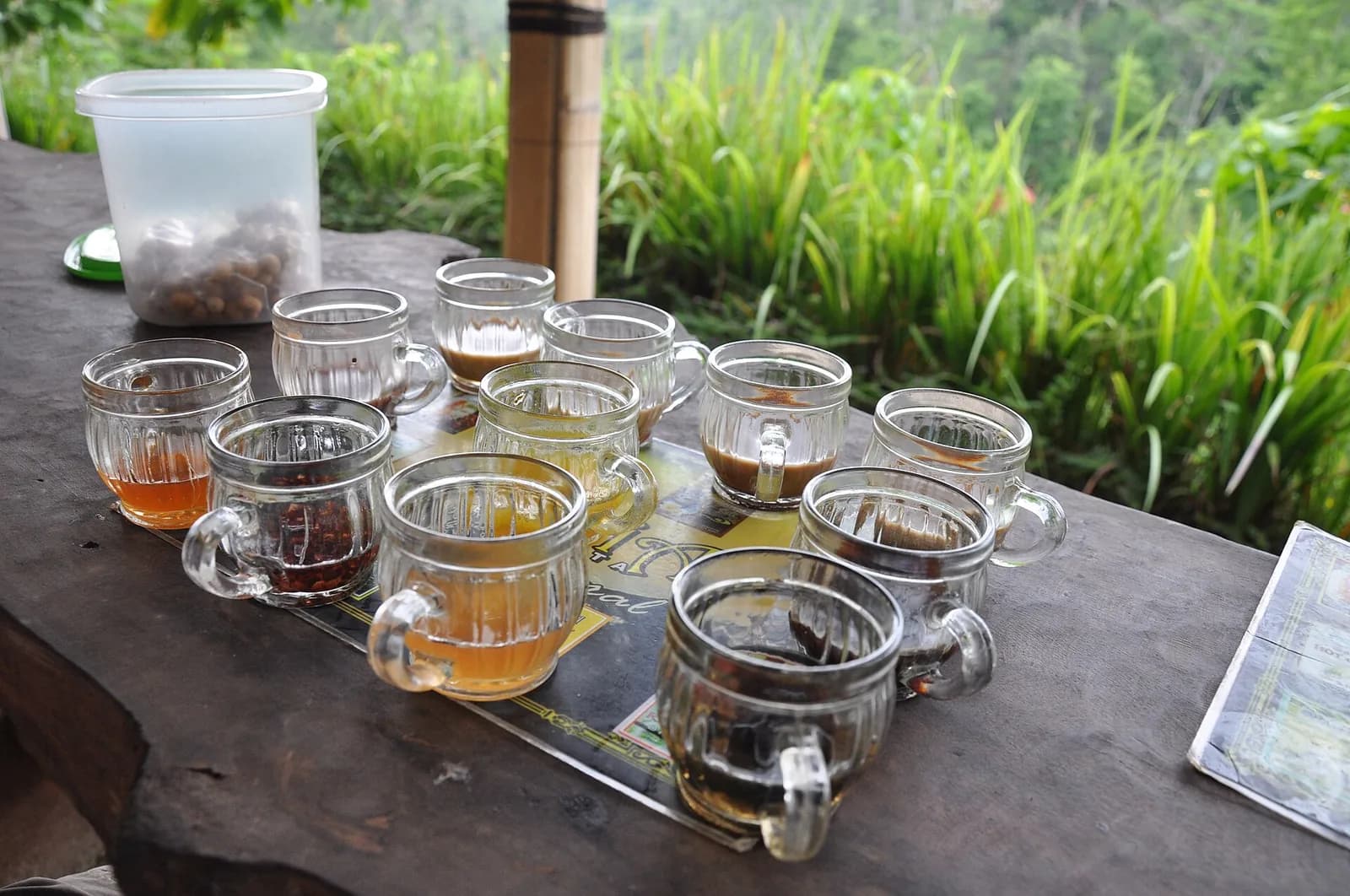
Photo Jorge Láscar, CC BY 2.0
The paid cup of kopi luwak
The luwak cup is offered when the tray arrives, and it is always extra: Rp 50,000 at Bali Pulina, Cantik and Segara Windhu. Segara Windhu sells a second grade, "male" luwak, at Rp 80,000. It comes as a single cup alongside the tray, and saying no has no effect on the free tray.
The shop at the end
The walk ends in a shop selling packaged coffee, luwak in gift boxes, tea, spices and soap. Visitors at Cantik describe a fairly firm sales push after the tasting, and prices that are often above what the same kind of product costs in a local supermarket. Cards are accepted there with a surcharge of about 3%, so cash in rupiah is better. We could not find a reliable 2026 price for a 50 g or 100 g pack at any plantation shop, so compare with the price on a supermarket shelf in Ubud before you buy.
Kopi luwak price in Bali in 2026
Prices below come from plantation guides updated in June and October 2026 and were converted on 20 October 2026 at that day's rate (Rp 18,055 to US$1, Rp 12,805 to C$1). Plantations change them without notice, so carry Rp 100,000 in cash per person and you will not be caught short.
| What you pay for | Detail | Order of magnitude |
|---|---|---|
| Entry to the plantation | Free at Bali Pulina, Segara Windhu, Cantik and most of the Manukaya stops. The guided walk is free too. | Free |
| Tasting tray of coffees and teas | Free at Segara Windhu and Cantik (10 to 14 cups). Bali Pulina charges for its tray. | Free or Rp 65,000 (US$3.60 · C$5.10) |
| One cup of kopi luwak | Always extra. Same price at Bali Pulina, Cantik and Segara Windhu for the standard cup. | Rp 50,000 (US$2.80 · C$3.90) |
| Cup of 'male' kopi luwak, Segara Windhu | The plantation sells two grades by the sex of the civet. Nobody can verify the difference. | Rp 80,000 (US$4.40 · C$6.25) |
| Lower terrace area at Alas Harum | The rice terraces, caves and photo spots below the café. Sources disagree on the price. | Rp 65,000 to 100,000 (US$3.60 to 5.50 · C$5.10 to 7.80) |
Older blogs and some tour listings quote an all-inclusive package of about Rp 250,000 (US$14 · C$20) at Bali Pulina, covering samples, a luwak cup, snacks and a guide. The 2026 reports describe free entry with paid extras instead. If a tour price includes a "coffee plantation entrance", ask what it actually pays for.
Why is luwak coffee so expensive?
The price rests on rarity: wild civets eating only the ripest cherries, and someone searching the forest floor for the droppings. That supply exists and it is small. But most kopi luwak on the market comes from civets fed cherries in cages, which is cheap to produce and sold on the rarity story. The price is a marketing figure as much as a cost.
What is the price of 1 kg of kopi luwak?
The figures quoted most widely are up to about US$100 (C$140) a kilo for farmed kopi luwak and up to about US$1,000 (C$1,400) for beans sold as wild, with a single cup in a specialty café abroad running from US$35 to US$80. In Bali you will pay a few dollars for a cup. We found no reliable wholesale price for genuinely wild beans from Bali, and the wild label is the first thing fraud copies.
Where to find kopi luwak in Bali, town by town
Most coffee plantations in Bali sit on the two roads that climb from Ubud to Kintamani, because that is where the day tours go. The western road runs through Tegallalang, about 20 minutes north of Ubud. The eastern one climbs through Manukaya and Tampaksiring, 30 to 45 minutes from town. Both reach the crater rim facing Mount Batur. A few more stops serve the south of the island and the Bedugul highlands.
None of the plantations below can be called cage-free. They are listed so you know what each one charges and what you will see, not as a recommendation.
Kopi luwak in Ubud
There is no plantation in the centre of Ubud itself. The nearest is Teba Sari, just north of town, which gets good reviews for its tastings but publishes no prices. Everything else is a 20 to 45 minute drive up one of the two Kintamani roads below. In town, the specialty roasters and cafés are the place to drink Kintamani arabica, which is the better coffee and involves no civet.
Kopi luwak in Tegallalang
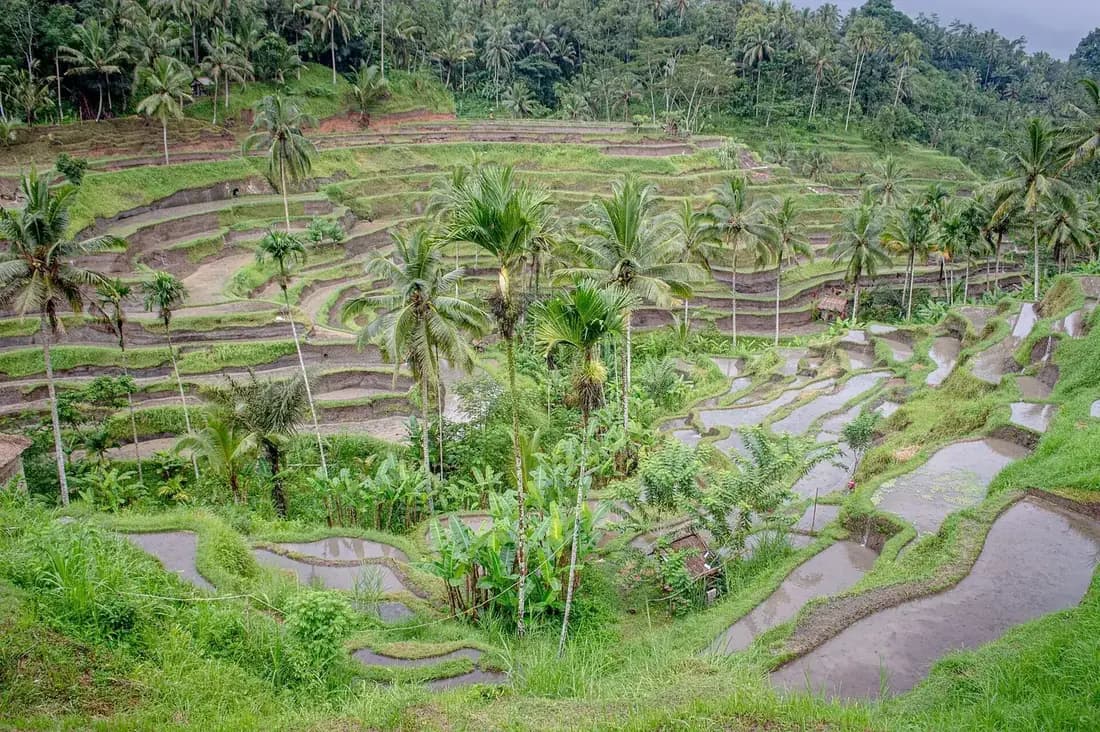
Bali Pulina, on Jalan Raya Pujung Kaja just north of the Tegallalang terraces, is the best-known name and the busiest. Its draw is the view: a café on stilts above its own rice terraces, with a swing over the valley. Entry is free, but the tasting tray of 8 to 12 cups costs Rp 65,000, and the luwak cup Rp 50,000. Civets are caged near the start of the walk. Staff say they are released after about a year, which nobody has been able to verify.
Alas Harum, a few minutes away on Jalan Raya Tegallalang, is less a plantation than a terrace leisure park with swings, photo nests and caves. The upper café area is free and groups get one free tasting tray. The lower area with the terraces and photo spots is paid, quoted at Rp 65,000 or Rp 100,000 depending on the source. Visitors report civets caged by day and let out at night. We found no current price for its luwak cup.
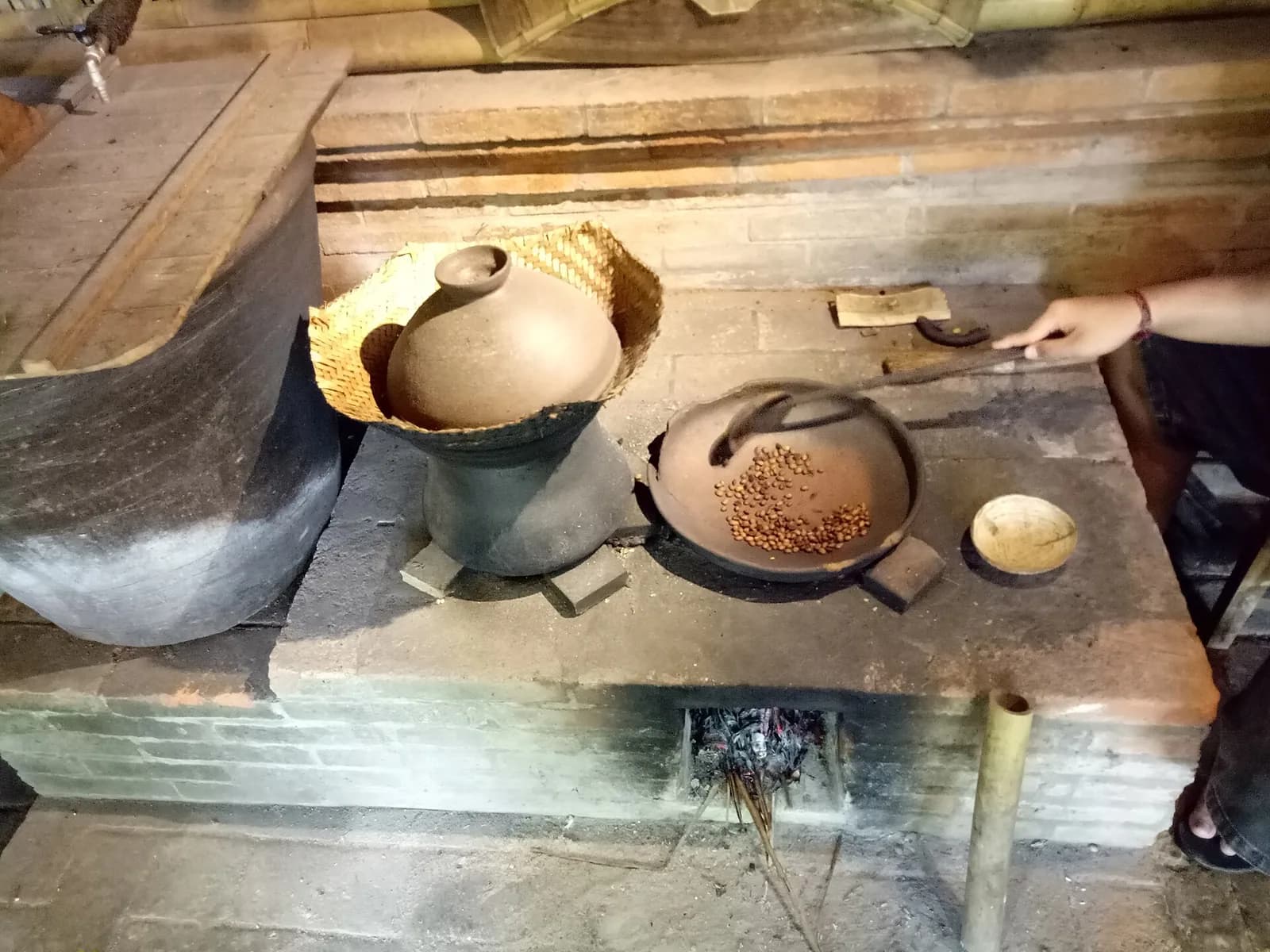
Photo Rennytan, CC BY-SA 4.0
Kopi luwak in Tampaksiring and Manukaya
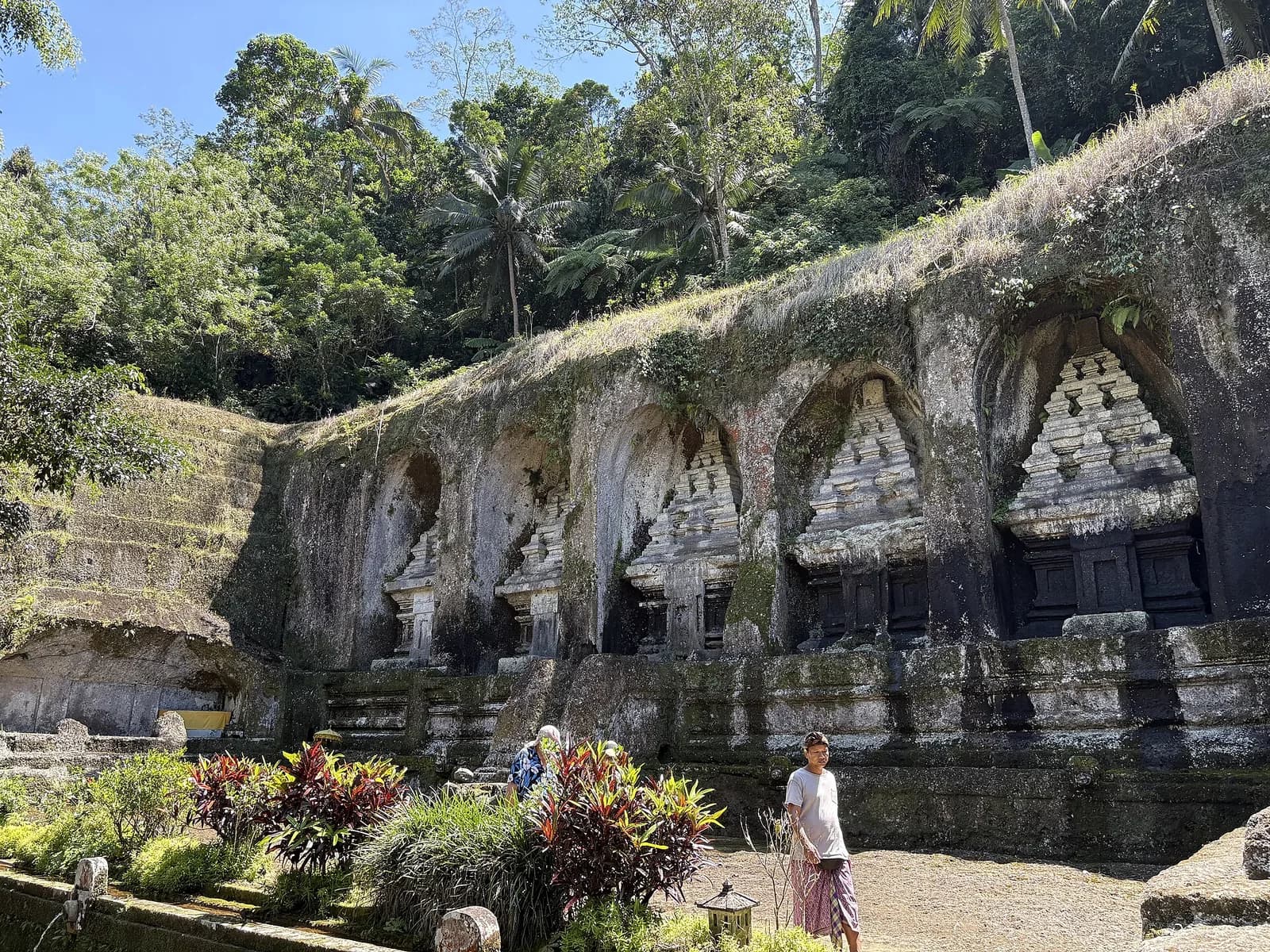
The eastern road to Kintamani has more plantations than any other stretch, a few minutes from Tirta Empul and Gunung Kawi. Segara Windhu, at Banjar Temen in Manukaya, is a smaller family-run stop with a free tray of 12 to 14 cups. Its luwak comes in two grades, Rp 50,000 for "female" and Rp 80,000 for "male", a distinction no one can test in the cup. Civets are in cages here too.
Cantik Agriculture, also at Banjar Temen, about 19 km from Ubud, is a regular coach stop. The guided walk is compulsory and free, the tray of around 10 to 14 cups is free, and the luwak cup costs Rp 50,000. Cages sit beside the path. Coaches arrive mostly between 11:00 and 14:00, so a stop before or after that window is noticeably quieter.
The same stretch has Satria Agrowisata, where only the luwak cup is charged, Pemulan Bali Coffee at Jalan Raya Kintamani 16 and OKA Agriculture, all with free entry and a free tray.
Kopi luwak near Kintamani and Mount Batur
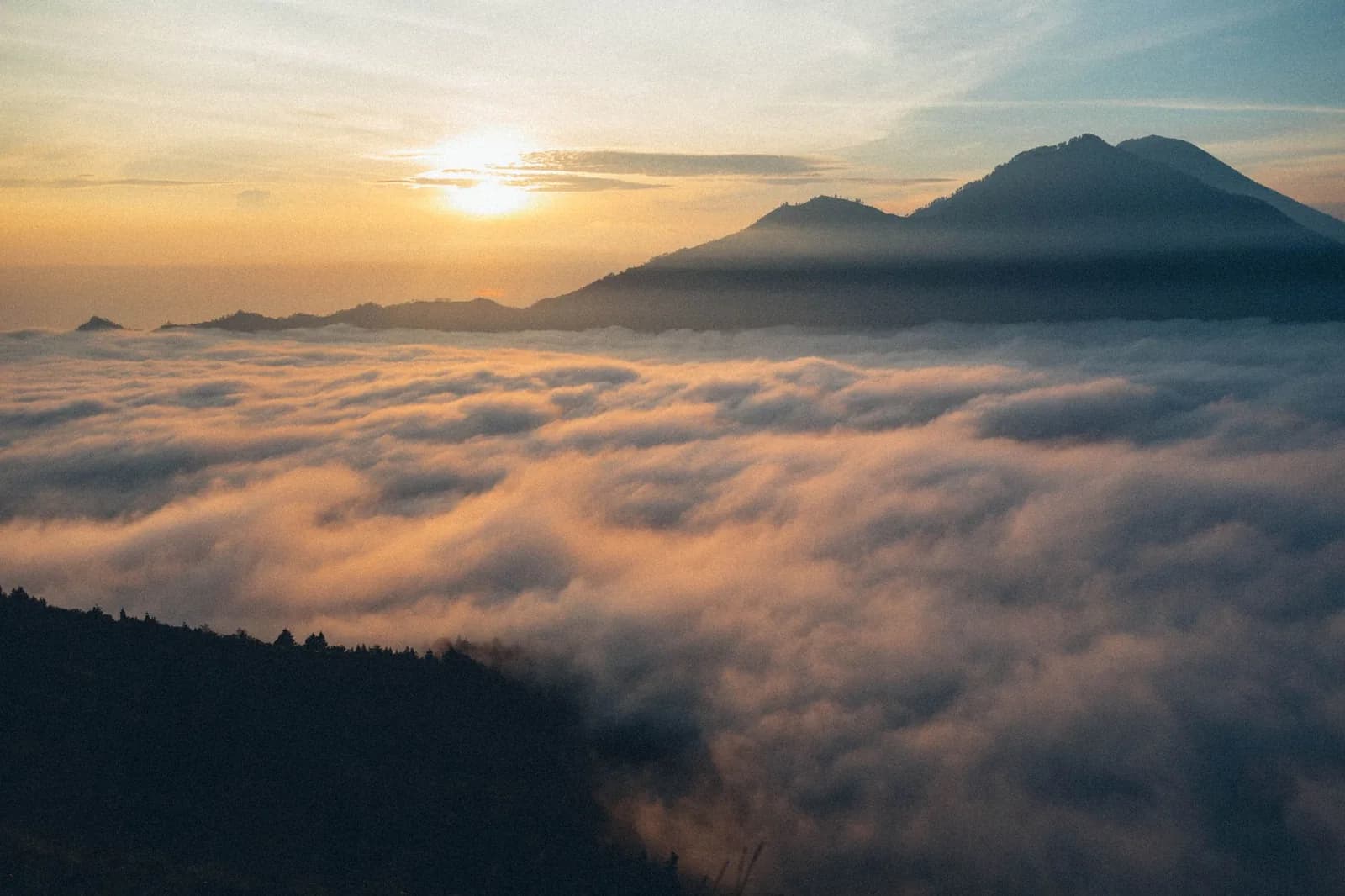
Past the Tampaksiring turn, the road enters Bangli regency on its way up to the rim. Bas De Atayana, at Sribatu on Jalan Raya Tampaksiring-Kintamani, works like the Manukaya stops: free entry, a free tray, and the luwak cup as a paid extra. Up on the rim road, the plantations facing Batur sell the same civet coffee tour, next to the local arabica grown on those slopes, which is the cup to order.
Kopi luwak near Uluwatu (Pecatu)
For Seminyak, Kuta, Jimbaran or the Bukit, the coffee stop on the south side of the island is Lumbung Sari at Pecatu, on the road to Uluwatu. Entry is free and the tasting tray of about 15 cups is free too. It is the plantation that tours from the beach resorts use, so it saves the long drive north if a tasting is all you want.
Kopi luwak in Bedugul (Baturiti)
On the road up to the lake temple of Ulun Danu Beratan, Hidden Garden at Baturiti has free entry and a free tray, with the luwak cup reported at around Rp 50,000 to 60,000. The welfare question is the same wherever the plantation is.
Coffee plantation stop on an Ubud to Kintamani day trip
The standard loop runs Ubud, the Tegallalang terraces, lunch on the crater rim at Kintamani facing Batur, then Tirta Empul or Gunung Kawi on the way down, with a coffee plantation fitted in between. Drivers put it on the way back more often than not, after lunch, which lands you in the 11:00 to 14:00 coach window.
With a private driver you control both choices. Ask for the plantation on the way up, before the coaches, or tell the driver you want to skip it: they earn a commission on what you buy, so they will suggest one, but they will not insist. If you climbed Batur for sunrise, many hiking tours add a plantation on the descent. The same rules apply.
Kintamani arabica: the Bali coffee worth buying instead
The slopes around Kintamani grow arabica at altitude, processed by the washed method, and the result has a bright, citrusy profile that has nothing to do with the sweet sachets on the tasting tray. On 5 December 2008, Kopi Arabika Kintamani Bali became Indonesia's first registered geographical indication, the same kind of protection as Champagne or Parmigiano.
Look for the Kintamani name on the bag, ideally with a roast date, at a café or roaster in Ubud. It is the coffee from the same hills, without the civet, and it is the better souvenir on both counts.
Is luwak coffee allowed in Australia?
Yes, within limits. Australia's Department of Agriculture allows kopi luwak or civet coffee, whole bean, ground or instant, for your own use if the beans are roasted, the product is commercially prepared and packaged, and the total is no more than 1 kg. It has to be declared and inspected on arrival. Anything that fails those conditions is destroyed or sent back at your cost.
Ordinary roasted coffee, Kintamani arabica included, is allowed up to 10 kg for personal use. Green beans need a phytosanitary certificate, so leave them in Bali.