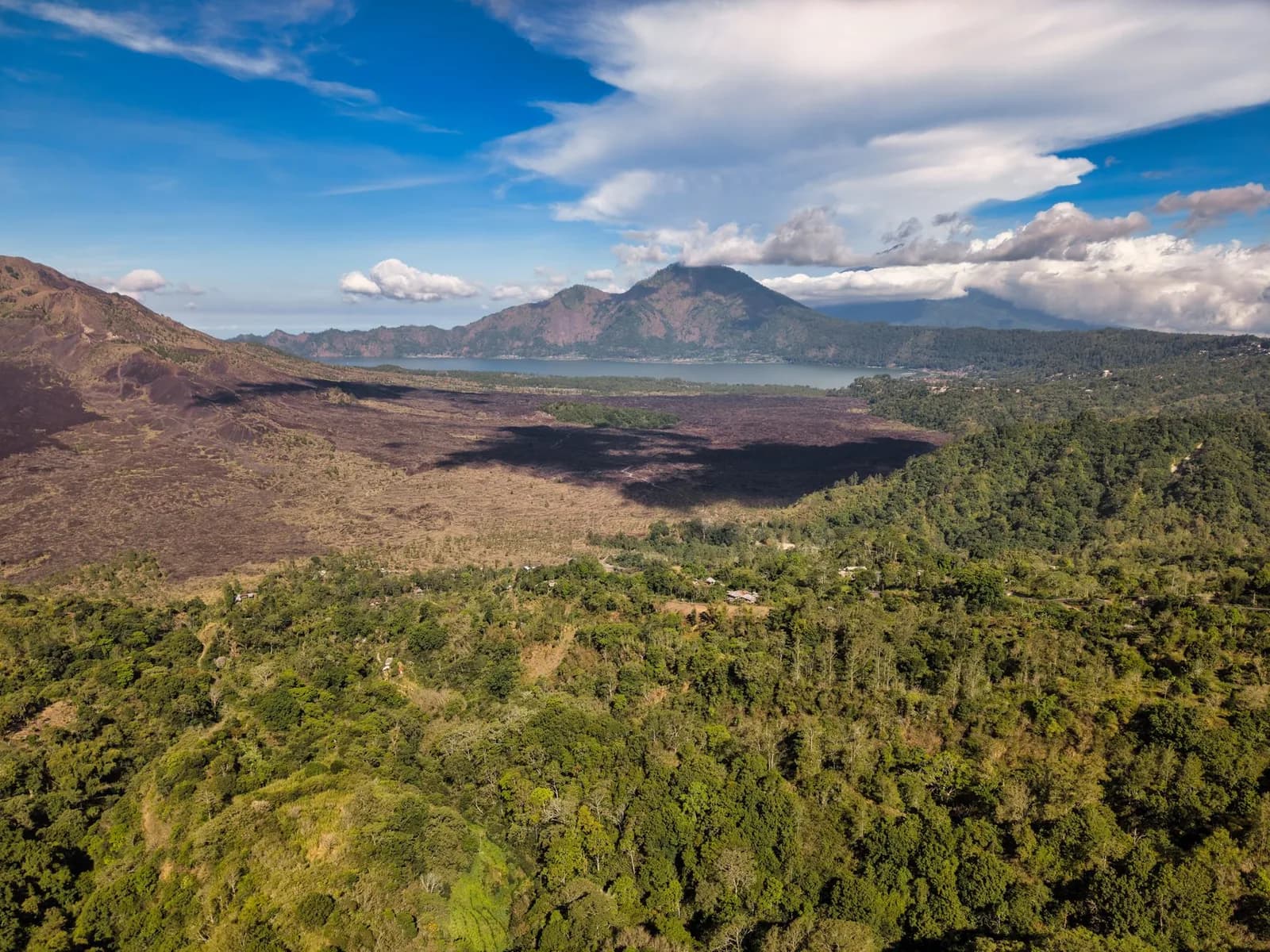
Mount Batur is an active volcano of 1,717 metres in the Kintamani district, sitting inside a caldera so much larger than itself that most visitors see the whole thing from the rim road without ever working out what they are looking at. It is the one mountain in Bali that ordinary travellers climb, and around a thousand of them do it every night of the dry season.
The pages selling that climb describe the summit and skip the night. The night is the trip: a pickup at two in the morning, two hours on a dark path, half an hour sitting in wind at around 10 °C, and a day afterwards that you will spend asleep. None of that is a reason not to go.
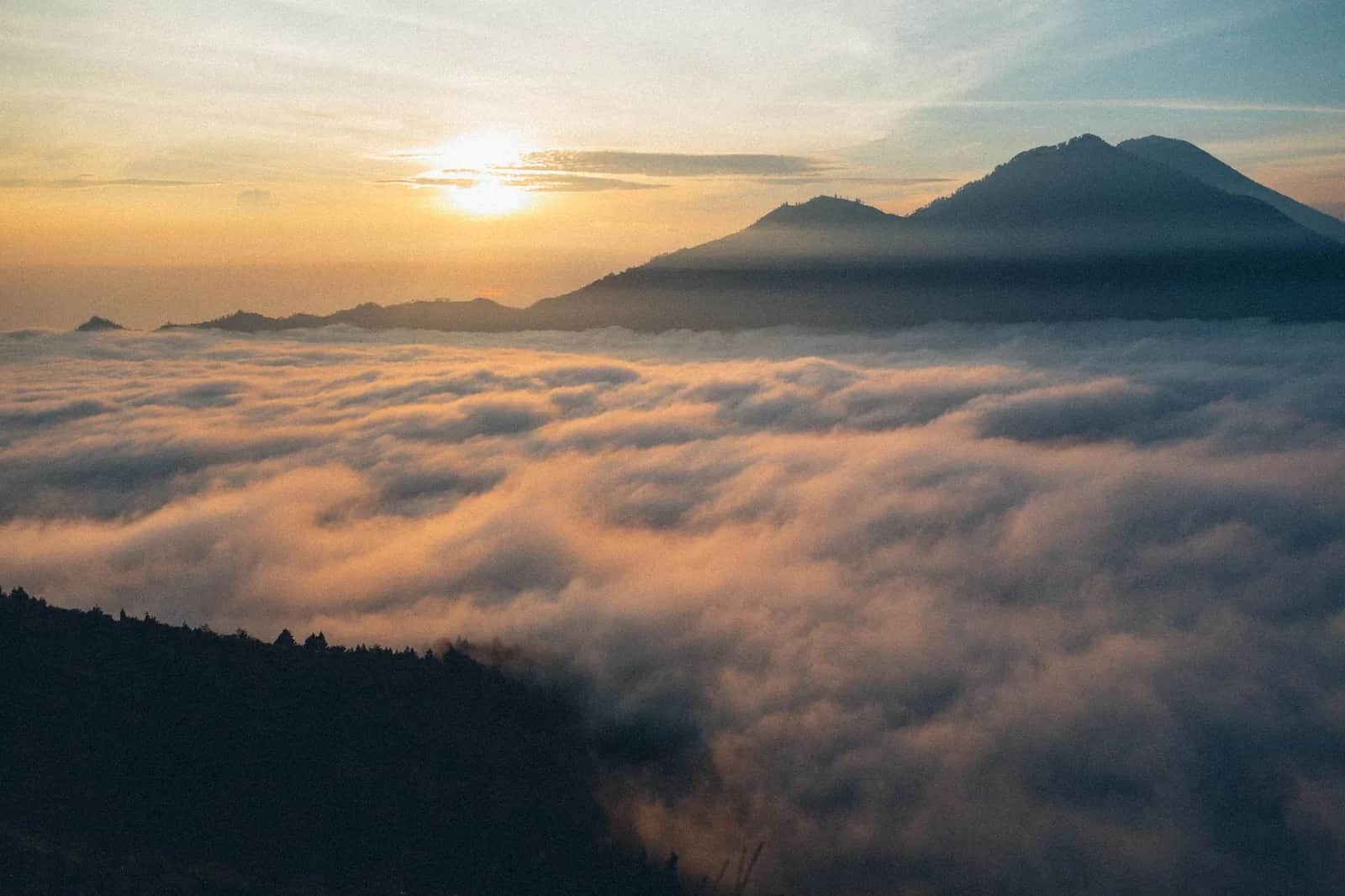
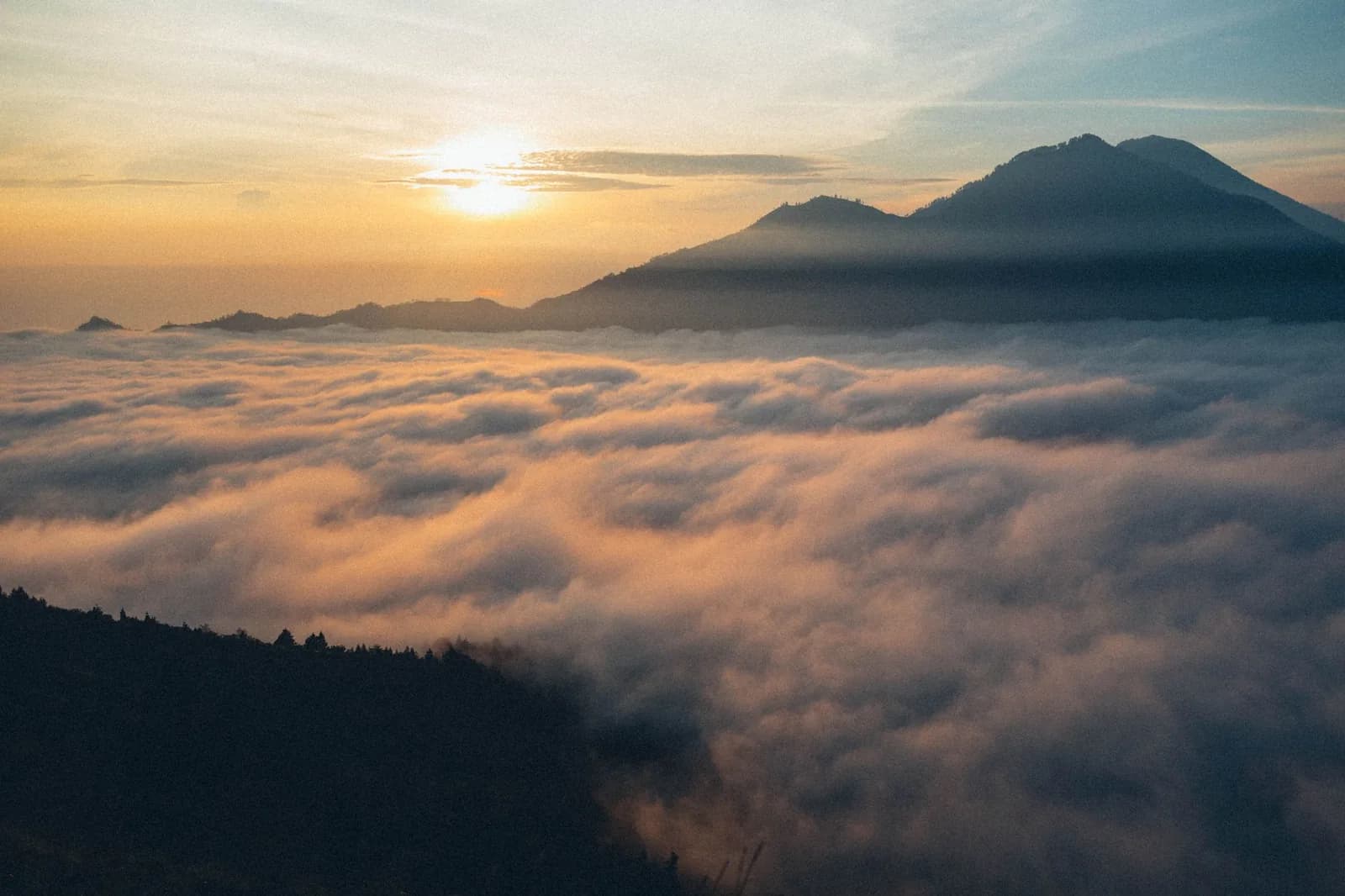
What decides it is the month. In August you stand above a floor of cloud with Agung rising out of it. In January you pay the same money for a grey rim about two mornings in three, and nobody tells you the odds before you book.
The standard version, and the one with the most reviews behind it
Free cancellationMount Batur sunrise trek, guide and breakfast included
- ✓The association guide is included, which settles the one part of this trek you cannot legally or practically avoid
- ✓Pickup from Ubud or the south at the right hour, so the two in the morning problem becomes someone else's
- ✓Breakfast cooked in a steam vent at the top, which sounds like a gimmick and is genuinely the warmest thing about the summit
- ✓Free cancellation on most listings, which is the whole game here: book it, watch the sky, and pull out on a bad night
Affiliate link. Booking through GetYourGuide costs you nothing extra and supports the guide. Price and rating checked October 2026. Both move with season and demand.
On this page
What the night actually looks like
Every operator sells this as an early start. It is not an early start, it is a night removed from your holiday and a morning spent recovering from it. Here is the whole thing, hour by hour, from a hotel in the south.
01:15
Alarm, if you are staying in the south
Seminyak, Canggu and Kuta are two and a half to three hours from the trailhead. From Ubud you get an extra hour in bed. This is the single strongest argument for moving up to Ubud or into the caldera the night before.
02:00
Pickup
A driver you have not met, a minibus with two or three other groups already in it, and a road east through villages that are entirely asleep. Most people do not sleep in the car and arrive at the mountain having been awake since the previous morning.
03:45
Toya Bungkah, breakfast and the guide
Coffee, a headlamp handed over, and the group you are actually climbing with takes shape. This is where the association guide joins you and where the price of everything gets settled if it was not settled online.
04:00
Into the dark
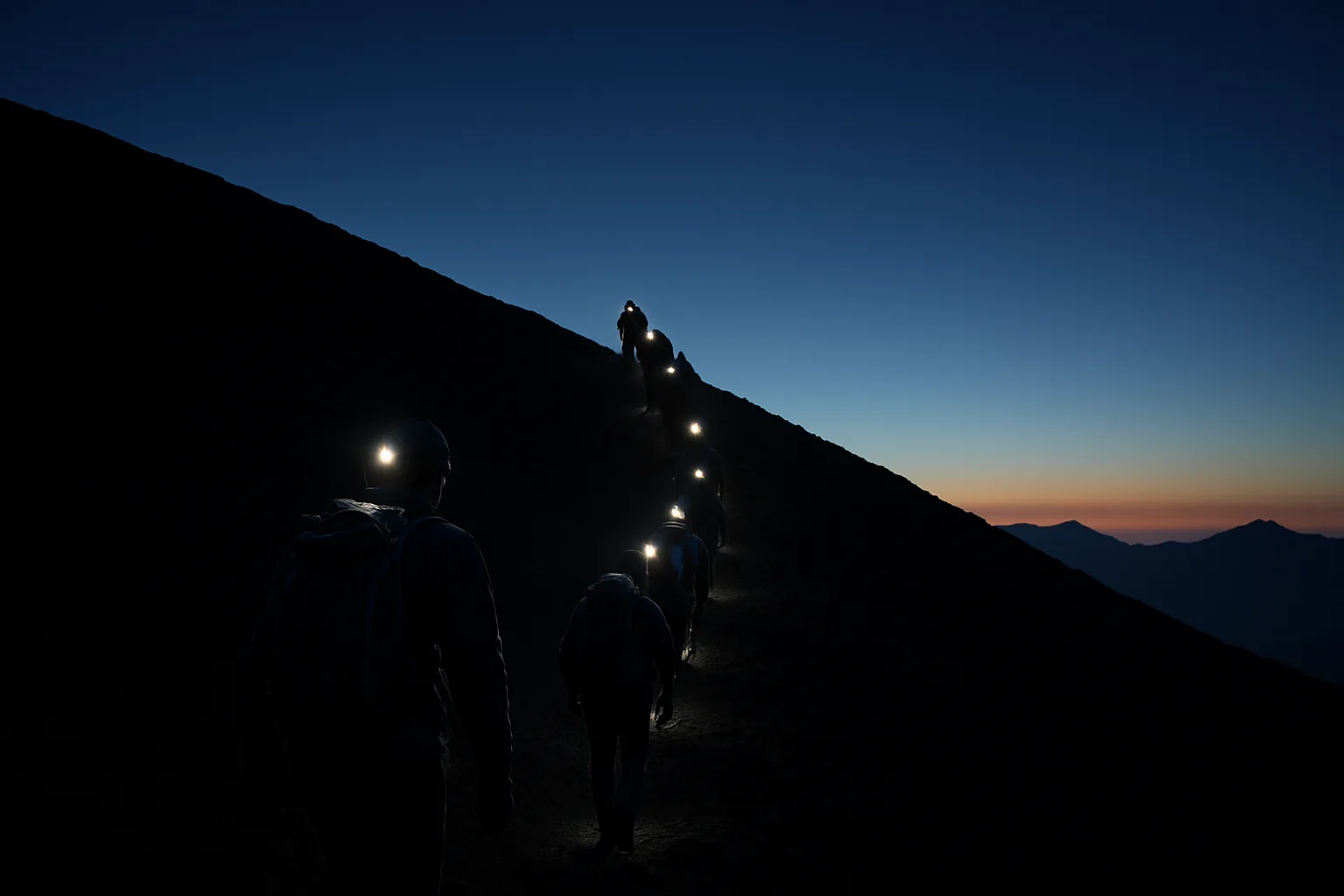
The first half hour is a track through scrub with the lights of the other groups strung out above and below you. It is the part people remember most fondly and the part where the pace gets set too fast.
05:00
The ash
The last third steepens onto loose volcanic grit where you take two steps for every one you gain. Head torch on the ground, no view, cold air. Anyone who is going to want to stop wants to stop here.
05:40
The rim, and the wait
You arrive sweating and then sit still in wind at around 10 °C for thirty to forty minutes. This is the coldest anyone is on the whole trip and the reason the layer in your bag matters more than the shoes on your feet.
06:10
Whatever the sky decides to do
Sunrise falls somewhere between about 05:50 and 06:30 depending on the month. In the dry season the cloud is a floor below you with Agung standing out of it. In the wet season you are often inside it.
07:00
Down, in daylight
The descent takes about half the time of the climb and is where the ankles and knees get tested, because loose ash under gravity is a different surface from loose ash under effort. You finally see the caldera you walked up in the dark.
09:00
Hot springs, or the car
Most packages add the hot springs by the lake or a coffee plantation on the way back. Both are pleasant and both extend a day that started at one in the morning by another two hours.
11:30
Back at the hotel, and done for the day
This is the part nobody prints. You will sleep in the afternoon, and the evening will not be a real evening. Plan the day after Batur as a day with nothing in it, not as the day you drive to Amed.
Will you actually see the sunrise?
This is the question the entire trip turns on and the one nobody answers. The reason it matters more here than on an ordinary mountain is that two different things are happening at 1,717 metres, and confusing them is how people end up disappointed.
In the dry season the air stacks into layers and the cloud settles below the summit. That is the sea of cloud in every photograph, and you are standing on top of it. In the wet season the same cloud sits on the summit, and you walk up into it. The difference between a spectacular morning and a pointless one is not whether it rains. It is where the layer is.
| Month | Clear summit odds | Where the cloud sits | Rim temperature |
|---|---|---|---|
| January | ≈ 30% | Above and around you, often rain on the descent | 14 to 17 °C, wet |
| February | ≈ 30% | Low and thick, sitting on the summit | 14 to 17 °C, wet |
| March | ≈ 40% | Breaking up, clear windows of two or three days | 13 to 16 °C |
| April | ≈ 60% | Beginning to settle below the summit on better mornings | 12 to 15 °C |
| May | ≈ 70% | Usually a flat layer under you, filling the caldera | 11 to 14 °C |
| June | ≈ 80% | Below the summit most mornings | 10 to 13 °C, with wind |
| July | ≈ 85% | A clean layer under you on most mornings | 9 to 12 °C, with wind |
| August | ≈ 85% | Below you, the clearest far horizon of the year | 9 to 12 °C, with wind |
| September | ≈ 80% | Still settling below the summit | 10 to 13 °C |
| October | ≈ 65% | Variable, first humid mornings returning | 11 to 14 °C |
| November | ≈ 45% | Building through the night, often on the summit by dawn | 13 to 16 °C |
| December | ≈ 35% | Around the summit more often than under it | 14 to 17 °C, wet |
These are odds read from how the cloud layer behaves over the caldera through the year, not from a weather station on the summit: nobody publishes one.
December to February: poor odds against a full high season price
Two mornings in three end with a grey rim and no horizon, and the path turns to wet ash and volcanic grit, harder work up and genuinely slippery down. Groups still go up every night because the tour was already paid for. Christmas fills Bali regardless of what the sky is doing, which makes this the month where the Kintamani viewpoint by car makes the most sense: you keep the caldera and the lake and lose nothing but a summit you probably would not have seen. If it is your only window, book something with free cancellation, watch the sky at midnight, and be willing to write the morning off rather than climb into cloud on no sleep.
March and April: the odds start to turn
March brings clear windows of two or three days at a time, enough that the trek is worth planning without building a whole trip around it. Book late in your stay rather than early, so you can move the date onto a clear night. April is the first month where the sea of cloud appears properly and the crowds have not: you get the view and share the summit with forty people rather than two hundred, which makes it, with May, the best value month for the trek specifically.
May to September: the reliable window, best in July and August
Reliable skies from May, with the air still clean from the wet season so the far view holds Agung and Rinjani across the strait on the best mornings. June brings very good odds and the first cold wind at the summit, worth a real layer since it is easy to underdress after 29 °C in Seminyak the evening before. July and August share the best odds of the year and the busiest summit of the year, several hundred people spread along the crater rim with a queue on the narrow sections, so ask your operator for an earlier start rather than a later one. September repeats August's conditions with the crowd thinning from the middle of the month, the window for peak season skies without peak season company on the rim.
October and November: decide late
October stays comfortably in favour, but the pattern becomes hard to read a week ahead, so treat a forecast as worth nothing beyond about three days and decide late. November is close to a coin toss: the afternoon storms start but the mornings are not yet consistently lost, so go early in the month rather than late if you have the choice.
The practical use of that chart is simple. If your month is on the left of it, either move the trek to a different trip or take the version without the climb. If your month is on the right, book with free cancellation, look at the sky at midnight, and go. Our month by month guide to Bali weather covers what the rest of the island is doing at the same time, and July is the month where the mountains and the beaches agree with each other.
How hard is it, honestly
Around 700 metres of ascent over roughly four kilometres, in about two hours. On paper that is a moderate walk and most people who exercise occasionally will finish it. The numbers understate it for three reasons that have nothing to do with fitness.
The first is the surface. The bottom third is a farm track, the middle is rock and root, and the top third is loose volcanic grit at an angle where you take two steps to gain one. It is the single most tiring surface a walker meets and it arrives exactly when you are furthest from having slept.
The second is the dark. You see a metre of path and nothing else, which removes every cue you normally use to pace yourself. Groups set off far too fast in the first twenty minutes because the track is easy and there is nothing to look at.
The third is the descent. Everyone plans for the climb and nobody plans for coming down the same ash in daylight on legs that have been awake since yesterday. That is where the turned ankles happen. Poles help more than they look like they should, and any guide will cut you a stick if you ask.
Children of about ten upwards manage it regularly. Knees that already complain on stairs will complain louder here. If you are genuinely unsure, the honest test is whether you would happily walk up forty flights of stairs in the dark, because that is the shape of it.
| The numbers | |
|---|---|
| Summit | 1,717 m |
| Ascent from Toya Bungkah | ≈ 700 m |
| Distance, one way | ≈ 4 km |
| Time up | ≈ 2 h |
| Time down | ≈ 1 h 15 |
The guide is not optional, and here is why
Search for whether you can climb Batur alone and you will find a decade of forum threads arguing about it. The arguing is the answer.
The trails up Batur are controlled by the local association of trekking guides, drawn from the villages around the mountain. It sets the tariff, allocates the work among its members, and posts people at the access points before dawn. This is not a national park rule you can read on a sign. It is a local arrangement enforced in person, and it has been that way for many years.
Travellers who have tried to walk up independently report being stopped at the trailhead, followed, or told firmly that they would be hiring a guide after all. Some get through and some have an unpleasant conversation in the dark. Neither outcome is worth the fifteen or twenty dollars a place in a group costs.
The fixed pricing has a real defence and a real problem, and it is worth understanding both. It keeps the money in the villages that live beside a mountain the whole island profits from, and it stops a race to the bottom that would put untrained people on a night trail. It also means you have no leverage and the service varies enormously: some guides are genuinely good on the geology and the group, others walk in front of you in silence.
The practical conclusion is the same either way. Book a package with the guide already included, so the negotiation happens before you are standing in a car park at four in the morning with no alternative. That is the single thing that separates a good Batur morning from a sour one, and it costs nothing to arrange.
What it costs
Orders of magnitude in US dollars, checked in August 2026. The spread in each line is the difference between a shared minibus and a private car far more often than it is a difference in the trek itself.
| What you pay for | Detail | Order of magnitude |
|---|---|---|
| Sunrise trek booked online, pickup included | The standard package from Ubud or the south: transfer both ways, association guide, headlamp, breakfast at the top. | ≈ $27 to $45 |
| The same trek with the hot springs added | Adds around two hours on the way back and an entry to a lakeside pool. The most commonly sold version. | ≈ $36 to $60 |
| Guide hired at the trailhead, no transport | The association rate, negotiated on the spot. Only makes sense if you slept in the caldera and drove yourself. | ≈ $30 to $50 per group |
| Sunrise by jeep, no walking | Shared or private 4WD onto the black lava field at dawn. Same hour, no ascent. | ≈ $18 to $55 |
| Toya Devasya or a village hot spring | Bought separately if your package does not include it. Lakeside, warm, and busy from about eight in the morning. | ≈ $15 to $30 |
| Scooter or private car to the Kintamani rim | If you skip the climb entirely. A driver for the morning from Ubud, or your own scooter and a very early start. | ≈ $0 to $40 |
If you do not want to walk: Kintamani at first light
This section exists because the alternative is genuinely good and almost nothing written about Batur treats it as a real choice rather than a consolation.
The view that sells Bali's highlands is not the one from the summit. It is the one across the caldera, from the rim road at Penelokan: the cone of Batur with its black lava flows spilling down one side, Lake Batur behind it, and Abang and Agung closing the horizon. You reach it by car, on a sealed road, with a coffee in your hand.
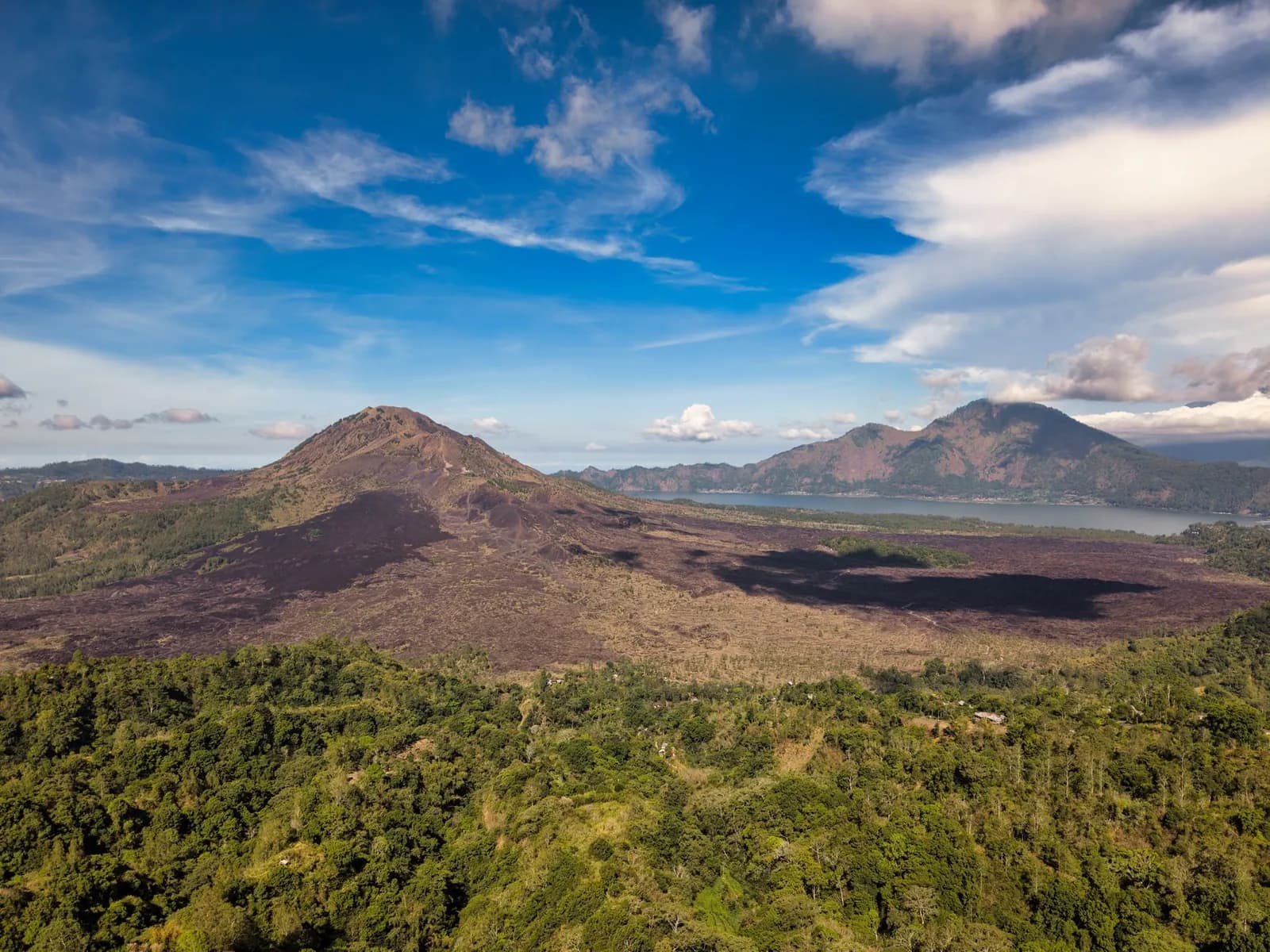
Leave Ubud around 04:30 and you are on the rim before the light, which is when the caldera fills with mist and the cone stands out of it. That is roughly a quarter of the effort for something close to the same photograph, and you are back for a normal breakfast.
The rim road is lined with warungs and viewpoint restaurants and they open early. They will charge you for the view through the buffet rather than through a ticket, which is a fair trade at that hour. Stop at Penelokan rather than driving straight on to Kintamani village: the road bends and the first proper opening is the best one.
The middle option is the jeep. A 4WD takes you onto the black lava field below the cone for sunrise, which puts you inside the landscape rather than looking at it, without a metre of ascent. It works for anyone travelling with children, with knees, or with a firm objection to walking uphill in the dark.
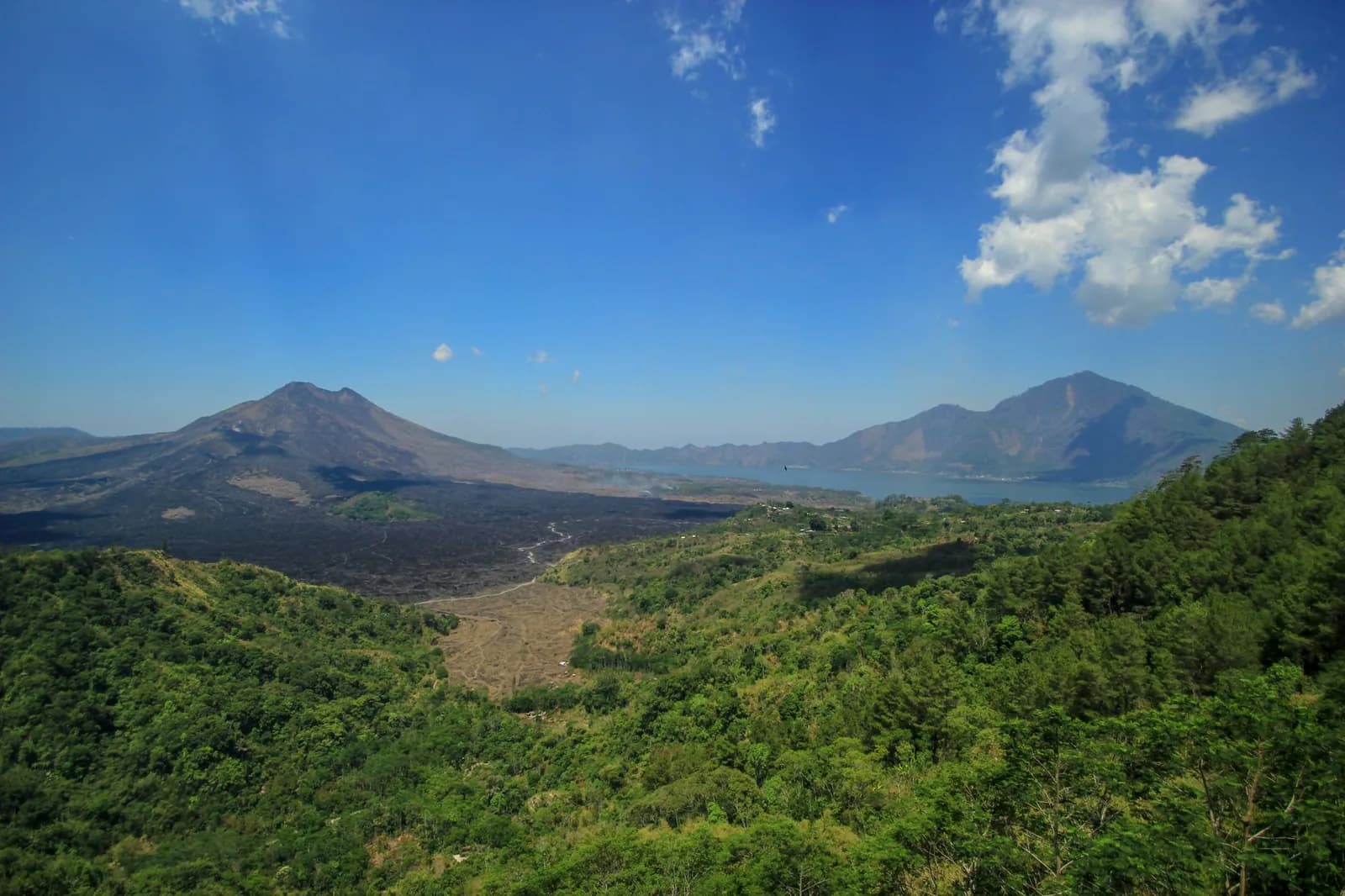
The same hour on the mountain, without the ascent
Free cancellationMount Batur sunrise by jeep, with the hot spring
- ✓A 4WD takes you onto the black lava field for first light, so you get the landscape without 700 metres of climbing
- ✓Pickup is a little later than the trek, which buys back part of the night
- ✓The lakeside hot spring afterwards is the sensible use of a morning that started early
- ✓Works for families, for anyone with knees that object, and for the wet season months when the summit is under cloud anyway
Affiliate link. Booking through GetYourGuide costs you nothing extra and supports the guide. Price and rating checked October 2026. Both move with season and demand.
Still an active volcano, and what that means for you
Batur has erupted many times since records began in the nineteenth century, and its last significant activity was in 2000. The caldera around it was formed by two far larger eruptions tens of thousands of years ago, which is why the bowl is around thirteen kilometres across and the cone inside it looks modest by comparison.
It is monitored continuously and sits at the normal alert level, which is the condition under which the trek runs at all. Access has been suspended in the past when that changed. If you are booking weeks ahead, the useful habit is to check the current status a few days out rather than to worry about it now.
There is no lava to see, and any listing implying otherwise is describing the rock. What you get instead is better than most people expect: steam vents near the summit hot enough to cook an egg or a banana in, which is how your breakfast at the top is made, and the flow fields below, which are the clearest thing on the island for understanding what a volcano actually does to the ground around it.
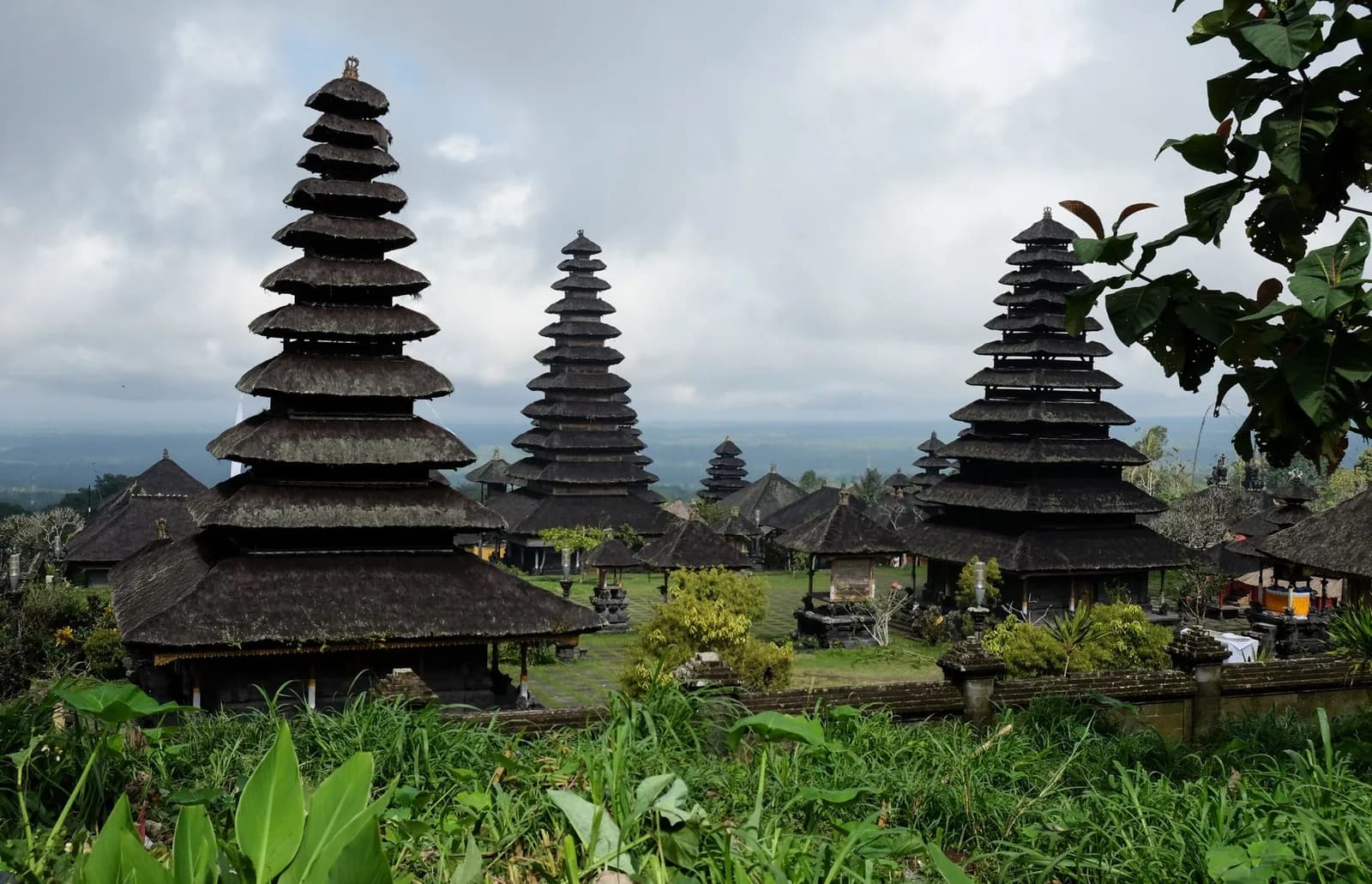
Bali's other volcano is the one you look at from up here. Agung is 3,031 metres, it erupted as recently as 2017 and 2019, and the island's mother temple sits on its slope. It is a serious mountain rather than a night out, and Besakih is how most people meet it.
Getting there, and where to sleep to make 02:00 survivable
From the south
Seminyak, Canggu, Kuta and Sanur are two and a half to three hours from Toya Bungkah, which means a pickup between 01:00 and 01:30. It is the version of this trip most people do and the version most people describe as brutal afterwards. If your whole stay is in the south, weigh the jeep or the rim road seriously.
From Ubud
An hour and a half, and a 02:00 pickup. Ubud is where nearly every Batur trek is sold and where the maths works best for most itineraries: you already want to be there for other reasons, and the extra hour in bed is worth more than it sounds.
Sleeping in the caldera
Toya Bungkah and the villages along the lake have simple guesthouses, several of them with hot spring pools. Staying there turns a 02:00 pickup into a 03:30 alarm and a ten minute walk to the trailhead, and it lets you see the caldera in daylight rather than through a car window in the dark. It is the least known and most sensible way to do this trek.
What else is in the caldera
Most people see the mountain and drive home, which wastes the more interesting half of the area. Lake Batur is the largest crater lake on the island and supplies irrigation water across a good part of Bali, which is why the temple on its shore matters as much as it does to the subak system.
The hot springs on the lake's edge are fed by the volcano and are the correct place to be at eight in the morning after a night on your feet. The coffee plantations on the rim road sell the civet coffee tour that you can safely skip, and much better ordinary Kintamani arabica that you cannot.
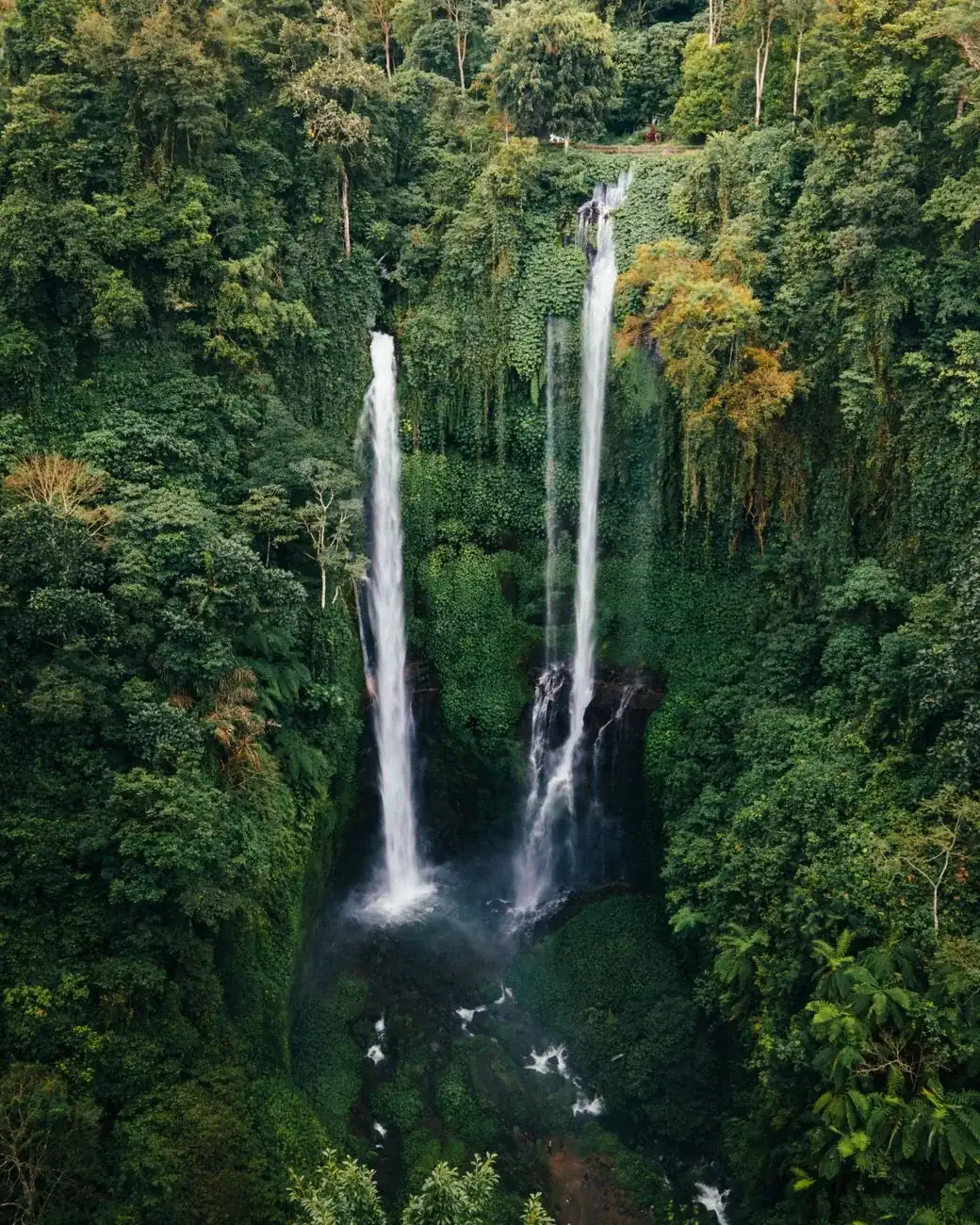
On the way back down towards Ubud you pass within reach of the waterfalls east of Ubud, which is exactly the trap this page has already warned you about. They are a different morning.
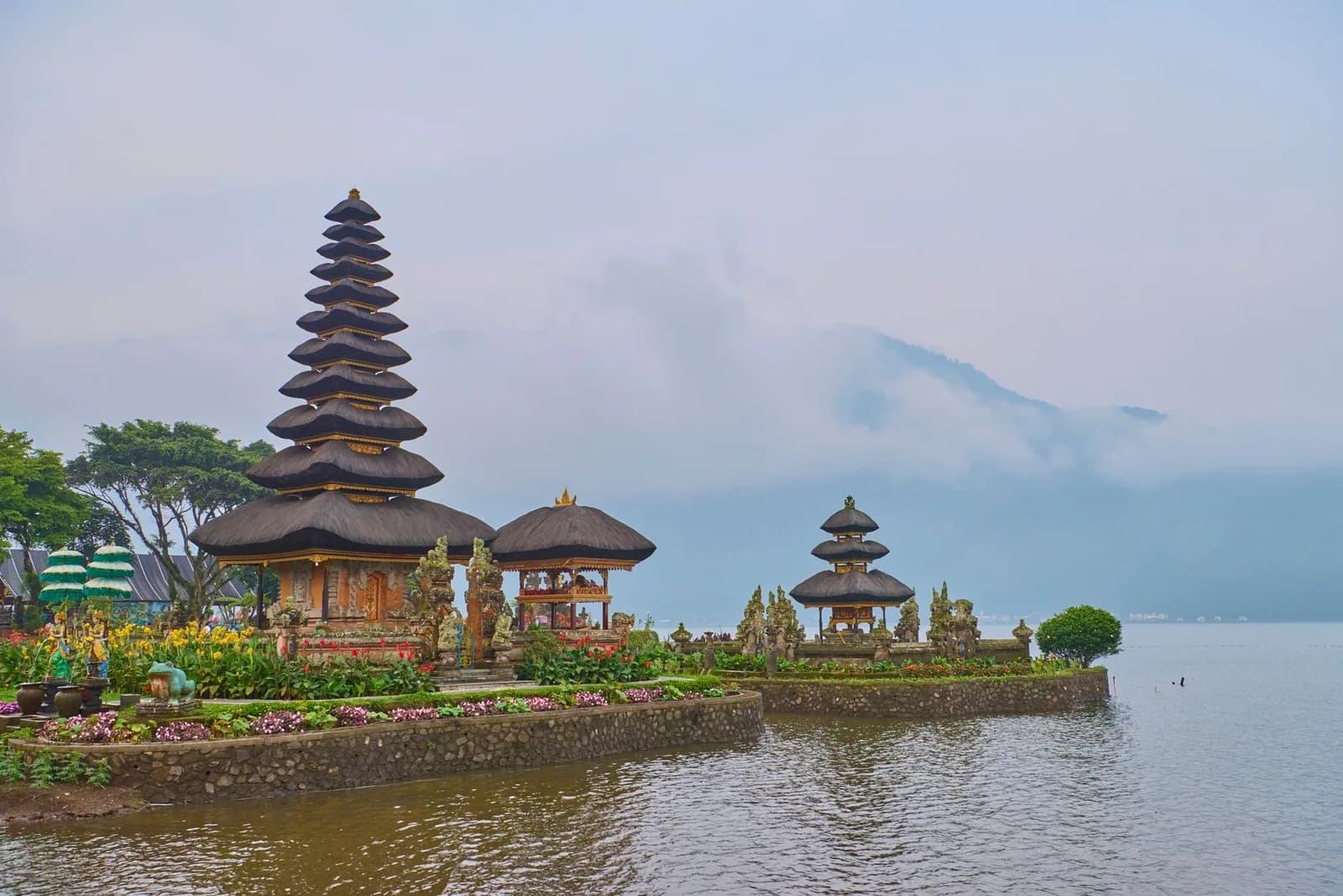
For the drive north instead of south, the rim road carries on to Ulun Danu Beratan on the lake at Bedugul, which is roughly ninety minutes west and the one detour that genuinely fits into a Batur day if you have slept.