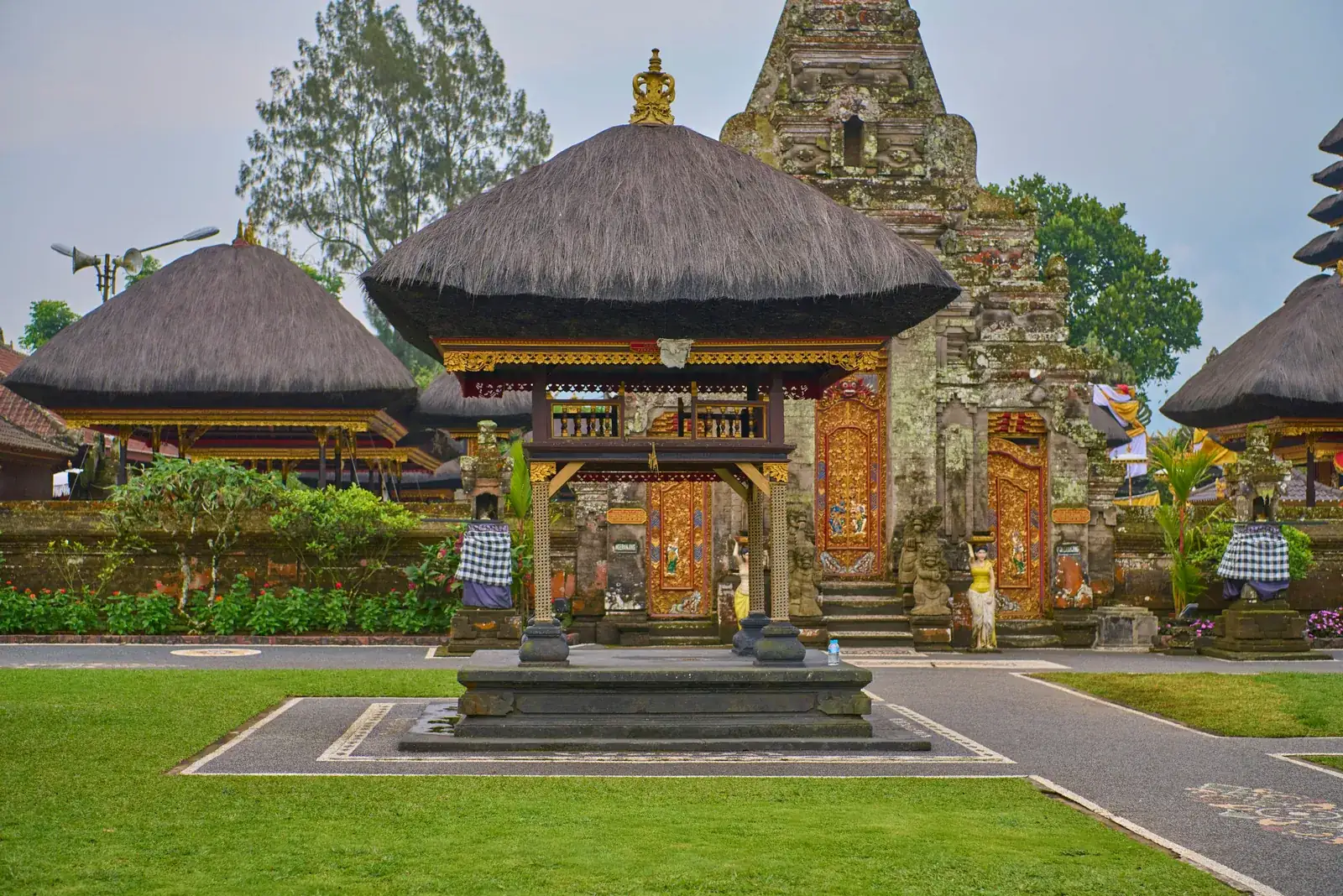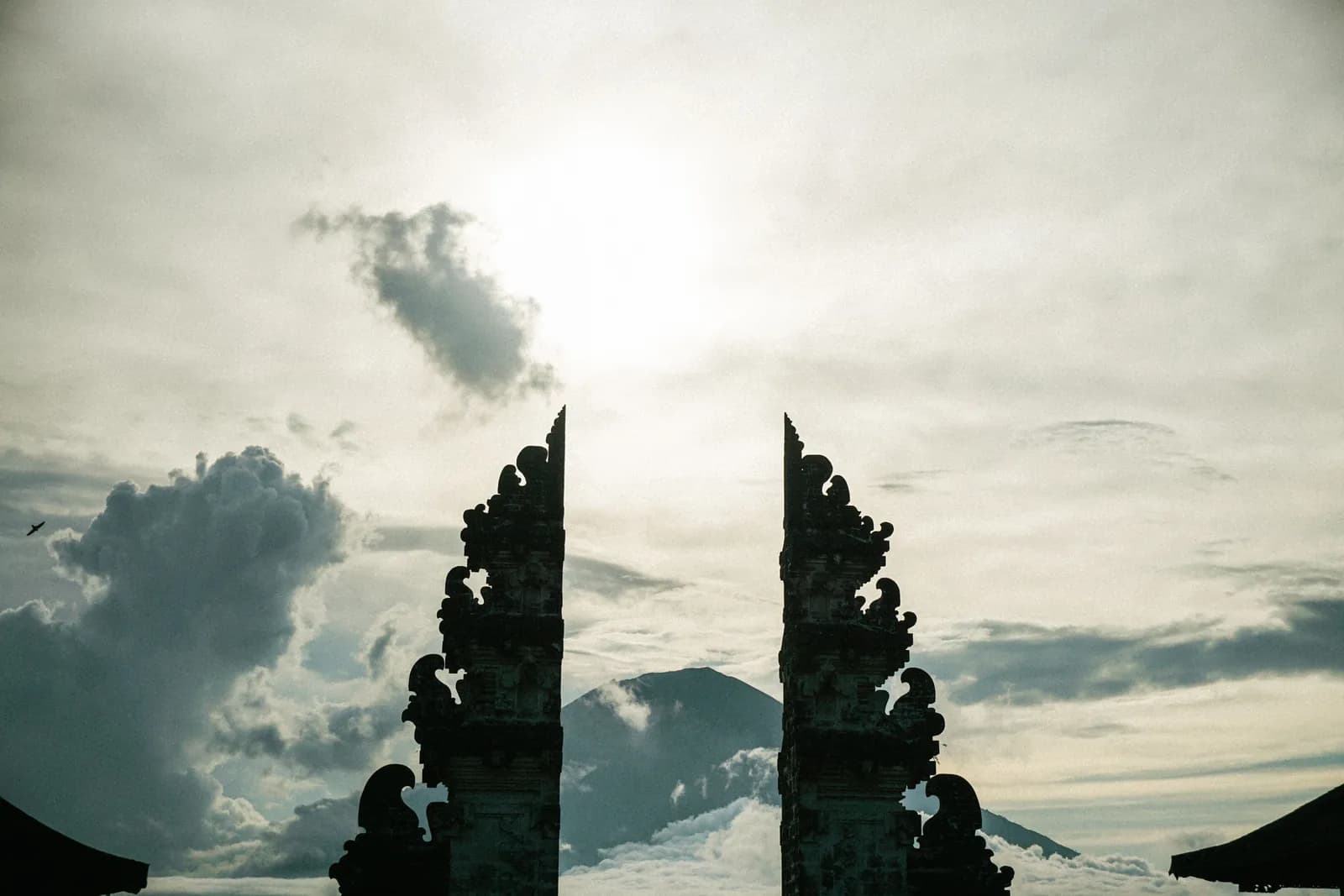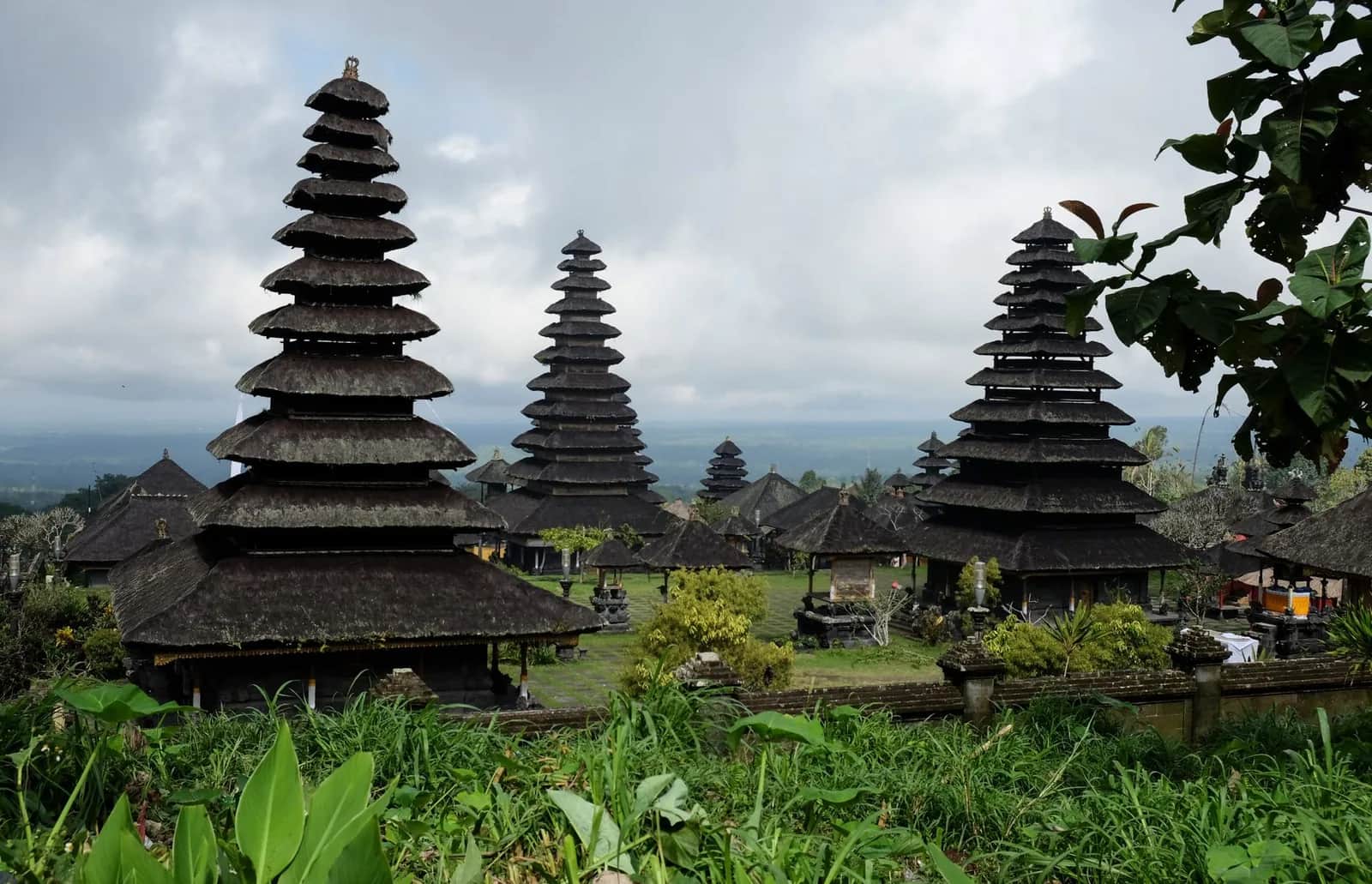
Besakih is not one temple. It is a complex of more than twenty, built in terraces up the south-western flank of Mount Agung at around a thousand metres, with the central sanctuary of Pura Penataran Agung at its heart. In Balinese Hinduism it outranks everything else on the island, which is why it is universally called the mother temple. Every regency, every clan and every caste on Bali has some claim on a shrine somewhere on this hillside.
It is also the site that generated more angry reviews than any other in Bali, for reasons that had nothing to do with the temple itself. Most of what you will read online about Besakih was written during that period, and a good deal of it is no longer accurate. The site has been reorganised around a visitor centre and a shuttle, and the experience people describe from a decade ago is not the one you will have.
What has not changed is the distance. Besakih eats a day from anywhere most visitors stay, and it rewards you with scale rather than intimacy. This page is about deciding whether that trade is yours to make, and then making the day work if it is.
The drive is the hard part
Besakih and east Bali day trips
- ✓Hotel pickup, which removes the two and a half hour drive from your morning
- ✓A driver who waits, so a ceremony closure does not wreck the schedule
- ✓Usually paired with Lempuyang, Tirta Gangga or Sidemen on the same loop
- ✓Free cancellation on most listings, useful because the mountain makes its own weather
Affiliate link. Booking through GetYourGuide costs you nothing extra and supports the guide. Price and rating checked September 2026. Both move with season and demand.
On this page
What Besakih actually is
Nothing else on Bali is built like this, and the layout is the whole point.
Balinese temples are usually walled compounds on flat ground: a gate, a courtyard, a row of shrines. Besakih breaks that pattern completely. It is a vertical settlement of temples, each with its own walls and its own gate, stepping up a mountainside on a series of terraces that were almost certainly cut for worship long before anything Hindu stood on them. Archaeologists and historians read the terracing as evidence of a much older mountain cult, later absorbed rather than replaced.
That is the first thing to understand about the place: it grew. Successive dynasties, priestly lineages and clans added their own structures over centuries, which is why the complex has no single architect's logic to it. The word most guides reach for is accumulation, and it is the right one. Walk it and you can feel the additions.
The organising idea is direction. The central temple sits on the axis, and the temples around it are placed to the north, south, east and west, each carrying the colour and the deity that Balinese Hinduism associates with that direction. Vishnu to the north in black, Brahma to the south in red, Shiva at the centre in white. Once you know that, the apparently random scatter of gates and towers resolves into a diagram of the cosmos laid out across a hillside.
The other organising idea is height. In Balinese thought the mountain is the direction of purity and the sea the direction of impurity, so everything in the complex is arranged with the volcano above it. Besakih is not a temple that happens to be on a mountain. It is a temple that is about the mountain, which is exactly why 1963 mattered as much as it did.
The complex, temple by temple
The most common way to waste a visit to Besakih is to climb the main stairway, photograph the gate, and come back down without ever knowing that you walked past five separate temples on the way.
Besakih is a group of separate temples, not one building. Here is the layout, then what each one actually is.
| Temple | Where it sits | What you can enter | Detour |
|---|---|---|---|
| Pura Penataran Agung | Dead centre, top of the main stairway | Outer courtyards and the stairway | You cannot miss it |
| Pura Batu Madeg | North of the centre, uphill to your right | Approach and outer walls | Five to ten minutes off the main axis |
| Pura Kiduling Kreteg | South of the centre, across a small ravine | Approach and outer walls | Ten minutes, with a dip and a climb |
| Pura Gelap | East, above and behind the central group | Outside only for most visitors | A short uphill path |
| Pura Basukian | Below and east of the main stairway | Varies day to day, often in ceremonial use | On your way in, if you look for it |
| Pura Ulun Kulkul | West of the central axis | Outer areas | A few minutes sideways |
| Pura Pangubengan | Well above everything else, up through the trees | Open air, open access, because almost nobody goes | Thirty to forty five minutes of real climbing each way |
Pura Penataran Agung, the great central temple
White, the colour of the centre, and dedicated to Shiva, seated on the padmasana tiga, the triple lotus throne. This is the temple everyone photographs and the one that gives the complex its hierarchy. The wide flight of steps, the split gate at the top, the towers stacked behind: that frame is Penataran Agung. You walk up to it and around it rather than through it, and the terraces above the gate are the best place on the site to understand how the whole thing is laid out. The inner courtyards, past this point, are for worshippers.
The trinity temples: Batu Madeg, Kiduling Kreteg and Gelap
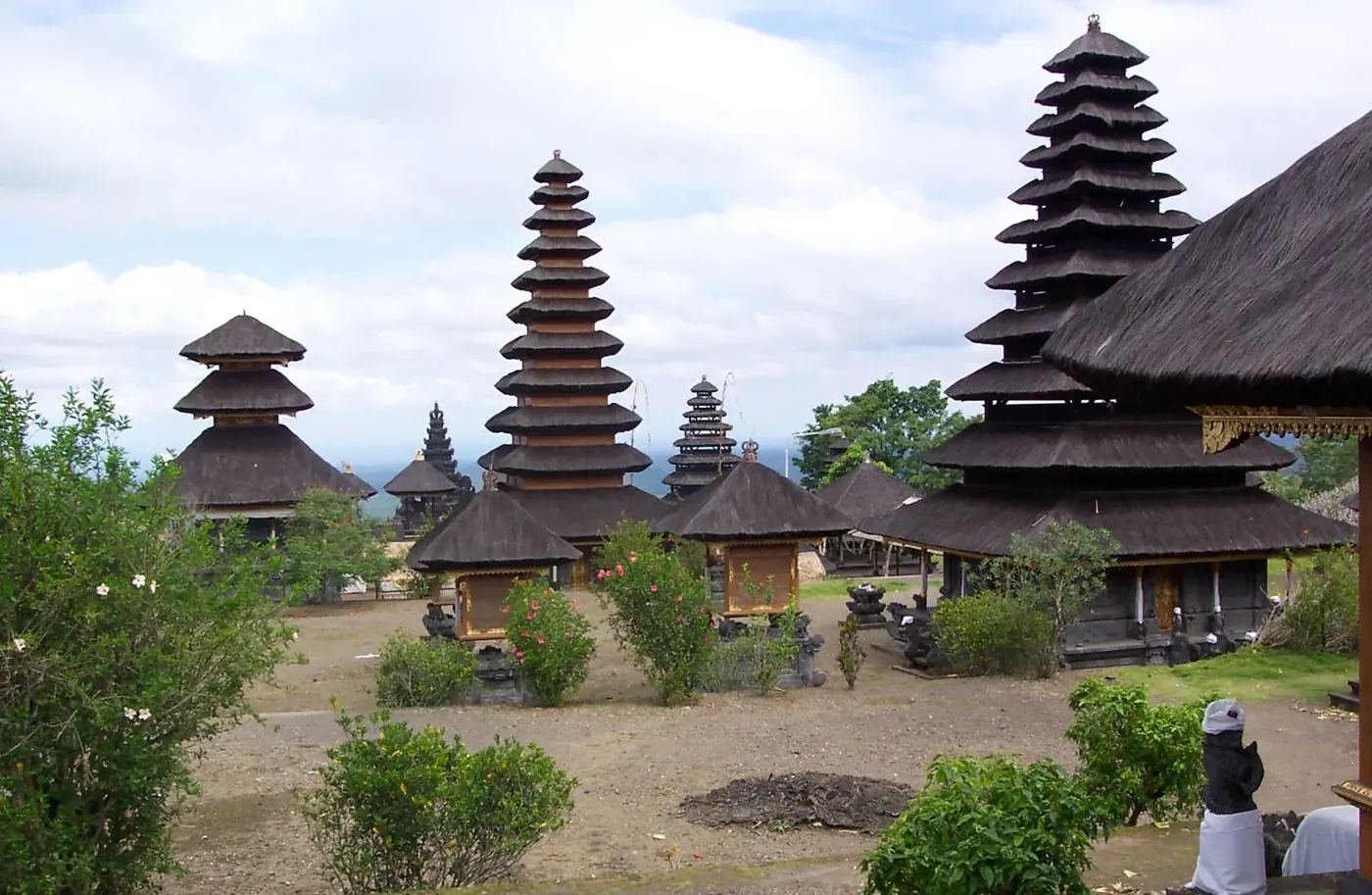
Pura Batu Madeg is one of the three temples that hold the Hindu trinity between them, and the one most visitors walk straight past. Black, the colour of the north, it is dedicated to Vishnu. Its meru towers are among the tallest in the complex and the path to it is almost always empty, which tells you something about how the site is actually used by day trippers, quiet even on busy days. Pura Kiduling Kreteg, red, the colour of the south, is dedicated to Brahma. It is the third of the trinity temples, and the one that completes the geometry. Standing at Kiduling Kreteg and looking back north across the ravine is the single clearest view of how Besakih is composed: a line of separate temples reading the compass, not one building with wings. Pura Gelap, white and linked to the east, is dedicated to Iswara, small, high and almost always deserted, worth the few extra minutes purely because it is the point where the crowd noise stops and you can hear the wind coming down off the mountain.
Pura Basukian, the origin point
Not part of the directional colour scheme, and associated with the founding of the site rather than with a single deity. Balinese tradition holds this as the spot where the sanctity of Besakih began, long before the terraces above it existed. It is modest next to Penataran Agung and it is the reason the rest is here at all. Most visitors walk past it without a glance because nothing signposts its importance. It is frequently in ceremonial use, so access varies day to day.
Pura Ulun Kulkul, temple of the signal drum
Yellow, the colour of the west, dedicated to Mahadeva. Named for the kulkul, the slit drum whose beat calls the community together and announces ceremonies. If you hear wooden knocking carrying across the terraces, this is usually where it comes from.
Pura Pangubengan, the highest temple of the complex
Linked to the mountain itself. Usually open air and open access, because almost nobody goes. The one genuine hike inside the complex, on a rough path through plantation and forest above the main terraces. You get the whole of Besakih laid out below you and the plain running to the sea beyond it. Do it only if you have a spare hour, water, and the legs for it after the main stairway.
Two things become obvious once you use the layout rather than just looking at it. The first is that the crowd occupies a very small part of the site. Almost everyone stays on the central axis, which means the trinity temples to the north and south are often close to empty five minutes after you leave the stairway. The second is that the further you go, the more the complex looks like what it is: a mountain sanctuary, not an attraction.
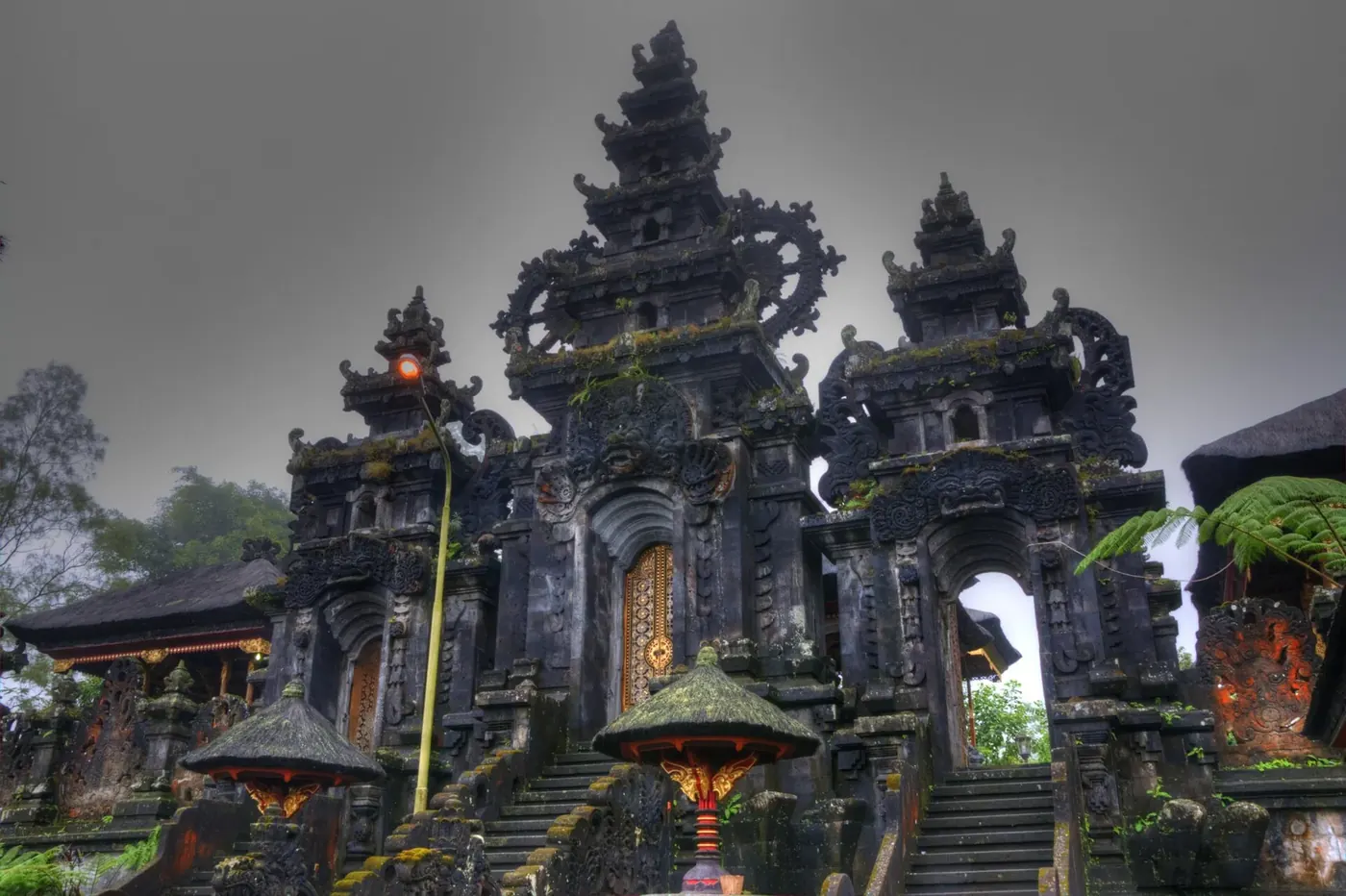
Photo Bhasker Thodla, CC BY 3.0
If you have the legs and the hour, Pura Pangubengan above the main terraces is the one that changes people's minds about the place. The path is rough, the climb is genuine, and at the top you are looking down on the whole of Besakih with the coastal plain behind it.
1963, and why this temple carries the weight it does
Every guide mentions the eruption in a sentence. The story is worth more than that, because it explains the atmosphere of the place.
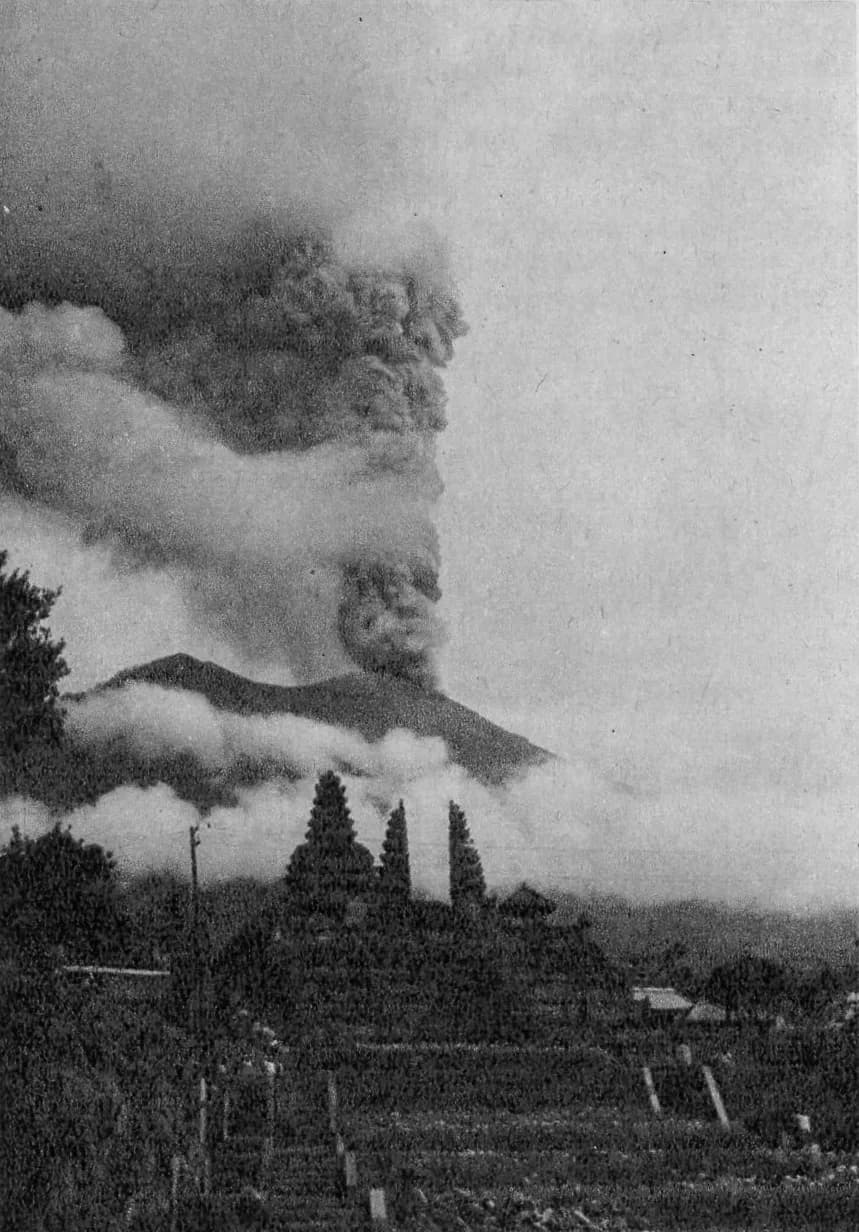
In 1963 the Balinese were preparing Eka Dasa Rudra, the greatest purification rite in the calendar, held at intervals of roughly a century and staged at Besakih because nowhere else has the standing to host it. Mount Agung began to stir while the preparations were under way. The ceremony went ahead in circumstances nobody would have chosen.
The eruption that followed was one of the most destructive in twentieth century Indonesia. It devastated the districts on the mountain's flanks, displaced enormous numbers of people and killed a great many of them. Ash fell across the island and the agricultural damage in the east lasted years.
Besakih was not destroyed. The flows came down the slope and passed the complex, close enough that the escape is impossible to describe as anything other than narrow, and the temples were left standing. For Balinese Hindus that outcome was not luck. It confirmed what the site already was, and the rite was completed at the next opportunity in the following cycle.
Knowing this changes the visit. Standing on the terraces with the volcano above you and the burnt-black stone underfoot, the relationship between the temple and the mountain stops being an abstraction. Agung erupted again in the late 2010s and closed Bali's airspace more than once. The mountain is not a historical detail.
The reputation, and what changed
For a long stretch, arriving at Besakih meant being met in the car park by men presenting themselves as official guides, being told that a guide was compulsory, being walked around for twenty minutes and then being asked for a sum with no relation to anything. Alongside it ran a second routine involving donation books and invented fees. It was persistent enough that guidebooks openly advised skipping the holiest site on the island, which is a remarkable sentence to have to write about a place of worship.
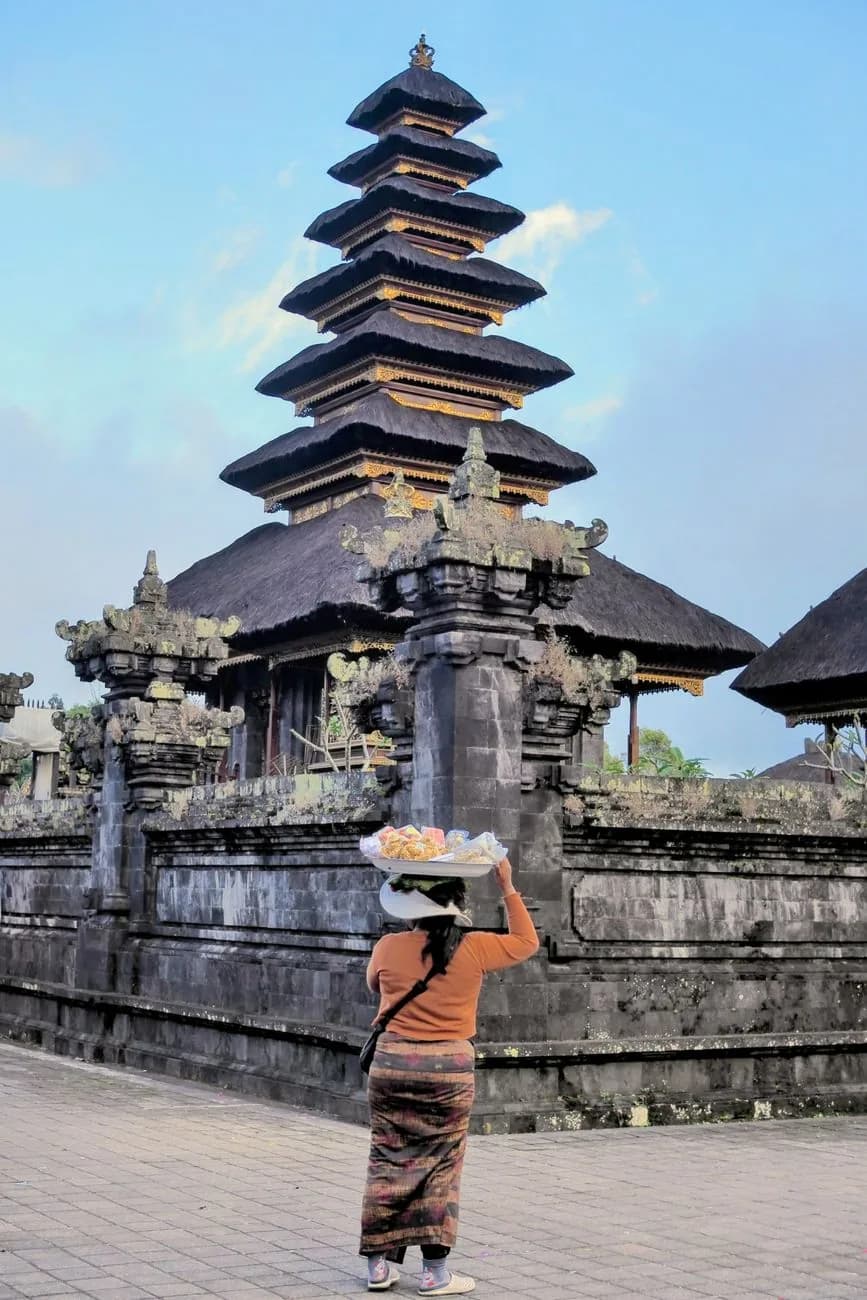
The site has since been substantially reorganised around a large visitor centre at the base of the hill. Private vehicles park there rather than at the temple, a shuttle runs the last stretch up, and ticketing happens formally at a counter instead of being negotiated at a gate. Taking the transaction away from the temple entrance removed most of the opportunity for the old approach, and the improvement in reports since is not subtle.
Some approaches still happen, as they do at any major site anywhere. The defence is unchanged and it is easy: nobody is required to hire a guide to enter, you pay at the official counter, and a polite refusal repeated once is the end of it. Nothing you are told on the path overrides what the counter tells you.
It is worth separating two things that used to be tangled together. The old ambush was a problem. A real guide at Besakih is not, and is genuinely worth having if you want the complex explained. The difference is whether the decision is yours, made calmly, or a condition someone imposes on you in a car park.
Guide, booked trip, or on your own
There are three reasonable answers and the right one depends on what you want from the morning, not on what anyone tells you at the gate.
The guide question is the one that has followed Besakih around for twenty years. Three things actually decide it: whether you want the complex explained, whether you plan to go beyond the main stairway, and whether turning down an approach without discomfort is easy for you.
| Want it explained | Going beyond the stairway | Comfortable saying no | Recommendation |
|---|---|---|---|
| Yes | Yes | Either | Hire an official guide, full route |
| Yes | No | No | Book a guided trip in advance |
| Yes | No | Yes | Hire a guide, central temple only |
| No | Either | No | Consider a booked trip, for the quiet |
| No | Either | Yes | Go on your own, no guide |
Hire an official guide at the visitor centre
If you want the complex explained and plan to go beyond the main stairway, a guide is the best value here. You get the two things a guide is genuinely good for: naming the temples as you pass them, and knowing which paths above the main stairway are open on the day. Arrange it at the counter when you buy your ticket, before you start walking, so the price is agreed while you are still standing somewhere calm. Ask at the ticket counter rather than accepting whoever approaches you on the path, agree the figure and the route before you set off, and say up front that you want the side temples, or you will be walked up the middle and back down.
Book a guided trip before you arrive
If you want the commentary but are not comfortable negotiating for it on the spot, booking in advance removes the entire transaction from the day. You turn up with a guide already attached to you, and every approach on site becomes somebody else's problem. It also solves the two and a half hour drive, which is the other half of a Besakih day. Pick a trip that pairs Besakih with somewhere else in the east so the driving earns its keep. Check the listing says the temple entrance is included, or budget for it separately. Free cancellation matters here because the mountain makes its own weather.
Take a guide, but only for the central temple
If you want the explanation, are comfortable handling the conversation, and do not plan to go beyond the main stairway, a short guided walk up the main axis gives you the padmasana, the trinity temples and the layout, which is most of what there is to explain. You are comfortable handling the conversation, so do it at the official counter and keep it brief. Agree a short walk rather than an open ended one, and pay at the counter, never to a book of donations produced on the path. An hour of commentary is plenty for the central group.
Consider a booked trip, for the quiet more than the commentary
You do not particularly want a guide, but you would rather not spend the visit fielding offers. Arriving as part of a booked trip settles that before it starts, and it takes the two and a half hour drive off your hands as well. If that does not appeal, going alone is entirely doable: the reorganisation of the site means the old car park ambush is largely gone. Buy your ticket at the official counter and keep walking past anything else. Nobody is required to hire a guide to enter, whatever you are told, and one polite refusal, repeated once, is the whole technique.
Go on your own, and skip the guide entirely
You are not after commentary and you can turn down an offer without it spoiling your morning. Besakih is a straightforward site to walk unaccompanied: a stairway, a set of terraces, and a view. Buy the ticket, take the shuttle, climb, look back, come down. Ticketing happens at the visitor centre, and that is the only place money changes hands. Read the temple names on the way up so you know what you passed, and give yourself an hour and a half on site, more if you go sideways to the trinity temples.
What the visit is actually like
The pleasure of Besakih is the ascent and the geometry, not a close inspection of shrines. Expect that and the place delivers completely.
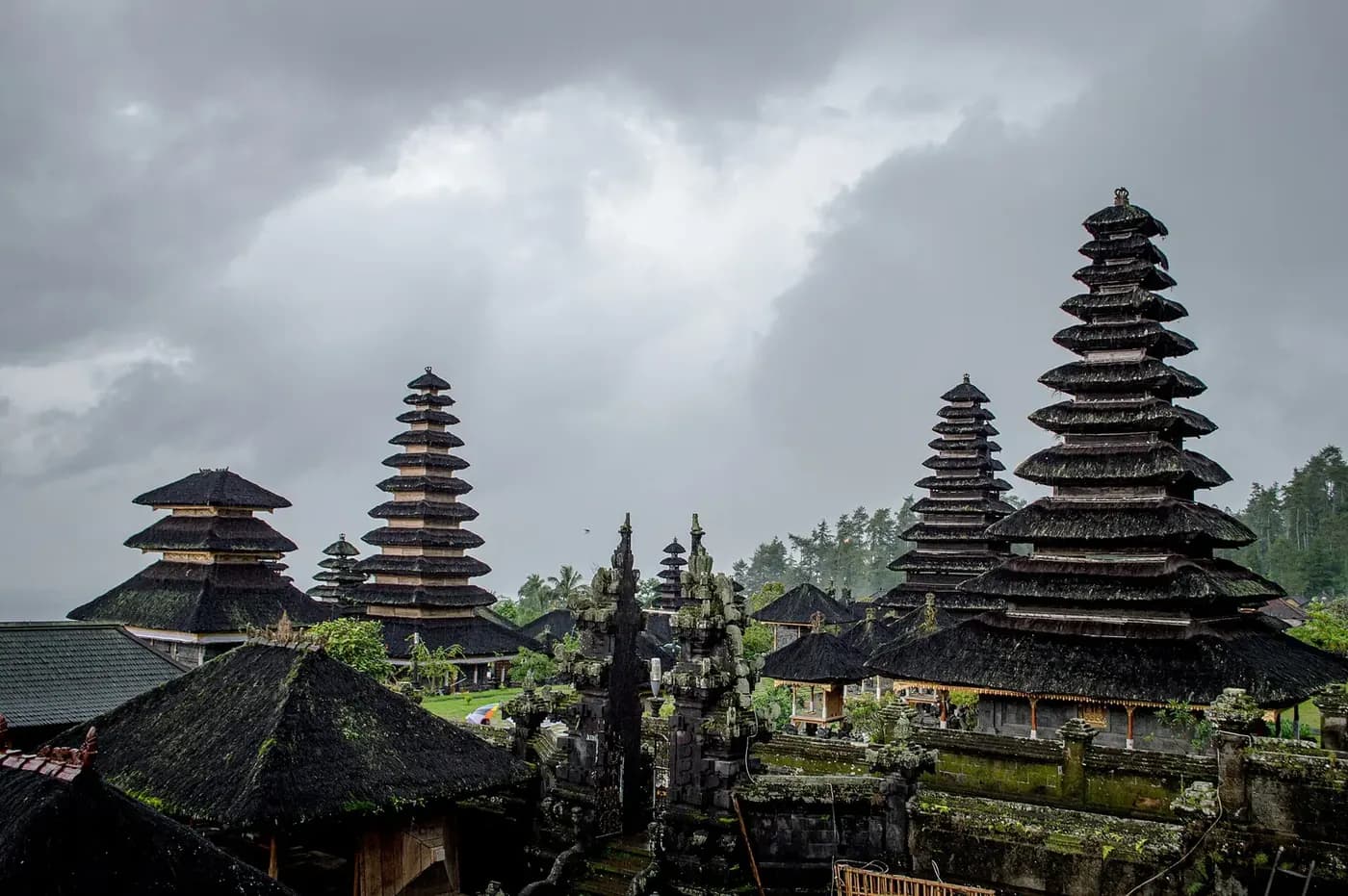
Photo Philip Nalangan, CC BY 4.0
The stairway
A broad flight of steps climbs from the entrance through a split gate towards the central temple, flanked by carved guardians. It is the image everyone takes, and it is considerably more impressive standing at the bottom of it than in any photograph of it.
The terraces
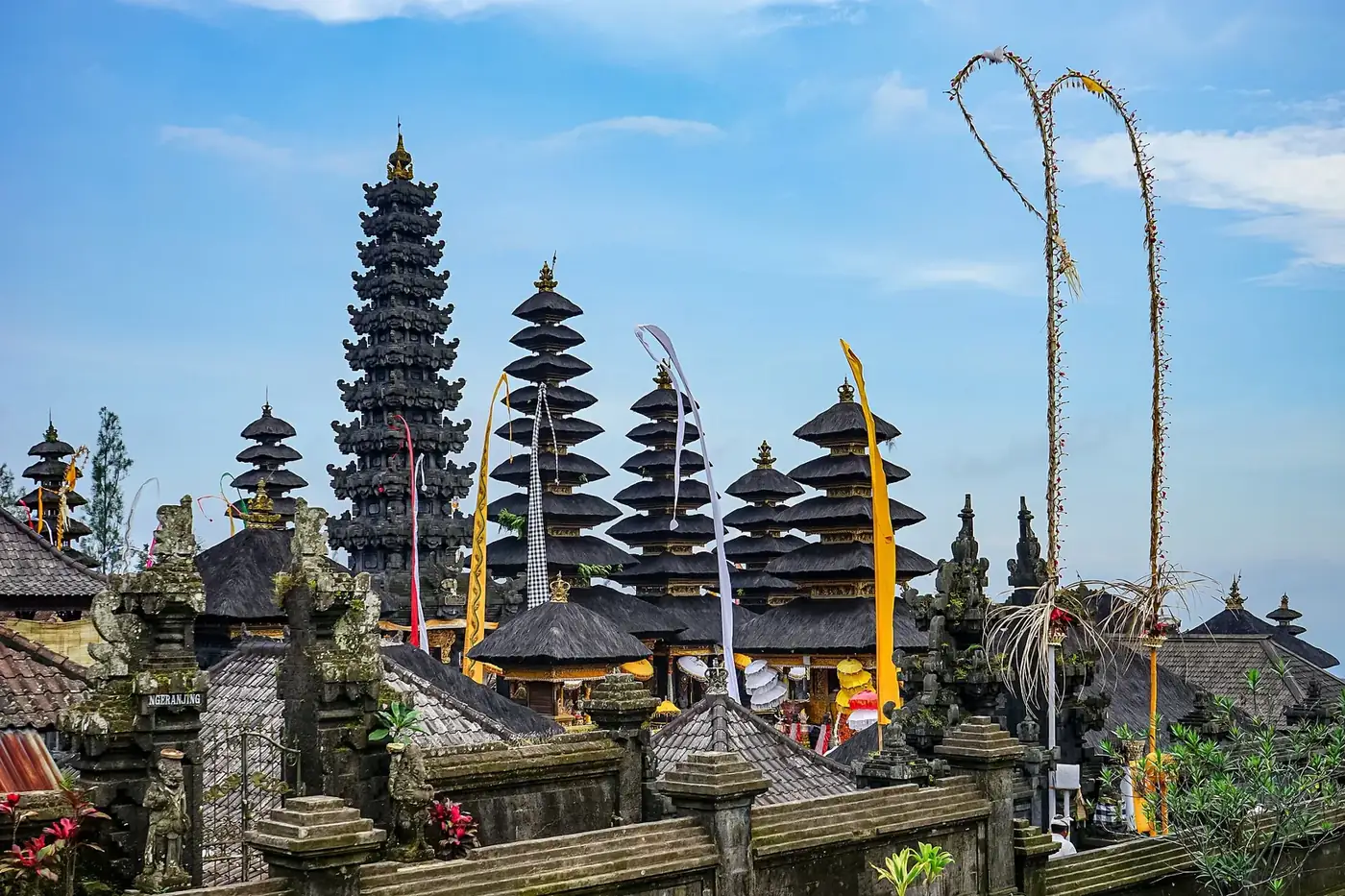
You walk between courtyards on successive levels, with black thatched meru towers stepping up the slope in odd-numbered tiers. It reads as a town of temples rather than a single building, which is exactly what it is.
The view back
Turning round is half the reason to climb. The land falls away towards the south coast and on a clear morning you can see a very long way. Agung itself is behind and above you, more often in cloud than not.
What you can and cannot enter
This is the single biggest cause of disappointed reviews, and it is entirely avoidable by knowing it in advance. Besakih is a functioning sanctuary rather than a monument, and the rules that apply to worshippers apply to you as well, which cuts both ways.
| Part of the complex | Visitor access | What that means in practice |
|---|---|---|
| Main stairway and split gate | Open | The classic frame. Climb it, stand on it, photograph from it. |
| Terraces and paths between temples | Open | Where you will spend most of your time, and where the site finally makes sense. |
| Outer courtyards of the temples | Usually open | Varies by temple and by day. If a ceremony is running, assume not. |
| Inner courtyards of Pura Penataran Agung | Worshippers only | You see the padmasana and the shrines from outside the wall. This is not a queue you can join. |
| Anywhere during a major ceremony | Closes at short notice | Frustrating after a long drive, and also the most interesting day to be there if you accept looking from further back. |
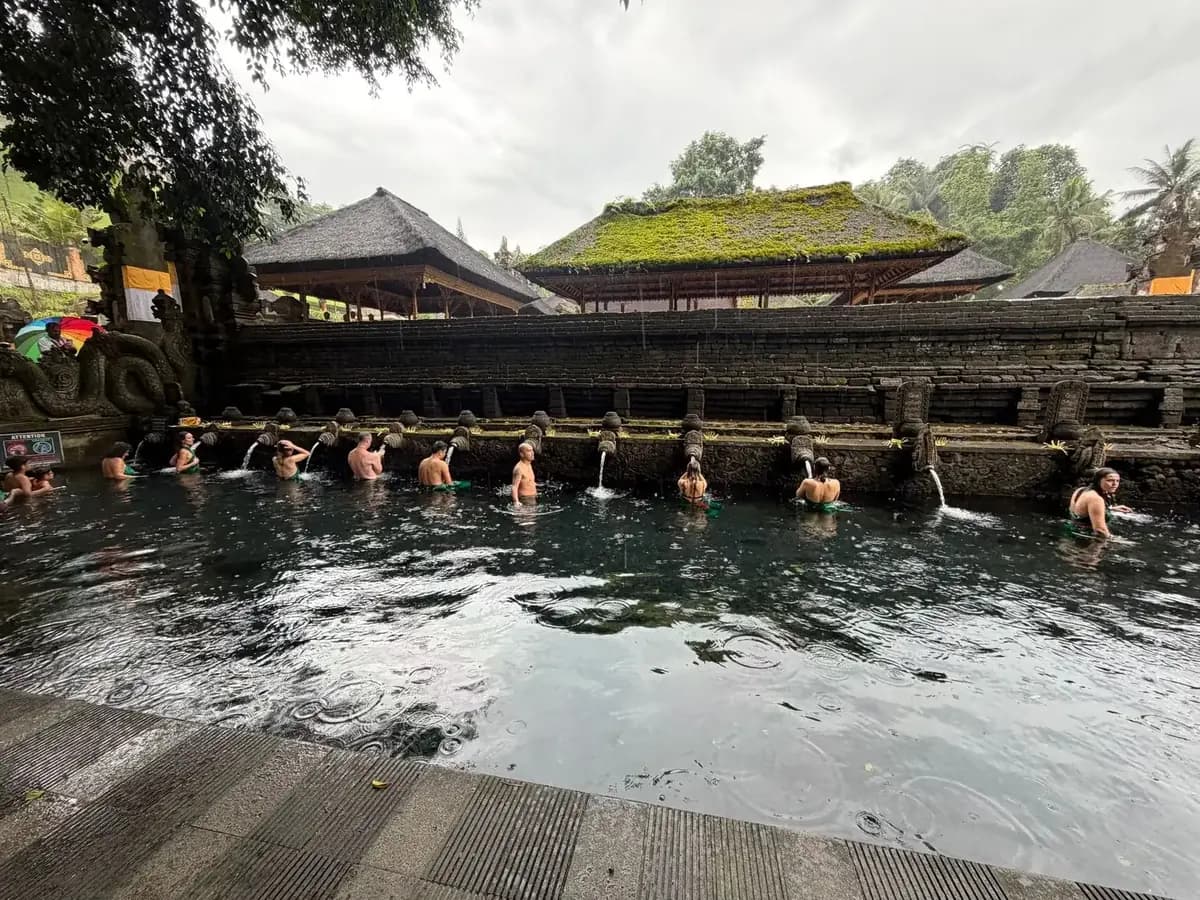
If walking through a temple interior is what you are after, Besakih is the wrong choice and Tirta Empul near Ubud is the right one, because there you can enter the water and take part in the ritual rather than watching it from behind a wall.
Ceremonies, and the day you might get lucky
Besakih runs a dense ceremonial calendar, because it hosts rites for the whole island as well as its own. The largest annual event is Bhatara Turun Kabeh, when the deities are understood to descend to the temple together and worshippers arrive from every part of Bali. It falls around the full moon of the tenth Balinese month, which lands in the March and April window on a Gregorian calendar and moves from year to year.
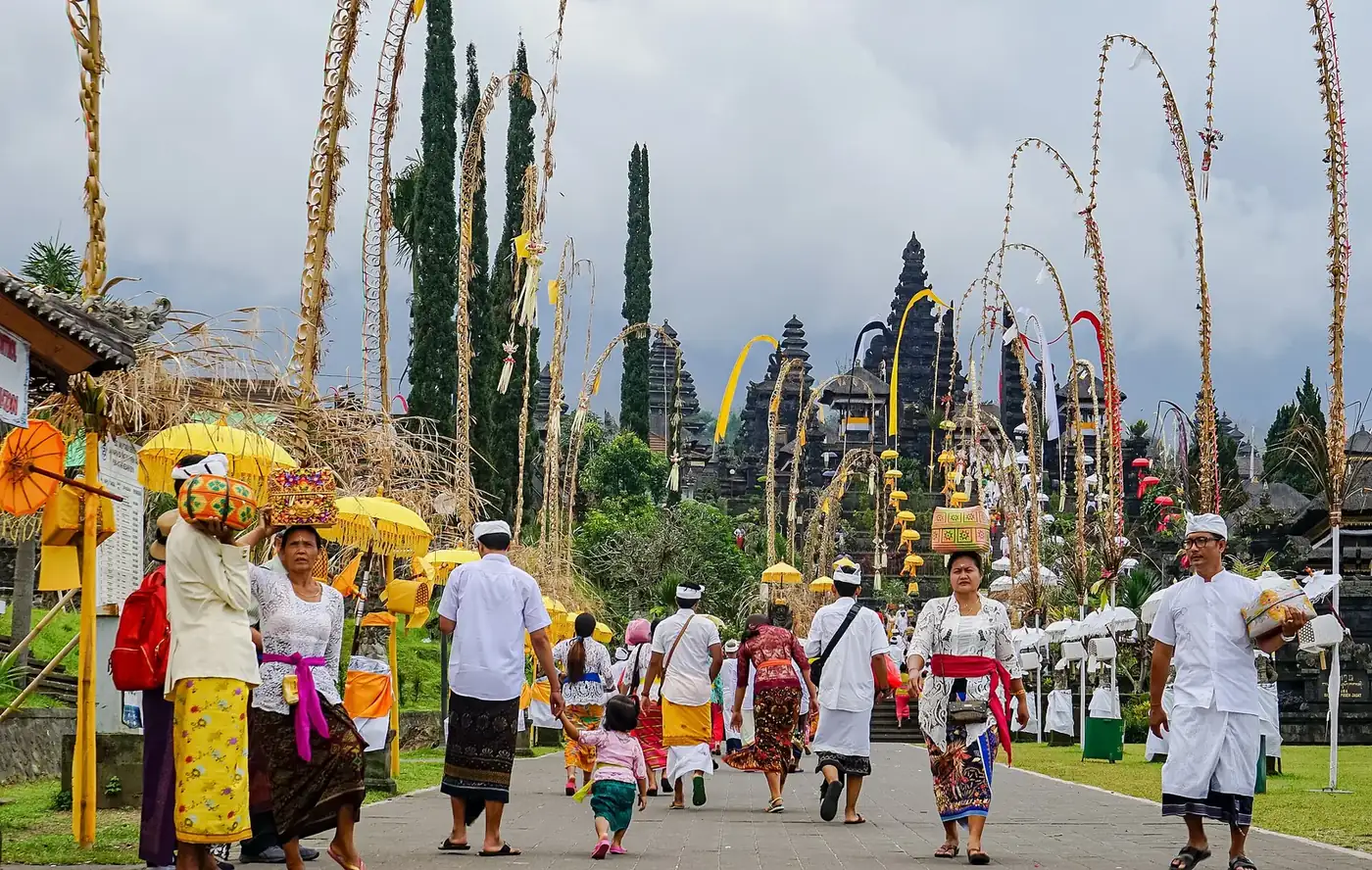
On a day like that the complex is transformed. The approach fills with penjor, the tall curved bamboo poles that mark a festival, and with families in white and gold carrying offerings up the hill on their heads. You will not get near the central shrines, and it does not matter in the slightest, because the thing worth seeing has moved outdoors and is happening all around you.
Above that sits Eka Dasa Rudra, the great purification held roughly once a century, which is the rite the 1963 eruption interrupted. You will almost certainly not be in Bali for one, and it is worth knowing about because it is the reason this particular hillside outranks every other temple on the island.
Practically speaking: a ceremony day is a coin toss. Check with your driver or your hotel before you set out, because they will know, and decide whether you would rather see the temple or see it in use. If you go on a festival day, dress properly, stay outside anything walled, do not stand higher than a priest, and keep the camera at waist level rather than in anyone's face.
Getting there, and how long the day really takes
Besakih sits in Karangasem, inland and high, and the drive is the part people underestimate. These are realistic figures rather than the ones a mapping app gives you on an empty road.
| Coming from | Drive, one way | Leave by | Shape of the day |
|---|---|---|---|
| Ubud | 1 h 30 | 07:00 | A comfortable half day. The easiest base for Besakih by some distance. |
| Sidemen | 45 min to 1 h | 08:00 | The closest sensible base, and a beautiful valley in its own right. |
| Candidasa | 1 h 15 | 07:30 | Pairs naturally with Tirta Gangga on the way back east. |
| Seminyak, Canggu, Kuta | 2 h 30 to 3 h | 06:00 | A full day, five to six hours of it in a car. Only worth it combined with something else. |
| Amed | 1 h 30 to 2 h | 07:00 | Works well as one leg of an east Bali loop with Lempuyang. |
Private driver
The standard solution and the right one for most people. A driver for the day is inexpensive by European or Australian standards, waits while you climb, and lets you chain Besakih with a second stop without renegotiating anything. Agree the itinerary in the morning, not at each stop.
Scooter
Reasonable from Ubud, Sidemen or Candidasa if you already ride confidently. Genuinely inadvisable from the south. Three hours each way on unfamiliar roads, with an afternoon of rain at altitude a realistic possibility, is not a good trade for saving the price of a car.
Grab and Gojek
Fine for getting there, unreliable for getting back. Coverage in the hills above Karangasem is thin and you can be left waiting a long time in a car park at the end of the afternoon. If you use an app, agree with the driver that they wait.
When to go
Altitude decides this, not the tourist calendar. Besakih makes its own weather and it does so on a predictable daily rhythm.
Early morning
The best window without argument. Cooler for the climb, the mountain is more likely to be out, and the coach groups have not arrived. Arrive within an hour of opening and you get the terraces close to yourself.
Late morning
The busiest stretch, when the organised trips from the south land together. Still perfectly good, but the stairway is shared and the sun on the open terraces is hard work.
Afternoon
Cloud usually wins by early afternoon and rain is common, especially in the wet season. It is atmospheric rather than ruined, but wet stone steps in flip-flops are how ankles get turned.
Season
The dry months from around April to October give you the best odds of seeing Agung. The wet season gives you dramatic skies, fewer people and a genuine chance of arriving inside a cloud.
Tickets, dress code and what to bring
| Where | Besakih village, Karangasem regency, on the south-western slope of Mount Agung at roughly a thousand metres. |
|---|---|
| Ticket | A few dollars at the official counter, with sarong and shuttle in small additional amounts. Cash. Prices moved when the visitor centre opened and will move again. |
| Hours | Open through the day, from early morning to late afternoon. Ticketing closes before the site does, so do not arrive at the last hour expecting to climb. |
| How long | An hour and a half to two hours on site, plus the shuttle at both ends. Add an hour for Pangubengan. |
What to wear
A sarong and sash are compulsory for everyone regardless of what else you are wearing, and both are available at the entrance. Shoulders covered. Beyond the rule, dress for the climb: closed shoes with grip, because the steps are worn stone and they are frequently wet, and a hat, because there is almost no shade on the terraces.
The same etiquette applies here as at every Balinese temple. Do not climb on shrines to get a photograph, do not point your feet at a shrine while sitting, step aside for a procession, and by convention women who are menstruating do not enter temple grounds. Nobody checks, and it is asked of visitors as much as of the Balinese.
What to bring
- Water. More than you think. The climb is short but it is at altitude in the open.
- Cash in small notes. Ticket, shuttle, sarong, parking and a drink afterwards. Cards are not the norm here.
- A layer or a light rain shell. A thousand metres changes the temperature more than people expect, and the cloud arrives without ceremony.
- Sun cover. Hat, sunscreen. The terraces are entirely exposed.
There are warung and stalls around the visitor centre for a plate of nasi campur or a coffee afterwards. Do not plan a serious lunch here, eat properly in Sidemen or back in Ubud.
Combine it with
Besakih on its own is a lot of driving for ninety minutes of temple. In the east it has natural partners, and picking one turns the day from a long errand into a proper itinerary.
Lempuyang
The Gates of Heaven, and the only pairing that justifies a pre-dawn start from the south. Do Lempuyang at opening while the queue is short and the mountain is clear, then come west to Besakih in the middle of the morning. The reverse order does not work.
Tirta Gangga
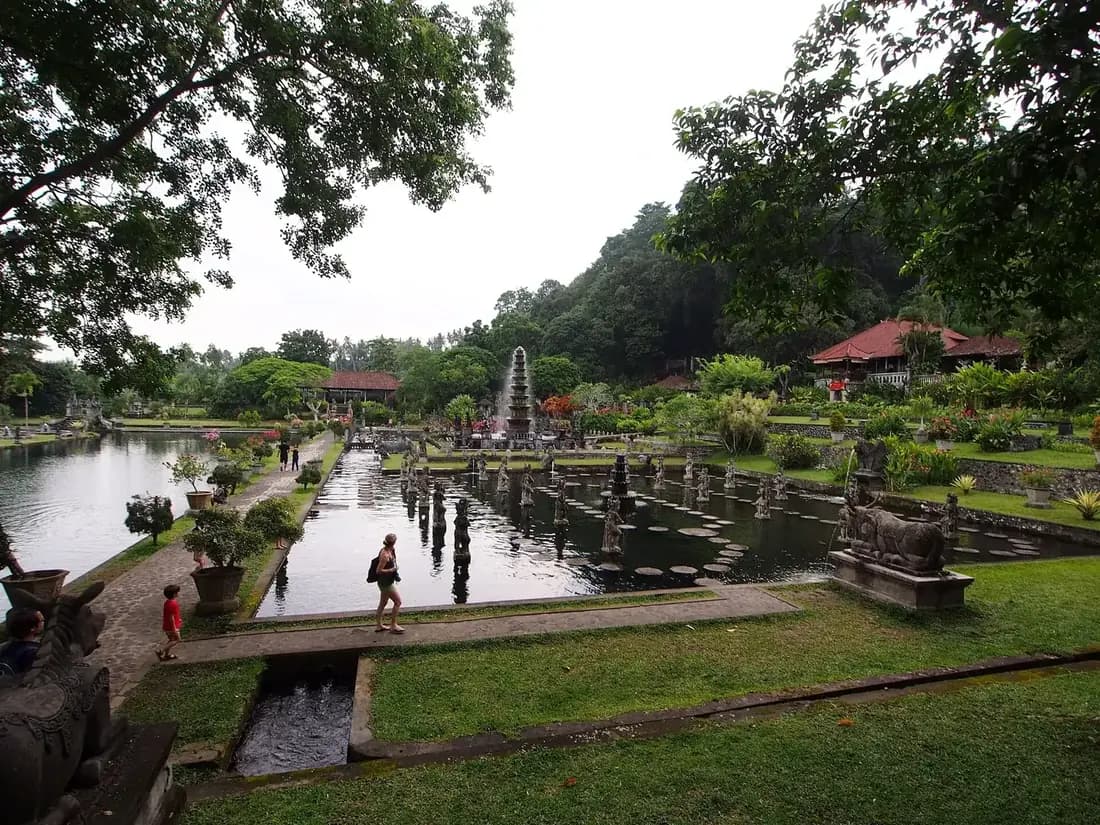
A royal water garden rather than a temple, and the perfect antidote to a hot climb: shade, ponds, stepping stones and somewhere to sit. About an hour east of Besakih and easy to slot in on the way back towards the coast.
Sidemen valley
Twenty minutes downhill, all rice terraces and river valley, and the quietest place to stay within reach of the temple. If Besakih is on your list and Ubud is starting to feel crowded, one night in Sidemen solves both problems at once.
Coming from the west, the road up passes through the country south of Kintamani, and it is entirely feasible to attach Besakih to a morning at Tukad Cepung if you leave early enough. What does not work is trying to bolt Besakih onto a day that already includes Tegallalang and a coffee plantation. Something in that chain gets rushed, and it is always the temple.
The volcano itself is a different proposition from the temple on its flank. Agung is a serious climb that few visitors attempt, and the one almost everybody does instead is Mount Batur an hour north, which is where you get the view back towards Agung standing out of the cloud at first light.
For how Besakih sits against the rest of the island's temples, and which ones are actually worth the drive from where you are staying, the Bali temples guide compares them side by side. Two very different alternatives, if the east is simply too far: Taman Ayun for a royal temple in a moat with no climbing at all, and Ulun Danu Beratan for the lake temple in the northern highlands.
So is it worth it
The honest answer depends entirely on what kind of traveller you are, and the reviews split cleanly along those lines.
Go, without hesitating
- You are interested in how a religion organises itself in space, and you will happily spend two hours working out a layout.
- You are staying in Ubud, Sidemen, Candidasa or Amed, so the drive is an hour or so rather than three.
- You want scale. There is nothing else on Bali that operates at this size.
- You are already going to Lempuyang and the two fit into one east Bali loop.
Think twice
- You have four days on the island and you are based in Seminyak or Canggu. The maths does not work.
- You are travelling with small children or anyone who struggles with stairs in heat.
- You are chasing one specific photograph. The gate here is impressive in person and unremarkable in a phone camera.
- You want to be inside a temple rather than around one. That is a different site.
The people who come back disappointed almost always arrived expecting a monument and found a working sanctuary that is not especially interested in them. The people who come back delighted arrived understanding that, climbed slowly, went sideways to the empty temples, and turned round at the top to look at the island falling away beneath them. Besakih rewards the second approach and punishes the first, and which one you take is entirely within your control.