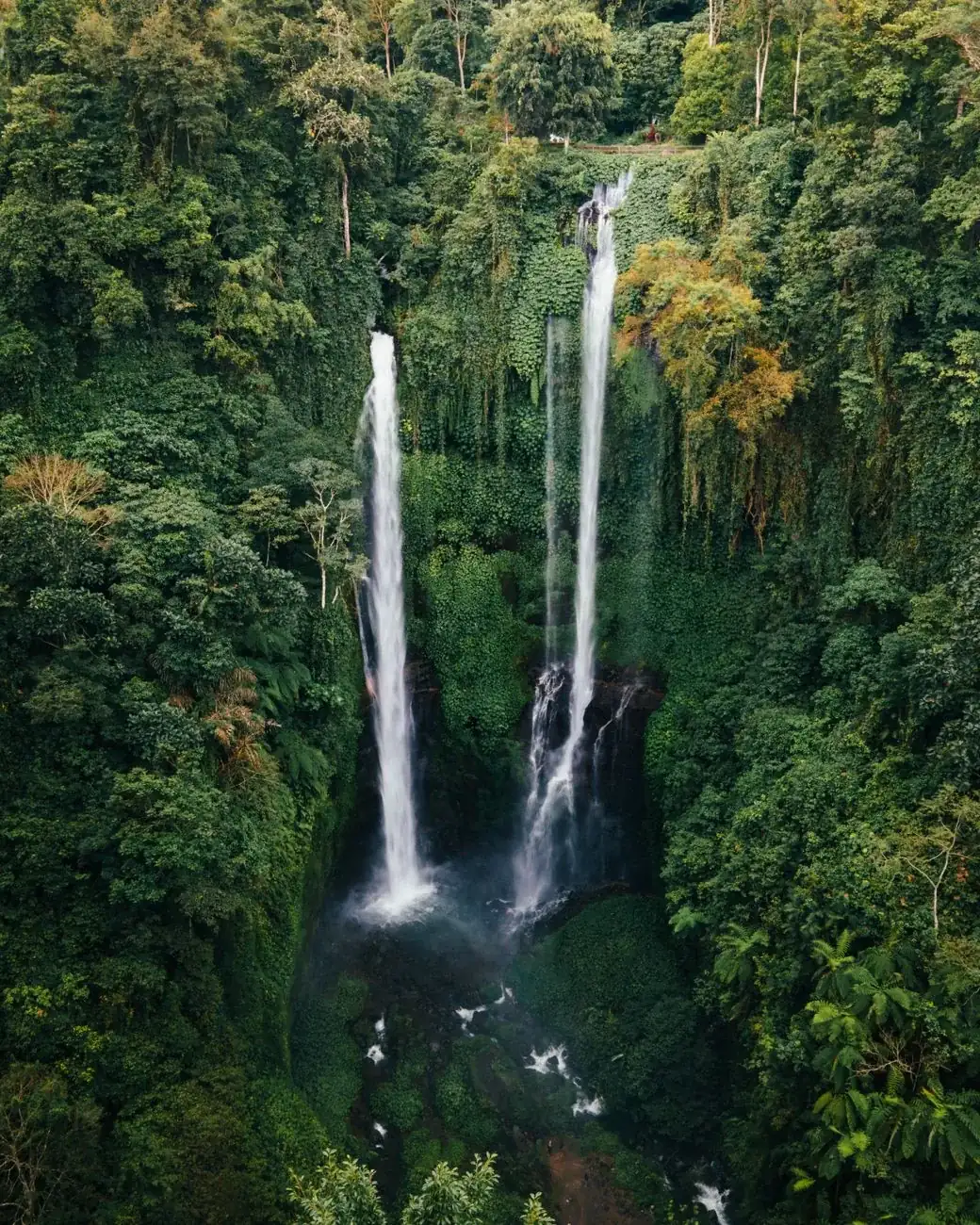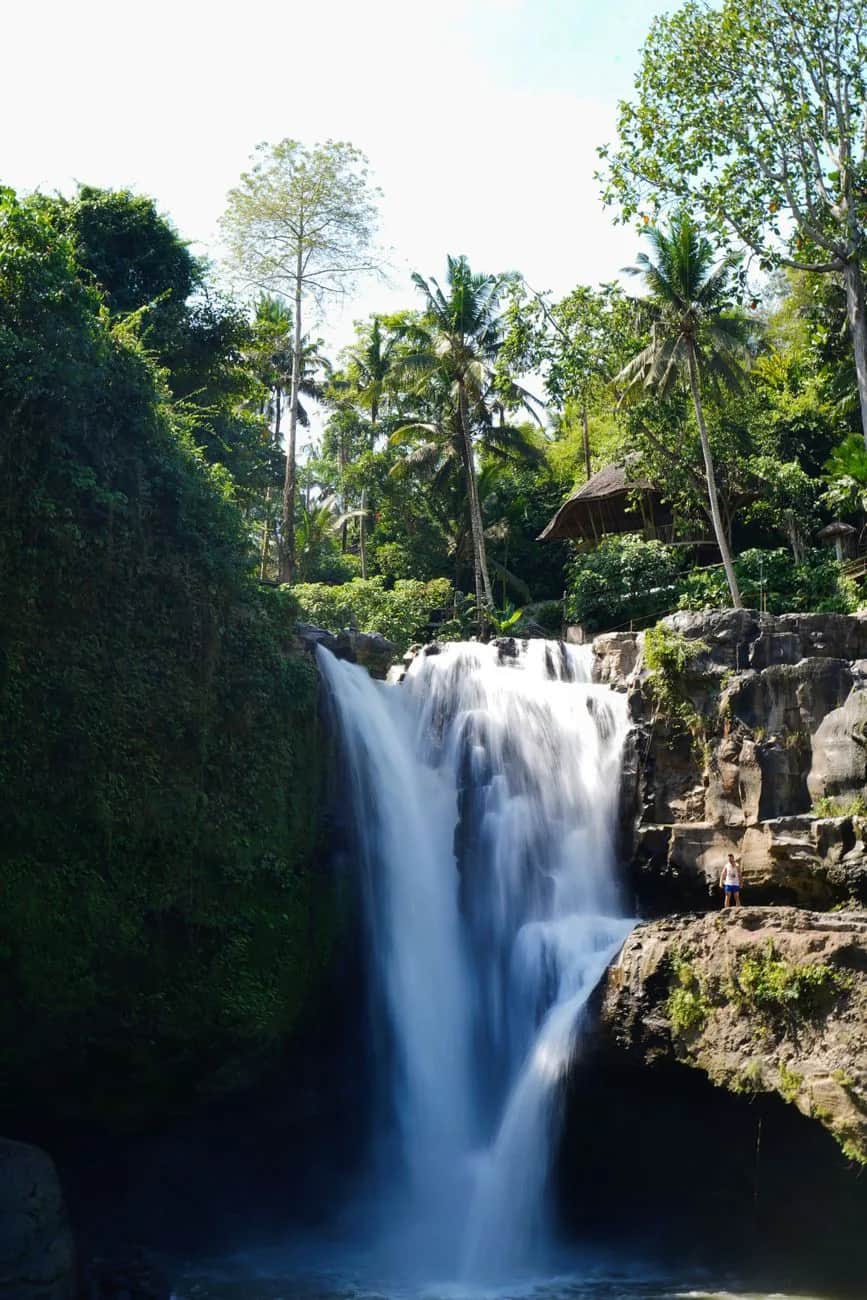
Tegenungan is a proper river waterfall rather than a jungle trickle: wide, loud, and carrying real volume over a rock lip into a pool you can walk to. It sits about twenty minutes south of Ubud on a good road, and it has a large car park, a ticket booth, warungs, viewing decks, souvenir stalls, swings and photo platforms.
That combination is the whole story. It is the easiest big waterfall to reach on Bali, which is its strength, and it is therefore the busiest and the most developed, which is its weakness. The people who call it the best waterfall on the island and the people who call it a tourist trap are describing the same place on the same day.
This page answers the questions people actually type: how many steps, whether the water is clean, what it costs, what the glass bridge is, and whether it is worth your morning. The last one has no single answer, so there is a tool below that gives you yours.
On this page
Driver, tickets and the loop east
Tegenungan and Ubud waterfall day trips
- ✓A driver who waits, which is what makes a three waterfall morning possible
- ✓Usually bundled with Tibumana and Tukad Cepung, the two that reward the extra drive
- ✓Hotel pickup in Ubud or the south, so the early start actually happens
- ✓Free cancellation on most listings if the river is running brown
Affiliate link. Booking through GetYourGuide costs you nothing extra and supports the guide. Price and rating checked September 2026. Both move with season and demand.
What Tegenungan actually is
A lowland river falling off a rock lip in farming country, with a village on one bank and a coconut grove on the other. Not a canyon, not a jungle, and knowing that in advance changes everything.
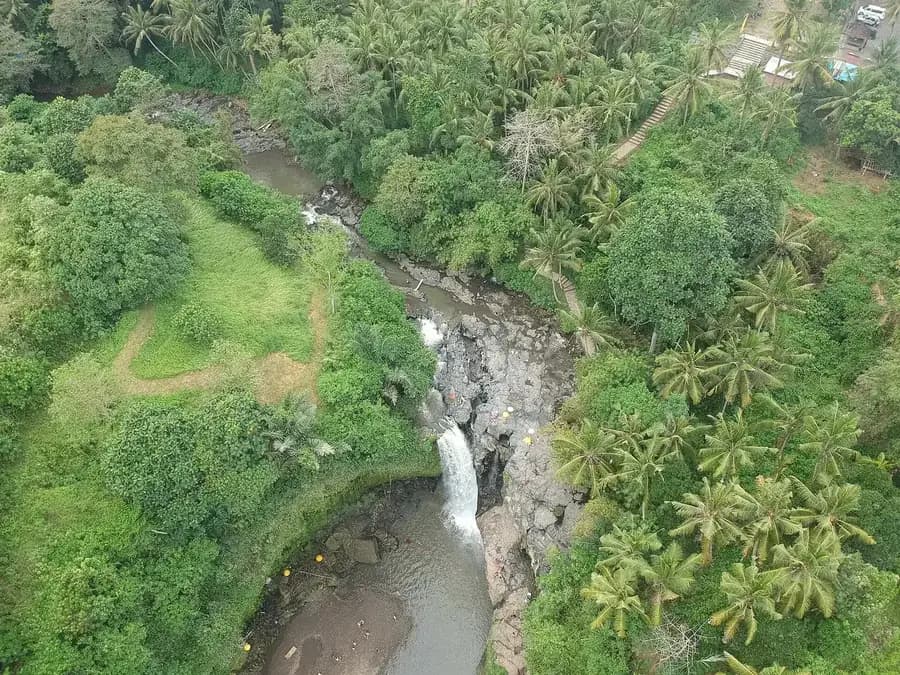
Photo Magul, CC BY-SA 4.0
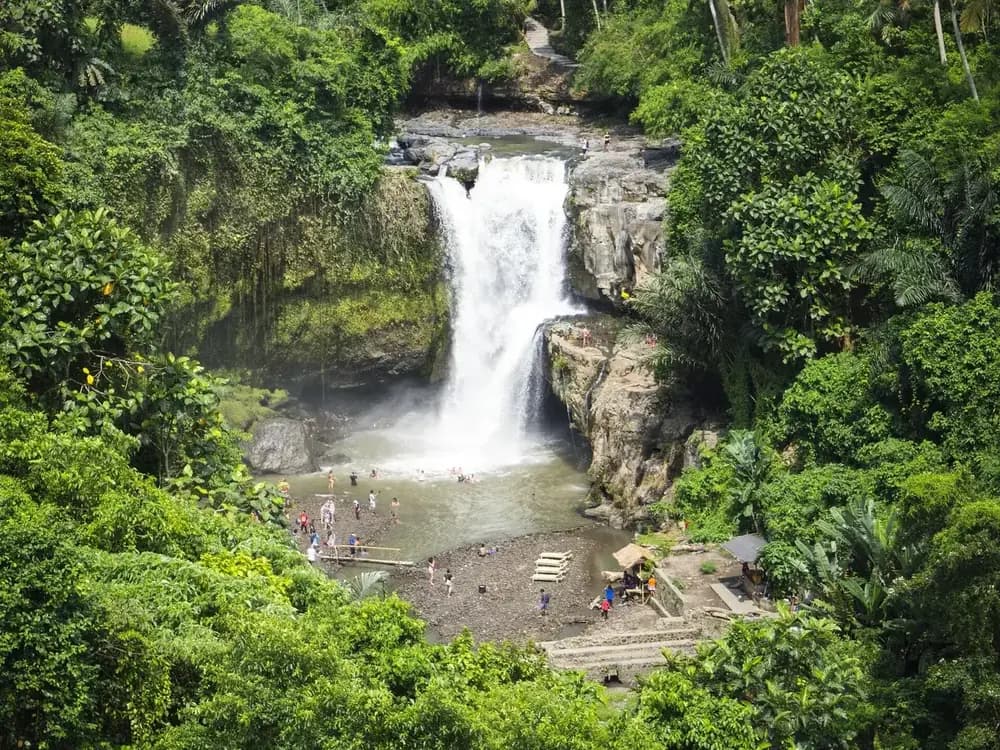
The fall drops something in the region of fifteen to twenty metres in a single curtain, split into two or three strands depending on the flow, into a wide pool with a boulder field downstream of it. It is in Kemenuh village, in the Sukawati district of Gianyar regency, roughly ten kilometres south of Ubud. Villages sit on both banks, close enough that you can hear scooters between the sets of water.
What makes it unusual on Bali is that it is a lowland fall. Most of the island’s waterfalls are up in the hills, fed by short steep streams off the volcanoes, which is why they run clear and cold and why you need an hour of driving to reach them. Tegenungan is at the bottom of the system, carrying everything the river has picked up along the way, which is why it is both far bigger and far less pristine than its neighbours.
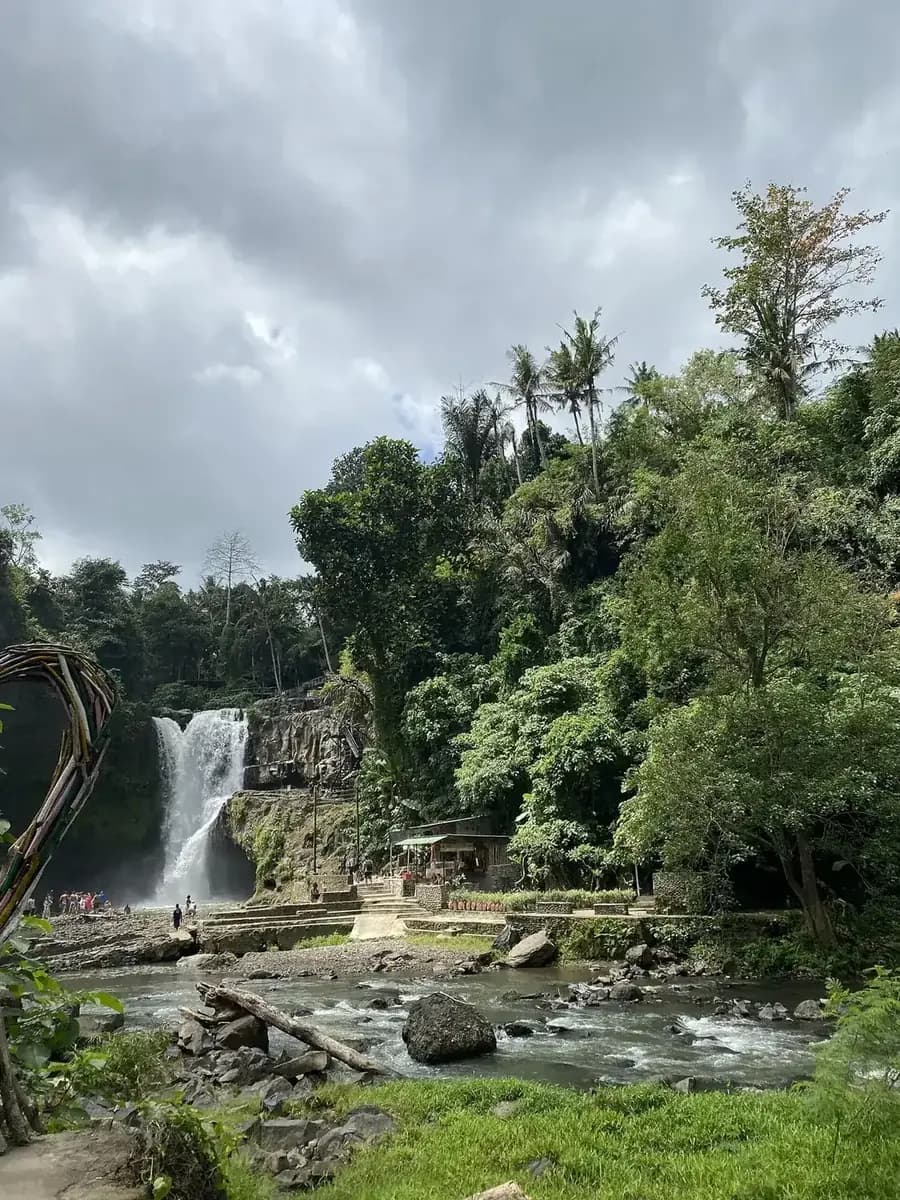
The other consequence of that geography is the one nobody mentions on the tour listings: the setting is built. There is a concrete apron at the base, a made staircase down to it, a rim lined with cafes and stalls, and a run of photo installations along the clifftop. Compare that with Tukad Cepung, where you wade up a stream in a slot canyon, and you have the distance between the two ends of the Bali waterfall experience.
None of that makes it a bad place. It makes it a different kind of place from the one the photographs imply, and the gap between the two is where every one star review comes from.
Is Tegenungan worth it for you
This is the most searched question about the place, and the honest answer is that it depends on four things about your trip rather than anything about the waterfall.
Reviews of Tegenungan split almost down the middle, and the split is not about the waterfall. It is about how much time you have, whether this is your only one, how much you mind a crowd, and how you feel about the climb back up.
If stairs are a real issue for you
Go for the view from the top, not for the waterfall. The upper terrace looks straight down onto the fall and costs you nothing but the ticket, with a warung and a table facing it. The descent is the part to be honest about, several flights of steps with an uneven finish, in heat, and the climb back is what people remember. Treat Tegenungan as a viewpoint with a coffee rather than as a walk, and you will have a perfectly good half hour. For water you can reach on the flat, Tirta Empul near Ubud involves no descent at all.
If crowds ruin it for you and you have other falls planned
Skip it and drive twenty minutes further. Tegenungan is a big, genuinely impressive fall inside a landscaped visitor site, with a car park, ticket booth, souvenir stalls, cafes, swings and photo frames along the rim. If other waterfalls are already on your list and busy places spoil the experience for you, there is no version of this visit that works. Tibumana and Tukad Cepung are both around half an hour east and both are quieter by an order of magnitude.
If crowds ruin it for you but this is your only waterfall
It is worth it only if you are through the gate at opening. Tegenungan gives you the most water for the least effort on the island, and the first hour of the day is a different place from the rest of it: the tour vans have not arrived, the base is nearly empty, and the light is still coming into the gorge. Arrive after ten and you get the version you say you hate. The site does not change through the day, the number of people in it does.
If you have an hour and this is your only waterfall
Yes, this is the right call. One hour, one waterfall, and the closest big one to Ubud. Nothing else nearby gives you this much water within twenty minutes of town, and the made staircase means you spend your hour looking at the fall rather than picking your way down a root path. Go early, take the steps at your own pace, and do not expect solitude.
If you have an hour and other falls already planned
It is a reasonable stop, not a highlight. Tegenungan works as a convenient first stop rather than the one you will talk about afterwards. It is wide and loud and easy to reach, which is precisely why everybody is there. See it on the way somewhere, keep it short, and let the quieter falls carry the day. Kanto Lampo is fifteen minutes away and photographs better for the same amount of time.
If you have half a day and this is your only waterfall
Yes, and you have time to do it properly. Half a day turns Tegenungan from a photo stop into a real visit: down to the base, along the boulders, back up for something to eat with the fall in front of you, and time to cross to the Blangsinga side for the view from the opposite bank. If it is your only waterfall, this is the one that delivers the most for the effort.
If you have half a day and would rather it were quiet
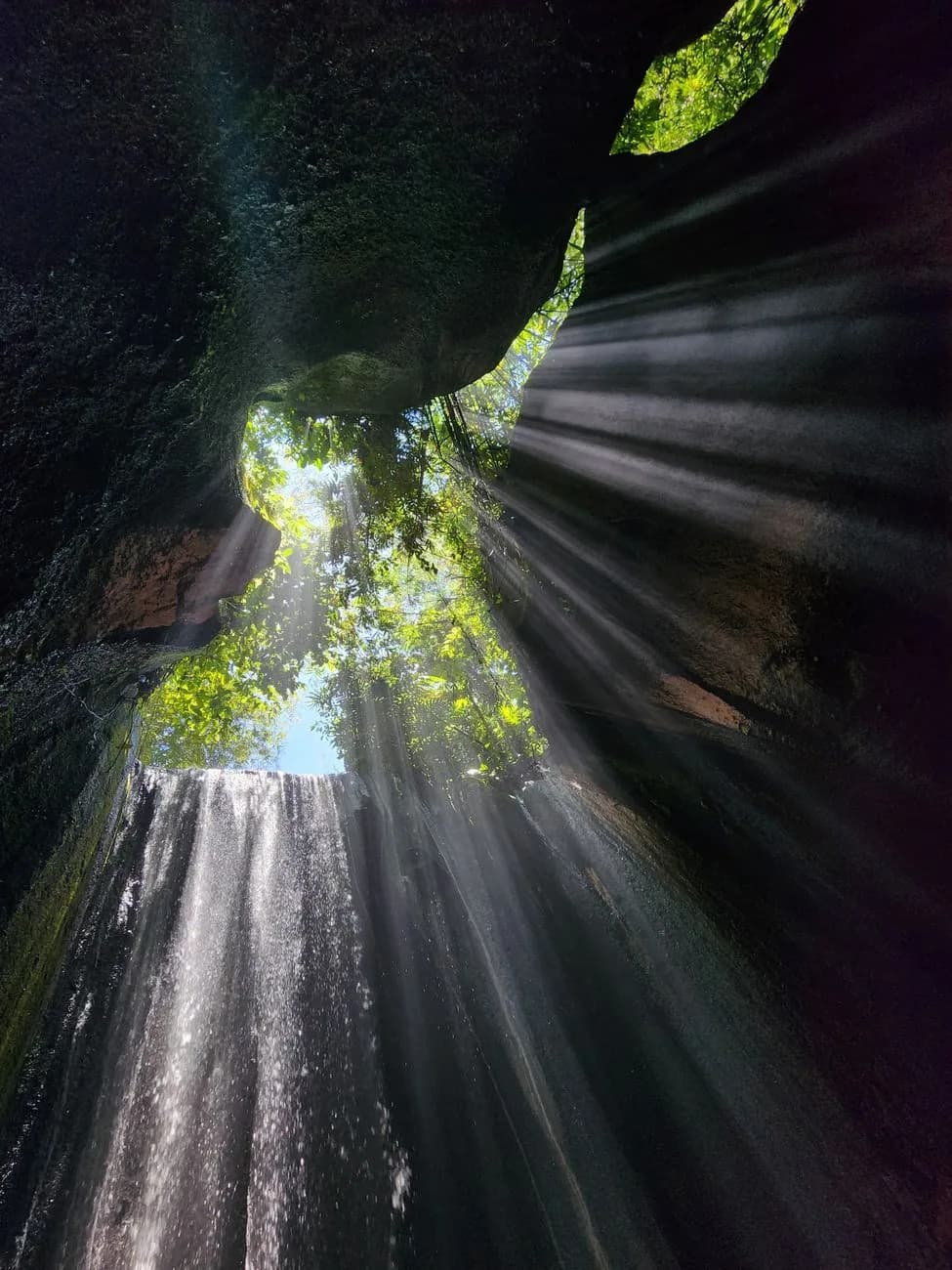
Do it first, then leave the crowd behind. Tegenungan at opening, twenty minutes at the base while it is still calm, then east before the vans arrive. Half a day is enough for two falls, and doing them in that order means the busy one happens at the hour when it is not busy yet. Tukad Cepung after Tegenungan is the classic pairing, and the light beam in the cave works late morning.
Otherwise: an easy opener
If crowds do not bother you, the steps are fine and you have the time, Tegenungan is an easy yes and a good warm-up. It is the biggest volume of water of the group and the least demanding to reach, so it sets the bar low on effort and high on noise. Then head east for the falls that are smaller and better.
The pattern in the reviews is remarkably consistent once you sort them. People who came from Ubud with an hour to spare and no other waterfall planned tend to leave delighted. People who had already seen Tibumana or Sekumpul, or who arrived at eleven in the morning in the middle of a coach convoy, tend to leave irritated. The waterfall is the constant in that equation. Everything else is the variable.
The four viewpoints, and what each one costs you
Tegenungan is not one view. It is four, at four different levels of effort, and most of the disappointment on site comes from walking down two hundred steps expecting the picture that was taken at the top.
Every photograph of Tegenungan in circulation was taken from one of four spots, and they are not interchangeable.
| Viewpoint | Steps | Time to allow |
|---|---|---|
| The upper terrace | None | 5 to 10 minutes |
| The middle landing | Roughly half the staircase | 10 to 15 minutes |
| The base and the boulders | All the steps, both ways | 30 to 60 minutes |
| The Blangsinga side | Its own separate staircase | 45 minutes plus a short drive |
The upper terrace, where you buy the ticket
No steps at all. From here you see the whole fall from above and slightly to the side, the gorge, the river running away downstream, and the green wall opposite. This is the view on most postcards and on the front of most tour listings, and the wide shot of the entire waterfall requires nothing of you but walking from the car park. The catch is that the swings, the photo frames and the nest-shaped props are also here, along with the cafes, so there are people in front of you at almost any hour after nine.
The middle landing, part way down the staircase
Roughly half the steps get you to the fall at eye level through the trees, with the spray starting to reach you and the noise properly loud. You lose the wide gorge and gain the sense of scale that the upper terrace flattens out. This is where the flattering light lands on a bright morning, good for portraits with the fall filling the background. The landings are narrow and are also where everybody coming back up stops to breathe, so it is a fast photo rather than a place to linger.
The base and the boulders, at river level
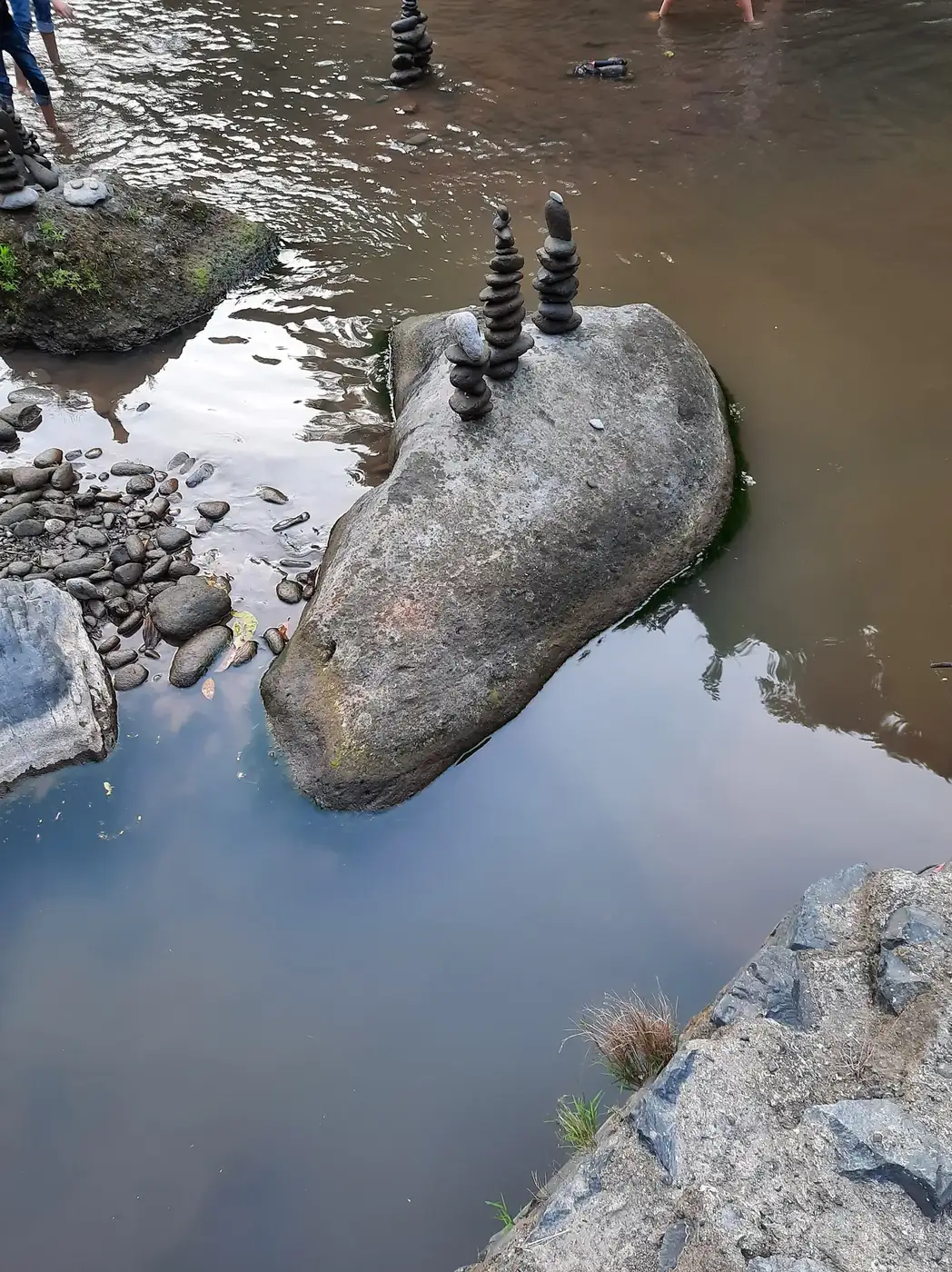
All the steps, both ways, for 30 to 60 minutes, gets you the full drop from directly underneath, the plunge pool, the boulder field downstream and the stacked stone cairns people build on it. Late morning in the dry season there is often a rainbow in the spray. This is the photograph people actually want, a person on the rocks with the column of water behind them and scale finally obvious. Bring a dry bag, the spray reaches further than it looks. The climb back is the price, paid in full over several flights of steps in heat and humidity, which is why the warungs at the top do so well.
A fourth viewpoint exists on the opposite bank at Blangsinga, its own separate entrance, and it is worth its own explanation further down this page.
Photo John Ellis, CC BY 3.0
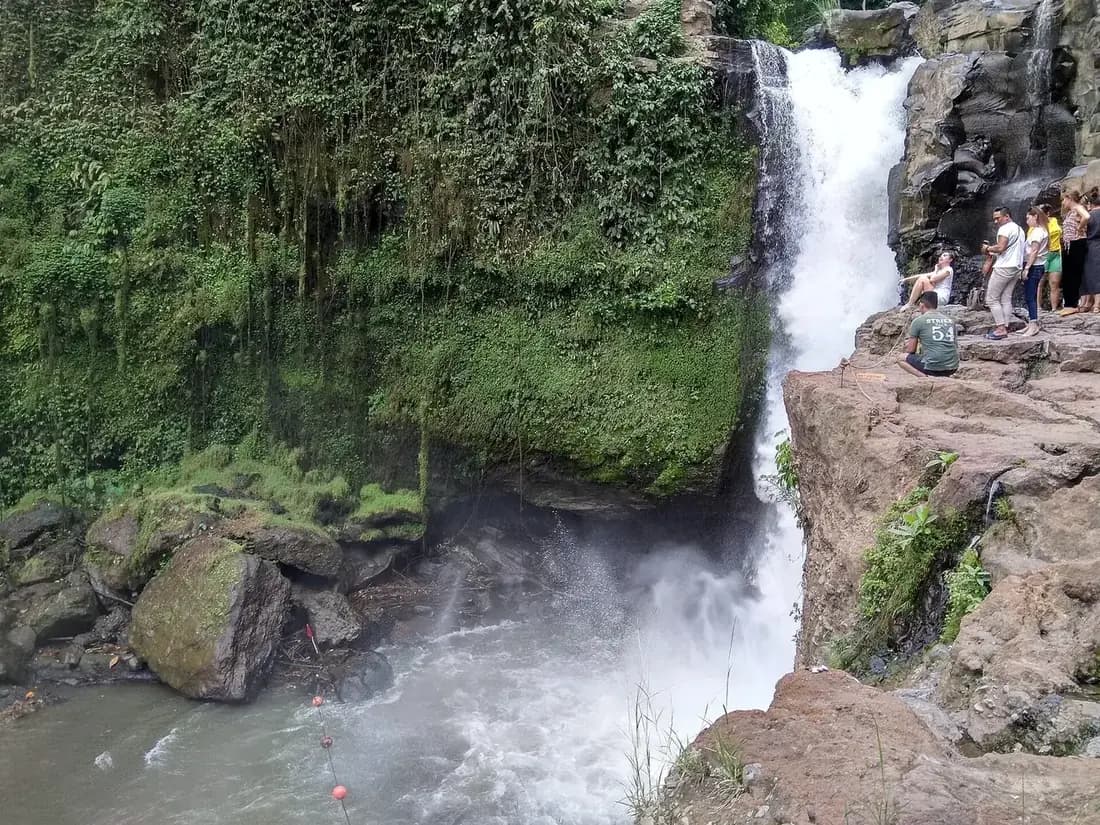
Photo Karter873, CC BY-SA 4.0
The steps, and how hard the climb back really is
How long the walk takes is the single most searched practical question about Tegenungan, and the answer people need is not about the way down.
From the ticket booth to the base takes around ten minutes, on a concrete staircase with handrails through most of it and landings where you can stand aside. There are several flights, and the count you will see quoted online varies wildly because different people start counting at different places. What is consistent is that it is a stairway rather than a hike: no roots, no mud, no scrambling, and no navigation required.
The climb back is a different proposition. Allow fifteen to twenty minutes and expect to be properly warm at the top. The gorge is humid, there is little shade on the middle flights, and you will almost certainly be doing it in the hottest part of the morning because that is when people finish at the base. Every warung at the top exists because of this staircase.
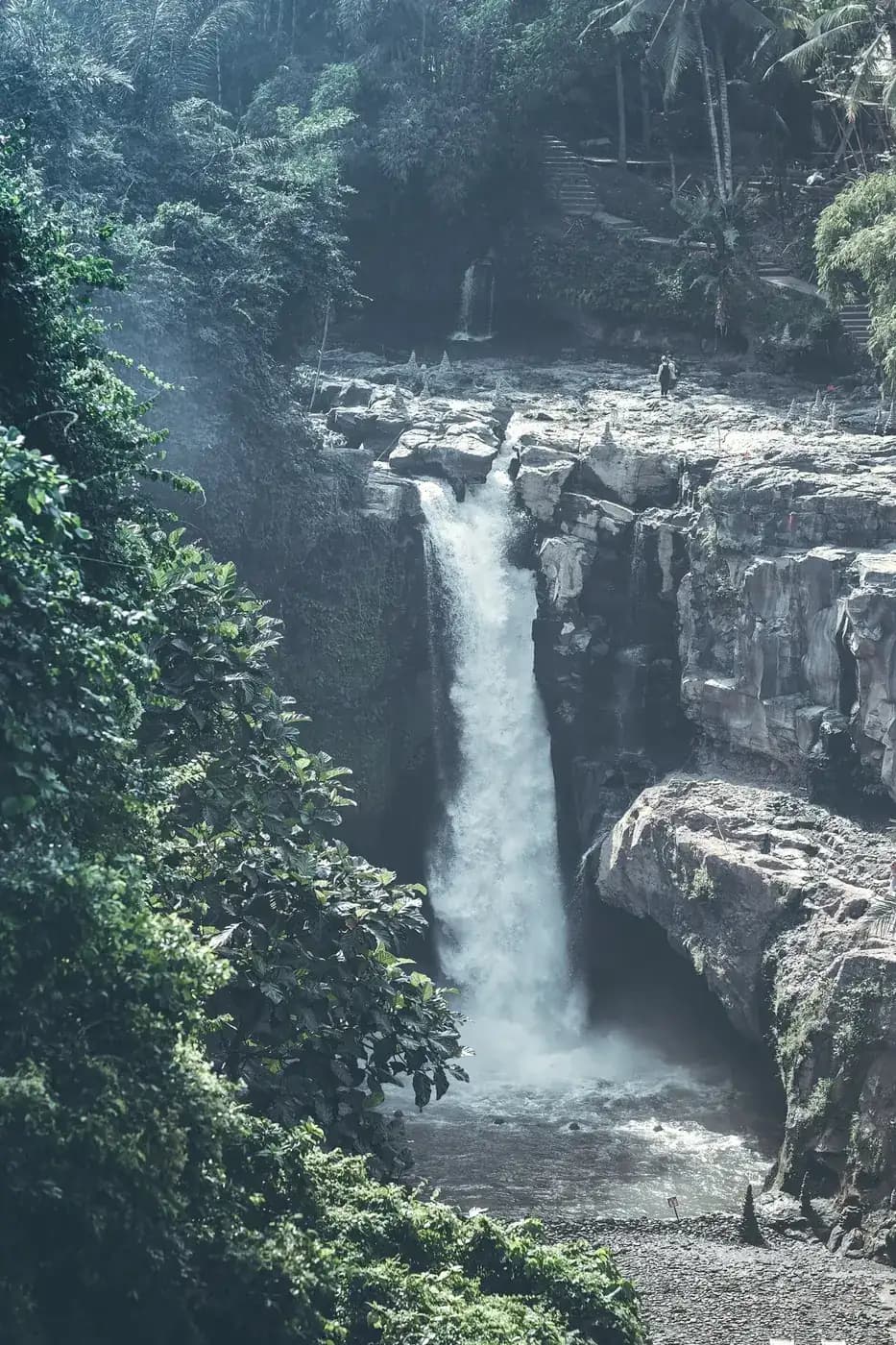
The last twenty metres before the water are the part to watch. The made steps end and you cross wet rock and loose stones to reach the pool. That is where the ankles go, particularly in flip-flops, and it is the reason to wear something with a grip even if you have no intention of swimming.
One thing worth saying plainly: you do not have to go down. The best wide view of the fall is from the top, the cafes are at the top, and a substantial number of visitors look, photograph, drink something and leave without touching the staircase. That is a legitimate visit, not a failed one.
Is the water clean, and can you swim in it
Two of the four questions Google shows for this waterfall are about the water. Most guides answer them by not answering them.
Tegenungan is fed by a river, not by a spring. That river runs through farmland and inhabited villages before it reaches the lip, so what comes over carries whatever the catchment is carrying. After a dry spell it runs reasonably clear and looks like the photographs. After heavy rain it runs brown and fast, sometimes with vegetation and litter in it, and the difference can appear within a few hours of a storm upstream.
That is not a scandal, it is simply what a lowland river waterfall is. The contrast is with a spring-fed site like Tirta Empul, which is consistent all year because the water emerges from the ground a few metres from where you stand, or with the smaller falls further up in Bangli that drain far less inhabited land.
The practical rule is short. If it has rained hard in the last day or two, go to look rather than to swim. If it has been dry, getting in is fine, and the usual caution about not swallowing river water applies exactly as it would anywhere else in the tropics. Do not judge from a photograph taken on somebody else’s week.
As for swimming itself, this is a wade and a splash rather than a swim. The pool is shallow at the edges and the bed is rocky and uneven, so there is nowhere to do lengths and nowhere to stand comfortably in the middle. If a proper swim in clear water is the point of your day, that is Tibumana, and it is half an hour further east.
Tegenungan or Blangsinga: one waterfall, two entrances
One of the most confusing things about this place, and one almost no English-language guide explains clearly.
West bank: Tegenungan, the main entrance
The original and much the busier side. Big car park, ticket booth, the run of cafes and souvenir stalls along the rim, the swings and photo platforms, and the staircase down to the base. If somebody says “Tegenungan” without qualifying it, this is where they went.
It is the only side from which you can get down to the pool and stand under the fall, which for most people settles the question.
East bank: Blangsinga, the quieter side
Signposted as Blangsinga Waterfall or Tegenungan Blangsinga, with its own car park and its own ticket. A viewing deck looks head-on down the gorge, and a short glass-floored walkway projects out above the drop. This is the source of most of the glass bridge photographs you have seen.
Fewer people, fewer stalls, and a genuinely different angle on the same water. Worth the crossing if you have half a day rather than an hour.
The two sides are a few minutes apart by road even though they face each other across the river, because you have to go round via the bridge. Buying one ticket does not get you into the other site. Decide which bank you want before you park, because walking between them is not a realistic option and drivers will take you to whichever one they know best unless you tell them otherwise.
What it costs
The entrance is trivial. The accumulation, as everywhere on Bali, is the part that surprises people.
| What you pay for | Detail | Order of magnitude |
|---|---|---|
| Entrance ticket, main entrance | Collected at a proper booth at the top. Adult rate, children usually less. | ≈ $1 to $2 |
| Parking | Charged separately for a car or a scooter, at the barrier rather than the booth. | ≈ $0.35 to $1 |
| Blangsinga side, if you cross | Its own entrance and its own ticket, including the glass walkway. | ≈ $1 to $3 |
| Swing, photo props, nest platforms | Priced individually on the rim, none of it included in the entrance. | ≈ $3 to $12 |
| Locker or changing room | Small charge at the top if you want to leave a bag or change after swimming. | ≈ $0.60 to $1 |
| Driver for a half day of waterfalls | The real cost of the outing, shared between however many of you there are. | $22 to $40 |
All of it is cash, in rupiah, and none of the figures above are posted anywhere authoritative. Rates are set locally, they move, and they differ between the two banks. Treat every number on this page as an order of magnitude rather than a price, bring small notes, and do not count on an ATM at the site.
The line worth internalising is that the ticket is the cheapest part of the day. The driver is the expense, and a driver who takes you to three waterfalls costs barely more than one who takes you to this one, which is the argument for turning the visit into a morning rather than an errand.
Opening hours, and the hour that decides your visit
Hours
Broadly 07:00 to 18:00, with variation at both ends and nothing published authoritatively. The staircase closes before the site does when the light goes out of the gorge.
The quiet window
Opening to about 09:00. The organised tours reach Tegenungan mid-morning because it is close to everything, so the first two hours are a different site.
The season
Wet season means more water and browner water. Dry season means a thinner but clearer fall. You cannot have both, and most people prefer the dry season version.
The seasonal trade is worth spelling out because it is the opposite of what people assume. Between roughly November and March the river is at its most powerful, the fall is at its widest and the noise is genuinely impressive. It is also when the water is most likely to be brown, when the steps are slick, and when an afternoon storm can turn the pool unswimmable in an hour.
Between roughly May and September the flow drops, the two strands separate, and the water clears up. That is the version in the photographs that made you search for this place, and it is also the version that shares the site with peak-season visitor numbers.
If you have one morning and any flexibility at all, go on the first dry day after a run of dry days, as early as the gate opens. That single decision does more for the visit than any other choice on this page.
Getting there
The proximity to Ubud is the entire reason this waterfall is famous. From the southern beaches it is a different calculation.
| Coming from | Drive | Leave by, for a quiet arrival |
|---|---|---|
| Ubud centre | 20 to 30 min | 06:30 to 07:00 |
| Sanur | 45 min to 1 h | 06:00 |
| Seminyak, Kuta | 1 h to 1 h 30 | 05:30 |
| Canggu | 1 h 15 to 1 h 45 | 05:30 |
By scooter
Straightforward from Ubud on sealed road, with a proper bike park at the top. From the south it is a long, hot ride through traffic and rarely worth it.
By driver
The normal choice, and the one that makes a multi-waterfall morning possible. Agree the full route before you set off rather than adding stops as you go.
By ride app
Getting there works. Getting back is the problem: coverage at the car park is patchy and local arrangements discourage pickups. Have a plan for the return leg.
What is actually up there: cafes, swings and photo props
The rim is a small commercial strip. Whether that is a convenience or a disappointment depends entirely on what you came for.
Cafes and warungs
Several, along the clifftop, with tables facing the gorge. Nasi goreng, juices, coffee, beer. Prices are tourist prices by Balinese standards and still low by anyone else’s.
Swings and nest platforms
Rope swings over the drop and the woven bird-nest frames that appear in every Bali feed. Each is charged separately and each has its own queue by mid-morning.
Toilets and changing rooms
At the top, near the entrance, for a small charge. Basic but functional. There is nothing at the base, so change before you go down or accept a wet drive home.
Souvenir stalls
Sarongs, carvings, beachwear, the same stock as everywhere else on the island. Nobody here is aggressive about it, which is not true of every site on Bali.
Cash and ATMs
Assume there is none that works. Everything on site is cash, and the nearest reliable machines are back towards Sukawati or Ubud. Arrive with small notes.
Parking
Large, sealed, charged at the barrier, and it fills from mid-morning in high season. Coaches use it too, which is a useful early warning of what you will find at the base.
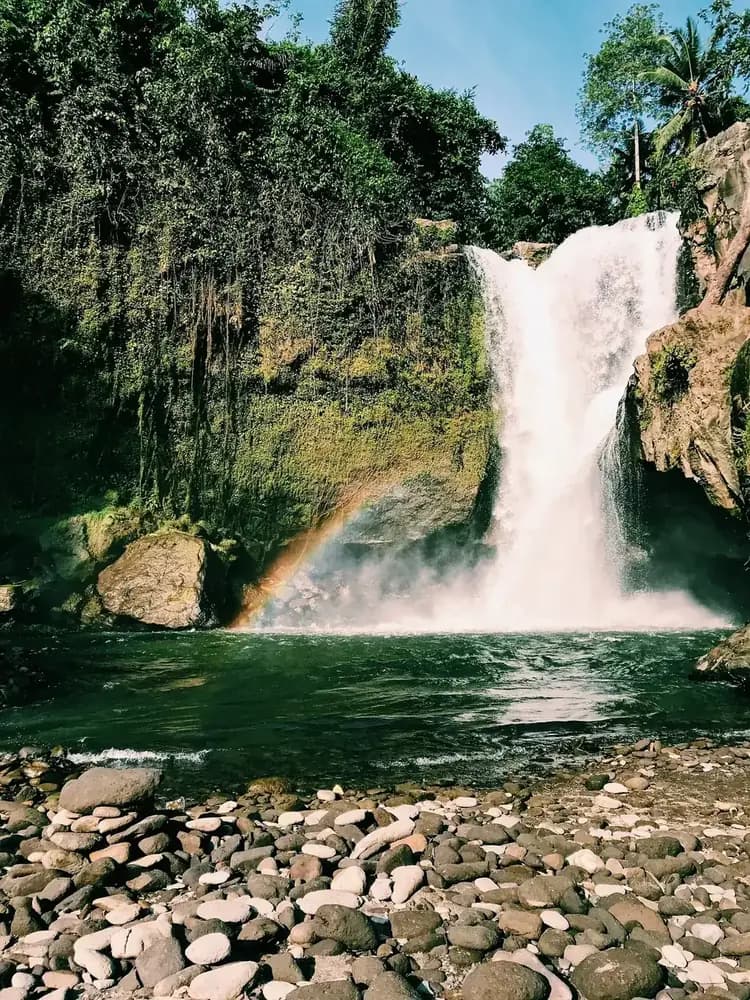
Photo Jeanet Suila, CC BY-SA 4.0
Tegenungan against the other waterfalls near Ubud
Four falls, all within an hour of Ubud, all completely different. This is the table that decides your morning.
| Waterfall | Drive | Effort | Crowd | The water | In a phrase |
|---|---|---|---|---|---|
| Tegenungan | 20 min from Ubud | Made staircase, several flights | Heaviest of the four | Wide and powerful, river fed | The easy one, and the loudest |
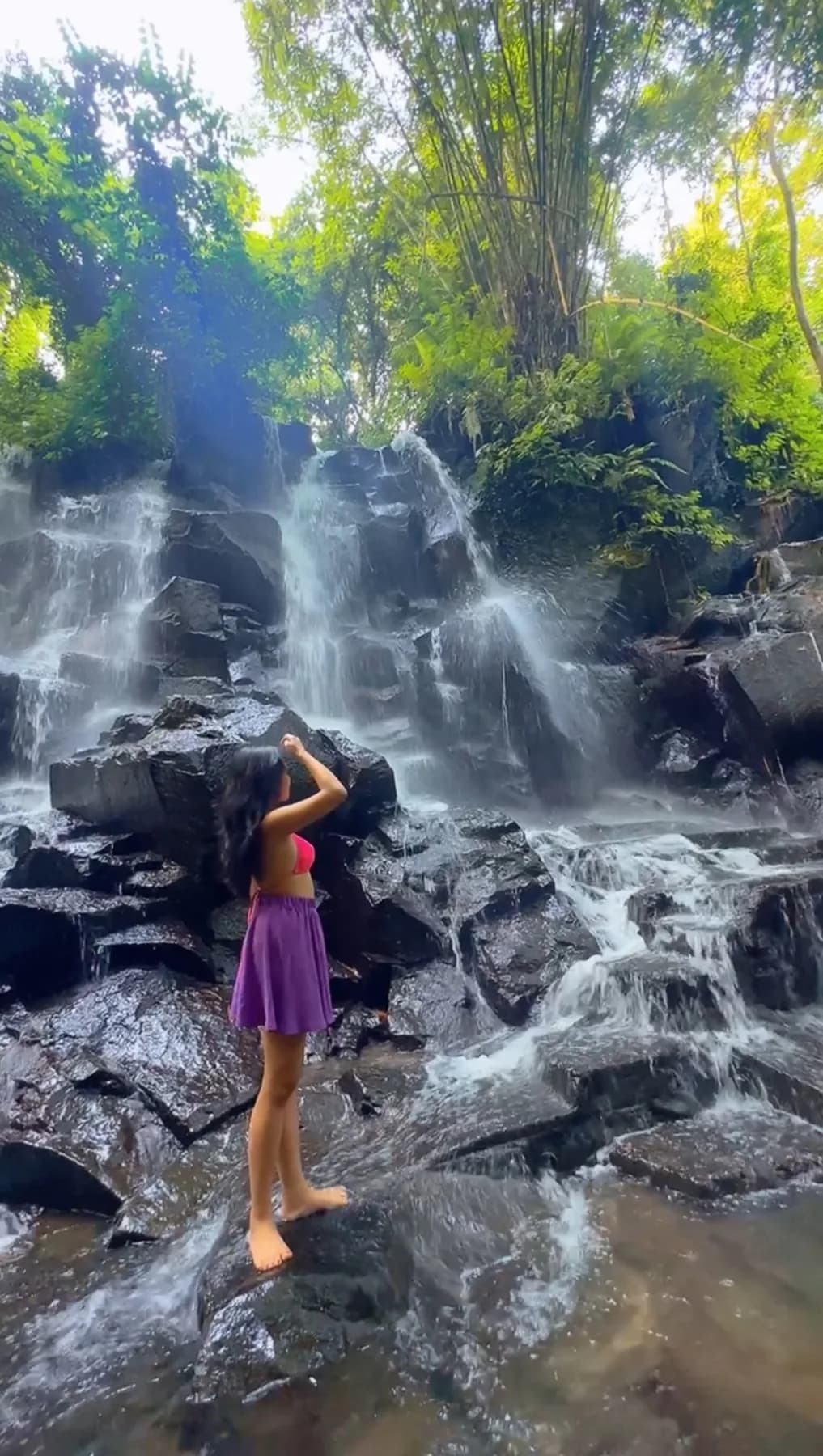
| Kanto Lampo | 25 min from Ubud | Short and shallow descent | Busy, with a queue for the photo | A wall of tiers, not a single drop | The photogenic one |
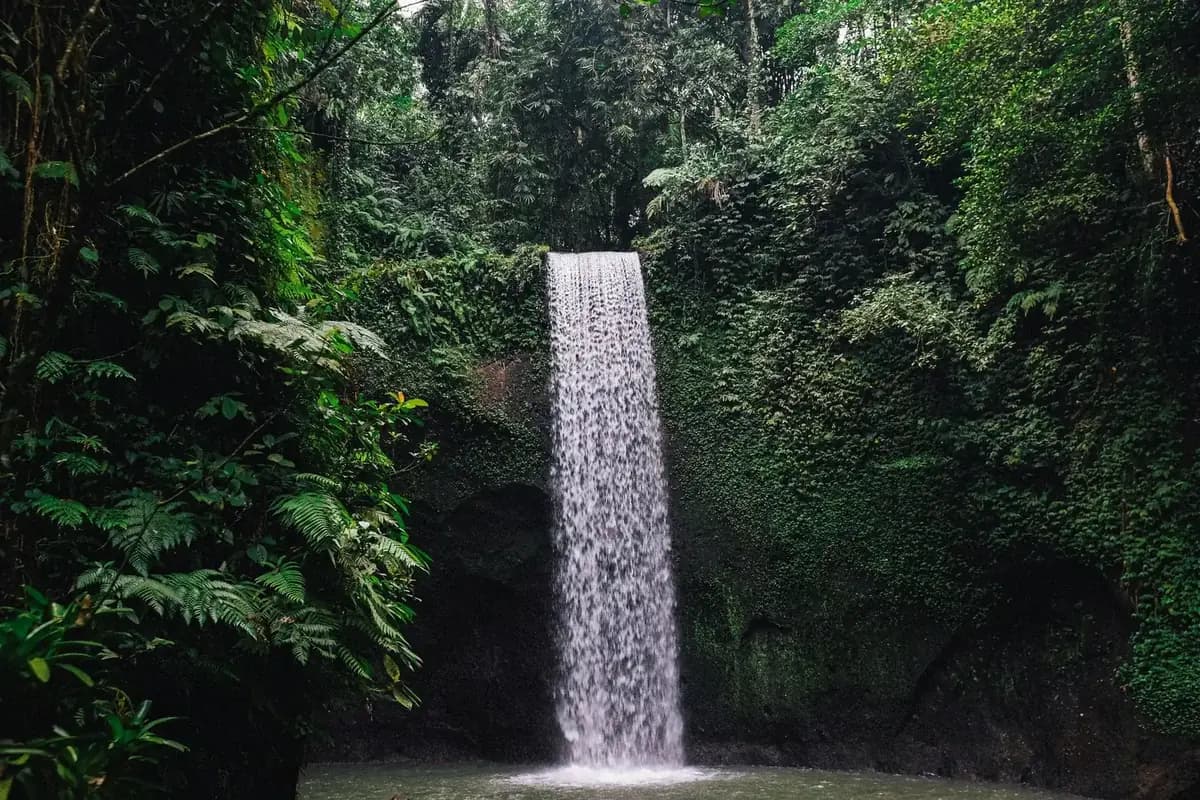
| Tibumana | 40 min from Ubud | Easy path, gentle steps | Moderate, calm by comparison | One clean ribbon into a round pool | The swim |
| Tukad Cepung | 50 min from Ubud | Steps then a wade up the stream | Bottleneck in the cave, timed | Falls into a roofless cave | The light beam, late morning |
The three others are all east of Ubud and all within twenty minutes of each other, which makes them a genuine half-day loop rather than three separate errands. Tegenungan sits south, slightly off that line, and that is the practical argument for doing it first and early rather than squeezing it in at the end.
If you only have room for one and you want the one people remember, it is not this one. Take Kanto Lampo for the photograph, Tibumana for the swim, and the full waterfall guide if you want the ones further north that need a real day.
What to do with the rest of the morning
An hour at Tegenungan leaves most of the day, and everything nearby is within twenty minutes.
Kanto Lampo
15 min north. A tiered wall of water rather than a single drop, shallow, easy to reach and the best photograph of the group. Expect a queue for the one spot everybody wants.
Tibumana
30 min east. One clean ribbon into a round pool, calm enough to actually swim in, and quiet by comparison. The antidote to Tegenungan in every respect.
Ubud
20 min north. The obvious base for all of this, and the reason Tegenungan gets the traffic it does. Market, palace, rice terraces and the ridge walk are all within the town or just outside it.
The sequence that works, if you have a driver for the morning, is Tegenungan at opening, Kanto Lampo next, then east to Tibumana or Tukad Cepung, and back into Ubud for lunch. That order puts the busiest site at the hour it is empty and the light-dependent one at the hour its beam works, which is the only reason to do them in that direction rather than the reverse.
Practical details
Where
Kemenuh, Sukawati district, Gianyar regency. About twenty minutes south of Ubud, an hour or more from the southern beaches.
The descent
Several flights of made steps with handrails, ten minutes down and fifteen to twenty back up. Not step-free, and the last stretch is loose wet rock.
Bring
Cash in small notes, shoes with grip, water, swimwear underneath and something waterproof for your phone. The spray at the base is heavier than it looks.
How long
Half an hour from the top only, an hour to an hour and a half including the base, half a day if you cross to Blangsinga as well.
One last thing, and it is the sentence this whole page comes down to. Tegenungan is the most convenient waterfall on Bali, not the best one, and it has never pretended otherwise in person. It only pretends otherwise in photographs, which crop out the car park, the stalls and the two hundred other people. Go early, go knowing, and it is a good hour. Go at eleven expecting a secret jungle pool and you will write one of the reviews.